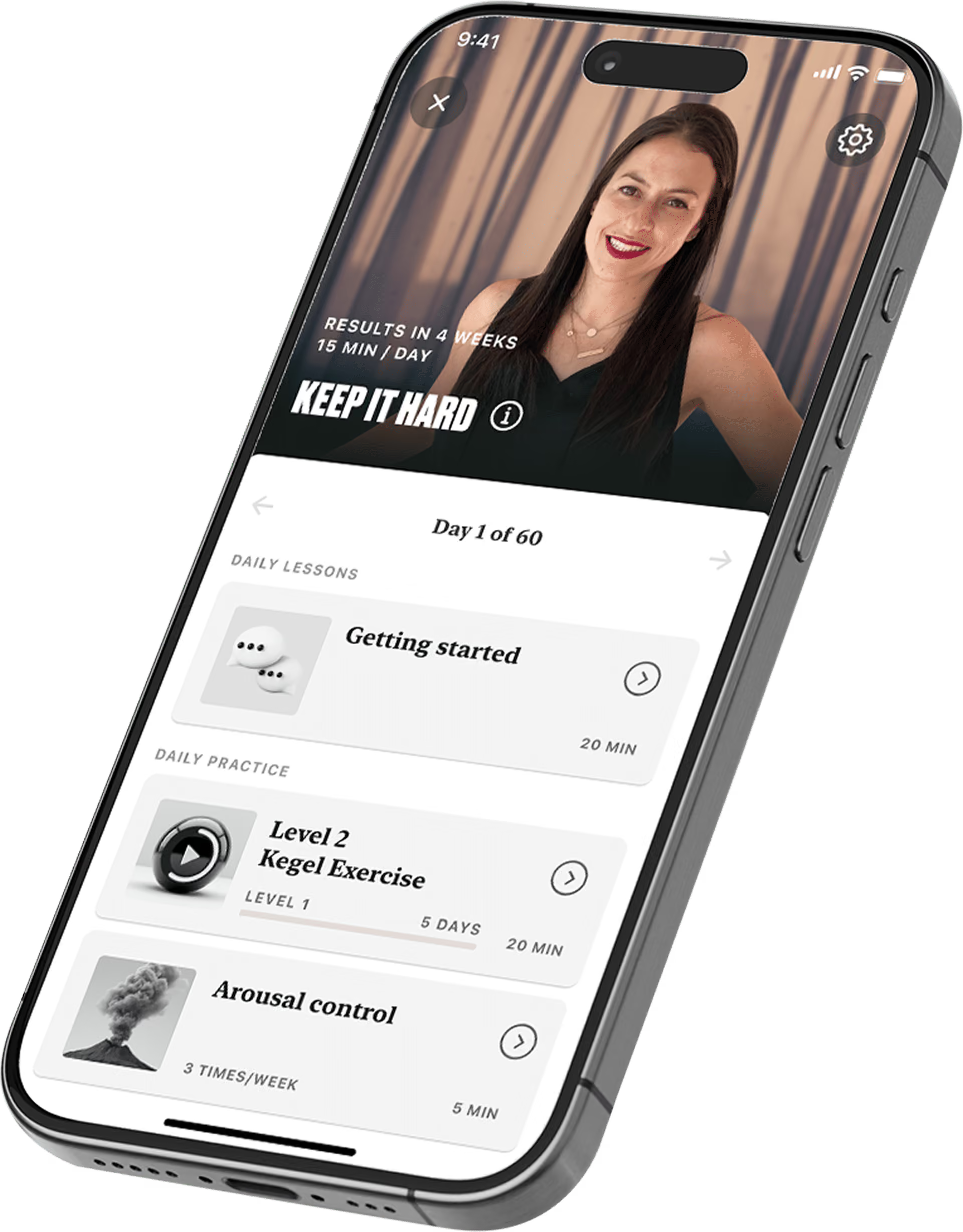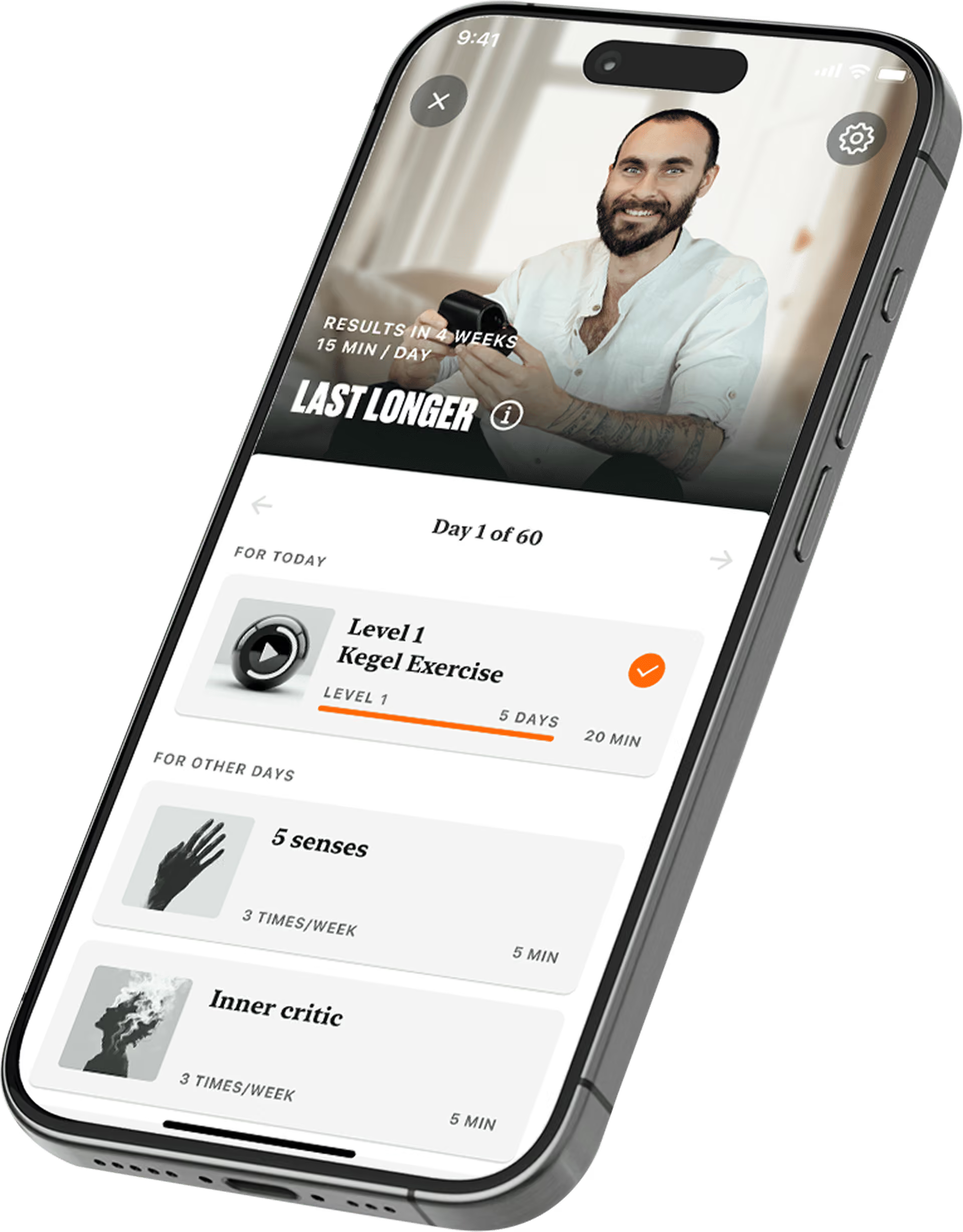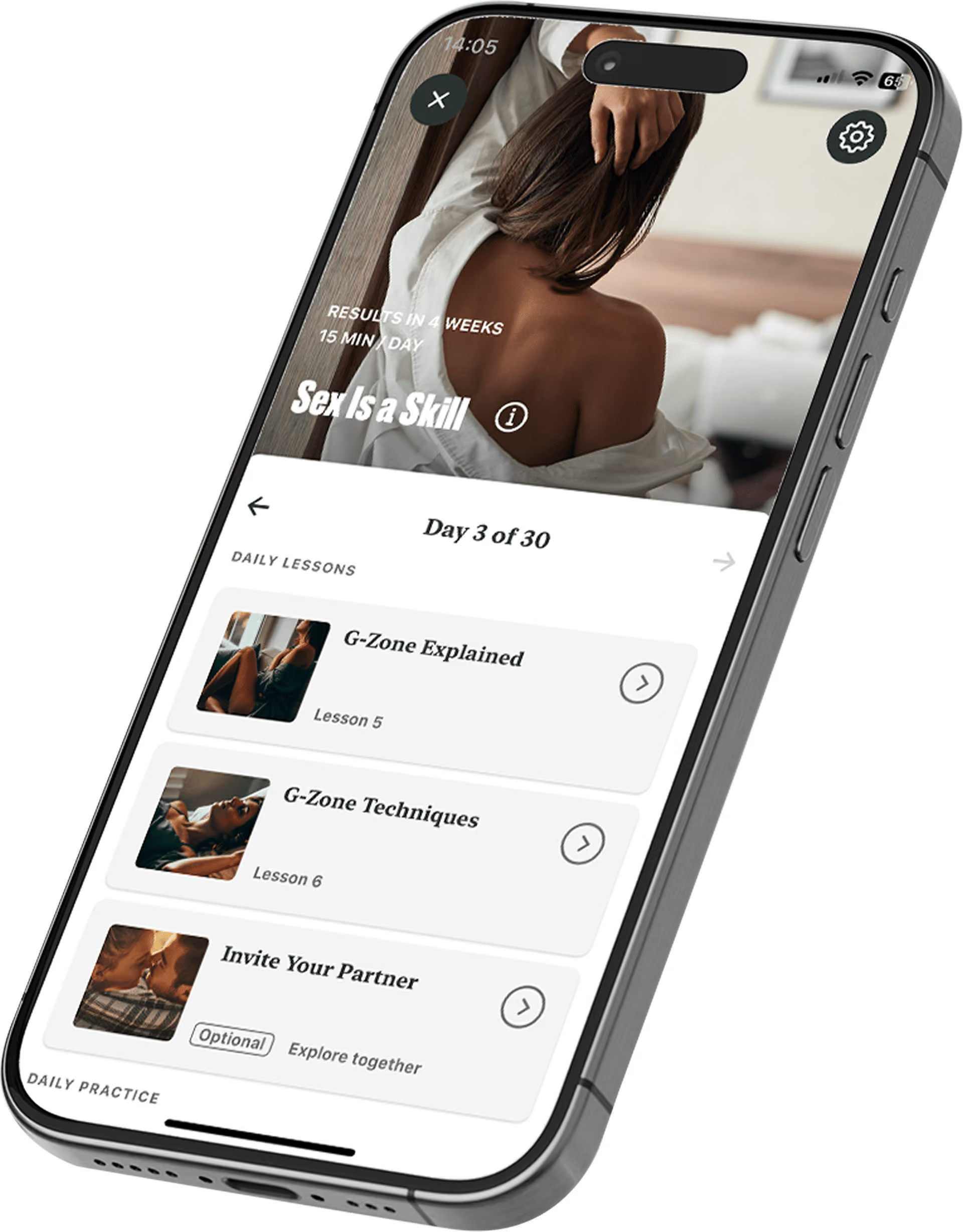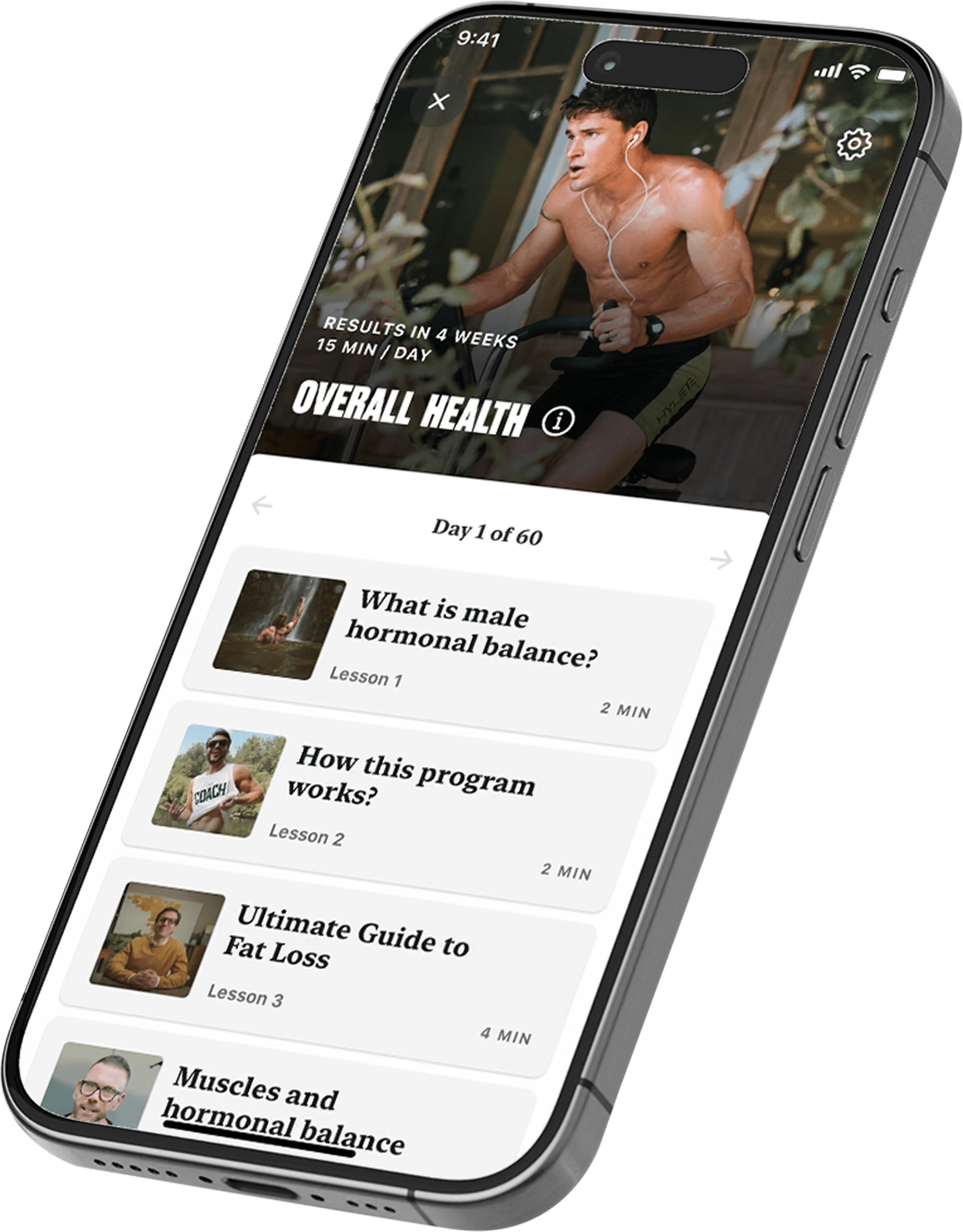
You can have good sex with erectile dysfunction (ED). Sex is more than intercourse: longer foreplay, oral sex and touch can satisfy you both whether or not you’re hard, and they ease the pressure that can make erections harder to get. When you want penetration, positions where you can relax and watch your partner, such as having them on top, make it easier to stay hard. If you can’t get an erection in any situation, including on your own, see a doctor first. Keep It Hard, a program in The Coach app, has lessons on foreplay, sex without penetration and positions, plus exercises for the anxiety that often keeps erection problems going.
Get my planYes. Many women reach orgasm more easily through clitoral stimulation than through intercourse, because penetration often doesn’t stimulate the clitoris directly. So whether sex is satisfying for her depends far less on your erection than you might think.
Things you can focus on instead:
If erection problems are starting to affect your relationship, our guide to erectile dysfunction in a relationship covers how to talk about it together.
Sex with ED goes better when your erection stops being the measure of success. These steps help whether erection problems happen now and then or most of the time:
If staying hard is the main problem, our guide to staying hard during sex covers what helps in the moment and over time.
Sex without penetration can be as satisfying as intercourse, and it doesn’t have to end when an erection fades. Ideas to try:
Keep It Hard covers these ideas in its lesson on sex without penetration, alongside exercises for the worry that can make erections harder to keep. A few questions show you where to begin.
Foreplay brings you closer and builds arousal in both of you, and an erection depends on arousal. It also gives you something to focus on other than whether you’re hard.
Ask your partner where they like to be touched, or find out slowly. Places worth exploring:
If worry about your erection keeps pulling you out of the moment, our guide to sexual performance anxiety explains why it happens and what helps.
The positions that help most let you relax, see your partner and control the pace without holding up your own weight. No position solves erection problems, but these five can make it easier to stay hard, and one tends to make it more difficult:
Seeing your penis soften during sex is one of the most common things that set off worry, even though erections naturally come and go. This exercise teaches your mind to stop linking softness with failure. You do it alone, in private, and you don’t try to get hard.
Set aside 10 minutes, three times a week, for two weeks, and keep going longer if it helps. Each session goes like this:
Keep It Hard includes this exercise, along with breathing and pelvic floor practices, and adds them to your daily plan.
Good sex doesn’t depend on a perfect erection.
Keep It Hard is for men who want stronger, more reliable erections. Its 17 lessons cover how erections work, anxiety, the pelvic floor and sex with a partner, and practice takes about 10 to 20 minutes a day.
Lessons on foreplay, sex without penetration and positions that make it easier to stay hard.
Breathing and grounding exercises for worry before and during sex, plus work on the self-critical thoughts that feed it.
The soft penis exercise and an exercise in letting an erection fade and come back, both done alone.
Answer a few questions to get a plan that shows which practices to start with. After that, Keep It Hard sets out what to do each day.
Changing how you have sex eases the pressure, but it doesn’t replace a medical check when the signs point to a physical cause. See a doctor if you can’t get an erection in any situation, including on your own or when you wake up, or if any of these apply:
For the causes and the medical side, see our guide to erectile dysfunction.
Erection problems don’t always mean no erection at all. If you’re partly hard, penetration may still be possible, and a few things make it easier.
Use plenty of lubricant, and let your partner guide you in instead of pushing. When your partner is on top or sitting in your lap, they can control the movement and keep you inside, and slow, shallow movements are easier to keep up than hard thrusting.
If your erection softens further, there’s no need to stop. Switch to your hands or mouth for a while and let arousal build again. Your erection may come back once the pressure is off, and if it doesn’t, sex can still end in pleasure for both of you.
These figures come from a survey of The Coach users after their first four weeks. They describe what users reported, not a promise for every man.
Box breathing and the arousal control exercise need no partner. In box breathing, you breathe in, hold, breathe out and hold again, each to a slow count of four. In the arousal control exercise, you let an erection fade by about half and bring it back with gentle touch, so a dip during sex feels less alarming. Your plan shows how often to do each.
Reviews from men using the app, in their own words.
“After only five or six lessons, I was tuned in to making the experience more pleasurable for her, which actually made me feel sexier! I’m not ashamed to admit that the Coach made me a better partner and lover.”
“Some information they taught blew me away and really helped demystify the female pleasure with a structured approach to exploration. The app opened up possibilities instead of contributing to more confusion and frustration by giving vague advice that have littered magazines and the webs.”
“I started the Coach program because there was some real inconsistency in my response to stimulus. In fact I was beginning to believe that my sexual life was on its way out the door. I was pretty desperate to find a solution and I stumbled across The Coach. It has been a game changer.”
“My experience with ‘The Coach’ app has been very good. The lessons and exercises have helped me tremendously. I am much more confident both within myself and also with my appearance. Intimate moments are not so anxious as before because I follow the helpful advice given in the ‘The Coach’ app.”
Keep It Hard was developed with specialists in men’s health, among them urologists, physical therapists, a sex therapist and a sex coach.
Gerard Greene
Specialist men's health physiotherapist and senior lecturer at Coventry University.
Dr. Susie Gronski
Licensed physical therapist, certified sexuality counselor, and founder of a men's pelvic health clinic.
Natalie Goldberg
Certified sex and family therapist dedicated to improving intimate relationships and personal well-being.
Dr. Amy Pearlman
Board-certified urologist specializing in male sexual wellness, performance, and hormonal health.
Dr. Justin Houman
MD, UCLA-trained urologist and male reproductive specialist focusing on sexual health.
Cameron Fraser
Australia's leading men's sex coach, specializing in male sexual wellness and performance.
Ben Greenfield
13-time Ironman triathlete, bestselling author, and recognized expert in health, fitness, and performance.
Dr. Gary Shlifer
DO, board-certified internal medicine physician specializing in preventative care, nutrition, and anti-aging.
Yes. Erectile dysfunction makes erections harder to get or keep, but it doesn’t stop you from having sex. Oral sex, touch and mutual masturbation don’t depend on an erection, and when you want intercourse, positions where you can relax make it easier. If you can’t get an erection in any situation, see a doctor.
Yes, it’s possible. Orgasm and ejaculation don’t require a full erection, and men can climax with a partial or even a soft one, especially with steady stimulation from a hand or mouth. It helps to focus on the sensations rather than on getting hard.
There’s no single best one, but positions that let you relax, see your partner and control the pace tend to work well: doggy style, your partner on top, spooning and sitting face to face. Missionary is usually the most difficult, because you hold up your own weight.
It’s when your erection stays firm in some positions but fades in others, for example when you lie on your back or stand. Losing your erection after changing position is common now and then, because the pause and the movement can be enough to make it dip. If it happens every time in the same positions, see a doctor; one possible cause is a venous leak, which our guide to venous leak explains.
No. Avoiding sex tends to make the worry bigger, because each attempt starts to carry more weight. Keep having the kinds of sex that feel relaxed, such as touching, oral sex and mutual masturbation, and leave intercourse out for a while if that takes the pressure off.
Don’t stop to apologize. Slow down, stay close and switch to your hands or mouth for a while; your erection may come back once the pressure eases, and sex can carry on either way. If it happens often, our guide to losing your erection during sex covers why it happens.
No. The breathing, soft penis and arousal control exercises and the pelvic floor training are done alone, and the touch exercise for couples has a solo version. The lessons on foreplay, sex without penetration and positions are for when you have a partner.
About 10 to 20 minutes. Some practices are daily and others a few times a week; your plan shows what to do each day.