Sexual Performance Anxiety in Men:
Why Trying Harder Makes It Worse

When your body decides sex is something to get right, it runs the same response it runs for danger, and that response sends the blood to your arms and legs and away from your erection. That’s why effort backfires, and it’s why sexual anxiety and erection trouble are usually one problem wearing two names. Below: what’s happening, what men do about it, and where Keep It Hard — the program this page comes from — picks it up.

See my Keep It Hard plan
4.7
1M+
Downloads
7,000+
User reviews

What sexual performance anxiety does to your body

None of this is imaginary. An erection starts as a signal from the brain, travels down the nervous system and ends as blood arriving where you want it. Anxiety interrupts that chain at the first link, and it does so for a reason that made sense long before bedrooms existed.

  1. Your body cannot tell the difference. Picture running through woods with a bear behind you. Blood goes to your arms and legs so you can fight or run, and it gets pulled away from everything your body has decided is optional in the next thirty seconds, which is a list your genitals have always been on. A bedroom you badly want to go well produces the same chemistry as the bear.
  2. The chain has three steps. The brain registers a threat, the fight-or-flight response switches on, and blood gets directed away from the penis. That’s the whole mechanism behind psychological erection problems, and it explains why willpower doesn’t reach it — you can’t instruct a survival reflex.
  3. Some men don’t feel anxious at all. They feel flat, absent, or oddly numb, and they assume that rules anxiety out. It doesn’t. Numbness produces a similar response in the nervous system, so the absence of a racing heart proves nothing either way.
  4. When to take it somewhere else first. If the worry follows you into work, sleep and ordinary weeks, that belongs with a doctor or a therapist, not with an app. And if you can’t get an erection in any circumstance — alone, in the morning, with anyone — the cause is more likely physical, and a doctor’s visit comes before any program.

None of that makes the response a character flaw. It’s automatic, and it fires whether or not you approve of it, which is exactly why arguing with yourself about it has never worked for anybody. What practice changes is how often it fires, and what you do in the seconds after it does.

What the app does about performance anxiety, day by day

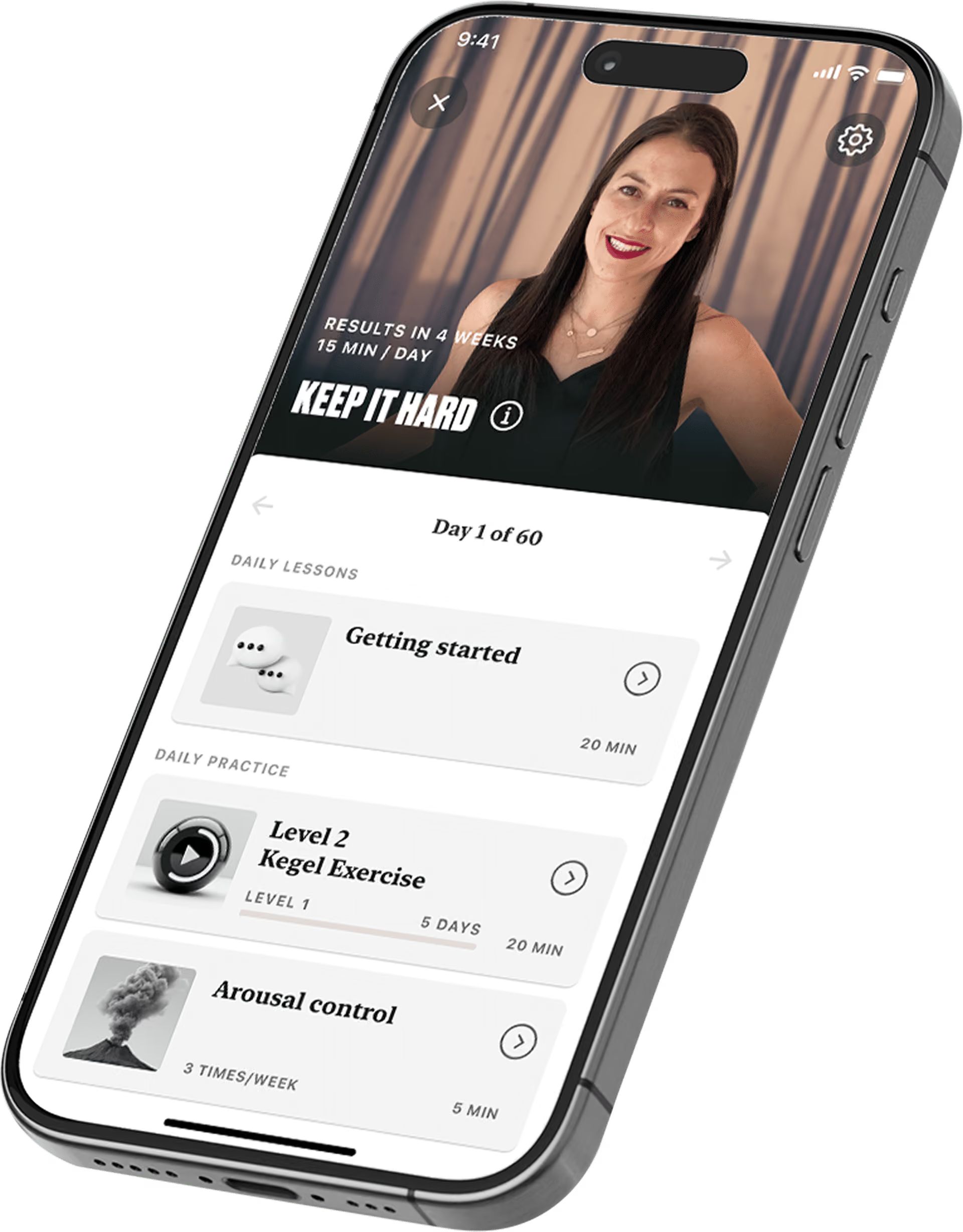
Keep It Hard runs a psychological half and a physical half, and this page is about the first one. This is training. It isn’t treatment, and it doesn’t stand in for a doctor when the cause is physical.

Step 01

Your answers set the order

A short questionnaire first, and the plan comes back sorted for where you are now, not for men in general. Nobody asks you to describe anything out loud.

Step 02

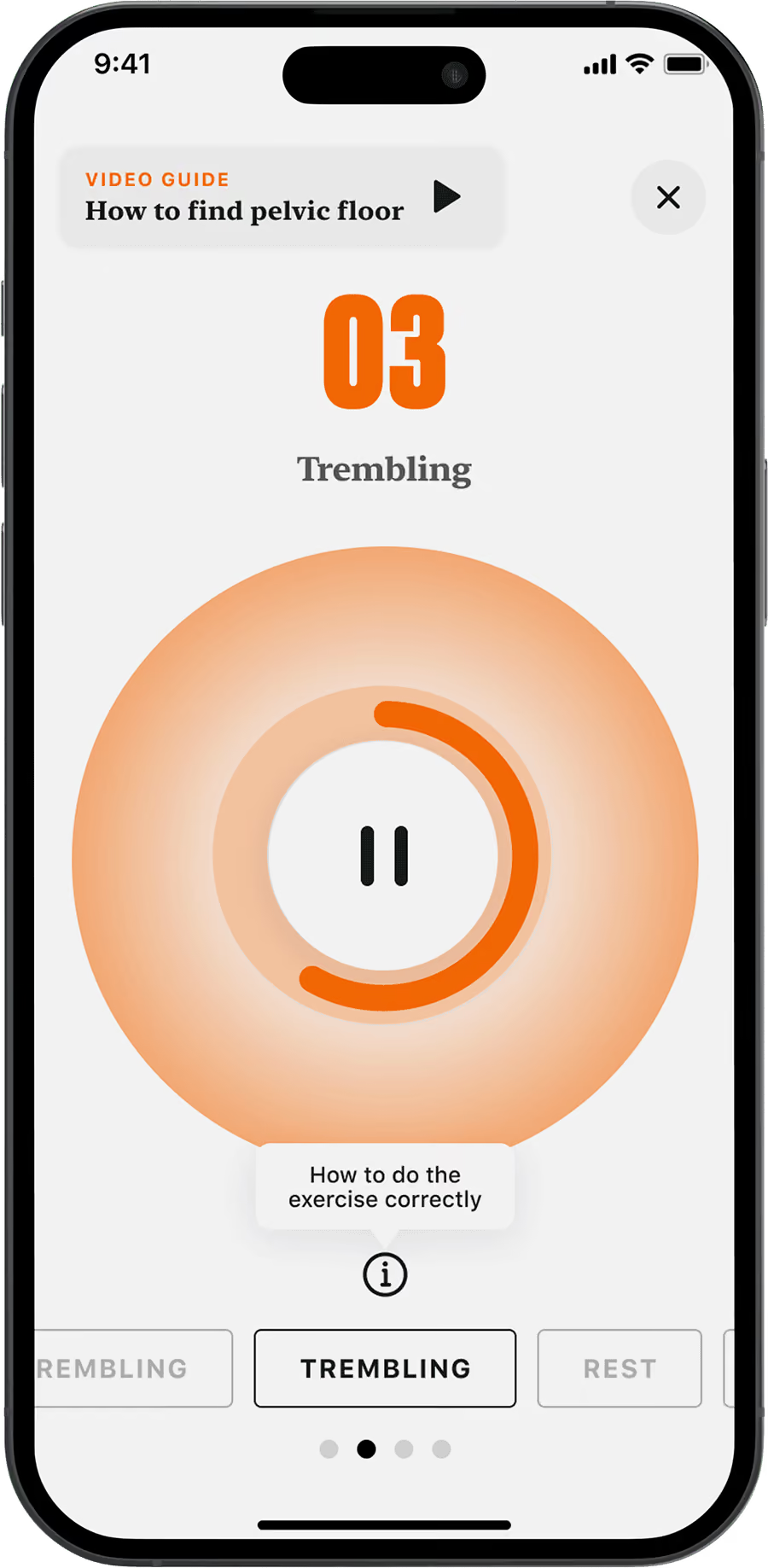
The head work is mostly audio

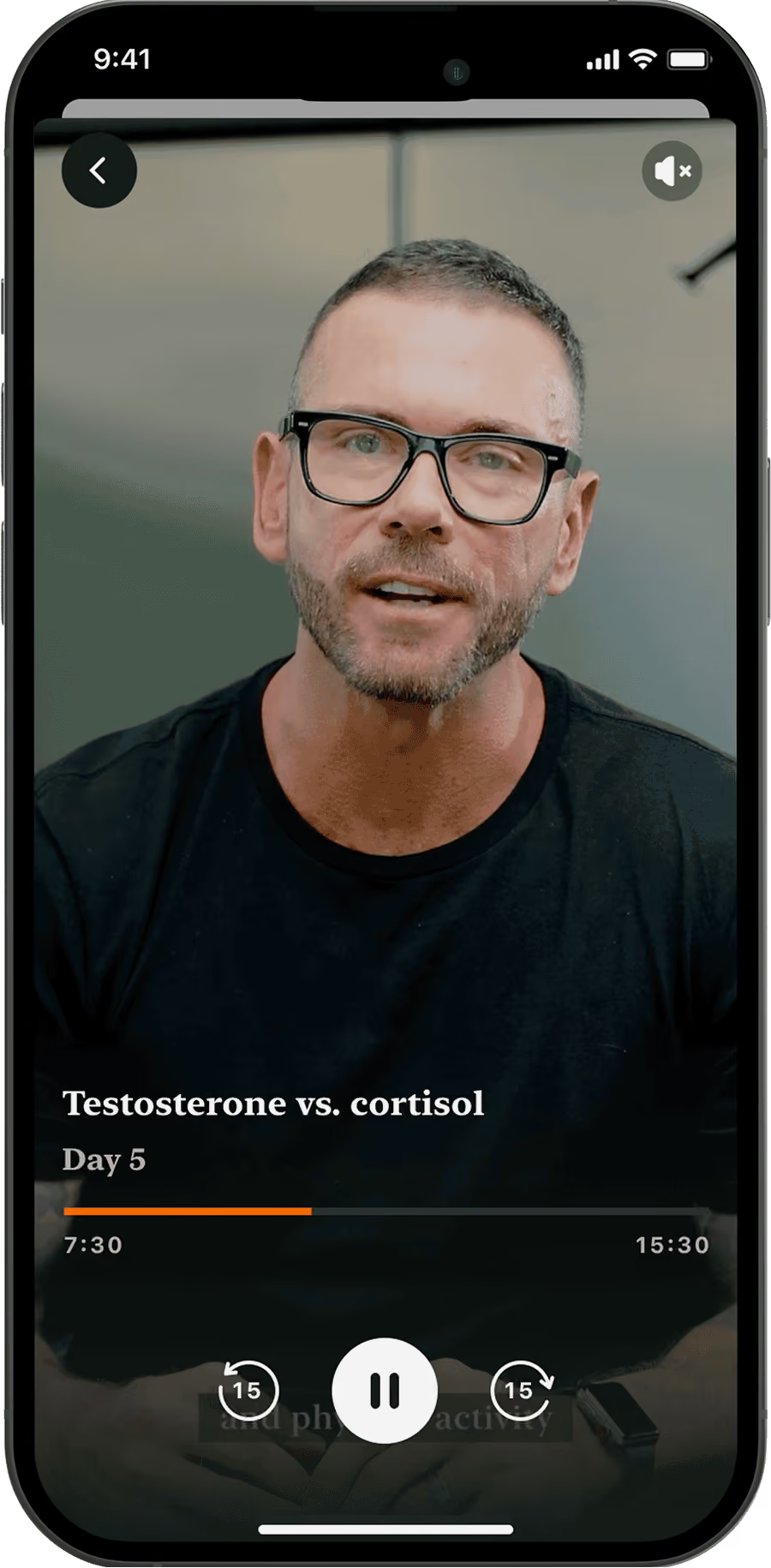
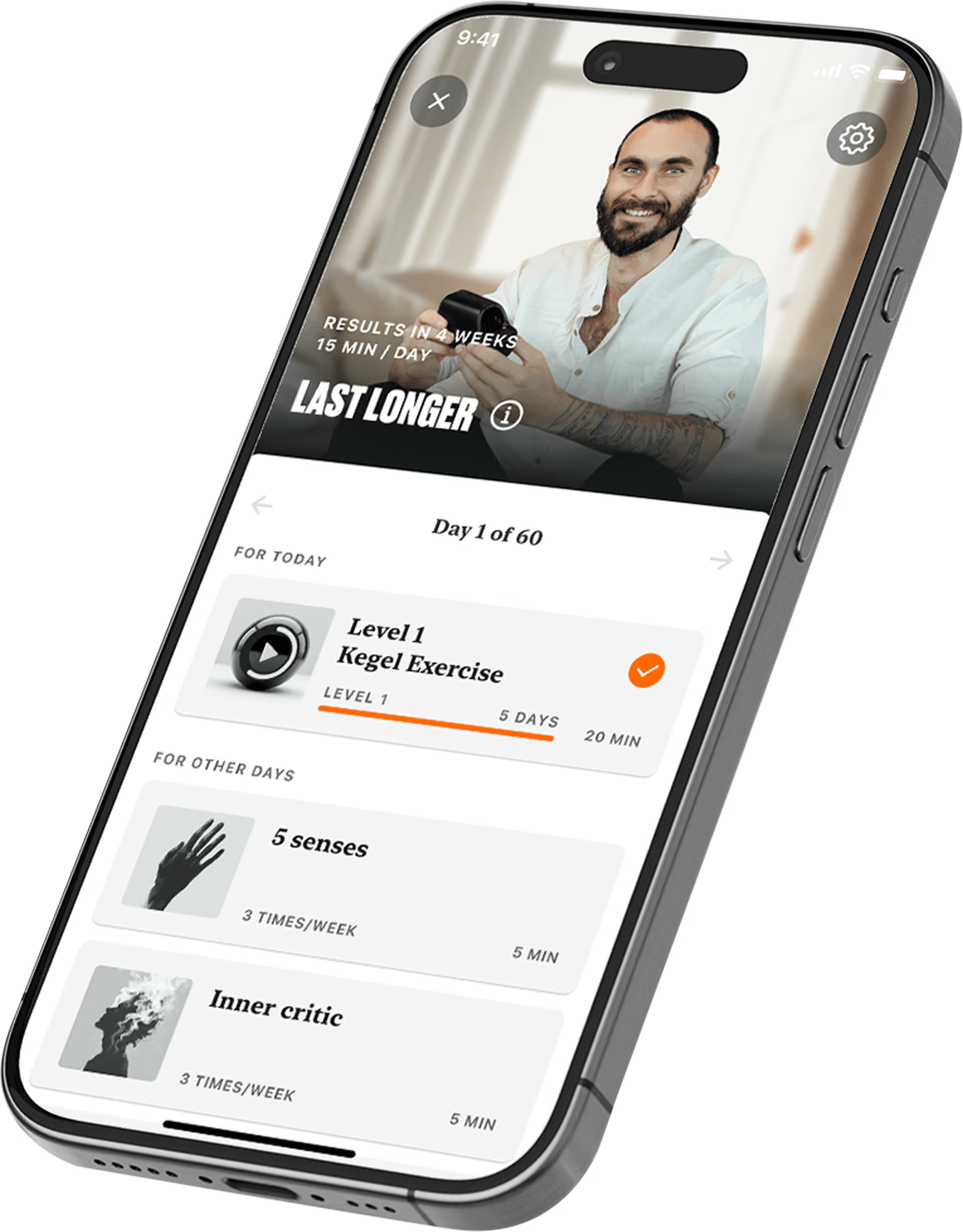
Guided sessions you listen to, plus short written lessons. Some of it is daily and some comes round every few days; the plan decides which, so you’re following one instead of building one.

Step 03

The psychological half comes first

The mind comes first here and the body second, which is the reverse of what most men expect when they hear that a program has a physical half. You get the psychological work while the physical work is still starting, not once it has finished.

Knowing your own triggers is where the plan starts

A short questionnaire. Then the program, in the order that fits you.

See my Keep It Hard plan

The loop that keeps sexual performance anxiety going

Something usually starts it — a night that went wrong, a remark from a partner, an ex who made a habit of criticising, a stretch of stress arriving from outside the bedroom — and once it has happened, the episode stops being the trouble and the expectation that follows it takes over the job. Here’s the shape that takes.

  1. The question arrives first. What if it doesn’t work tonight? It shows up early — in the taxi, at dinner, hours before anything happens.
  2. The question produces tension. Shoulders, jaw, breathing. It arrives in your body before it arrives as a feeling, and that’s where you can catch it.
  3. Tension switches the wrong system on. The sympathetic nervous system takes over. That’s the survival side, and it’s the one that moves blood away from an erection and hurries ejaculation.
  4. The night goes the way you feared. Your body did what the chemistry told it to do. Now you have evidence, and evidence is much harder to argue with than a worry was.
  5. The evidence makes the question louder. Next time the thought arrives sooner and lands harder, and the loop is now running itself. Negative anticipation turns into the thing that produces the result it predicted.

There’s no villain in that list. Every step follows from the one before it, which is also the useful part. Five steps means five places to interrupt it. Step one isn’t the only door.

Sexual anxiety and erections are one loop, not two problems

Plenty of men handle these as neighbouring problems: sexual anxiety in men on one side, erection trouble on the other. They’re one circuit, read from opposite ends.

  1. Which one started it barely matters. One difficult night creates the expectation, the expectation creates the chemistry, and the chemistry makes another difficult night more likely. After a few rounds nobody can say which came first, and the work is the same either way.
  2. A pill doesn’t step around it. Medication makes blood flow into the vessels easier; it doesn’t supply arousal, and the signal still has to come down from your brain. A fight-or-flight response can spoil that signal regardless of what you took an hour earlier.
  3. Watching yourself is part of the mechanism. It has a name in sex therapy — spectatoring — and it means half of you participates while the other half stands at the end of the bed grading the performance. The half that’s grading is running a threat check, and you already know what those do to the blood supply.
  4. Going a bit soft is normal.Hardness fluctuates in every man, and the trouble usually starts with what you do the moment you notice it. If the physical side is the part that worries you most, the erectile dysfunction page covers it directly.

Two ways to answer the thought

Following the thought

You argue with it, and arguing keeps it alive.
Your breathing shortens and your shoulders climb.
Attention moves to monitoring: is it working yet?
The night confirms the prediction, and the prediction gets louder.

Noticing it instead

You let it be there without answering it.
Breathing out slowly gives the calm side of the system something to do.
Attention goes to what you can feel: texture, temperature, pressure.
The thought passes without having decided anything.

Your body isn’t refusing you. It’s guarding you, at the worst possible moment.

Five practices that work on sexual anxiety

These are the five the program has you practise, in the order it teaches them. Not one of them is an affirmation, and not one of them asks you to talk yourself out of anything.

01Practice
Five senses. Name five things you see, four you feel, three you hear, two you smell, one you taste. It sounds trivial and it’s a nervous-system switch: attention comes back to the present moment and the calm side of the system gets a chance to take over.
02Practice
Box breathing. Out, in for four, hold four, out for four, hold four. Repeat. Slow exhaling is the most direct route men have to the parasympathetic system, which is the one an erection needs.
03Practice
Meeting your inner critic. The voice that says don’t mess this up has a tone, a vocabulary and often somebody else’s face behind it — an ex, a parent, your own younger self. Some men hear nothing and feel it in the body instead. The practice is recognising it, not defeating it.
04Practice
Building the second voice. The counterpart to the critic, made as specific and as loud. A vague encouraging feeling loses that argument; a voice with actual arguments does not.
05Practice
Triggers, then deliberate exposure. Write down what sets it off — a light left on, a particular moment, the first sign of softness. Then meet the trigger somewhere safe and alone, with nothing to achieve. Sex therapists call this counterconditioning, and the point is to have the thought and not obey it.

Naming the loop and interrupting it are different skills

One of them you just did. The other has an order to it, and that’s what the program is.

See my Keep It Hard plan

What men try first, and why it backfires

Male performance anxiety has four standard responses, and each one of them buys a quiet evening at the cost of a harder night later. They’re worth naming, because most men reading this have already tried at least two of them and concluded from the result that nothing works.

Avoiding sex.

It works immediately and it costs you later. Less sex means more weight on each occasion, which means more pressure, which means more anxiety — the avoidance feeds the thing it was protecting you from.

Drinking first.

Alcohol quietens the worry, and heavy drinking sits on the course’s own list of physical causes of erection trouble. Quieter head, less reliable body, and the reason for the bad night gets harder to read afterwards.

Monitoring for signs.

Checking whether it’s working is itself a threat check, and that is the one input the alarm is waiting for. The attention that’s supposed to reassure you keeps the system switched on.

Reaching for a pill and stopping there.

Medication has its place and your doctor decides that. What it doesn’t do is quiet the response that interferes with the signal, so men who take one and still lose the erection conclude that nothing works — when what they’ve found is that the psychological half went untouched.

How men actually overcome performance anxiety in bed

Not by arguing with the thought, and not by trying harder next time. Grounding and breathing come first — those are the two practices above. What follows is the rest of the course’s sequence, and it starts somewhere most men skip.

  1. Stop trying to get rid of it. Accepting that the anxiety is there is what begins the process of disengaging from it. People keep it alive mostly by fighting the chain of thoughts it sets off, and the fight is what gives the chain its next link.
  2. Take the fork. A negative thought is a fork in the road, not an instruction. You can follow it, or you can notice it and come back to your breath. Erasing the thought was never on offer; declining to obey it is.
  3. Learn what your critic sounds like. For some men it’s their own voice. For others it’s an ex, or a parent. For plenty of men there’s no voice at all — a sensation, a memory, a wave of dread. You can’t answer something you haven’t identified.
  4. Build the second voice in detail. As specific as the critic, as loud, with actual arguments. The course treats it as a practice with repetitions, not a mindset you decide to have, and it asks for the same level of detail you found in the critic, because vividness is what makes the second voice stick when the first one starts up.
  5. Then put yourself in the room.Everything above is rehearsal until you’re in front of the trigger. Do that gradually, alone at first, and your subconscious slowly stops filing sex under threat. If finishing too quickly is the trigger, the premature ejaculation page runs the same logic on that.

Is there a treatment for sexual performance anxiety?

Here’s a straight answer rather than a careful one.

  1. We don’t treat anything, and we say so. The Coach is a program, not a clinic. Nobody here diagnoses you and nobody prescribes anything, and if what you have is an anxiety condition and not an anxiety about sex, a clinician is the right call.
  2. A lot of what clinicians use here is exercise-based. Sensate focus, graded exposure, cognitive work on the thought loop. Exercises come with instructions, which is why an app can carry them at all. What an app cannot do is choose which one you need, sequence it around your history, or watch how you respond — and that is the part a clinician is for.
  3. The program teaches them in the course’s own order. Grounding and breathing first, then accepting the thought instead of fighting it, then the work on your inner critic and the voice you build to answer it, then your triggers and deliberate exposure. The course’s own advice is not to skip lessons, because the sequence is what carries the logic.
  4. Nobody can promise you an outcome, and we won’t. What can be described is the work. The program runs four to six weeks before most men notice a difference, and it asks for ten to twenty minutes a day across both of its halves. What happens in your case depends on your case.

Numbers from our own user survey

Users of The Coach, asked after their first four weeks. The figures cover the app as a whole, not the practices on this page on their own.

58%
Felt more in control during sex
55%
Said sex became much more satisfying
39%
Reported a higher libido
41%
Had sex more often

The mental half, as users describe it

From the app stores and Trustpilot. Trimmed for length, never reworded.

“I have Only Just Started this Course and Already in my first part have learned so much from it. It seems that Everyone is genuinely trying to help men, who experience ED or similar mental health issues and problems about their health. It is not all about the physical side of Yourself that stops You maybe from having temporary or permanent problems.”

themackstar

“One of the most valuable parts of the program is its focus on managing performance anxiety and building better body awareness. The app includes structured breathing exercises, mindfulness practices, and pacing strategies that help users stay calm and present. These tools can be especially helpful for men who want to feel more in control and reduce the stress that can affect intimacy.”

Chris Vokaty

“This program has helped me a lot already. I’m 20 days in and it has improved my discipline and confidence. I know I need to get things done for my own health thanks to the notification reminders and I’m looking forward to feeling the end result of the program”

Mrcanyon

“This app and program is one of the most comprehensive tool and program I’ve tried. It provides you with many strategies and step by step instructions. It focuses not only on a physical side but also on psychic and mental side. Day to day guidenance with focus to understand all aspects of your life and health, both psychological and physical.”

Brian

Read all reviews

What they had was an order to follow

Yours comes back from a short questionnaire, sorted for where you are now.

See my Keep It Hard plan

Who wrote the psychological half

The psychological half was written with sex therapists, an accredited psychotherapist and a research psychologist. The urologists and physiotherapists on this list built the physical one.

Gerard Greene

Specialist men's health physiotherapist and senior lecturer at Coventry University.

Dr. Susie Gronski

Licensed physical therapist, certified sexuality counselor, and founder of a men's pelvic health clinic.

Natalie Goldberg

Certified sex and family therapist dedicated to improving intimate relationships and personal well-being.

Dr. Amy Pearlman

Board-certified urologist specializing in male sexual wellness, performance, and hormonal health.

Dr. Justin Houman

MD, UCLA-trained urologist and male reproductive specialist focusing on sexual health.

Cameron Fraser

Australia's leading men's sex coach, specializing in male sexual wellness and performance.

Dr. Paula Hall

Accredited sexual and relationship psychotherapist, registered with leading professional bodies in psychotherapy.

Dr. Justin Lehmiller

PhD in social psychology and senior research fellow at the Kinsey Institute.

Performance anxiety, question by question

Is sexual performance anxiety normal?

Ordinary enough that Keep It Hard gives it a module of its own, not a paragraph. We don’t publish a prevalence figure, because we don’t have one we can stand behind. What’s worth knowing is the difference between an episode and a pattern: one difficult night happens to nearly everyone, and it becomes a problem when the expectation it leaves behind starts arriving first.

What causes sexual performance anxiety?

A threat response firing where there’s no threat. Something usually sets it going: a night that went badly, a remark from a partner, an ex who criticised, the first time with someone new, stress arriving from work or sleep, or a stretch of drinking. Some triggers are physical, not emotional — the sight of yourself going a little soft is one of the commonest. After a while the anticipation alone is enough, and the original cause stops mattering.

How do I know if it’s anxiety or something physical?

A rough guide, not a diagnosis: if erections show up on your own, in the morning, or with one partner and not another, the wiring works and the trigger is situational. If they’ve faded everywhere, gradually, in every circumstance, see a doctor. That pattern points at the body, and some of its causes matter well beyond sex — narrowed blood vessels can show up as an erection problem years before they show up as a heart problem, which is a reason to get it looked at. Not a reason to panic.

Can sexual anxiety cause erectile dysfunction?

That’s the ordinary route to the psychological kind. The threat response pulls blood towards your arms and legs and away from the penis, so the erection either doesn’t arrive or doesn’t hold. Which means the two problems share a mechanism, and working on one moves the other.

How do I overcome performance anxiety in bed?

Not in the moment — the moment is too late, and “calm down” has never worked on anyone. What works is practised outside the bedroom: grounding and breathing so the calm side of your nervous system is reachable, then the work on the critic in your head and the voice you build to answer it, then your triggers written down, then meeting them somewhere safe.

Is there a treatment for sexual performance anxiety in men?

What clinicians use here is largely exercises — sensate focus, graded exposure, techniques for the thought loop. Not something you take. The Coach teaches that kind of work in a set order and does not treat, diagnose or prescribe. If the anxiety reaches past sex into the rest of your week, start with a professional.

Does sexual anxiety go away on its own?

Sometimes. If whatever started it disappears — a stressful year ends, a relationship settles — the expectation can fade with it, and plenty of men never think about any of this again. More often the avoidance that feels like relief is what keeps it going: less sex puts more weight on each occasion, more weight means more pressure, and the loop tightens quietly while it looks like nothing is happening.

Should I tell my partner?

The course makes the case for it with a story. One man traced the voice in his head to an ex-wife who used to ask what kind of man didn’t want sex with her; when he explained the fear to his new partner, she told him she didn’t care about the erection and wanted to be close to him. He could enjoy being close to her after that. Naming it out loud takes the imagined judgement out of the room, and the imagined version is usually harsher than the real one.

What if it only happens with one person?

That’s information, not a verdict on the relationship. Something in that context is the trigger: how much it matters to you, a memory of a night that went wrong, a fear of one particular reaction. Triggers are specific. Specific things can be written down and planned around.

Will a pill sort this out?

Medication is your doctor’s call, and the section above explains why it doesn’t step around this. It makes blood flow easier without supplying arousal, and the signal it needs still has to come down from your brain. That’s why men on medication still get nights that go wrong.

How long does the head work take?

There isn’t a separate budget for it. The ten to twenty minutes a day the program asks for covers both halves, and the four to six weeks before most men notice a difference is the whole program too. Within that, the breathing and grounding practices are usable the day you learn them. The critic work is slower. It runs on repetition, and one good session won’t do it.

What do I get in the app?

Keep It Hard, both halves of it: guided audio sessions, short lessons, the practices named on this page, a daily plan built from your answers, and reminders so the plan outlasts your interest in it.

Can I cancel anytime?

Yes. You manage the subscription in your App Store or Google Play account and can cancel there at any point.

How do I get in touch?

Two ways. Email support@the.coach and a real person on our team gets back to you — usually within a day. Or open the app, go to the Today tab, tap your profile, and hit Support. Both land with the same people.

More programs from The Coach

Keep It Hard

Reliable erections, trained naturally.

See the program

Last Longer

Real arousal control in eight weeks.

See the program

Overall Health

Boost your testosterone and get your energy back.

See the program

Nothing about this gets easier by avoiding it

A questionnaire, then a plan that starts where you are. Ten to twenty minutes a day, and the head half is in there with the rest.

See my Keep It Hard plan