Step 01
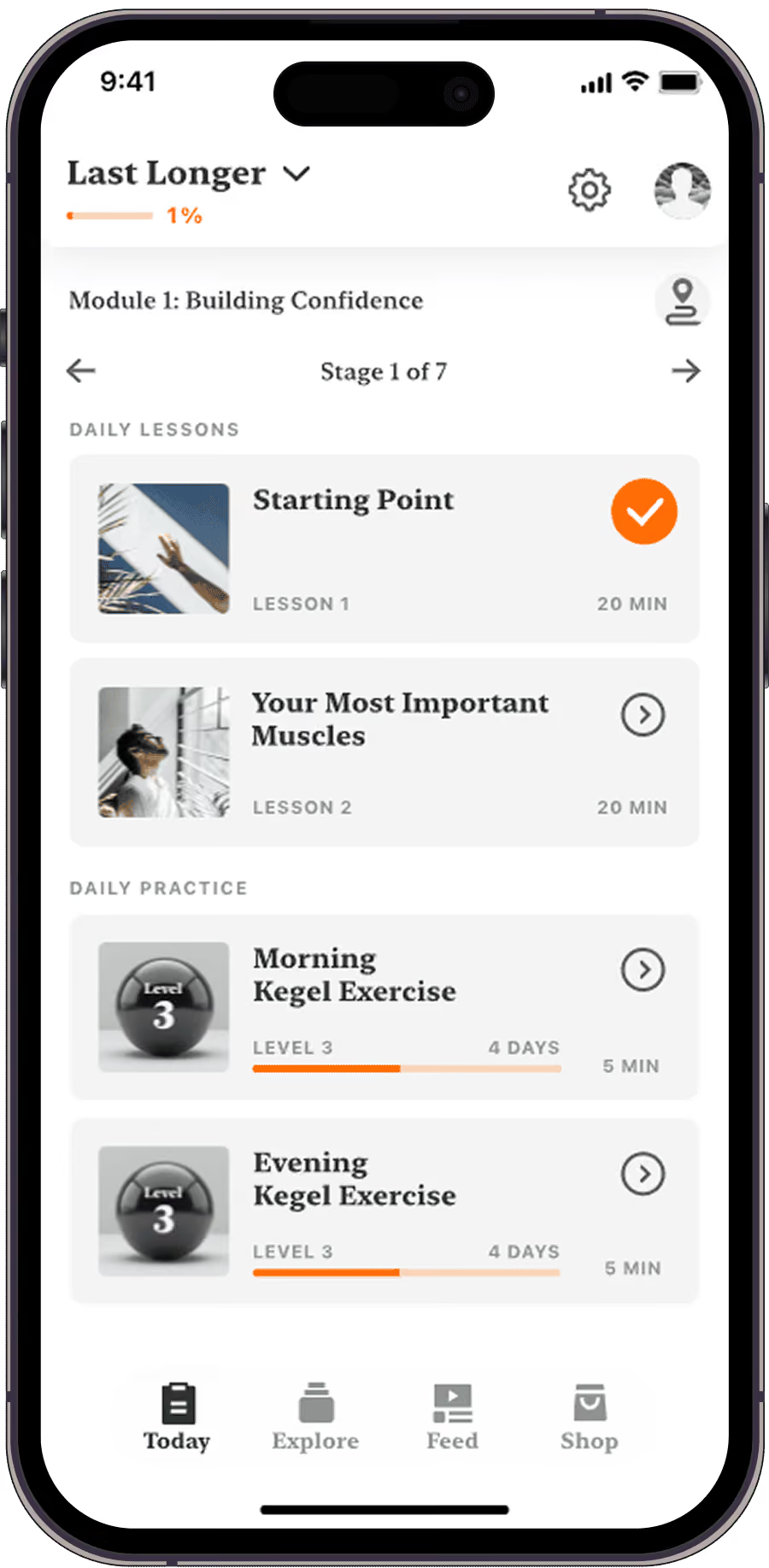
Answer the questions
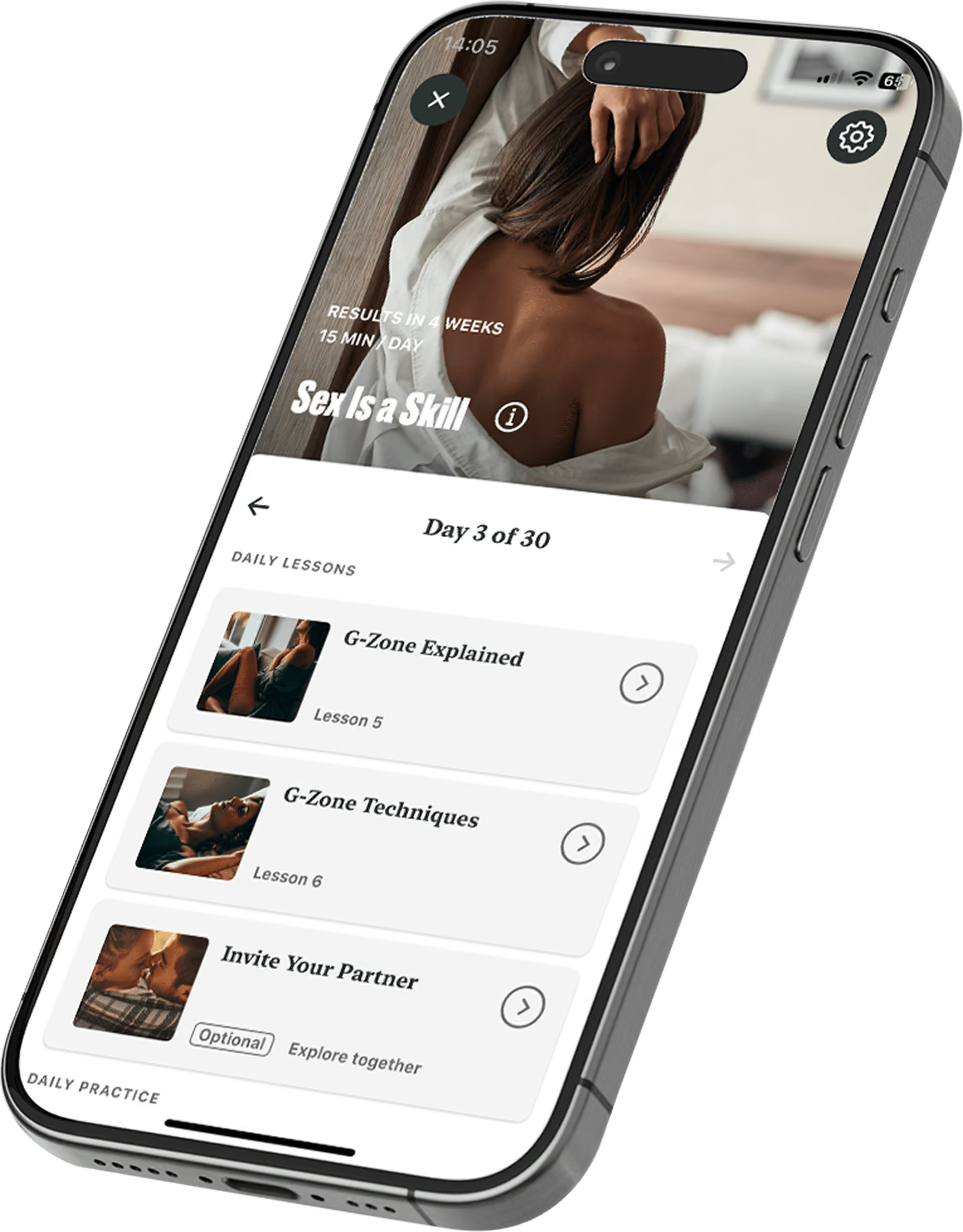
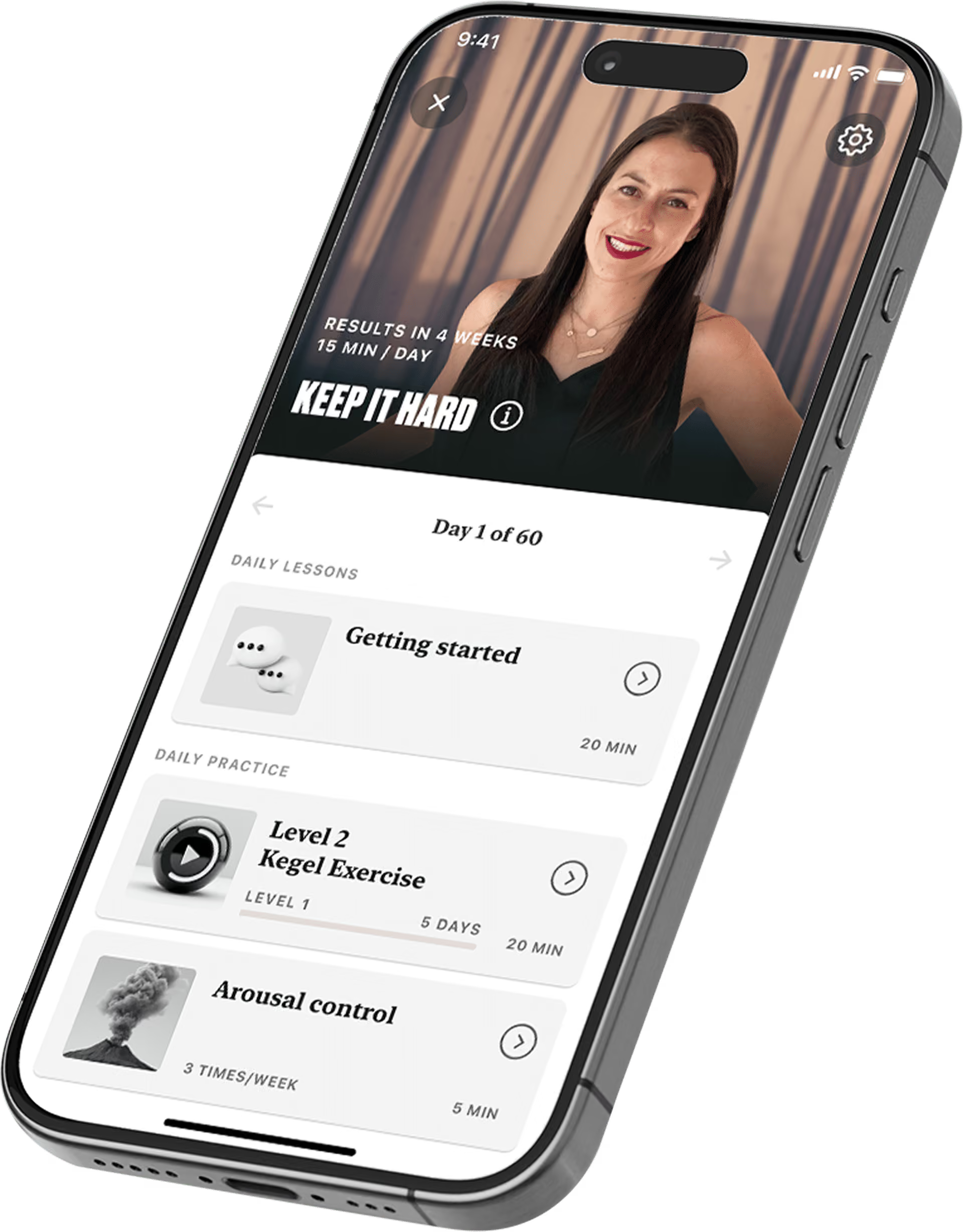
You start with a short questionnaire about your situation. Then the first week introduces the arousal scale, guided breathing, your first Kegel training and your first solo practice.

Learn how to train yourself to last longer in bed with a clear, repeatable solo practice. The Last Longer program in The Coach app combines arousal awareness, breathing, relaxation and pelvic floor exercises. In a typical twenty-minute session, you practice noticing changes in arousal, slowing down and pausing. The program guides you through each step so you can practice on your own before trying the techniques with a partner. It starts with a few questions, and your answers shape your personal plan.
Answer a few questionsTo learn how to train to last longer in bed, start with four parts: recognize your arousal level, choose a manageable goal, practice ways to slow down, and review how the session went. A ten-point scale gives you a simple way to describe what you feel, and with regular practice its levels become easier to tell apart.
That’s the difference between training to last longer in bed and reading about it. A coach would normally tell you three things: where you are, what to aim for and how it went. Once you know your scale, your own body can tell you where you are and how it went, which is why you can train your body to last longer in bed in a room with nobody else in it. What it won’t do is choose the target on a Tuesday in week four, when the novelty has worn off and a six feels like a wasted evening.
Most lists of mental techniques to last longer in bed give the same advice: think about something else. We don’t recommend it, because distraction pulls you out of the sex and teaches nothing for the next time. The mental side of control comes down to a loop of thoughts you can learn to notice and four tools you can rehearse. Learning how to stay calm during sex takes rehearsal, not the right mood.
The loop runs like this. A thought arrives, usually before anything has happened: “What if I finish too fast?” The thought brings tension, in the thighs and the belly first. Tension tips your nervous system toward fight-or-flight, and that is the state that triggers ejaculation. You climax early, the fear is confirmed, and the loop is stronger next time. Most men lose control not because of what they feel but because of what they think about what they feel, and the panic arrives near the peak in three short phrases: “it’s happening”, “can’t stop”, “too late”.
There are four tools, and each one is practiced, not just understood. Observe and reframe: notice the thought, name it as a thought, and return to the breath and to where you are on the scale. Urge surfing: when arousal spikes, pause the stimulation, tell yourself this is only sensation and you don’t have to react to it, breathe slowly, and feel the wave crest and fall; each time you do this, you build tolerance for high arousal. Expand your awareness: notice your partner’s skin and breath, the weight of your body on the bed and the sounds of the room, so that attention widens instead of narrowing onto one sensation. Redirect with breath: a gentle inhale, a slow exhale you imagine traveling down through your pelvis, and the word “breathe”, never the words “don’t finish”.
If you’re wondering what to think about to last longer in bed, the answer is your number on the scale, not baseball or your tax return. Am I at a seven or an eight? That one question keeps your attention on what you feel and gives you something to do with the answer: breathe and loosen below eight, and at nine, one pelvic-floor contraction. Swap “don’t finish” for “let’s stay with this” and the panic has less to hold on to.
Don’t try any of this for the first time with her. You map the loop on a quiet evening, by writing down what the thought was and when it came, and you practice the four tools at a six, alone, where a wrong move costs nothing. That is how to control ejaculation mentally: rehearsal, not willpower. If the thoughts arrive long before sex and stay long after it, the anxiety reaches beyond sex, and our guide to sexual performance anxiety covers that in full.
Twenty minutes, alone, a slow rhythm, no porn, and your arousal level in mind. Most guides describe this session in one line. Here is what happens inside it once a six feels ordinary and the target starts moving toward eight. If there is pain, or if you started finishing early suddenly after years without the problem, see a doctor before you start.
Answer a short questionnaire, then follow guided sessions with clear instructions, practice goals and rest days.
Step 01
You start with a short questionnaire about your situation. Then the first week introduces the arousal scale, guided breathing, your first Kegel training and your first solo practice.
Step 02
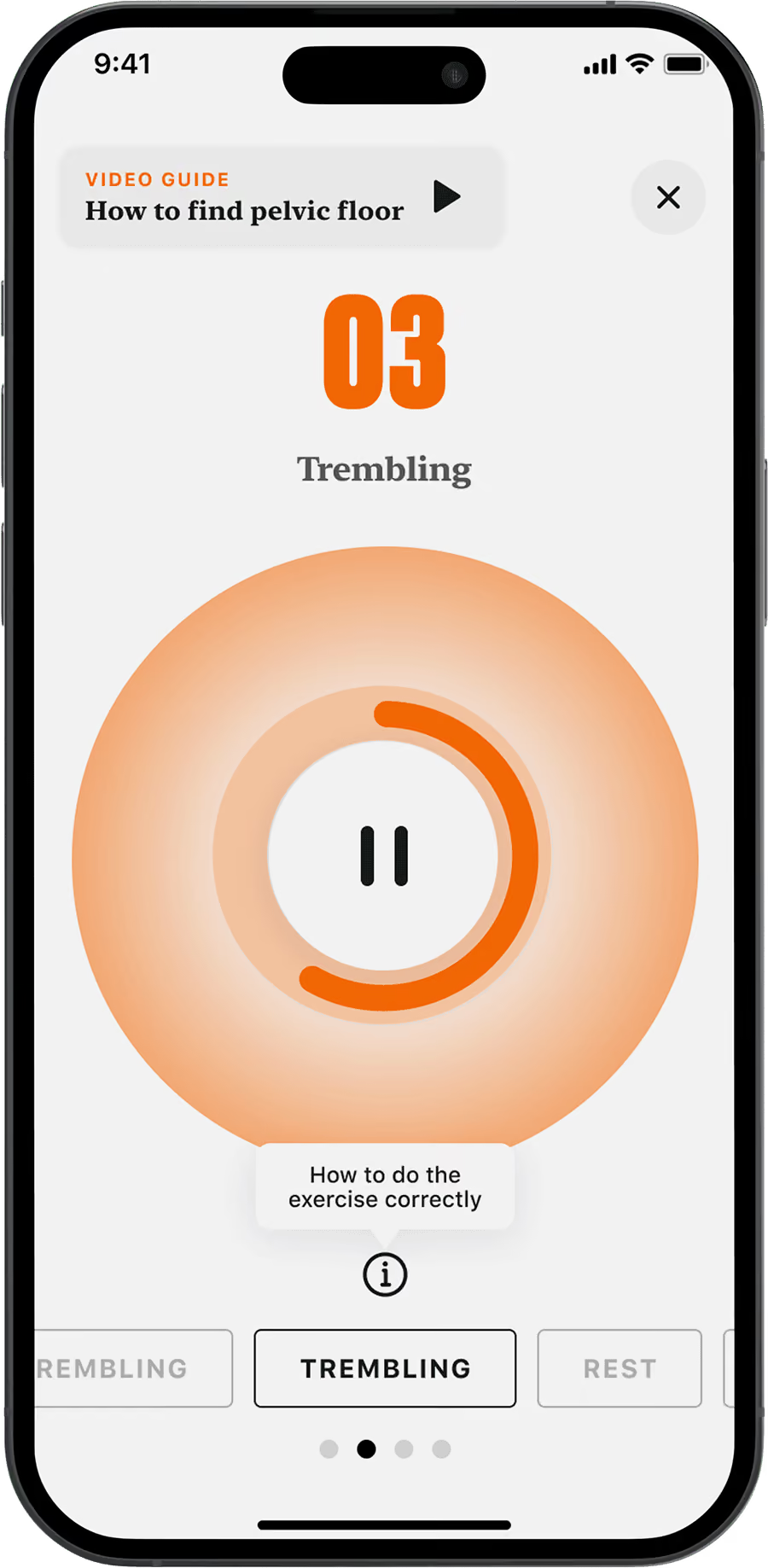
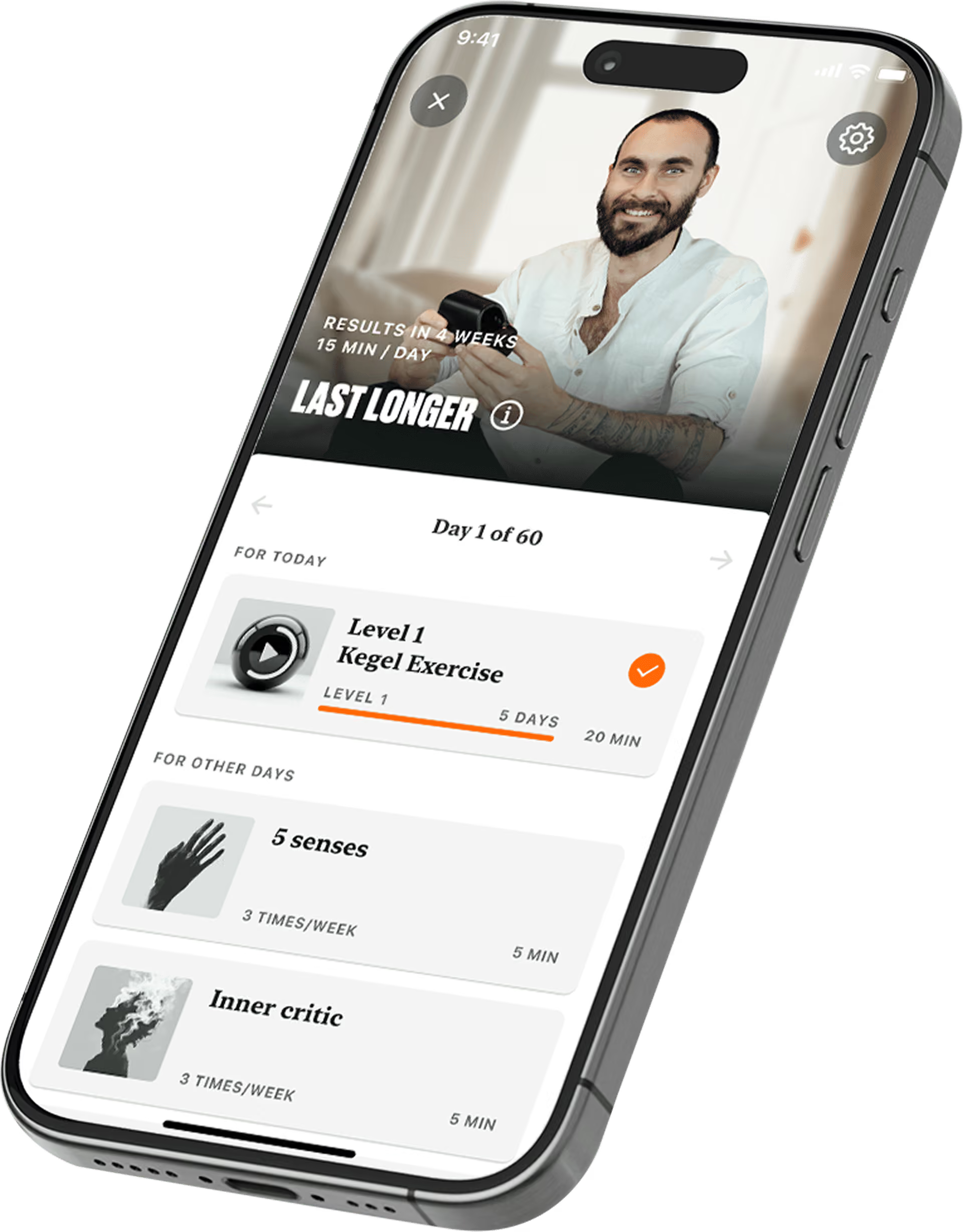
Guided belly breathing and muscle release daily, the six-week Kegel program with audio and reminders, and the first solo sessions at arousal levels four to six, three evenings a week. You do the sessions alone and slowly, saying your level out loud.
Step 03
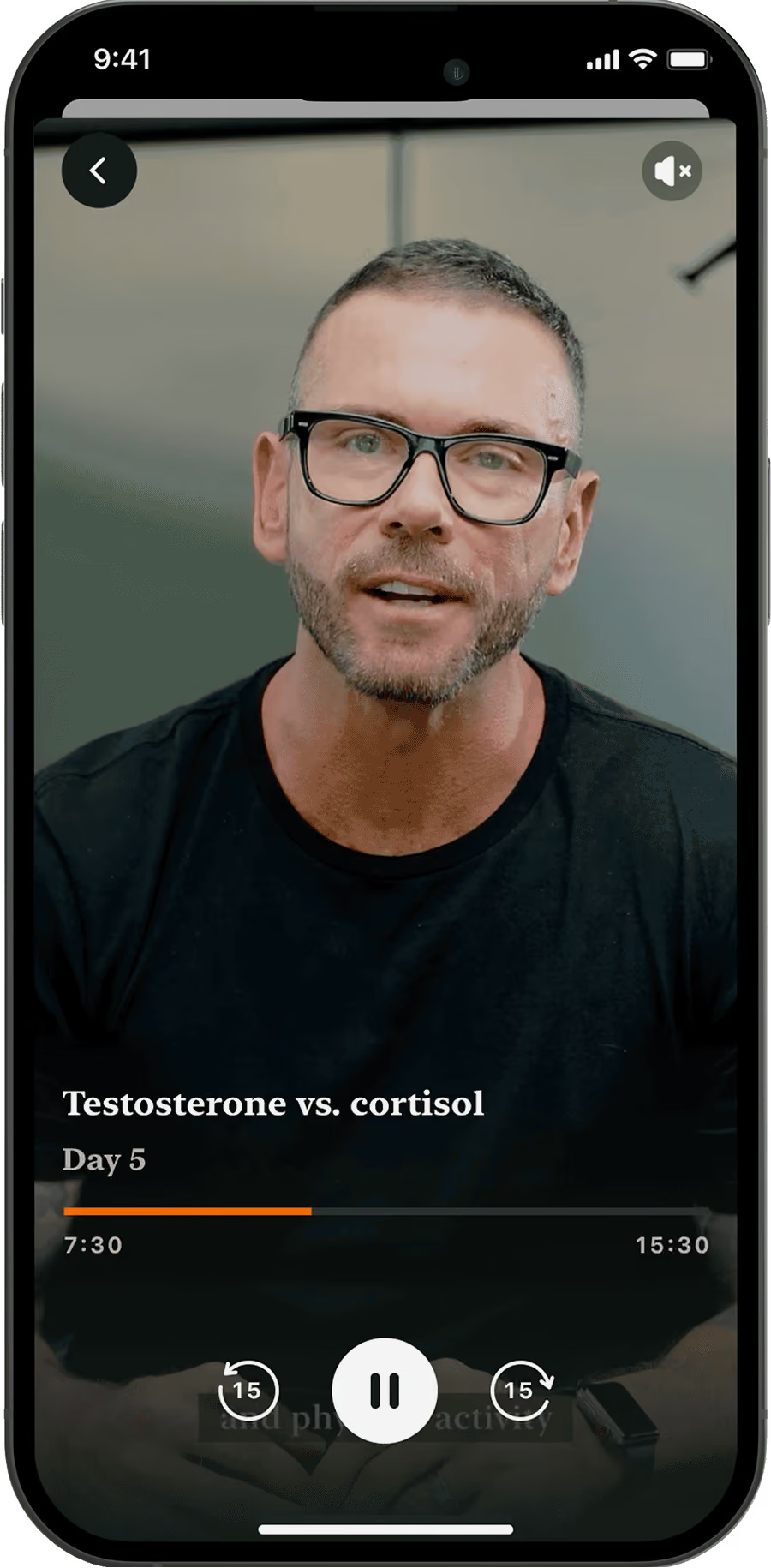
In weeks three and four you go to nine on purpose and train the mental tools alongside. From there the holds get longer, and the last stage adds your partner’s touch, once you can tell your level without effort.
Answer a short questionnaire to find your starting point and get your personal plan.
Practicing alone gives you time to notice changes in arousal and try ways to slow down.
Breathing exercises to last longer in bed appear on most lists, but the lists rarely say how long or how often to do them. Short, shallow breathing from the chest is the signal that tells your nervous system a threat has arrived, and the ejaculation reflex is driven by that stress response. A long exhale signals the opposite. Three techniques are worth learning, and each has its own length, frequency and best moment.
Sit with the knees bent, one hand on the chest, the other just under the ribs. In slowly through the nose so the lower hand rises and the upper hand stays still; out through pursed lips, drawing the stomach in. Five minutes, three times a day, from the first day of training. It won’t help much in bed until it has become routine at a desk.
In for a count of four, hold for four, out through the mouth for four, hold for four, and repeat until you feel re-centered. It’s the tool for the minutes before sex, or for an evening when the worry starts early: two or three minutes of it calms your nervous system before you begin.
As arousal rises, inhale naturally and let the exhale run for at least six seconds; slightly longer when you’re close. Keep the pelvic floor neutral and the thighs, abs and jaw soft. Nobody can see it, nothing pauses, and below eight it is the move that lowers the number. Above eight it stops working, which is why the scale matters more than the breath.
Chest breathing, which is the threat signal itself. Holding the breath at high arousal, which is what the body does on its own at nine. Forcing or rushing the rhythm. And stopping after one or two breaths: the breath needs a steady rhythm, so keep going until you feel more in control.
Breathing is one part of the twenty-minute session and won’t solve everything on its own. For the full set of drills, in order, see our guide to how to last longer in bed; to see which exercises train the muscle, which train calm and which help you read your level, see our guide to exercises to last longer in bed.
The program helps you choose what to practice and when to move on. Answer a few questions to get your plan.
From a survey of The Coach users after their first four weeks with the app:
Reviews from men using the program.
“I have known all these exercises for a while but I was not able to stay consistent for a long time. I like that the app is engaging and makes you keep coming back to do your workouts. I also like that includes breathing exercises and psychological aspects as well. So it is all in one.”
“I was skeptical on how the exercises would help. I had tried pills to go longer and they had no impact. The exercises and practices in my path have been great to enable my body to learn how to control itself in the moment. Highly recommend as an alternative!”
“Have been taking these Kegel Exercises for a good three weeks. Superb results from this and the arousal control advice. Intercourse with my wife has gone from about 30 secs to 2 mins. Big thumbs up 👍”
“I was a skeptic at first, but 2 weeks in my wife told me to stop using the app because I’m lasting too long and her p***** raw. Well done The Coach! Also - not stopping Highly recommend it.”
Start with guided sessions on your own, then try what you have learned with a partner.
We built every program with clinical researchers, certified sex therapists and medical professionals, including practicing urologists.
Dr. Justin Houman
MD, UCLA-trained urologist and male reproductive specialist focusing on sexual health.
Dr. Susie Gronski
Licensed physical therapist, certified sexuality counselor, and founder of a men’s pelvic health clinic.
Cameron Fraser
Australia’s leading men’s sex coach, specializing in male sexual wellness and performance.
Dr. Amy Pearlman
Board-certified urologist specializing in male sexual wellness, performance, and hormonal health.
Gerard Greene
Specialist men’s health physiotherapist and senior lecturer at Coventry University.
Natalie Goldberg
Certified sex and family therapist dedicated to improving intimate relationships and personal well-being.
Dr. Paula Hall
Accredited sexual and relationship psychotherapist, registered with leading professional bodies in psychotherapy.
Dr. Justin Lehmiller
PhD in social psychology and senior research fellow at the Kinsey Institute.
Yes, and mostly on your own. If you’re asking “How do I train myself to last longer in bed?”, start with one fact: finishing sooner than you meant to is a reflex that fires at a level of arousal you can learn to read. Learning how to train yourself to last longer in bed comes down to two skills: reading that level earlier and having a rehearsed response for each level. You learn both alone before you use them with anyone. What is harder alone is deciding how hard to train on a given evening and keeping the sessions going after the first weeks; that is where a program helps.
About two months of steady sessions for the whole thing, in stages. Learning the scale takes about two weeks, three evenings a week, before you can call a six out loud and be right. In weeks three and four you go to nine on purpose, with the mental tools alongside. From week five the targets stretch: holding a lower level for up to a minute without climbing, then holding eight to nine for up to three minutes, then moving up and down the scale while your partner provides the stimulation. These are targets, not promises, and your own pace may differ.
Neither, and most of the training to last longer in bed is solo by design. The first steps are done alone, away from sex: breathing, the muscle work, the scale. The arousal sessions stay solo for most of the plan, because a night together moves too fast to learn from. Training to last longer with a partner starts with things she won’t notice, such as a longer exhale, a soft jaw or a pause that feels like a change of pace; practice with her touch comes last. No device, no sensor, nothing to insert; the only tool is the scale in your head.
What usually gets called premature ejaculation meditation is a general practice: a few minutes of sitting still, in the hope that the calm carries over to sex. Meditation for premature ejaculation is more useful when it has a specific target: a body scan that finds the tension you carry into sex, a short reflection that names the thoughts that arrive before sex, and urge surfing done at a six, when you are actually aroused. That is mindfulness tied to your arousal level, and it’s trained inside the sessions rather than instead of them.
Your number on the scale, and one question about it: am I at a seven or an eight? Below eight, breathe and let the thighs go; at nine, one pelvic-floor contraction. That question keeps you focused on your level, which is where the old advice fails: thinking about something else pulls your attention away from the sex without giving you more control. If your attention needs somewhere to go, widen it rather than leave: her skin, her breath, the sounds around you.
No. Breathing techniques for premature ejaculation keep your nervous system in its calm mode, which does most of the work below eight and very little at nine. At nine the breath stops working and a pelvic-floor contraction takes over, and that muscle needs at least six weeks of training of its own. Knowing how to breathe during sex to last longer is the easy half: one long exhale, invisible, from the first minute. The hard half is having done it enough times, in everyday life and then in a session, that you do it without thinking.
By scoring the week, not the night. Timing swings with stress, fatigue, how aroused you were before you started and how she moves, so grading each evening makes normal variation look like failure. The way to practice lasting longer in bed is a set of habits: two or three minutes of slow breathing before sex, a check-in first (already aroused? stressed? tired?), a cooldown from nine to six instead of a crash to two, and the solo sessions kept up so you keep learning your own patterns. Control comes from those habits, not from how you feel on the night.
The material is the same; the job is different. The exercises are the parts; the session puts them in order for a given evening and level, and afterwards you can see whether they worked. Our guide to exercises to last longer in bed sorts them into those that train the muscle and those that train calm. For how to adjust the same exercises for premature ejaculation, including where Kegels fit, see our guide to premature ejaculation exercises.
It’s a doctor’s question first when finishing early started suddenly after years without it, when there is pain, when erections or general health shifted at the same time, or when you haven’t had a prostate check-up lately; the prostate sits on the muscles this training uses, and trouble there can affect control early. Check-up first, sessions after. Medication belongs in that same conversation; we don’t work with it. For what the condition is, see our guide to premature ejaculation.
The Last Longer program: about two months of training to last longer, mostly done on your own. It includes the ten-point scale, taught away from sex; guided belly breathing and muscle release; the six-week Kegel program with daily audio and reminders; solo arousal practice three evenings a week, with a target level for each stage; the mental tools; and, in the final weeks, exercises with your partner.
At the top of the scale, and not before week three. Squeezing the head of the penis is an emergency stop at nine: useful in the moment, but it teaches you little if you use it earlier. How to do it is explained in our guide to the squeeze technique. Edging is the top of the session: climbing to eight or nine and holding there without going over. Where that edge sits is explained in our guide to what edging is and how to do it.