Step 01
Answer the questions
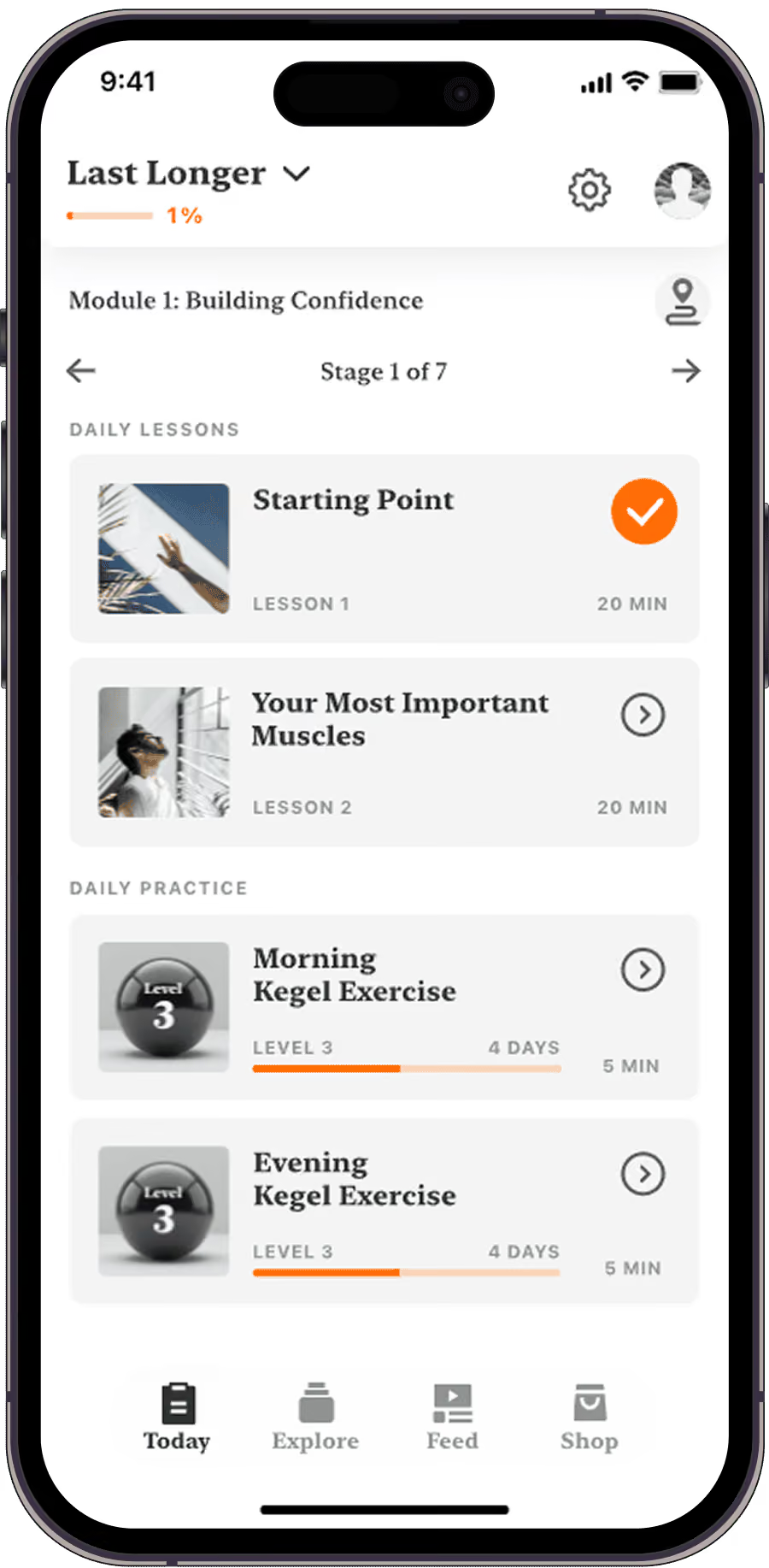
A short questionnaire about your situation, and you get back a daily plan rather than a list of drills: what this week works on and what today’s session is.

The squeeze technique and stop-start are two ways to practice delaying ejaculation.Both involve pausing stimulation before orgasm. This guide explains their differences and how noticing your arousal can help you decide when to pause. The Last Longer program in The Coach app brings these skills into a guided practice routine.
Answer a few questionsThe squeeze technique, also called the squeeze method, fits in one line: firmly squeeze the head of the penis when the urge hits. The classic version is more specific: squeeze the head for fifteen seconds, two or three times. You will also see it called the pause squeeze technique, or the stop squeeze technique, or Masters and Johnson’s squeeze; all of them mean the same grip.
There is a second form, and it matters more than the first. Instead of the head of the penis, you squeeze the pelvic floor, the muscle you use to stop the flow when you pee. The classic hold is ten to fifteen seconds. The version we teach is stricter and shorter: stop stimulation, exhale fully, then at the peak of the urge make one strong, controlled contraction, hold it one to two seconds, and let go completely so arousal can fall. The two holds are different moves, so keep them apart.
Both are simple, which is why most advice stops at the grip. Whether it helps depends on when you use it, and that depends on how aroused you are on the ten-point scale.
The start stop method is the drill that builds control, and a session goes like this. Alone, unhurried: stimulate until you reach level four or five on the ten-point arousal scale. Then slow down, relax your muscles, breathe deeply and open your eyes wide, which pulls your attention out of the narrow focus that high arousal creates. Notice which muscles let go. Come back down to two. Go up again, stop at six, back down to two. Go up to eight; eight is a risky level, so take your time and cool down. Repeat five to ten times, which puts the session at about twenty minutes. Longer sessions are fine if you have the time.
Cadence: three times a week, for two weeks. Then the drill gets harder: instead of climbing and dropping, you plateau, holding level five or six steady for twenty to thirty seconds and building that to two or three minutes. Same three sessions a week, another two weeks.
One rule applies throughout: no porn while you train solo. Fast, high-intensity stimulation trains exactly the habit you’re trying to undo.
With a partner, the drill stays the same: your partner does the stimulating and stops or starts the moment you say so. Twenty minutes minimum, three times a week, for two weeks. If finishing early happens every time, has lasted months, or came with another health change, see a doctor before you start.
Every drill here depends on knowing how aroused you are. Here is the scale we use, what each band feels like, and which of the two drills belongs there.
Control works in two stages. Below level eight you hold on with breathing, relaxation and knowing where you are. Above level eight there is one tool left, a strong pelvic-floor contraction, and it works only if that muscle has been trained. That is why stop-start and the squeeze technique are not interchangeable.
Stop-start does the training: it keeps you between four and eight and teaches you to tell six from seven, which is the core skill. And the squeeze is the brake. You pull a brake rarely, late, and with intent. If you squeeze five times a session, you’re not training control, just stopping in a rush again and again.
You now have both protocols, and you can start stop-start tonight without us. What a written protocol can’t give you is practice at telling seven from eight, even on the third session of a bad week. That skill takes about two months to build, and it is practiced like any other.
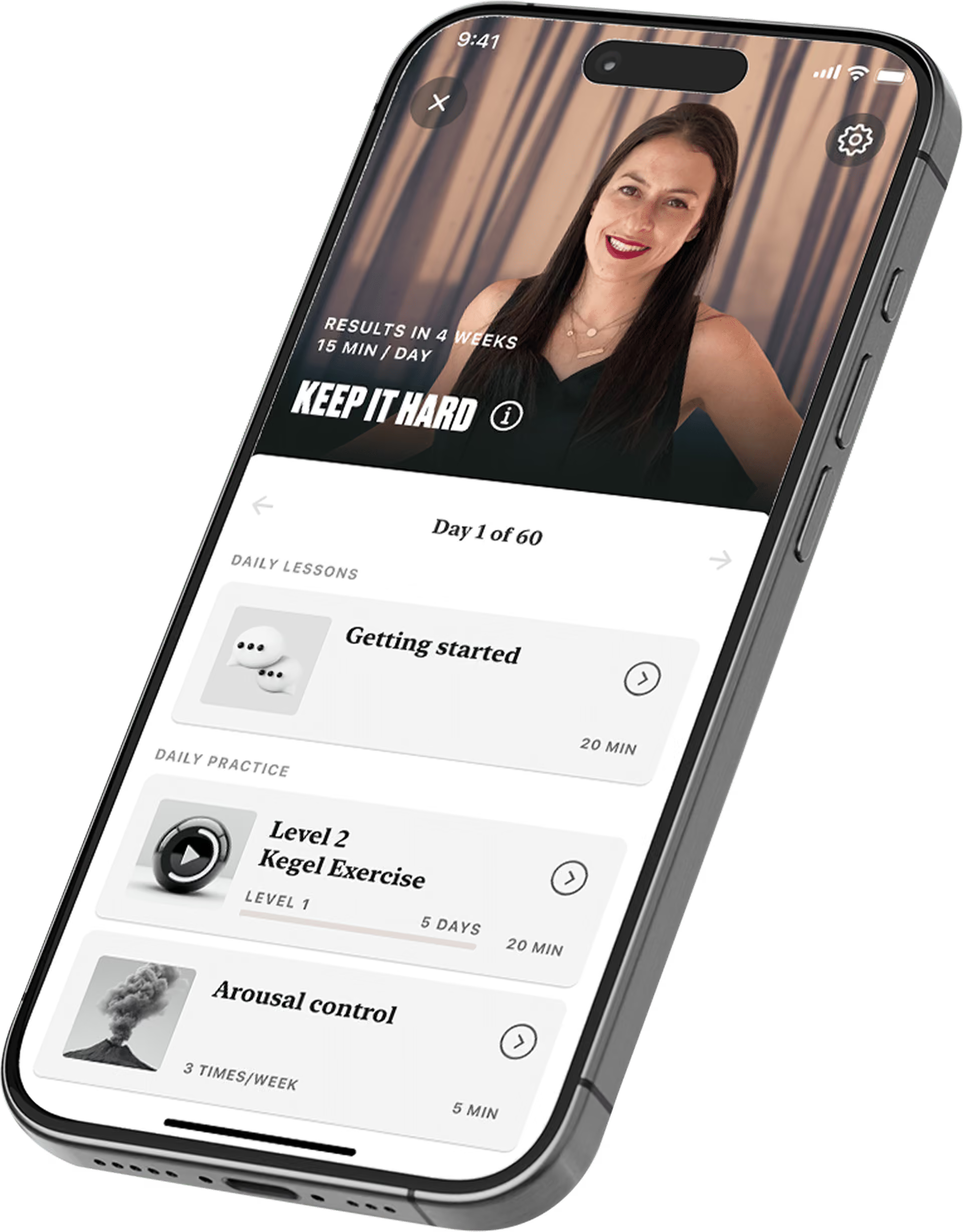
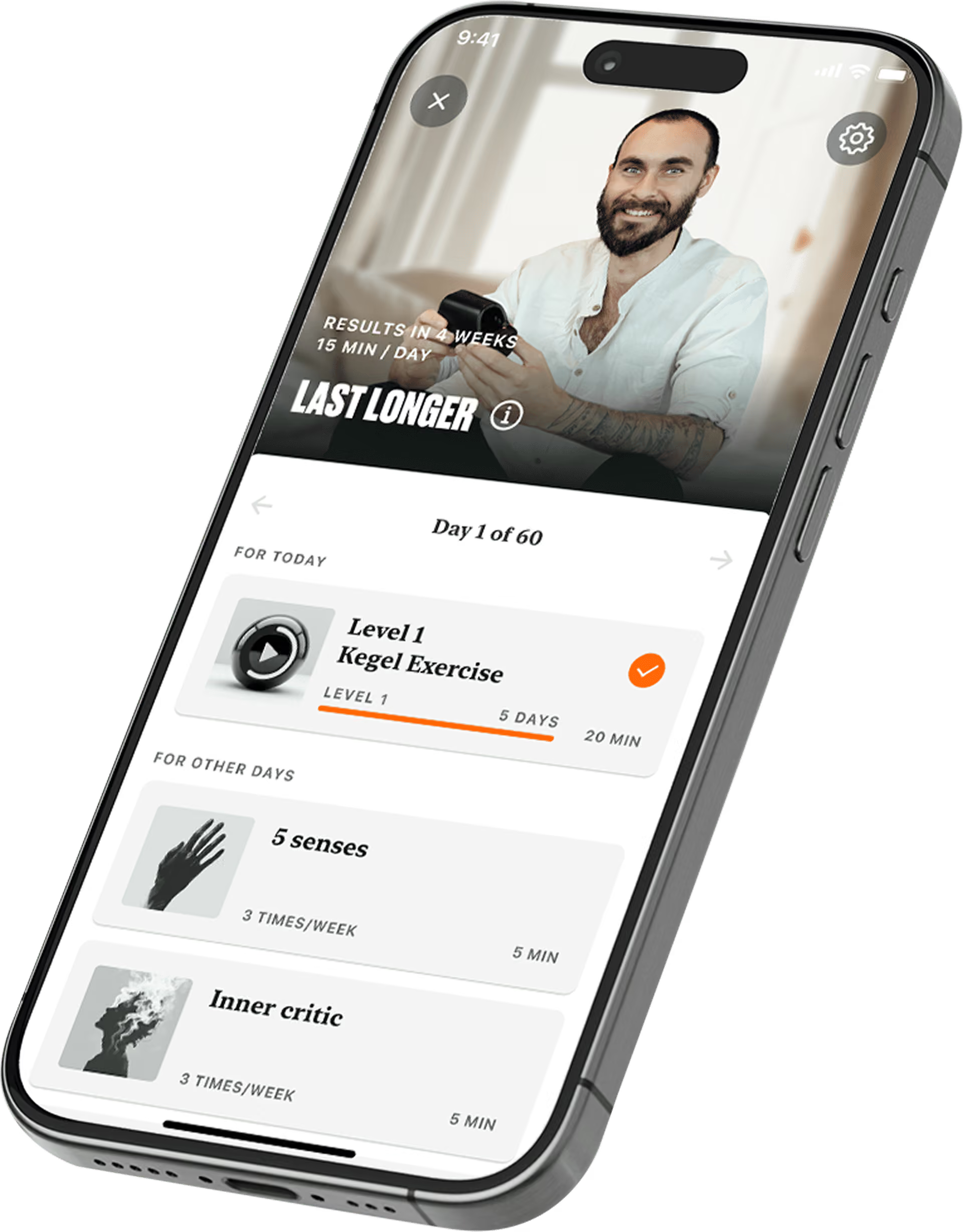
Start with a short questionnaire, then follow eight weeks of guided practice in arousal awareness, breathing, relaxation and pelvic floor coordination.
Step 01
A short questionnaire about your situation, and you get back a daily plan rather than a list of drills: what this week works on and what today’s session is.
Step 02
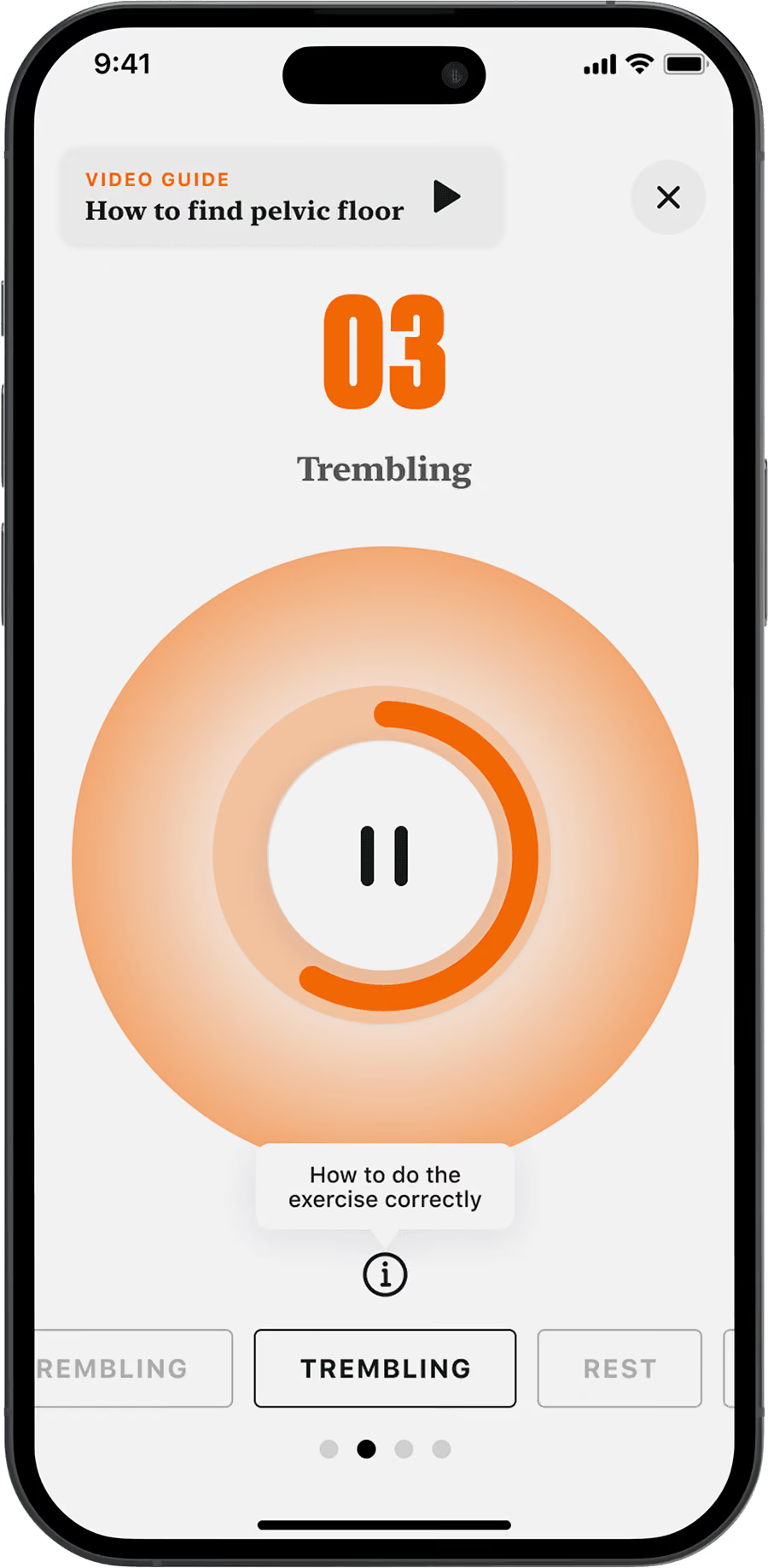
The plan keeps most sessions between levels six and eight, where breathing and relaxation still bring arousal down. Three sessions a week, about twenty minutes each.
Step 03
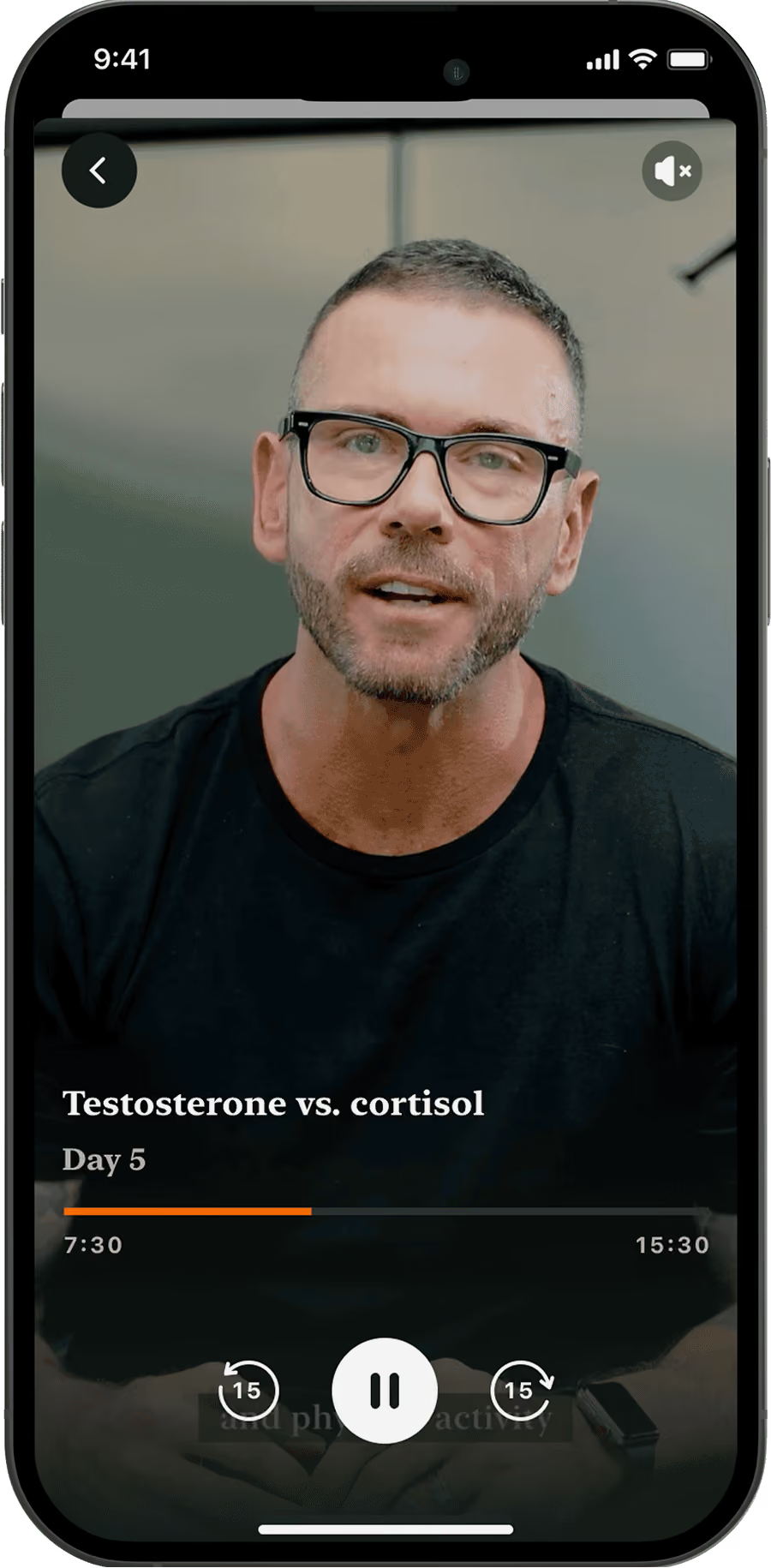
The squeeze at nine only works if your pelvic-floor muscle is strong, so the app includes a six-week Kegel program with guided audio, about ten minutes a day.
The eight-week plan organizes your practice into daily sessions. Take the quiz to find your starting point.
Pay attention to comfort and avoid repeated or excessive squeezing.
Getting the timing wrong is the mistake everyone can picture. Two others cost more: squeezing too often, and relying on a muscle you haven’t trained.
Squeeze too early and you’re still close to the edge when you let go; squeeze too late and the reflex has already started, so there’s nothing left to interrupt. Either way, the cause is the same: not knowing which level you’re at.
A squeeze isn’t a treatment, and neither is a schedule. What training changes is how early you notice, how long you can hold a range, and how rarely you reach for the brake at all. If finishing early happens every time, has gone on for months, or started alongside another health change, see a doctor before you start an eight-week plan.
Reach for it every session and it stops being a brake. The cost is specific: pelvic tension, muscles that tire early, and a quicker ejaculatory reflex, which is exactly the problem you’re working on.
The squeeze at nine relies on your pelvic-floor muscle, so that muscle has to be trained first. The in-app Kegel program runs six weeks at about ten minutes a day, and six out of ten men report a significant improvement after those six weeks, a figure about the muscle, not a promise about your timing.
Solo sessions take about twenty minutes, with instructions for each stage of practice.
From a survey of The Coach users after their first four weeks with the app:
Reviews left by men using the program, from the App Store and Google Play.
“55 yo. After months of being dubious about this app and what it promises, I took a chance on it based on the reviews. Am I ever glad I did! In just two weeks I’ve gone from ‘goodness you finished already? 🥲’ to ‘please finish baby I’m exhausted 🥵’ 🤣👍🏼”
“I was skeptical on how the exercises would help. I had tried pills to go longer and they had no impact. The exercises and practices in my path have been great to enable my body to learn how to control itself in the moment. Highly recommend as an alternative!”
“I was a skeptic at first, but 2 weeks in my wife told me to stop using the app because I’m lasting too long and her p***** raw. Well done The Coach! Also - not stopping Highly recommend it.”
“Have been taking these Kegel Exercises for a good three weeks. Superb results from this and the arousal control advice. Intercourse with my wife has gone from about 30 secs to 2 mins. Big thumbs up 👍”
The quiz sets up your first session.
We built every program with urologists, pelvic-health physiotherapists and therapists who work in sexual health.
Dr. Justin Houman
MD, UCLA-trained urologist and male reproductive specialist focusing on sexual health.
Dr. Susie Gronski
Licensed physical therapist, certified sexuality counselor, and founder of a men's pelvic health clinic.
Cameron Fraser
Australia's leading men's sex coach, specializing in male sexual wellness and performance.
Dr. Amy Pearlman
Board-certified urologist specializing in male sexual wellness, performance, and hormonal health.
Gerard Greene
Specialist men's health physiotherapist and senior lecturer at Coventry University.
Natalie Goldberg
Certified sex and family therapist dedicated to improving intimate relationships and personal well-being.
Dr. Paula Hall
Accredited sexual and relationship psychotherapist, registered with leading professional bodies in psychotherapy.
Dr. Justin Lehmiller
PhD in social psychology and senior research fellow at the Kinsey Institute.
A grip, and a short one. When the urge to finish arrives you squeeze the head of the penis (the classic version says fifteen seconds, two or three times) until the urge passes, then carry on. A second form squeezes the pelvic floor instead, briefly, at the last moment. Both interrupt a reflex that has already started climbing, which is why they count as short-term tools rather than training.
No equipment. The first weeks are deliberately solo: that is where the scale gets learned, and it’s easier to tell where you are on the scale without a partner setting the pace. The same drills come later with a partner.
In the moment, yes: that’s what an interrupt does. Over months it changes nothing. It works like a thicker condom or a delay spray: useful in the moment, but it trains nothing. Used often it costs you something: tension, fatigue, and a faster reflex than you started with.
Both, at different levels, and mostly the second one. Stop-start is where the training happens: three sessions a week for two weeks, about twenty minutes each, climbing and descending between levels two and eight. The squeeze is held in reserve for level nine. If you need it more than once in a session, you’re letting arousal climb too high before you stop.
Not one worth looking for, and here’s why: there’s nothing anatomical to find. The grip is the head of the penis, thumb on the underside where the ridge meets the shaft, firmly, but no harder than you need to. What a diagram can’t draw is the only difficult part: the moment you use it. That moment is a level on the ten-point arousal scale, not a spot on the body.
The Last Longer program, week by week: the arousal scale and how to read it, the solo practice with a target level for each stage, guided breathing and relaxation sessions, and a six-week Kegel program with reminders and daily guided audio. About two months of practice.