Step 01
A minute of questions
A short questionnaire about your situation comes first, and your answers shape your personal plan.

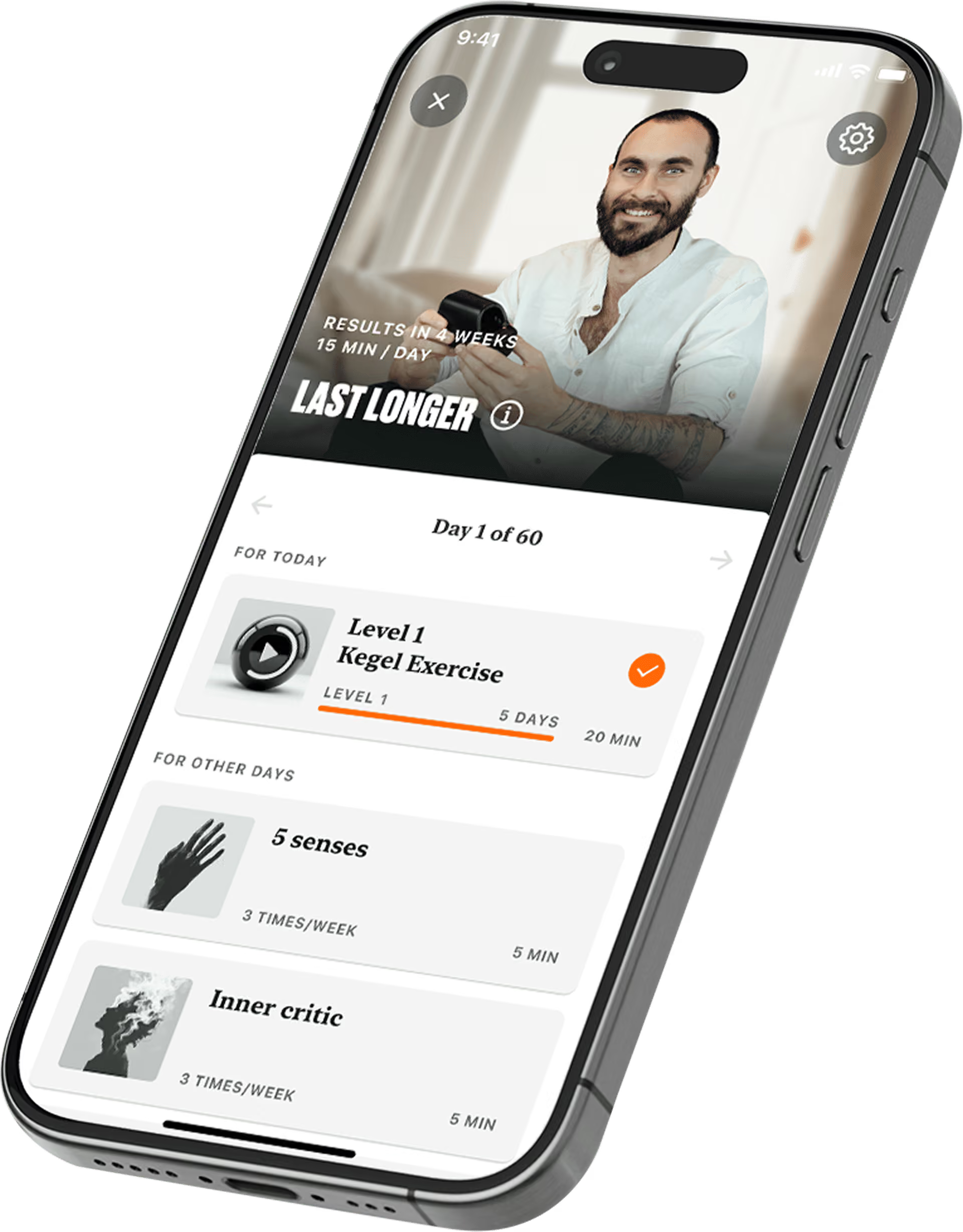
In the last few seconds before you come, your body takes over. Ejaculation is a reflex, and there’s a narrow window just before it starts. That window is the edge, and edging means climbing to it on purpose, holding there, and coming back down without going over. The usual definition (stop before you finish) describes the behavior. The skill is knowing where the line is while you’re still on the safe side of it. The Last Longer program in The Coach app brings these skills into a guided practice routine.
Get my planEdging is the practice of building arousal to just below the point where ejaculation becomes involuntary, holding it there, then letting it fall, and repeating that as many times as you choose. On your own, it’s a training drill; with a partner, it’s a way to make sex last longer without stopping. That’s the edging meaning you’ll find everywhere, and it’s true as far as it goes.
What it leaves out is where the edge is. Ejaculation is a reflex. Learning to notice the sensations that come before it can help you recognize when to slow down. Before it starts, you still control your pelvic floor. Once it starts, the pelvic muscles contract on their own, the testicles draw up, you tend to hold your breath, and the ending is already decided. The edge is the stretch just before that point. Sexual edging means staying there deliberately instead of arriving there by accident.
When people search “what is edging in bedroom”, they usually mean the version with a partner. In training, that version comes second, for a practical reason: you can’t steer a level you’ve never measured, and measuring it takes the kind of attention you only have on your own.
Edging techniques are ways of getting to that point and back down.
Edging runs on a ten-point arousal scale, and the first job is knowing your number at any moment. Edging training is really arousal training: most of each session is spent between six and eight, and the line that matters most is the one between seven and eight.
Most edging guides start at the edge. If you want to know how to do edging in a way that trains something, start lower, at a level where almost nothing is happening. And start solo. Learning how to edge yourself takes up the first two weeks, because with a partner you’re managing two nervous systems before you’ve learned to manage one.
Those are the edging instructions. No edging tutorial can teach the harder half: knowing, in the moment, which number you’re at. That comes from repetition, and the app’s daily plan is built around it: the day’s session is already picked, and the breathing and the body scan run as guided audio, so you’re not reading while you practice.
The steps are straightforward, but recognizing your own arousal takes practice. The plan provides daily sessions and audio guidance to help you build that awareness.
Breathing and relaxation run out above eight. Above that, arousal climbs faster than a breath can bring it down. There’s exactly one physical move that works at nine, and using it anywhere else makes things worse.
It’s a pelvic floor contraction: a hard, deliberate one, of the same muscle you’d use to stop yourself mid-stream. The sequence has four steps. Stop the stimulation. Exhale all the way out. At the peak of the urge, contract strongly. Hold it for one to two seconds, then release completely and let the arousal fall. The point is the timing, not holding the squeeze.
And it fails in both directions. Contract too early and you stay at the edge with a tense pelvic floor, which keeps you near the line instead of moving you off it. Contract too late and the reflex has already started; there’s nothing left to interrupt. Once men learn the squeeze, they tend to overuse it, and that has a cost: pelvic tension, early fatigue, and a reflex that gets faster rather than slower. Save the strong contraction for level nine and nothing below it. If the squeeze itself hurts, stop, and if the pain keeps coming back, see a doctor before you carry on.
It only works if the muscle can do it. If you can’t hold a contraction for two seconds at that level of arousal, it won’t stop anything, which is why kegel exercises start before the edge work. Six out of ten men report a significant improvement after six weeks of Kegel practice, and the Kegel track in the app is built to exactly that length: ten minutes a day, guided, with a reminder.
The Last Longer program in The Coach app spends its first weeks on reading your arousal, breathing and the pelvic floor, then introduces more focused arousal practice.
Step 01
A short questionnaire about your situation comes first, and your answers shape your personal plan.
Step 02
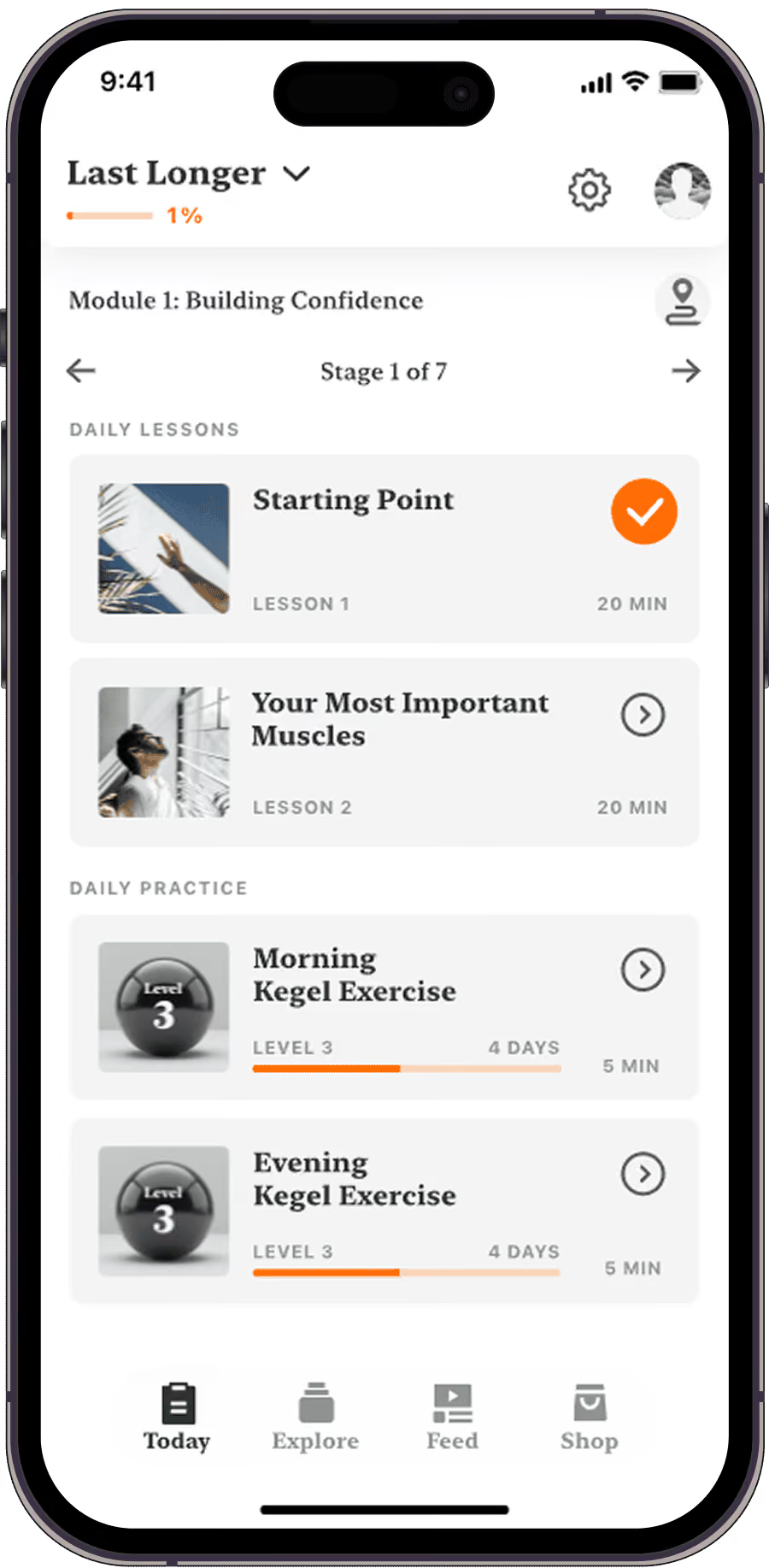
The daily plan names what you’re doing today: the arousal practice, guided breathing, a body scan, a progressive relaxation track. A full edging session runs about twenty minutes; the built-in Kegel track is ten a day, guided, with reminders.
Step 03
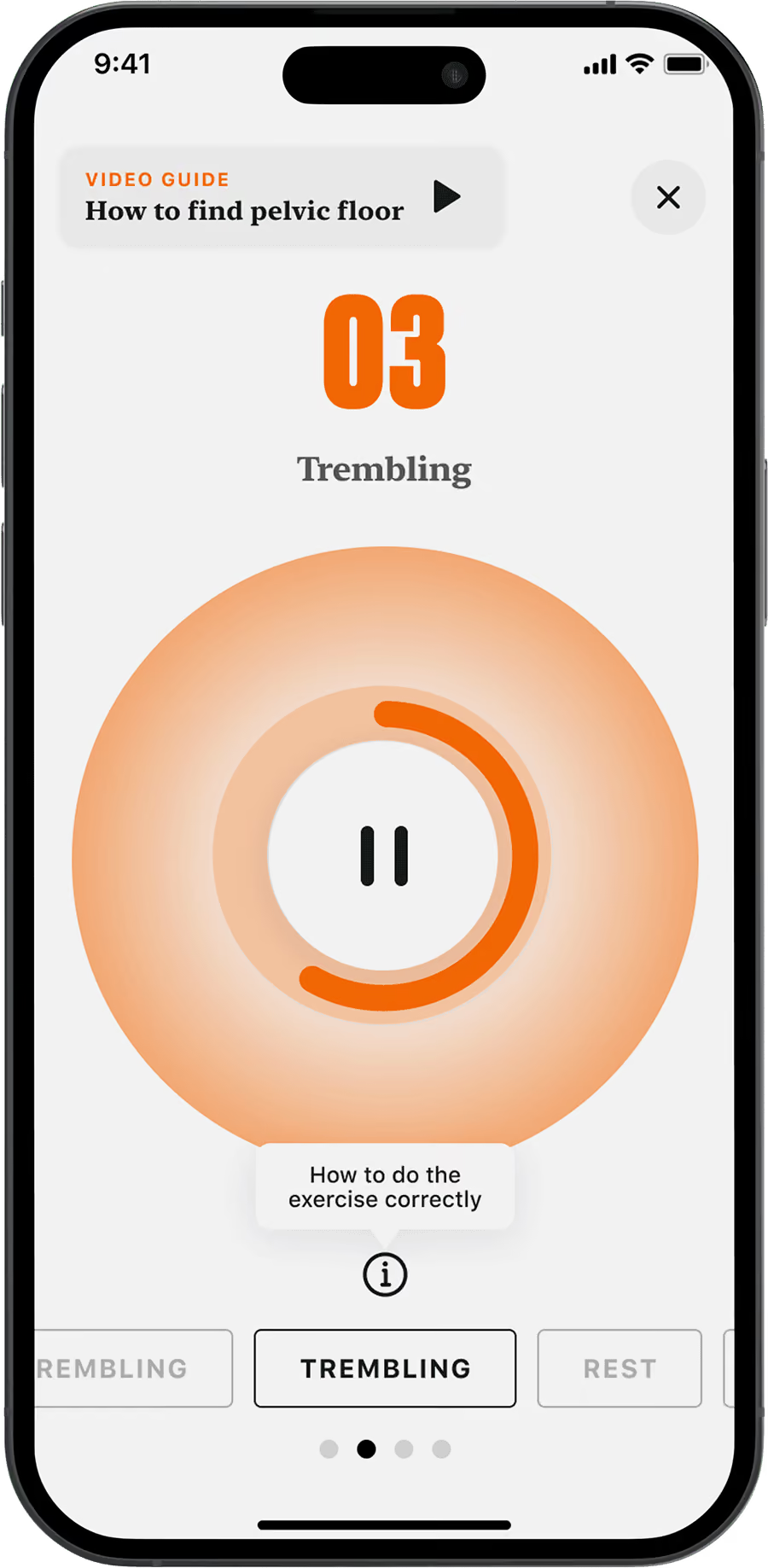
Weeks one and two build the scale and the muscle. In week three you go to level nine of the arousal scale on purpose and learn to come back from it. The partnered goals come last (receiving stimulation, then penetration), the reverse of the order it’s usually tried in.
Answer a few questions to find your starting point and get a plan with daily guided sessions.
Practice noticing your arousal before the urge to ejaculate becomes intense.
Most edging tips are about the moment when it’s already too late. These four are about the minutes before it.
Willpower asks you to try harder at the one moment you can’t assess. A scale asks you a question you can actually answer: seven or eight? You only have to be right within one number, and that’s a skill you can drill.
At level nine the only thing that still works is a trained pelvic floor contraction, and a muscle answers to reps, not to trying harder.
Going up happens on its own. Getting from eight back down to six without losing the erection is a separate skill, and it’s the one the drill is built to train. Without practice, the descent is usually a crash.
Every rep happens alone, at a level you chose, with nothing riding on it. That’s why the response is still there on a night when something is riding on it: the body isn’t learning it for the first time under pressure.
“Does edging work?” is a fair question, and the answer has two parts. As a one-night trick, barely: arousal you’ve never measured is arousal you can’t steer, and a man trying this for the first time during sex is usually already at eight by the time he starts paying attention. As training, it’s the core of the work. Every rep of going up and coming back down teaches the body that high arousal doesn’t automatically mean the end, and a body learns that the way it learns anything: repetition, on a schedule, past the point where it’s interesting.
If you keep at it, three things tend to change, roughly in this order. Sensitivity settles (the technical term is sensory adaptation), which is why men who train with a lighter grip and a slower rhythm stop believing they were built wrong. Recovery speeds up, so a spike at eight becomes something you handle rather than something that ends the evening. And the top of the range opens: by week six the target is holding levels eight and nine for up to three minutes, a long way from where you start. That’s also the answer to “does edging help build endurance?”: here, endurance is a trained skill, and edging is the drill that trains it.
Edging sex, the partnered version, asks something different of you. You’re managing your own level while someone else sets the pace, so the tools have to be invisible: longer exhales, a softened jaw, a pelvic floor kept neutral instead of clenched. We call that the silent control technique, and it starts in week one, alongside the solo drills, because in bed you can’t stop and start at will.
Edging for men has one hard limit, the point of no return: everything before it can be trained, and nothing after it can. And it doesn’t treat anything.
That’s as far as the claim goes. It doesn’t touch the reasons arousal is running hot in the first place: stress, sleep, a habit built around porn, or something physical. And trained badly it works against you: overusing the contraction produces the hair-trigger reflex it was meant to slow, and going to nine every session trains panic.
If you have pain, a sudden change in your erections, or new discomfort around your prostate, see a doctor before you go on training.
From a survey of The Coach users after their first four weeks with the app:
From The Coach’s reviews, typos and emojis left in:
“Have been taking these Kegel Exercises for a good three weeks. Superb results from this and the arousal control advice. Intercourse with my wife has gone from about 30 secs to 2 mins. Big thumbs up 👍”
“55 yo. After months of being dubious about this app and what it promises, I took a chance on it based on the reviews. Am I ever glad I did! In just two weeks I’ve gone from ‘goodness you finished already? 🥲’ to ‘please finish baby I’m exhausted 🥵’ 🤣👍🏼”
“I was skeptical on how the exercises would help. I had tried pills to go longer and they had no impact. The exercises and practices in my path have been great to enable my body to learn how to control itself in the moment. Highly recommend as an alternative!”
“I was a skeptic at first, but 2 weeks in my wife told me to stop using the app because I’m lasting too long and her p***** raw. Well done The Coach! Also - not stopping Highly recommend it.”
The eight-week program combines arousal practice, breathing, relaxation and pelvic floor exercises. The quiz helps you find your starting point.
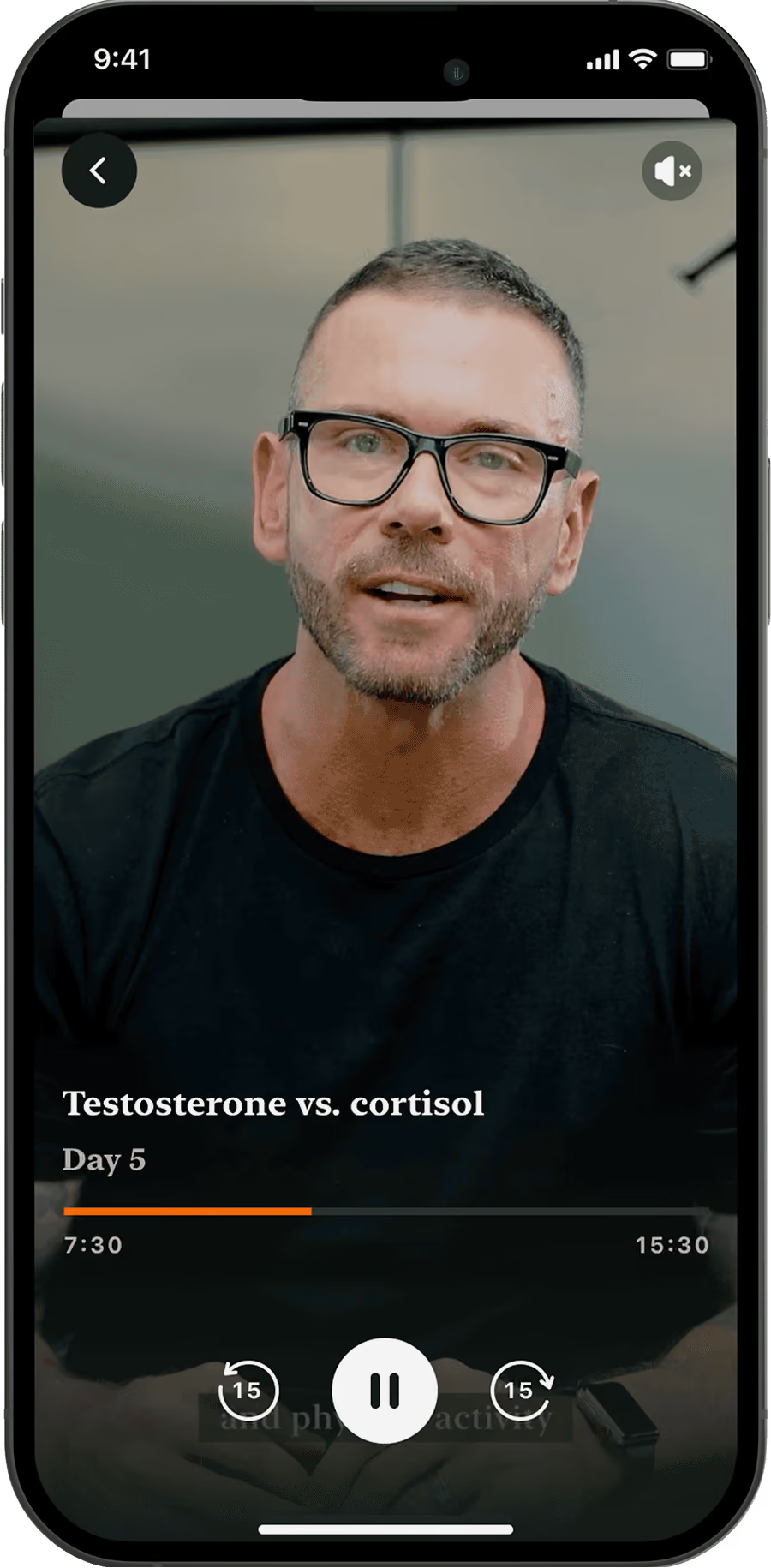
Every program is built with them: researchers, therapists, physicians and specialists from across men’s health. None of it replaces seeing one of them; it’s the training part, the part you do at home.
Dr. Justin Houman
MD, UCLA-trained urologist and male reproductive specialist focusing on sexual health.
Dr. Susie Gronski
Licensed physical therapist, certified sexuality counselor, and founder of a men's pelvic health clinic.
Cameron Fraser
Australia's leading men's sex coach, specializing in male sexual wellness and performance.
Dr. Amy Pearlman
Board-certified urologist specializing in male sexual wellness, performance, and hormonal health.
Gerard Greene
Specialist men's health physiotherapist and senior lecturer at Coventry University.
Natalie Goldberg
Certified sex and family therapist dedicated to improving intimate relationships and personal well-being.
Dr. Paula Hall
Accredited sexual and relationship psychotherapist, registered with leading professional bodies in psychotherapy.
Dr. Justin Lehmiller
PhD in social psychology and senior research fellow at the Kinsey Institute.
Same mechanism, different difficulty. Solo you control the stimulation, so you can stop at exactly the level you meant to stop at. During sex you’re reacting to someone else’s rhythm, which is why sex edging can go wrong even for men who’ve practiced alone: arousal climbs faster than they can decide what to do. That’s why the drills stay solo for the first weeks, with one partner-safe tool from week one: slow exhales and a deliberately relaxed pelvic floor, invisible from the outside.
Long enough for five to ten rounds, about twenty minutes for a solo session. Holding a single level is measured in seconds at first: twenty to thirty, growing to two or three minutes when the drop back down has stopped being a gamble. The hour-long numbers that get quoted aren’t a target and aren’t a fitness test. What counts is time spent in control, not time before ejaculation, and a short session that stayed steerable throughout beats a long one spent at nine.
It’s the central skill the whole training is built on. We see finishing sooner than you want as something the body learned (arousal nobody ever taught you to measure, and a pelvic floor nobody ever asked you to train), and things the body learned can be retrained. So yes, this is the work. It trains a response; it treats nothing, and if the pattern is new, painful, or arrived alongside other changes, start with a doctor.
It can, as training, and it does almost nothing as a first-time trick. What makes you last longer isn’t the session itself; it’s what the sessions leave behind. After a few weeks of practice, you start to recognize a six before it becomes an eight, the drop from eight has been rehearsed often enough to be reliable, and the pelvic floor has a contraction in it that holds. Those three carry into sex, where stopping isn’t an option but slowing down, exhaling and staying loose are. The order is what turns a practice into lasting longer: measure solo, then hold, then take it into bed.
It works the way any drill works: on a schedule, with signs you can check. The first sign is early: you notice a six while it’s still a six, usually inside the first two weeks. The second is the drop: coming down from an eight stops being a gamble and becomes a move. The third is the top of the range opening, when holding an eight starts to feel like somewhere you can stay rather than somewhere you’re falling from. If the signs run the other way, faster to eight than last week, that’s a sign of overdoing it, and the answer is an extra day off. It won’t work as a one-night trick; it works as practice done over weeks.
Yes. The signs are quiet ones: a pelvic floor that feels tight before you’ve started, and arousal that reaches eight faster than it did last week. Three times a week is the cadence, the days off between them are part of the training, and a bad week is a reason to take one more of them.
Nothing. No device, no spray, no partner for the first stretch: the opening phase is solo by design, and all it asks for is your attention and about twenty minutes. If you want something for tonight rather than for eight weeks, the options are unglamorous: a thicker condom, or masturbating an hour or two beforehand to lower your sensitivity. They can help for one evening, but they don’t train anything.
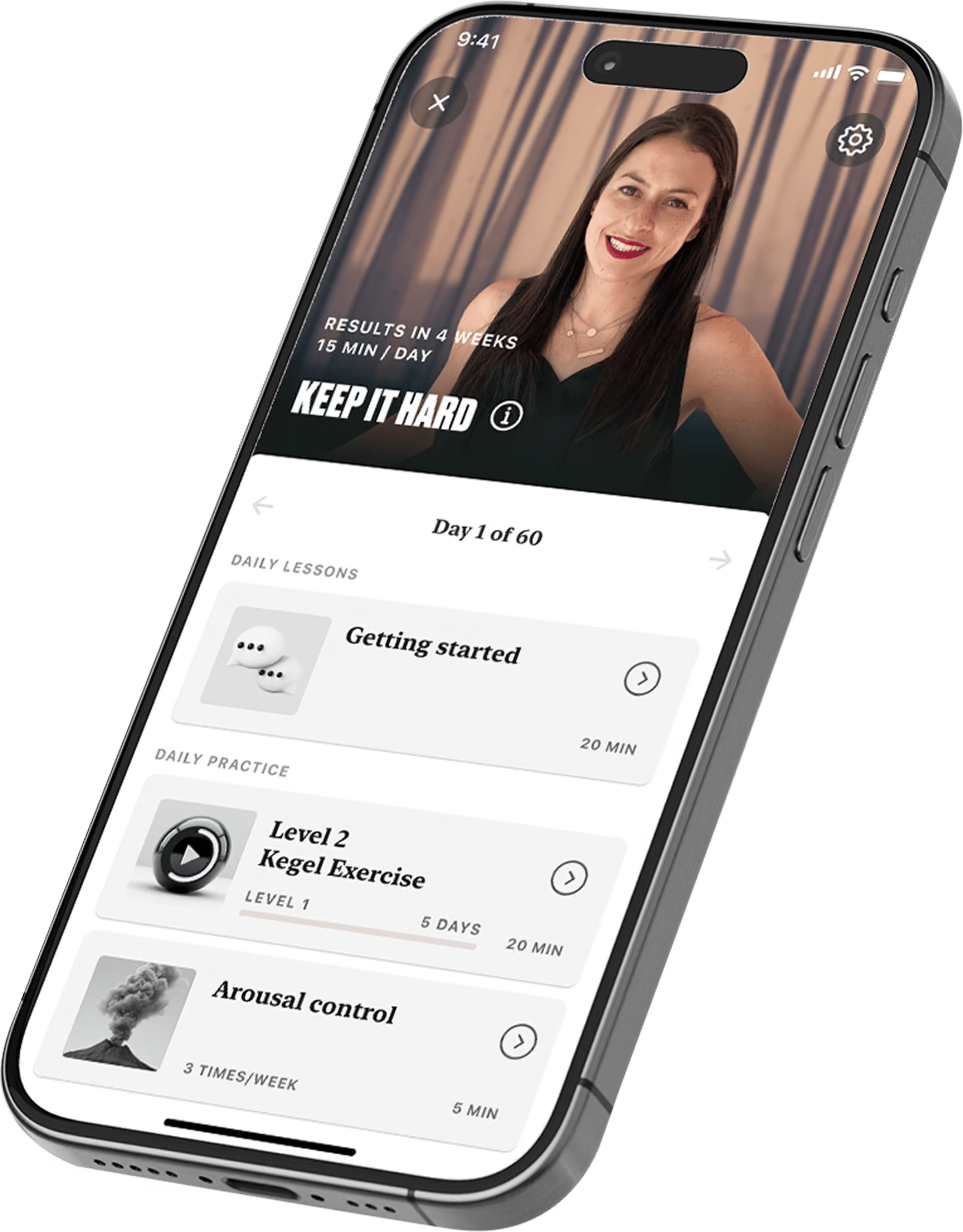
An eight-week program, not an edging app with a timer that tells you when to stop; a timer would be the wrong tool anyway. What’s in there: a daily plan that names the session for the day you’re on, guided audio for the breathing, the body scan and the progressive relaxation, a six-week Kegel track at ten minutes a day, and reminders. A few questions at the start set your starting point.