Step 01
Start with a few questions
A short questionnaire about your situation comes first, and your answers shape your personal plan.

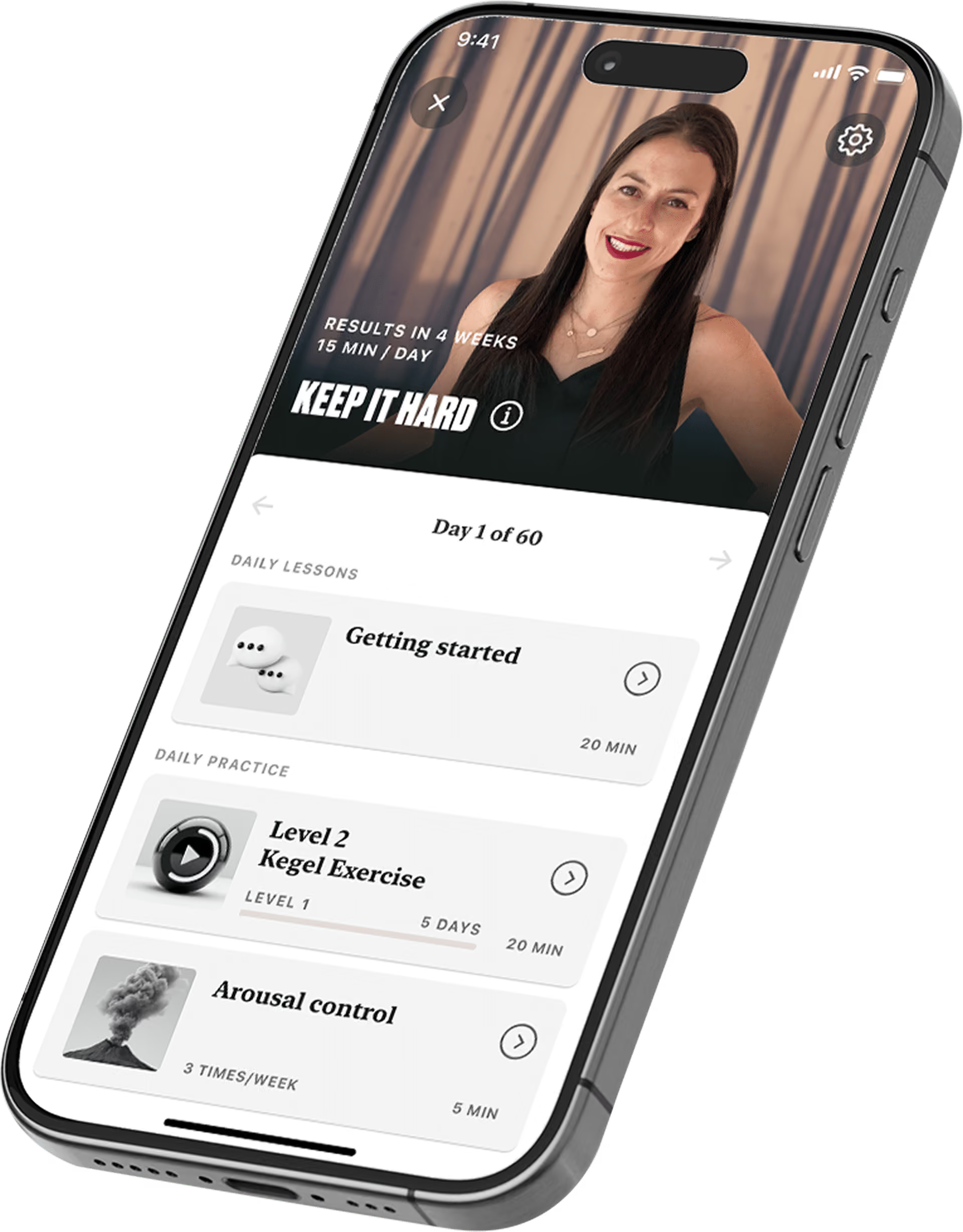
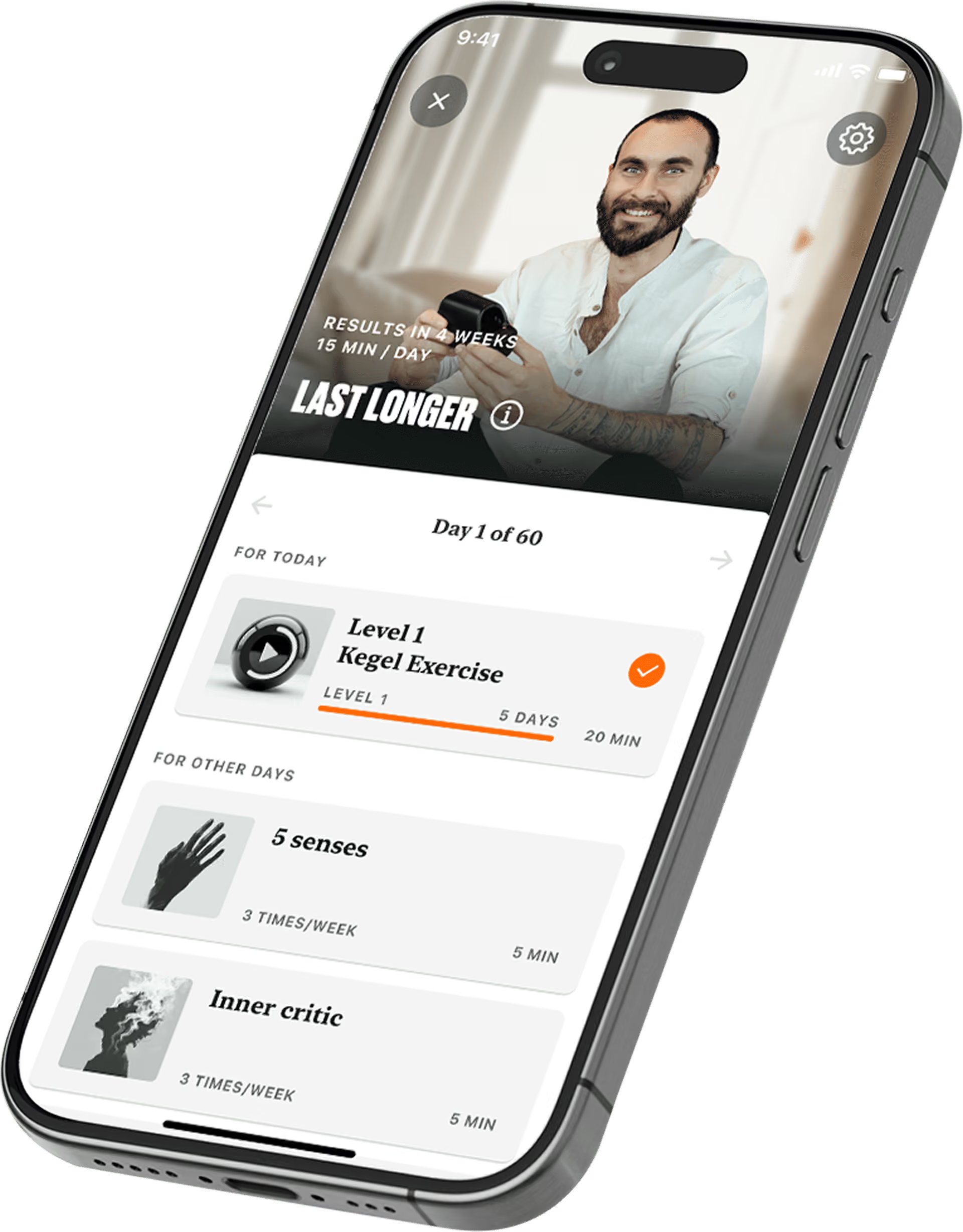
Learning to last longer involves several skills: relaxing your body, breathing calmly, noticing your arousal and coordinating your pelvic floor. Seven exercises train these skills, and a few simple changes can help you slow down during sex. The Last Longer program in The Coach app brings these skills into a guided practice routine.
Show me where to startIf you’re wondering how to last longer in bed, start with these four skills. Each takes practice:
The order matters, because they stack: reading your arousal is hard while you’re tense, and a strong pelvic floor is no help if you notice too late. None of the four asks you to feel less, and none of them needs a spray, a device or a pill.
The program introduces these seven exercises gradually. Start with breathing, relaxation, arousal awareness and pelvic floor practice before moving on to the more demanding exercises.
Those seven are the complete set of exercises we teach to improve sexual performance. What’s hard to judge alone is when a stage is steady enough to move on. Learning how to last longer during sex with a partner is a stage of its own after the solo work, and the plan brings it in during the final weeks.
These changes may help you slow down in the moment. Try one at a time and notice what feels comfortable.
The same four skills, in order, with something to do every day.
Step 01
A short questionnaire about your situation comes first, and your answers shape your personal plan.
Step 02
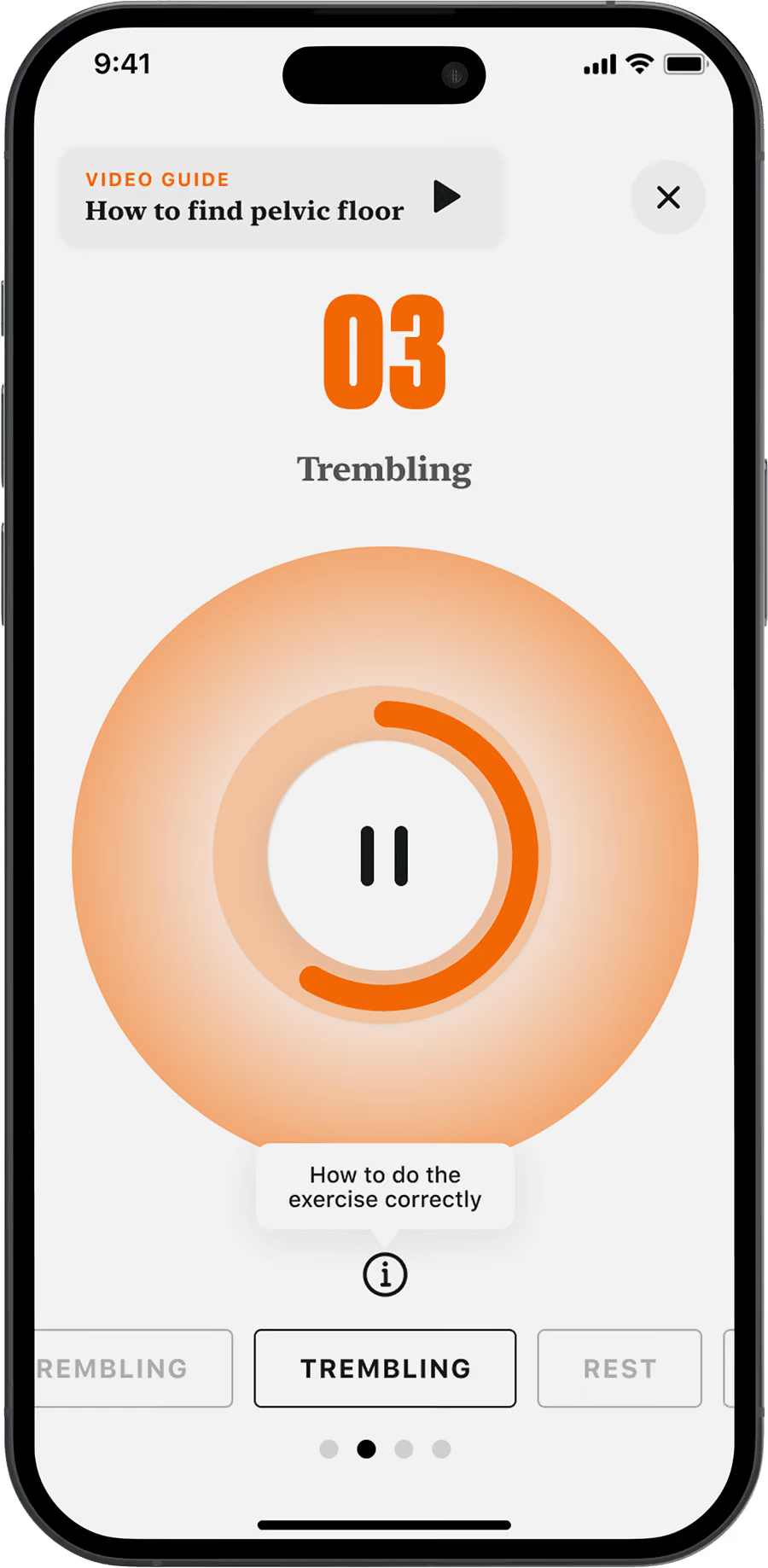
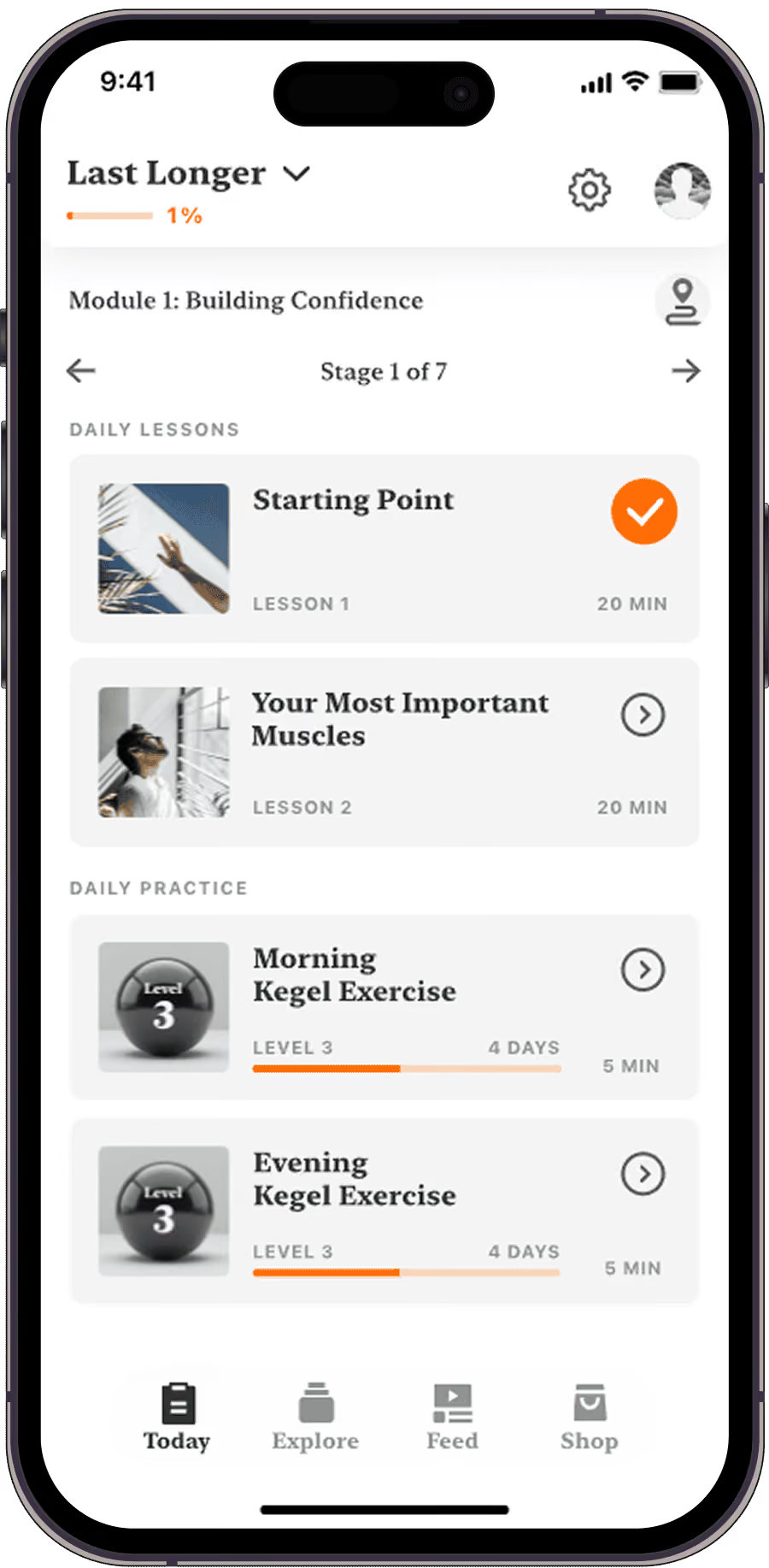
Guided audio for the breathing and relaxation work, a timer for the muscle work, and a daily plan that tells you which stage of arousal practice you’re on. About ten minutes on an ordinary day; three times a week there’s a longer session.
Step 03
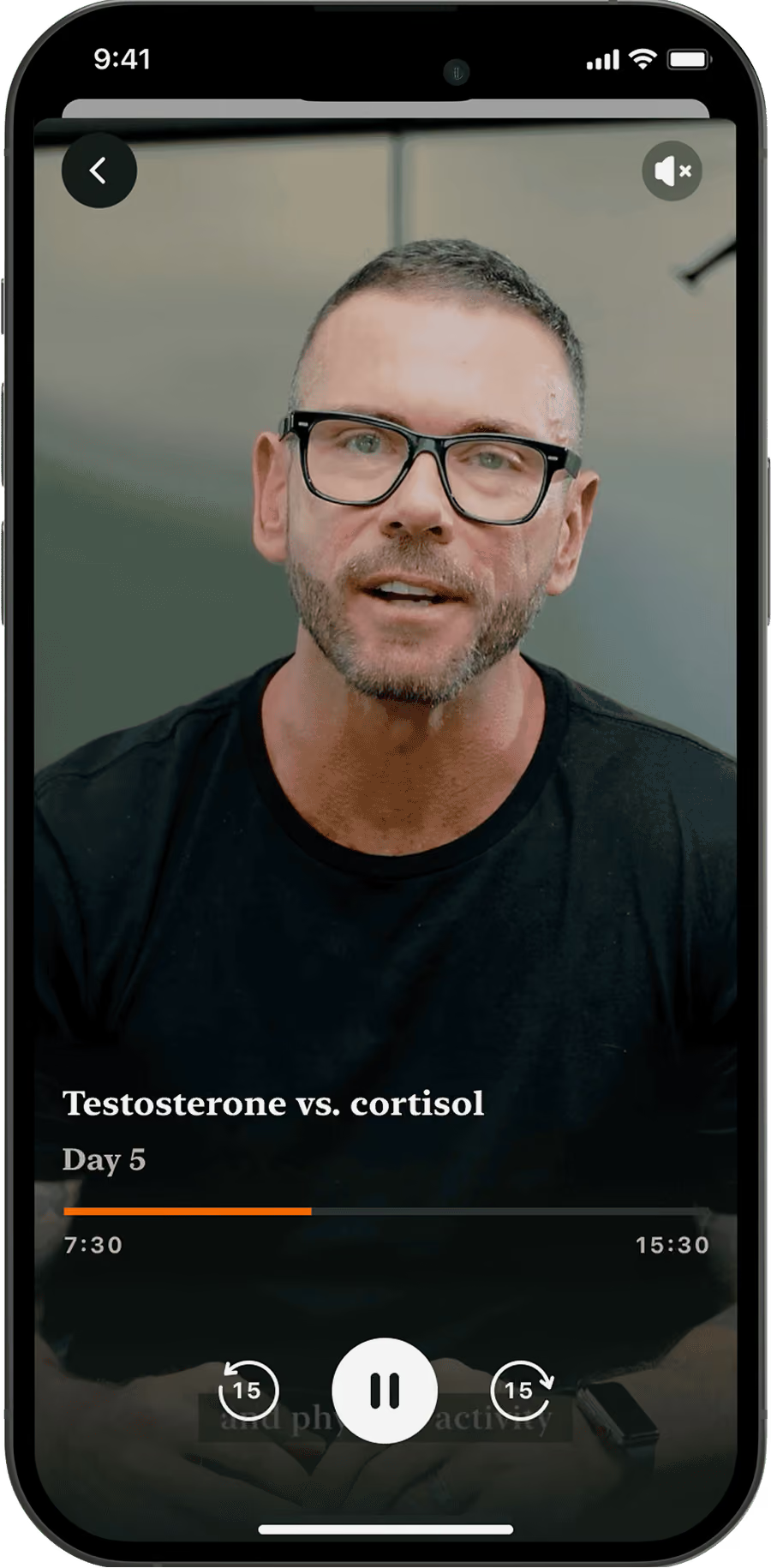
The plan introduces each stage gradually, with guidance on what to practice before moving on.
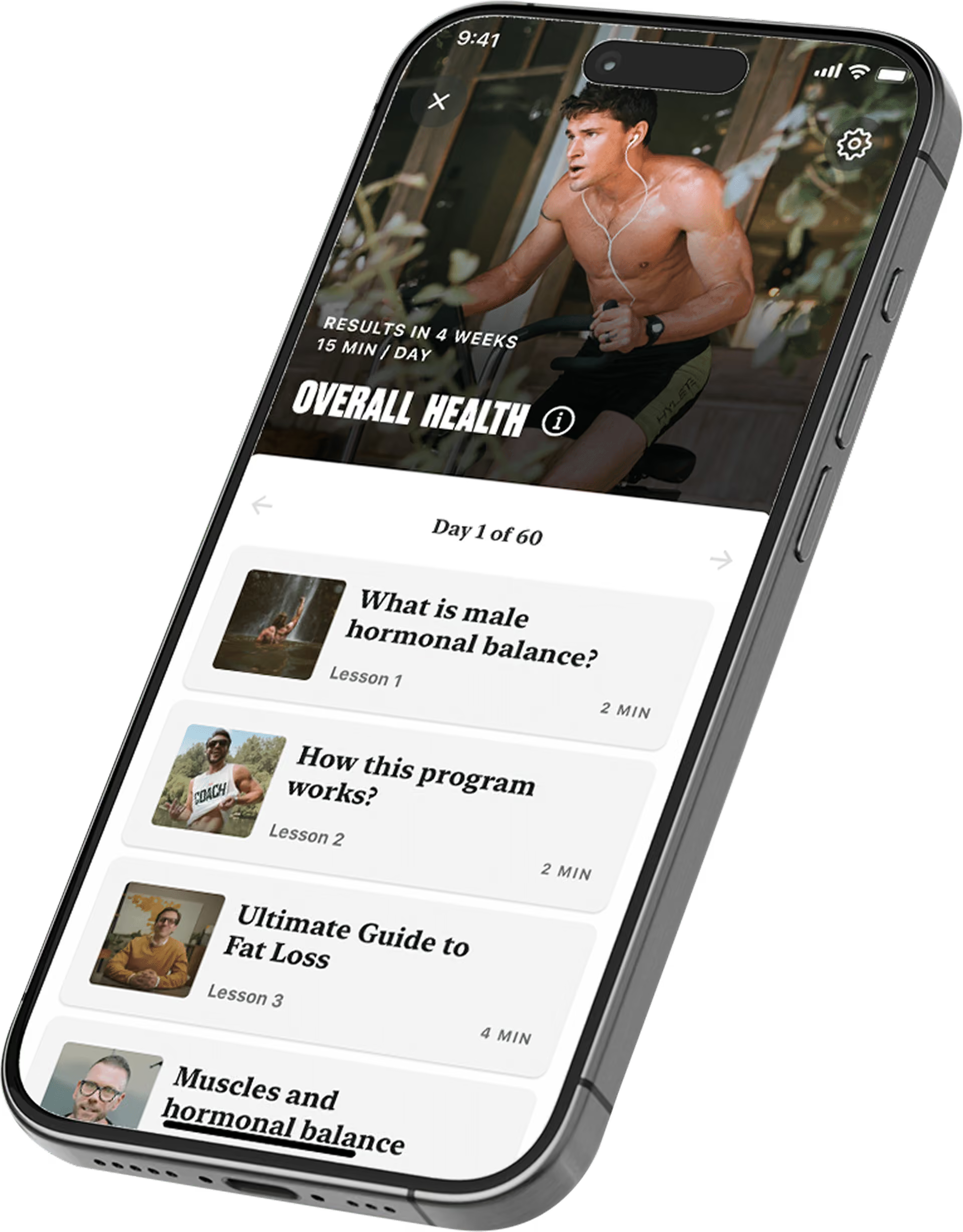
Answer a few questions, and the plan turns the seven drills into a day-by-day schedule at your level.
Men who last longer don’t hold on harder; they learn to release tension.
Most of these come from trying too hard, and each one has a specific correction.
Many men only check on their arousal once they’re already at nine, when one tool is left and there’s little time to use it. The entire point of the scale is that six and seven are where you still have choices.
The Kegel squeeze is for the very top of the scale, not something you hold all the time. Clenching throughout builds tension, tires the muscle and leaves you with a hair trigger. Stay loose the rest of the time.
Pushing straight to nine to test yourself doesn’t train anything, and it teaches your body to panic. The hours that count are spent between six and eight, extending how long you can stay there.
It’s easy to know that tension speeds things up and still forget it when it matters. Your thighs clench, your jaw locks and you hold your breath at the edge. Check every few minutes and use the exhale as the reset.
Your plan starts the muscle work on day one, because that part runs on a fixed six weeks, and adds the rest step by step.
From a survey of The Coach users after their first four weeks with the app:
Unedited reviews from the App Store and Google Play:
“I have been using the apps for a few months. Although I am not as consistent as I should, the exercises have helped me to last longer. On top of that, I really enjoyed the skills section that is very informative and practically useful. Give it a try and be patient to reap the benefits.”
“I like the multi-facetted approach including other exercises, not just kegels, as well as considering mental & emotional issues. I tried another app that was ok, but it focused on kegels. This app has helped me make progress in a few ways & has me on a road to keep my abilities long into the future.”
“So me & my love have seen great advancements in overall sex. (last longer, she enjoys much more now, I enjoy much more now). All is great with the program, some of these exercises are difficult for me & finding time is a struggle.”
“I have known all these exercises for a while but I was not able to stay consistent for a long time. I like that the app is engaging and makes you keep coming back to do your workouts. I also like that includes breathing exercises and psychological aspects as well. So it is all in one.”
A prepared daily session makes it easier to keep practicing. Take the quiz to find your starting point.
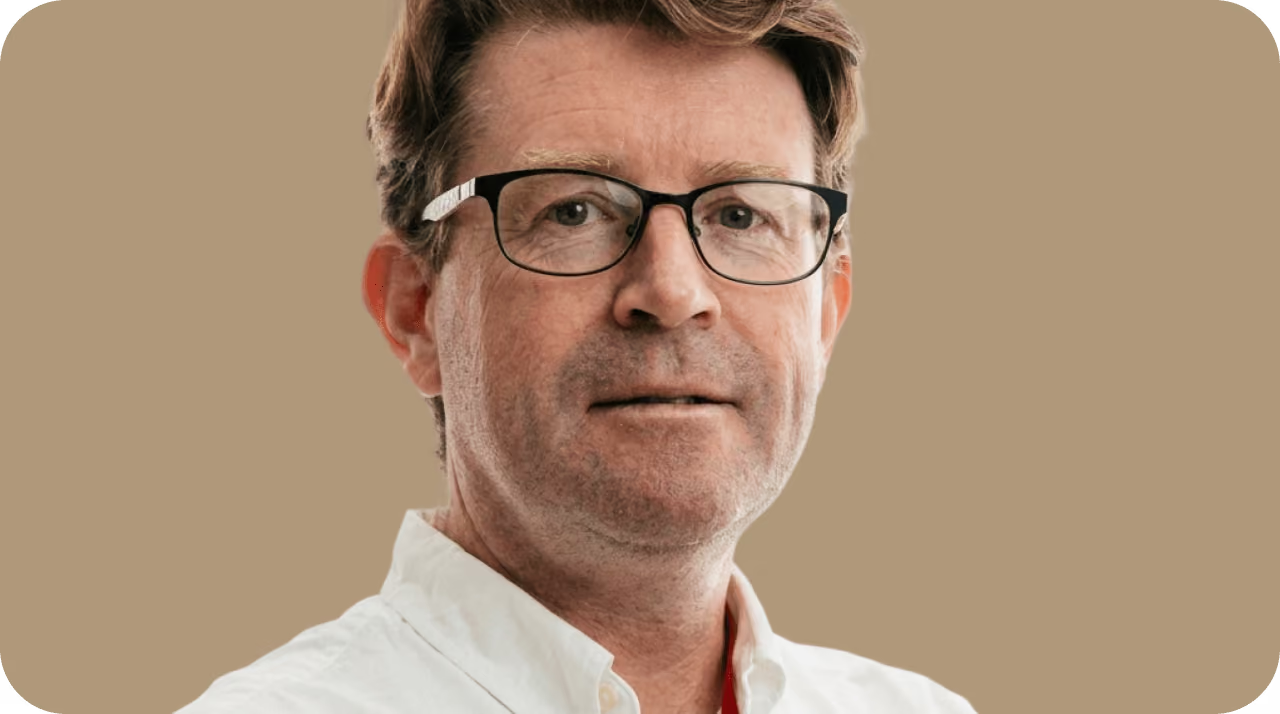
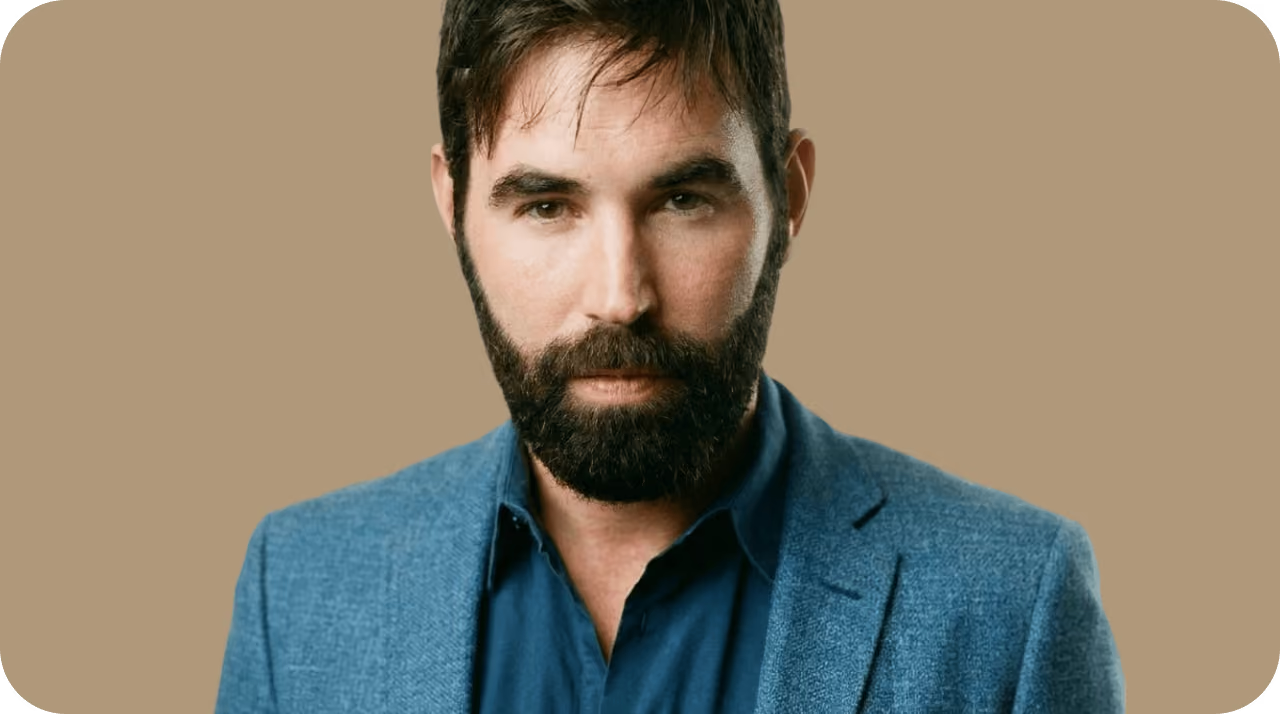
Urologists, pelvic-health physiotherapists and sex therapists helped build the programs, and where something belongs with a doctor rather than an app, we say so.
Dr. Justin Houman
MD, UCLA-trained urologist and male reproductive specialist focusing on sexual health.
Dr. Susie Gronski
Licensed physical therapist, certified sexuality counselor, and founder of a men's pelvic health clinic.
Cameron Fraser
Australia's leading men's sex coach, specializing in male sexual wellness and performance.
Dr. Amy Pearlman
Board-certified urologist specializing in male sexual wellness, performance, and hormonal health.
Gerard Greene
Specialist men's health physiotherapist and senior lecturer at Coventry University.
Natalie Goldberg
Certified sex and family therapist dedicated to improving intimate relationships and personal well-being.
Dr. Paula Hall
Accredited sexual and relationship psychotherapist, registered with leading professional bodies in psychotherapy.
Dr. Justin Lehmiller
PhD in social psychology and senior research fellow at the Kinsey Institute.
Start with the exhale. It needs no preparation, it works from the first minute, and you can use it without changing anything else you’re doing. If that isn’t enough, slow the rhythm right down before you try anything else. Easing the pressure and widening your focus help too. None of them is reliable on a night when you’re tired, stressed or haven’t had sex in a while; that depends on the underlying reflex, and changing it takes weeks, not an evening.
It depends which part. The muscle work has a floor: about six weeks at ten minutes a day, about the minimum for a muscle to get stronger, and six in ten men report a significant improvement after six weeks. The arousal work runs on its own clock: several stages, a couple of weeks each, and you move up only when the one before it is steady. The full program is eight weeks. There’s no version of this that takes a week.
Usually because nobody ever taught you how to last in bed. Two things decide it: where your arousal is at any given moment, and whether the muscle that could hold the line has ever been trained. Neither is a flaw; both are simply untrained, the way a language you’ve never studied is. So the answer is training, starting with the seven drills. If it happens within about a minute in every situation, and it has for months, that’s a different question and worth raising with a doctor; our guide to premature ejaculation covers it.
Seven, and they do different jobs: two that keep your nervous system on the calm side, one that tells you which tool to reach for, one that builds the muscle acting as a brake, and three that train the response itself. Those seven are the exercises for lasting longer. If one of them is the foundation, it’s the solo arousal practice, because it’s where the other six come together.
How to last longer during intercourse naturally comes down to breathing, relaxation, arousal awareness and muscle training, with nothing applied, swallowed or worn. It’s slower than a spray, but it doesn’t wear off at the end of the evening, because what changes is your own response, not how much you can feel.
Yes. The stop-start method is the classic answer to how to delay ejaculation, and it’s the backbone of the solo arousal practice: you climb to a level, slow down or stop, let arousal fall, then climb again. Two things decide whether it works for you. Do it below nine; the edge is not where the training happens. And pair it with breathing and relaxation — gritting your teeth through it trains the exact tension you’re trying to lose. The squeeze technique is its cousin, and it belongs at the top of the scale only.
Yes, and it’s worth learning as a technique in its own right. While you’re close — kissing, foreplay, penetration — you scan for tension in your jaw, hands, thighs and glutes, release whatever you find, and stretch your exhale out to six seconds or more. Nothing changes on the outside: no pause, no explanation, no announcement. If you don’t want to talk about this with your partner first, it’s a technique that needs nothing from them at all.
Plan for a faster climb than usual. Novelty, nerves and wanting it to go well all push arousal up, so you reach the high numbers sooner than you expect. So how to last longer for the first time is mostly about that gap: check in at five instead of seven, keep the rhythm slower than feels natural, and use the exhale from the first minute rather than saving it for the top. Foreplay that takes you to a six and back before anything else buys more time than any trick. And if the first time is also your first time ever, the same holds: nothing is wrong with you.
Expect more sensation and plan for it, because the condom was doing part of the job. Bare, arousal climbs faster and the levels blur together, so how to last longer without a condom comes down to checking your number earlier: the check-in that worked at seven now belongs at five, and the slow-down comes before you feel you need it, not after. Two things carry straight over from the training. The solo practice already runs without a condom, with lube and a lighter grip, so the sensation isn’t new on the night it counts. And the exhale doesn’t care what you’re wearing. Going the other way, with a thicker condom to buy time, works as a stopgap but trains nothing, so you keep needing it.
Five minutes sits inside the ordinary range of five to seven, so learning to last longer than 5 minutes is a question of practice, and the four skills answer it. An hour of continuous intercourse isn’t realistic; that figure comes from edited video, not real bodies. What an hour of sex looks like for men who last is pacing: stretches held at a six, slowing down before the spike, foreplay used as a level change rather than a warm-up, and the plateau drill, which is holding one level for two or three minutes at a time. Men who last an hour mostly aren’t thrusting for an hour. Either way, a stopwatch measures the wrong thing: what you’re training is time in control, not minutes.
Not by thinking about something else; that means checking out mentally, and your partner can usually tell. How to last longer in bed mentally is two skills, and neither of them is willpower. The first is attention: at high arousal it narrows to one small area, and opening it back out to the whole of your body and the whole of the room drops arousal without a pause. The second is knowing your number. Naming it as it happens is the mental half of the method, because it lets you use each physical tool in time rather than at nine. That’s what learning to control ejaculation mentally really means: knowing where you are while there’s still time to act. Both are practiced outside the bedroom first; in the moment is too late to learn either.
Common, and it’s a pacing problem more than an erection problem. Dropping from an eight straight down to a two tells your body sex is over, and the blood flow follows. Step down instead: eight to six, never eight to two. Keep some light stimulation going, keep a little tone in the pelvic floor (just awareness, no full contraction), and let the exhale run longer than the inhale. If losing your erection is the usual pattern, that’s a different problem and worth raising with a doctor; our guide to erectile dysfunction explains it.
They do something, which is why they sell. Thinking about something else works and costs you the evening; you’ve left the room, and usually your partner can tell. Numbing sprays and thicker condoms trade sensation for time, and the effect leaves when the product does: the active ingredient in most sprays is a local anesthetic, the kind doctors use to numb tissue. We don’t work with medication. If you need something for tonight, slow down, breathe out longer or ease the pressure; none of that costs you sensation.
Short, and mostly guided: a lesson, one audio session (breathing, relaxation or a body scan, depending on where you are) and the muscle block on a timer. Ten minutes on an ordinary day. Three days a week there’s an arousal practice as well, and that one runs about twenty minutes; it’s the session men actually have to make room for.
No. No device, no weights, no gel, no gadget. Everything here is your own body and about ten minutes.