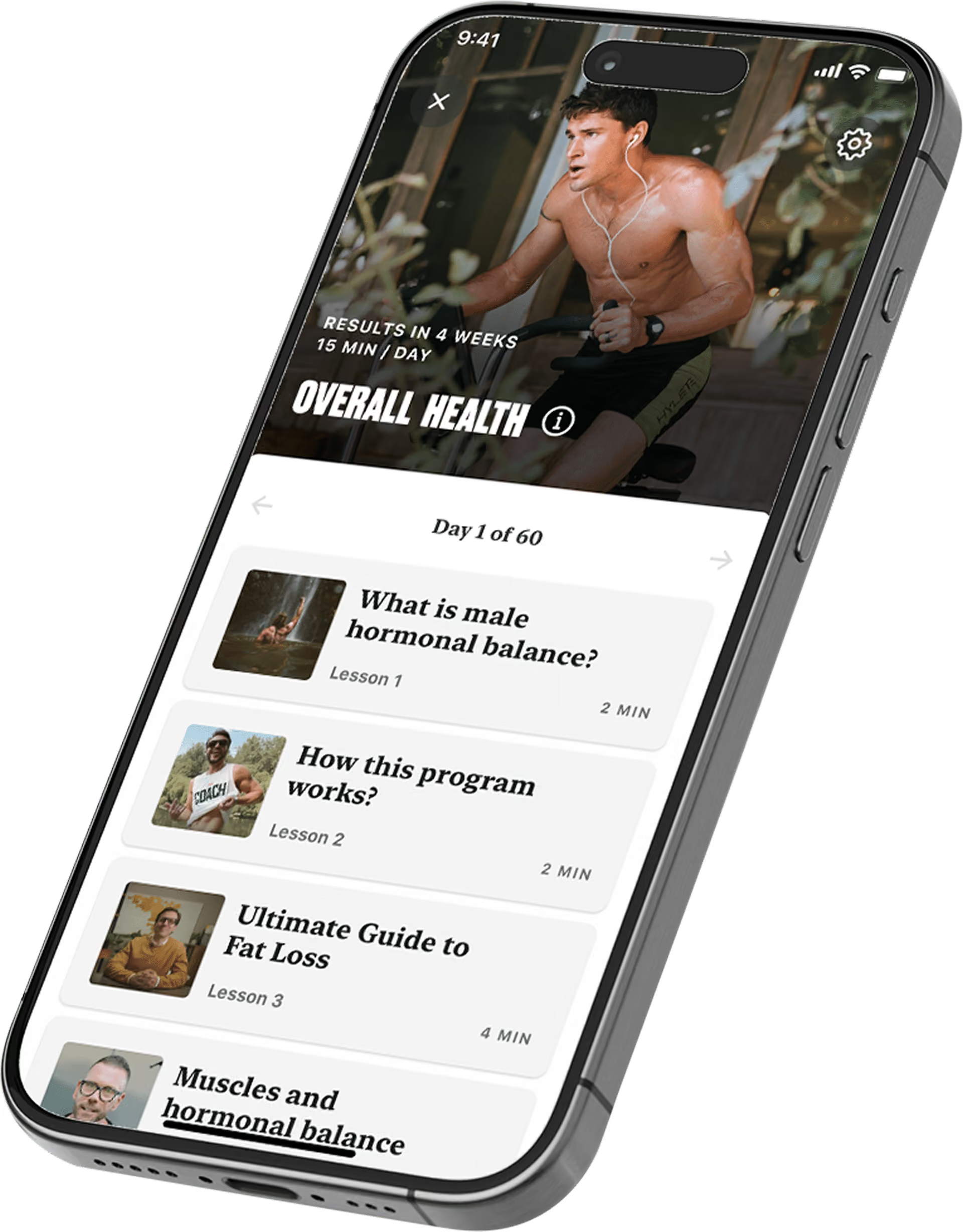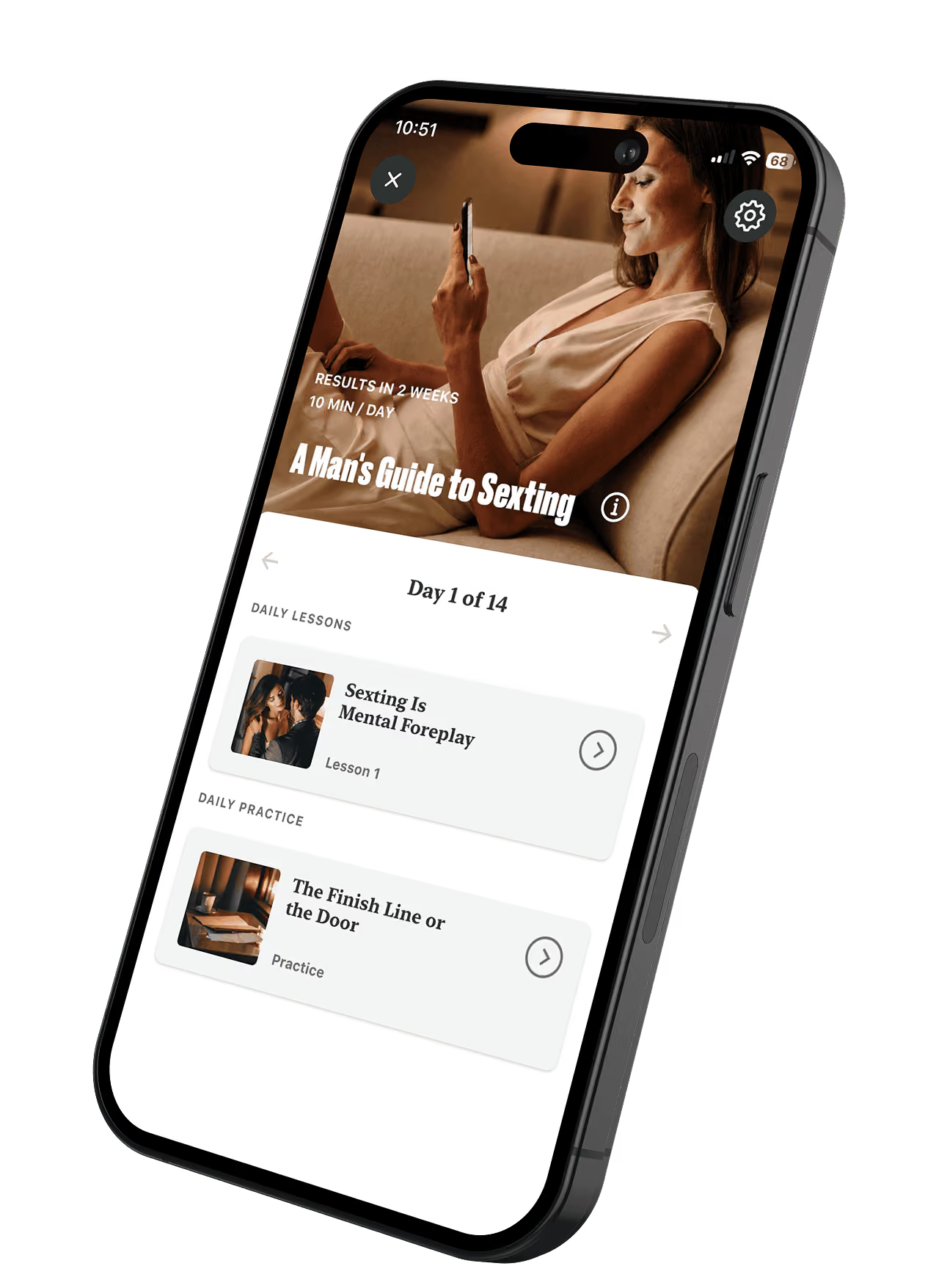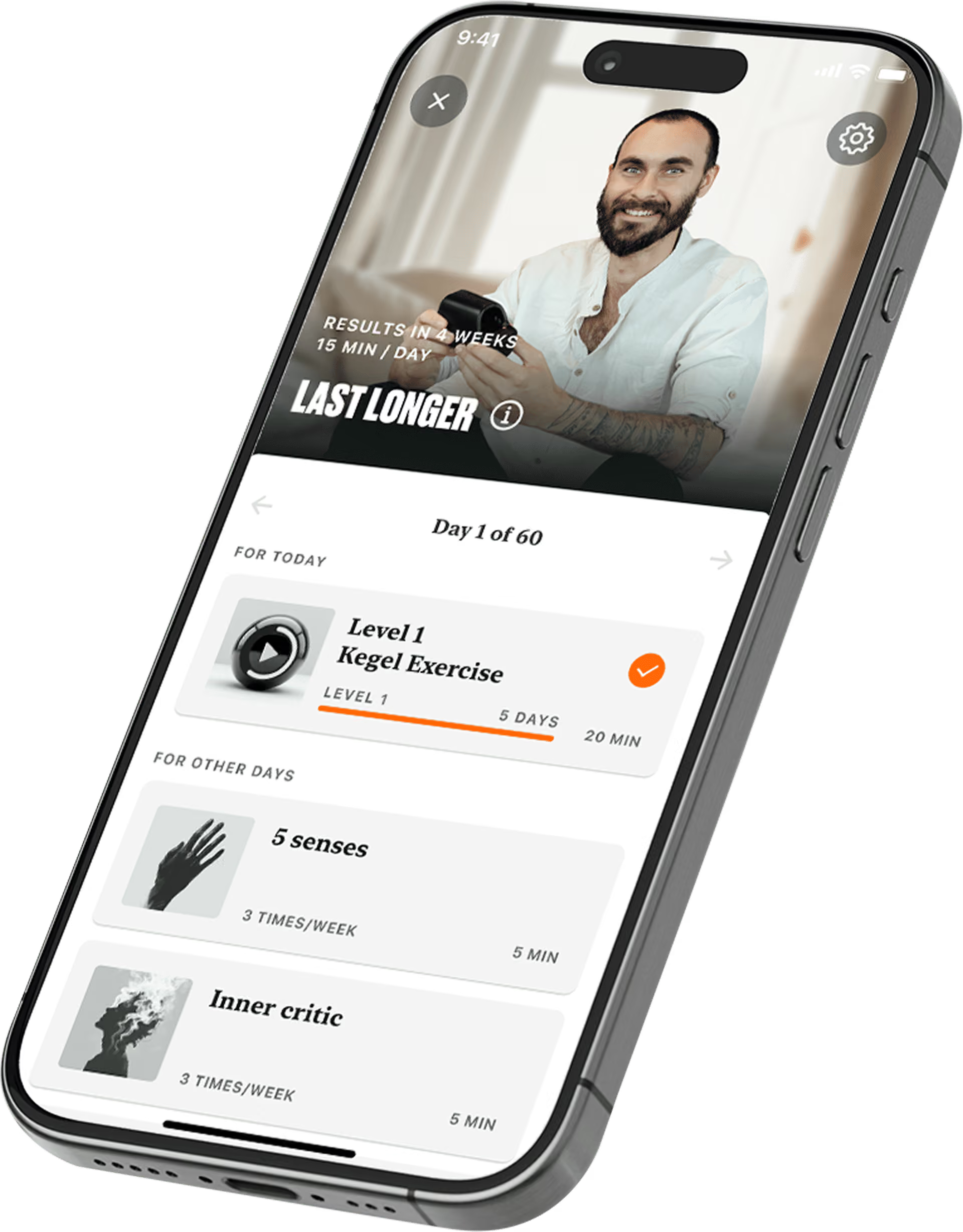
Step 01
A few questions first
A short questionnaire about your situation comes first, and your answers shape your personal plan.

Premature ejaculation can have several causes, including anxiety, learned habits and physical health problems. Learning to notice rising arousal and relax can be part of improving control. Whether you meet the clinical definition matters less than you’d think. The point is that it happens before you want it to. The Last Longer program in The Coach app brings these skills into a guided practice routine.
Get my personal planClinically, premature ejaculation means finishing within about a minute, in most encounters, for six months or more. By that definition most men who worry about it don’t have it; the ordinary range is five to seven minutes. The version that matters day to day is simpler: you finish earlier than you want to, often enough that it bothers you or your partner. Three things it isn’t:
Up to four in ten men say they finish sooner than they’d like on a regular basis, and up to three in four would like more time than they get. Wanting more time isn’t a symptom in itself. That leaves two separate questions. Whether you meet the diagnosis is for a doctor to decide. Whether you finish before you want to, you already know, and that second question is the one training can change.
Several factors can affect when you ejaculate, and more than one may be involved.
Apart from prostate problems, which are a doctor’s job, the causes come down to two things. You don’t know where your arousal is until it’s already high, and the muscle that could hold it back has never been trained. Every method that helps works on one of these two.
If you’re wondering how to fix premature ejaculation, it helps to understand what each approach does. Some reduce sensation temporarily; others focus on anxiety, habits or learning to manage arousal. A clinician can help you choose an appropriate treatment.
Set aside everything that only dulls sensation, and four things change the reflex: two calm the body, one tells you where your arousal is, and one gives you a muscle to hold back with. If your question is “how to stop ejaculating so fast”, these four are the answer, and none of them is a trick.
Our eight-week program works through all four, because each one makes the next easier: it’s hard to notice how aroused you are while you’re tense, and a strong pelvic floor is no help if you notice too late. None of them works the first night.
Eight weeks of arousal-control training instead of sprays or pills, ten to twenty minutes a day, in the order the skill builds.
Step 01
A short questionnaire about your situation comes first, and your answers shape your personal plan.
Step 02
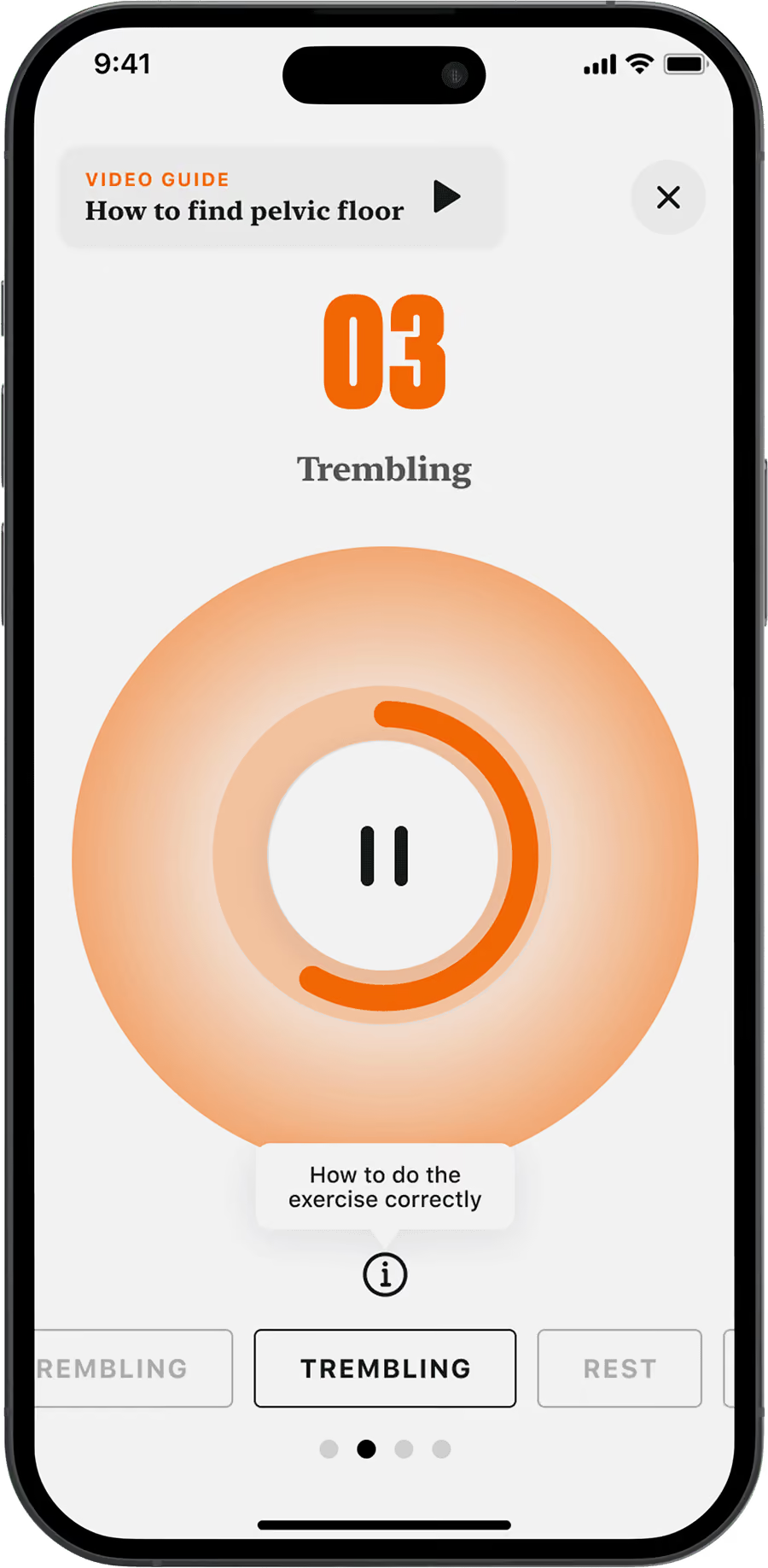
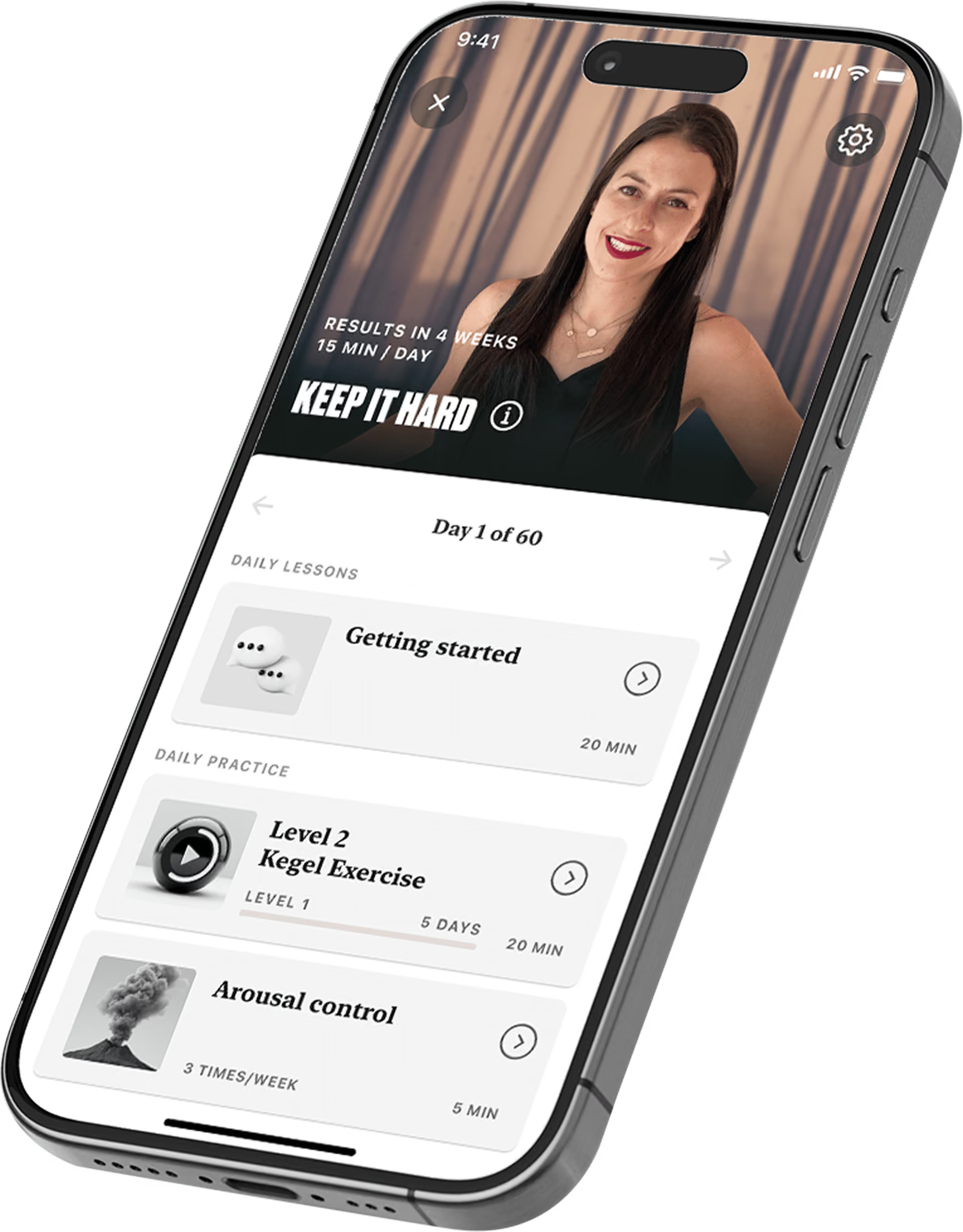
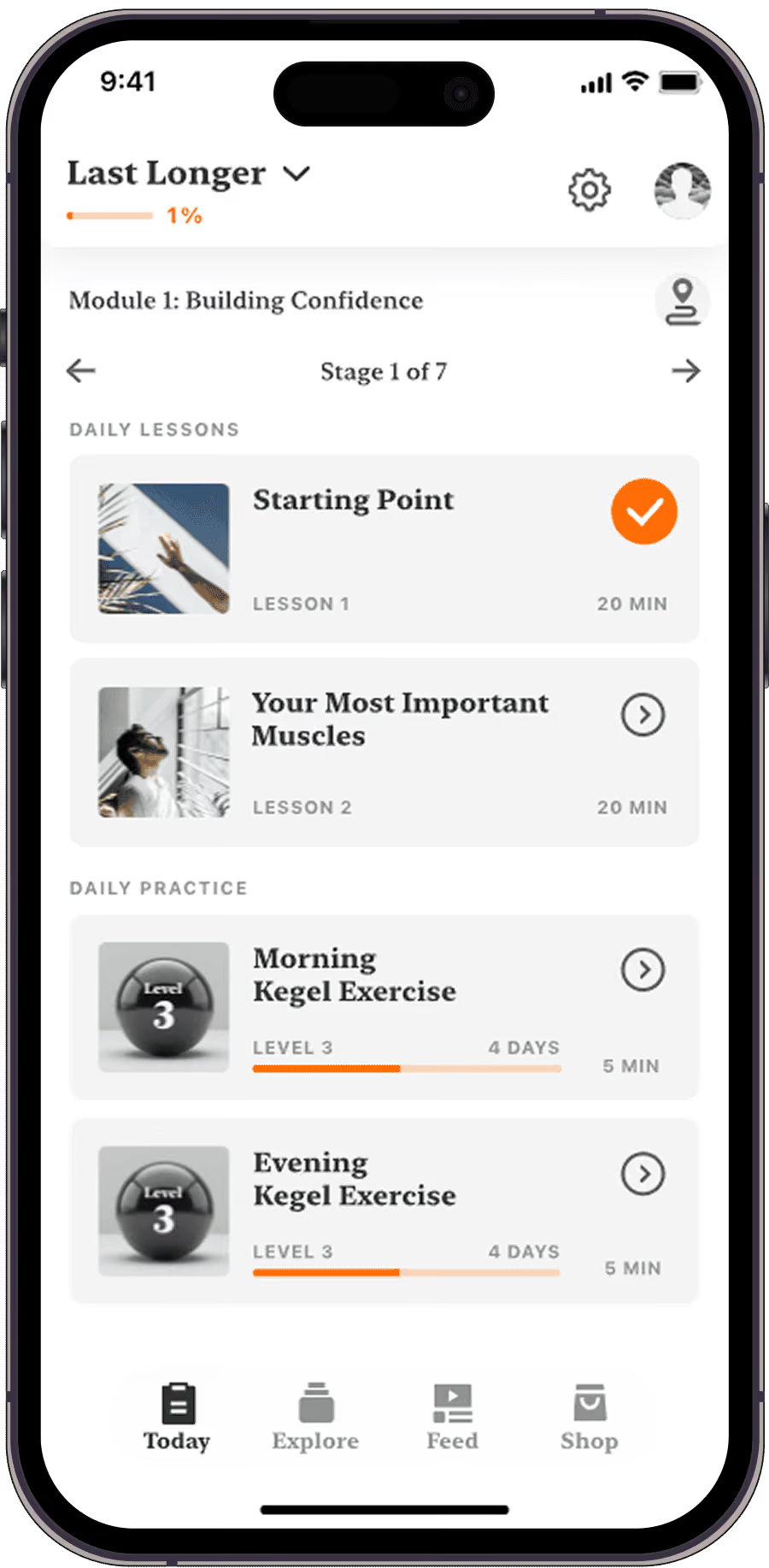
Short guided sessions in sequence: arousal awareness first, then pelvic floor work, then drills that bring the two together. Ten to twenty minutes, with the app counting the holds and rests for you.
Step 03
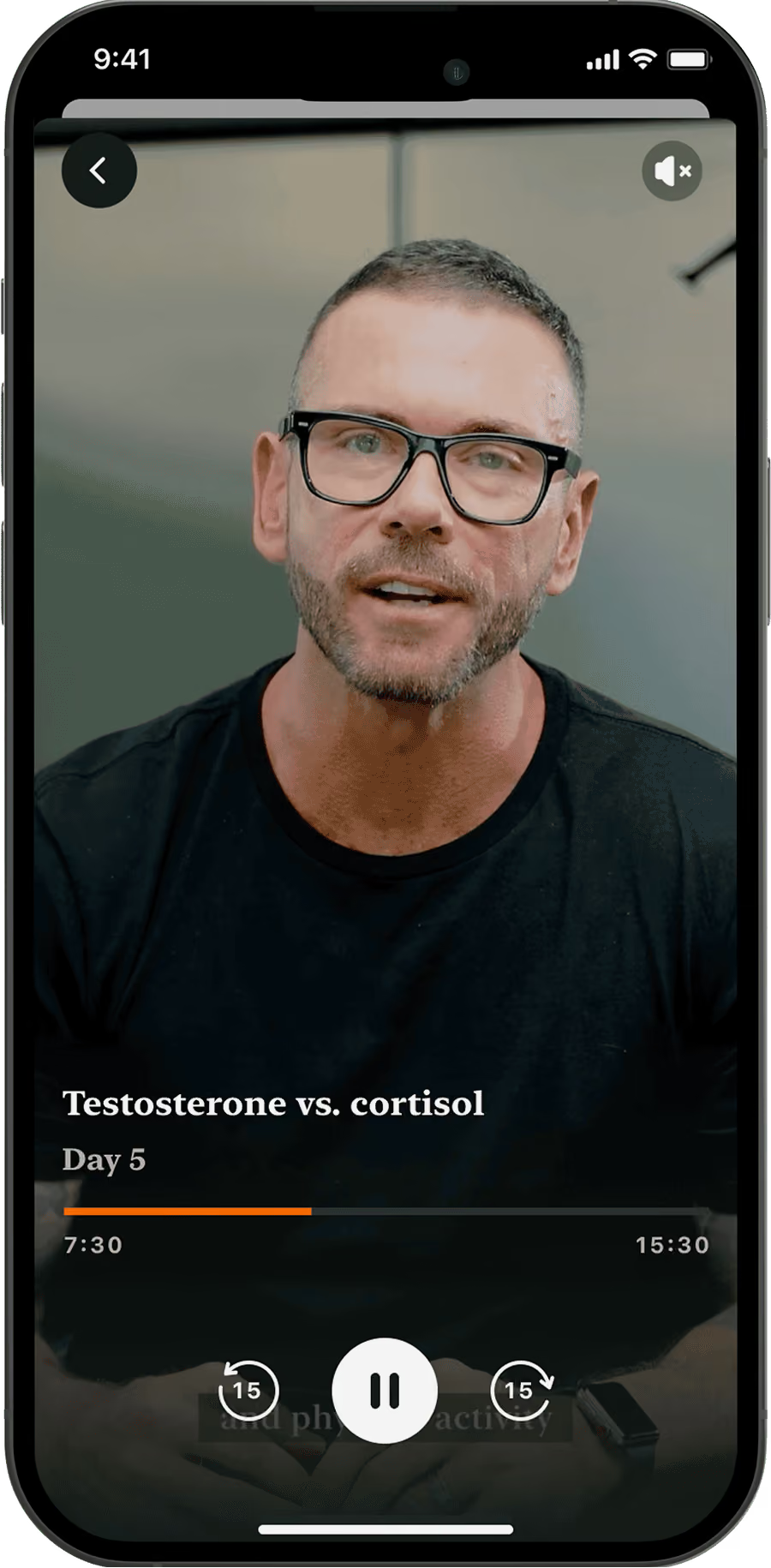
Each week builds on the one before it. You’re training a response, not treating a disease, so showing up every day is what makes the difference.
If you’ve never practiced noticing your arousal, it can be hard to know when to slow down. The eight-week program helps you practice that awareness alongside breathing, relaxation and pelvic floor exercises.
Finishing fast isn’t a character flaw. It’s a reflex, and a reflex can be retrained.
This is the question underneath most of the searching. The short answer: not on its own, but it can be trained.
Evolution gives everyone a quick reflex, but your timing is mostly a pattern your body rehearsed for years, largely by accident. Patterns change with practice, which is why this can be trained.
Nothing in ordinary life retrains this. A new relationship can mask it for a month, a good night can make it look solved, and the reflex underneath is unchanged either way. Leave it alone, and next year usually looks like this one.
The work is muscle training and attention training. Neither depends on being young, and both work at fifty-five as they do at twenty-five.
So can it be permanent? What you learn about your own body tends to stay with you. Muscle doesn’t: stop training altogether and it fades, the same as everything else you train. A few sessions a week is what holds it.
You now know what’s behind it and what doesn’t help. What remains is doing the work in the right order and showing up on the days you don’t feel like it. The Coach app gives you the order; showing up is up to you.
From a survey of The Coach users after their first four weeks with the app:
Reviews from the App Store and Google Play:
“All the issues I’ve ever had with PE are confronted in this app. And any questions I have on why I can’t last have been answered. I’m already seeing results and it’s brought my confidence back.”
“I had tried pills to go longer and they had no impact. The exercises and practices in my path have been great to enable my body to learn how to control itself in the moment.”
“I’ve always dealt with PE and sometimes ED as well. I didn’t grow up with any sexual health education and realizing that there is so much you can do to better yourself is amazing.”
“The Coach app focuses on improving pre-mature ejaculation in a natural way. It has helped me to understand a bit more of how the male body/mind work and how to improve my stamina naturally by being more self-aware during sex.”
A few questions about your situation, and your answers set where week one starts.
Urologists, pelvic-health physiotherapists and therapists who work in sexual health. They helped build the programs, and where something needs a doctor rather than an app, we say so.
Dr. Justin Houman
MD, UCLA-trained urologist and male reproductive specialist focusing on sexual health.
Dr. Susie Gronski
Licensed physical therapist, certified sexuality counselor, and founder of a men's pelvic health clinic.
Cameron Fraser
Australia's leading men's sex coach, specializing in male sexual wellness and performance.
Dr. Amy Pearlman
Board-certified urologist specializing in male sexual wellness, performance, and hormonal health.
Gerard Greene
Specialist men's health physiotherapist and senior lecturer at Coventry University.
Natalie Goldberg
Certified sex and family therapist dedicated to improving intimate relationships and personal well-being.
Dr. Paula Hall
Accredited sexual and relationship psychotherapist, registered with leading professional bodies in psychotherapy.
Dr. Justin Lehmiller
PhD in social psychology and senior research fellow at the Kinsey Institute.
Related, not the same. Premature ejaculation is the condition: what it is, what causes it, and whether it changes. The practical side, learning to notice your arousal and training the response over eight weeks, is our Last Longer program. If what you want is the technique on its own (the drills, in order, and the part you can use tonight), that’s how to last longer in bed. You may end up wanting both.
Rarely one thing. Two questions narrow it faster than anything else: has it always been this way, or did it start recently, and does it happen on your own as well as with a partner? If it’s always been this way, alone and with a partner, it points to habits you learned early; if it’s recent and only happens with someone, it points to stress, a new relationship, or the loop where worrying about it makes it happen. Neither is a diagnosis, and if something changed suddenly, see a doctor rather than guess.
Because the reflex responds to how aroused you are, and some situations push arousal higher than usual. A new partner does that more reliably than anything else (novelty and nerves both speed the nervous system up), and so does a long gap, or a night you badly want to go well. If your question is “why do I finish so fast with her and not on my own?”, that’s the answer: your reflex is the same, but the situation arouses you more. If it only happens sometimes, that’s partly good news. It means the control exists, and you already use it in some conditions. The training makes it available in the rest, starting with noticing your arousal in the situations where it runs highest.
Seven, and one of them belongs to a doctor. Prostate inflammation and enlargement are common, often silent, and worth ruling out before anything else. The other six are learned or physiological: the quick reflex evolution gave everyone, the pace you first taught yourself, porn, stress, an untrained pelvic floor, and never having been told how any of it works. In any one man, it’s usually two or three of these together.
A spray changes what you feel, not how your body responds, which is why nothing carries over to the next time. Prescription options exist, and they’re a doctor’s decision — we don’t work with medication.
There’s no one-time cure, but here’s what lasts. The awareness part tends to stay: once you can feel what your body is doing, that usually doesn’t switch off. The muscle half isn’t: it’s trained tissue, and it fades if you stop, which is what the few sessions a week are for. So the results can last, but they need some upkeep.
Yes, if there’s pain, blood, or a change that arrived suddenly, and yes if it started after an illness, an injury or a new prescription. Same answer for prostate symptoms. A pattern you’ve had for as long as you’ve been having sex, with nothing else wrong, is the ordinary case, and that’s the one this kind of training is for.
Both, and pulling them apart is the wrong move. Anxiety speeds the nervous system up, which speeds ejaculation up, which makes the anxiety worse next time. And often there’s a pelvic floor that has never been trained. Because they feed each other, the work goes at both.
Often, and usually in a loop. A man who isn’t sure his erection will last tends to hurry to finish before it fades. The other direction exists too: finish fast a few times and the worry about it can start pulling blood away from the erection before anything has happened. Both come from the same stress response. Which to work on first depends on which arrived first. If your erections have weakened gradually, alone and with a partner, see a doctor before you start training. If the erection is fine on your own and unreliable only when the clock is running, the arousal training is where both start to improve, and our guide to erectile dysfunction covers the other half.
Longer than a spray, shorter than you probably fear. The pelvic-floor training runs six weeks at ten minutes a day, and six in ten men report a significant improvement after six weeks of it. The full program runs eight weeks, because the awareness half needs practice rather than reps.
The eight-week program: a short daily session of ten to twenty minutes, arousal awareness and pelvic floor work in sequence, a roadmap that shows which week you’re on, and The Coach’s other male-health programs alongside it.
Ten to twenty minutes a day and somewhere private to practice. No devices, no sprays, and no partner needed for the early weeks: the first work is solo by design.