Stress or discomfort
Stress, feeling rushed or worries about your body may make it harder to enjoy touch. You can slow down, change the situation or stop. You don’t need to make yourself relax on command.

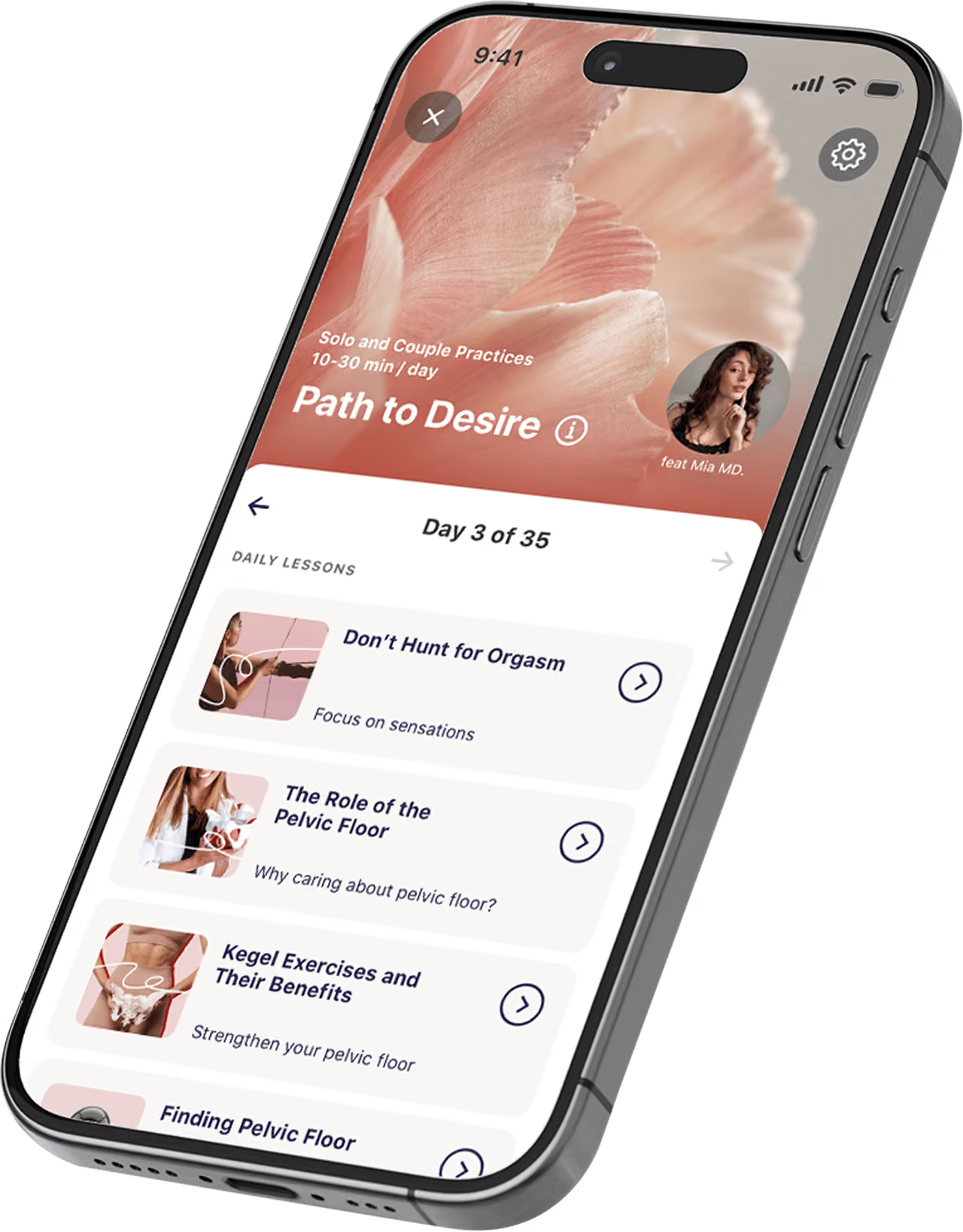
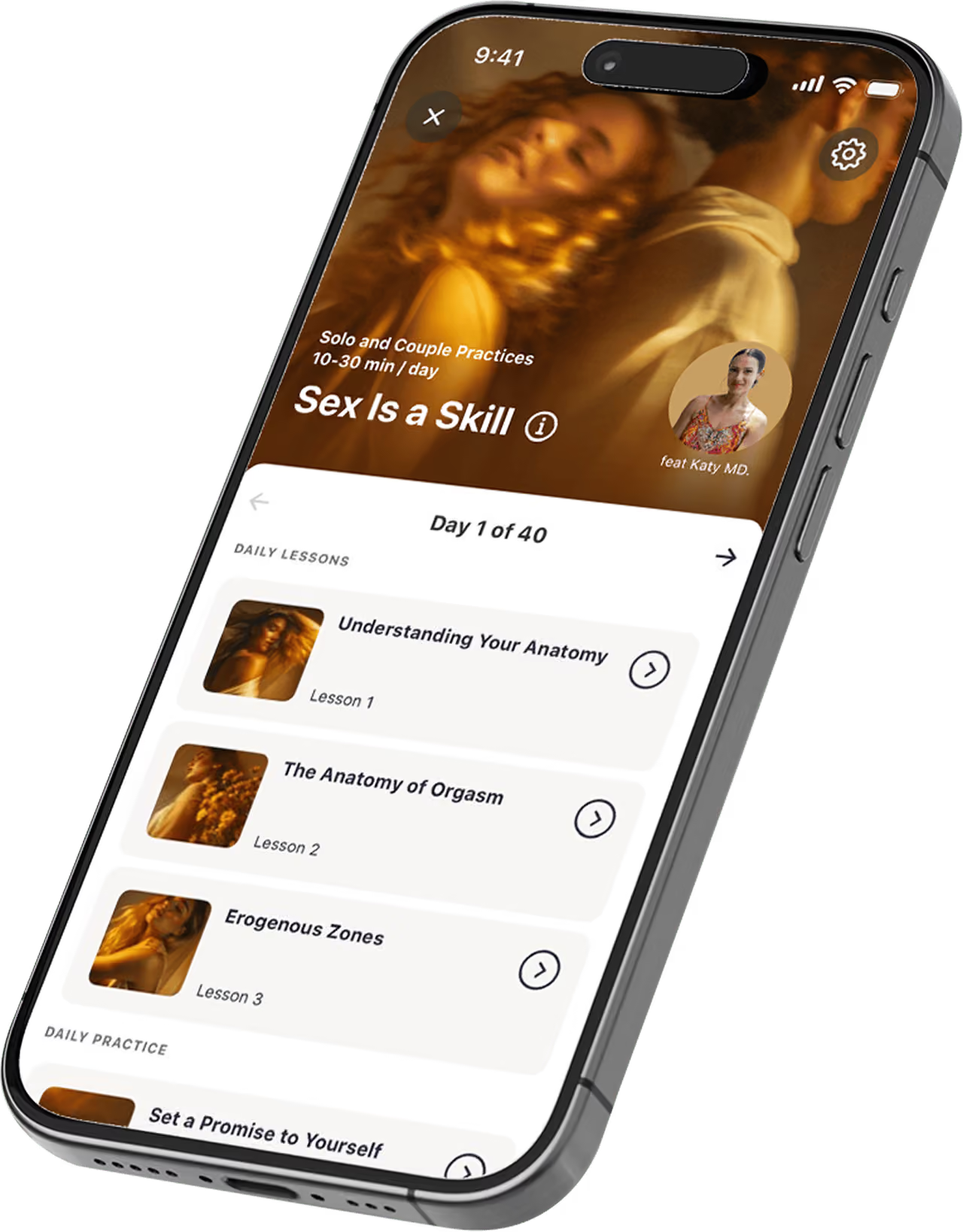
An orgasm can feel like a release of sexual tension, often with rhythmic contractions in the pelvic floor and a strong sense of pleasure. You might notice changes in breathing, muscle tension or sensitivity. Some orgasms feel intense; others are gentler. Learning to notice your own sensations can help you understand what you enjoy without comparing yourself with anyone else. The Sex is a Skill program in The Coach for Her app includes lessons about anatomy, arousal and orgasm. Answer a few questions to get a personal plan.
See my planOrgasm often involves a release of sexual tension and involuntary muscle contractions. The experience can vary in intensity, duration and the sensations you notice. These descriptions are examples, not a sequence or checklist your body has to follow.
Names for types of female orgasm often refer to the area being stimulated. The labels can help describe an experience, but they don’t predict its intensity or tell you which kind of touch you should prefer.
Some women experience more than one orgasm in a session, while others prefer to stop after one. Recovery time varies. For more about exploring this without a required count, see our guide to multiple orgasms.
Sex is a Skill for Her is a program in The Coach for Her app. It begins with lessons about your own pleasure, including anatomy, arousal and orgasm. Guided practices let you explore sensations at your own pace. Later parts cover your partner’s body and taking the lead.
These common expectations don’t define an orgasm.
An orgasm can be quiet as well as intense.
Stress, pressure to finish and the type of stimulation can affect orgasm. Health conditions can also play a part. These examples may help you understand your experience, but they aren’t a diagnosis.
Stress, feeling rushed or worries about your body may make it harder to enjoy touch. You can slow down, change the situation or stop. You don’t need to make yourself relax on command.
If a particular touch feels good, you can ask a partner to continue it. If a change interrupts your enjoyment, say so. Different people prefer different patterns.
You may want more time before penetration, or you may prefer another kind of touch. There is no fixed warm-up time. Pain is a reason to stop; if it persists or worries you, speak with a health professional.
Comparing yourself with dramatic depictions of sex can create pressure. You can focus on what feels enjoyable without trying to make your response look or sound a certain way.
The program includes lessons about arousal and guided practices for noticing what you enjoy. Take the quiz to get a personal plan.
Arousal can involve changes in interest, sensation and physical response. These experiences can overlap or happen in a different order, and they don’t always lead to orgasm. The descriptions below offer vocabulary for noticing your own experience.
If you’re curious about interest that develops during welcome touch, see our guide to responsive desire.
Possible visible signs include changes in breathing, muscle tension or movement. Someone may become still, tense or relaxed, and the signs may be subtle. You can’t reliably tell what another person is experiencing from appearance alone.
There is no required sound. You can be quiet or vocal without using that response to prove anything to a partner. Ask each other what feels good instead of relying on how the experience looks or sounds.
You may recognize a build-up followed by release, or be unsure how to describe what happened. Being unsure doesn’t mean your body failed. If difficulty reaching orgasm worries you, a health professional can help you explore possible factors.
Exploring on your own can give you time to notice your responses without distraction. The first practices in the program focus on this. For more, see our guide to guided masturbation.
From a survey of The Coach users who finished their first four weeks:
Answer a few questions to get a personal plan and explore the program at your own pace.
Reviews of The Coach for Her, including verbatim excerpts.
“I didn’t expect to enjoy this app this much, but it’s actually really eye-opening. It helps me understand myself better, not just emotionally but also in how I connect with others. I like that everything is broken into small, simple lessons, so it doesn’t feel overwhelming.”
“I wish I’d had this years ago. In a culture that is so sex-obsessed and sex has become a commodity, it can be hard to know where to get healthy, holistic advice that is free of shame or bias. Informative sessions with practical exercises that are approachable and relevant, this would be an excellent resource for singles and couples.”
“I was not expecting such a complete app. There’s so much helpful information, practical tips, and exercises.”
“Very approachable. I hadn’t ever used an app like this but I feel like it has given me perspective about my own body and has enhanced intimacy. Educational and engaging, I am enjoying it.”
The Coach works with clinical researchers, sex therapists and medical professionals.
Dr. Jessica Yih
Urologist and director of women’s sexual health and male infertility at UCI.
Dr. Kirti S. Patel
Board-certified ob/gyn and host of The Gynarchy, a women’s-health podcast.
Dr. Justin Lehmiller
PhD in social psychology and senior research fellow at the Kinsey Institute.
Dr. Paula Hall
Accredited sexual and relationship psychotherapist, registered with leading professional bodies in psychotherapy.
Natalie Goldberg
Certified sex and family therapist dedicated to improving intimate relationships and personal well-being.
Dr. Susie Gronski
Licensed physical therapist, certified sexuality counselor, and founder of a men’s pelvic health clinic.
Dr. Gary Shlifer
DO, board-certified internal medicine physician specializing in preventative care, nutrition, and anti-aging.
Dr. Joshua Roland
MD, sleep medicine specialist, and clinical instructor at the David Geffen School of Medicine, UCLA.
Many people describe a build-up followed by pleasure or release, often with involuntary muscle contractions. It may feel intense or subtle. If you’re unsure what you experienced, you don’t have to force a label or compare it with someone else’s description.
Difficulty reaching orgasm doesn’t mean you’ve failed. Time, comfortable stimulation and less pressure may help, but there can be other factors too. If it worries you, or sex hurts, talk with a healthcare professional.
Vaginal orgasm usually means orgasm associated with internal stimulation. It may involve pressure or sensations that differ from external touch, but there is no universal pattern. The label doesn’t make an orgasm better, more mature or more complete.
There is no fixed list of seven erogenous zones for women. An erogenous zone is an area where someone enjoys sexual touch. Common examples include the lips, neck, breasts, inner thighs and genital area, but preferences vary. A numbered list isn’t a test of what your body should enjoy.
No. You can begin by noticing sensations during touch you already enjoy. Some later practices use a toy or lubricant, but those products aren’t included with the app. Choose what you want to explore rather than buying something to meet a required result.
Sex is a Skill for Her includes lessons and practices about your own pleasure, your partner’s body and taking the lead. Anatomy, arousal and orgasm are covered in the first part. Practices range from ten to thirty-five minutes, and several include audio guidance.