How to Squirt:
The Glands Fill, Then You Let Go

Squirting is fluid from the Skene’s glands — the paraurethral glands sitting around the urethra, which the program calls the female prostate. Firm, wide pressure on the front wall of the vagina fills them, and once they are full the fluid has to go somewhere. The last step is the one the guides leave out, and it reverses everything before it: you stop gripping and you bear down.

Get my pleasure plan
4.7
1M+
Downloads
7,000+
User reviews

What Is Squirting, and What Actually Comes Out

Around the urethra sit the Skene’s glands, also called the paraurethral glands. The program’s name for them is the female prostate, and that name is the useful one: they fill with fluid under pressure and they empty under release. Squirting is that emptying. It is not a performance, it is not a sign of anything, and it is not something a body has to be able to do.

  1. The glands, not the bladder. The fluid comes from the Skene’s glands beside the urethra, which is why the program calls them the female prostate. How much arrives varies, and the course never puts a number on it.
  2. Pressure fills them. Broad, firm brushing along the front wall of the vagina is what loads them. Poking at a point does nothing; the surface you cover is what matters.
  3. Release empties them. The pelvic floor has to stop holding. That is the whole trick, and it is the one instruction that feels wrong in the moment.
  4. Arousal comes first, always. The front wall is not responsive from cold. The program is blunt about it: this region needs time, safety and strong external arousal before it wakes up at all.
  5. It is not the same thing as an orgasm. They can arrive together and often do not. A squirting orgasm is one outcome; squirting without one, and an orgasm with nothing else, are both ordinary.
  6. Wetness is not the measure. Being wet and being aroused run on two different systems, and the course spends a lesson separating them.

So the honest sequence is arousal, then pressure, then release — and only the middle one looks like technique.

Where the Squirting Lesson Sits in Sex is a Skill for Her

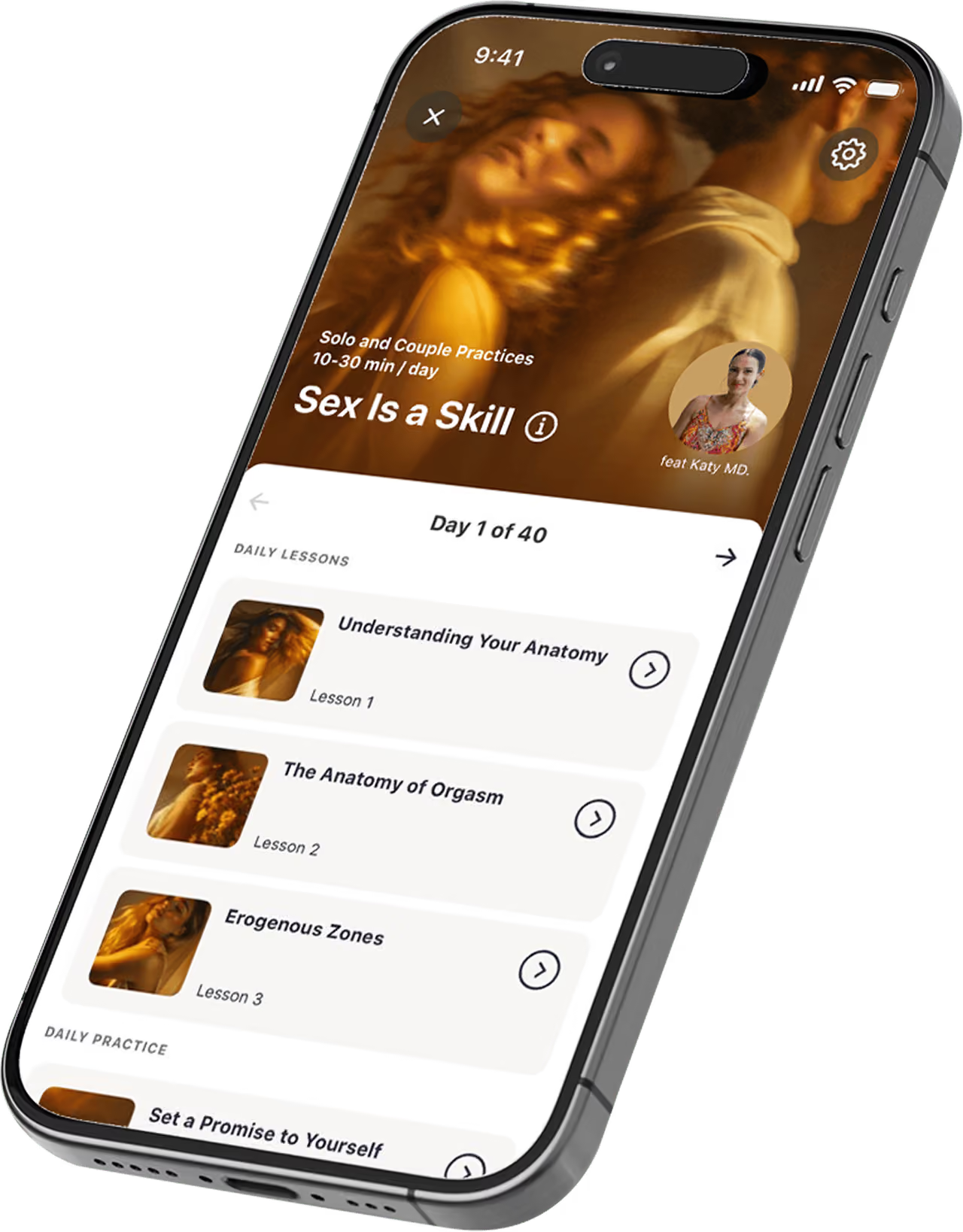
Sex is a Skill for Her is the women’s program inside The Coach. It runs in three parts: your own pleasure first, his body second, leading the connection third. Squirting is one lesson inside the first part, and it arrives after the lessons that make it possible rather than before them. The app is paid.

  1. Answer the quiz. A few questions about what your body already does, and what it has never done.
  2. Get the order, not a list. Anatomy, arousal, the front wall, then squirting — each one a lesson and a practice, ten to thirty-five minutes at a time.
  3. Practice with your hands free. Most of the practices are guided audio, so you are following a voice instead of re-reading a paragraph in the dark.

One minute of questions, then the order your body needs.

The quiz asks what already happens and what never has, and returns the plan built for that.

Get my pleasure plan

How to Squirt: The Five Steps, in Order

This is the program’s Deep Squirting Method, and the order is not decoration — each step exists to make the next one possible. Learning how to make yourself squirt starts alone, which is also how the course teaches it. A partner’s hand reaches the angle more easily than your own, and that is a fact about wrists rather than about you.

  1. Warm the vulva. Palm heat, a zigzag along the outer lips, a slow stretch outwards. Nothing internal yet. The program treats this as the step people skip and then blame their bodies for.
  2. Map with one finger. Two to three inches in, on the front wall, curled toward your navel. You are looking for the ridged patch — the G-zone — and then, on the opposite wall, the K-zone. Map them. Do not work them yet.
  3. Brush wide with two fingers. Broad strokes toward the pubic bone, the same motion over and over. This is the loading step, and you are listening for the change in sound: a wetter, fuller sound is the glands filling, and it is the only signal the method gives you.
  4. Pulse fast and tight. Now the motion narrows to quick, firm pulses on the G-zone. The pressure builds and the urge to clench arrives with it. Everything up to here has been build-up.
  5. Bear down and withdraw. Stop gripping. Let the pelvic floor go and push gently outwards — a reverse Kegel, not a squeeze — and take the fingers out in one movement rather than in stages.

Steps one to four are pressure. Step five is permission. Almost everyone who says it has never happened stopped at four. What the same lesson block does for his body — the seal, the tempo sets, the mistakes — is in our walkthrough of how to give a blowjob.

What squirting is not

Three beliefs stop more women than any technique does, and none of them describes a body.

01Myth
It should look like porn. Staged, and often literally faked. The program’s word for porn is a sexual cartoon, and the volumes on screen are a production decision.
02Myth
It proves you are good at sex. The lesson says it plainly: squirting is not a trophy, and not proof that anyone is sexually advanced.
03Myth
Every woman can, if she tries hard enough. Some bodies do this easily, some rarely, some never, and nothing in the program treats the third group as a failure.

What blocks squirting, and what lets it happen

What blocks it

Going internal before you are properly aroused
Poking at one point, hard
Holding the pelvic floor tight the whole way through
Pulling out in stages at the peak

What lets it happen

Ten to fifteen minutes of external warm-up first
Broad, flat pressure across the front wall
Letting go and bearing down as the pressure peaks
One clean withdrawal, in a single movement

Every muscle you are tightening is the one that has to let go.

Is Squirt Pee? What the Fluid Actually Is

It is the most-asked question on the subject and it deserves a straight answer rather than a reassurance. The fluid leaves through the urethra, which is why the doubt exists at all. What fills the glands is not what fills the bladder — and the two can arrive in the same moment, which is also true and which nobody enjoys hearing.

Where it comes from

The Skene’s glands — the female prostate, in the program’s vocabulary — sit around the urethra and fill under pressure. Volume is not a score: a lot and a little are the same event.

Why the doubt is reasonable

Same exit. The sensation in that area reads as “I need to pee” right up until it doesn’t — and that sensation is the signal that the glands are full, which is exactly the moment most people stop.

Why people empty the bladder first

So the sensation has only one possible meaning left. The program treats this as basic setup rather than as an admission, and a towel does the rest of the worrying for you.

What it should not be

Pain, burning, or a hard stop is the body saying no. Ease off. Nothing here is worth pushing through, and nothing about the result is a measure of anything.

You know the sequence now.

Knowing it and doing it on a slow Tuesday evening are two different problems.

Get my pleasure plan

Why Can’t I Squirt — and What to Change First

Four things account for most of it, and three of them are fixable this week. The fourth is that some bodies simply do not do this, and the program says so rather than selling around it.

  1. Not aroused enough, by a wide margin. Most women take far longer to get fully aroused than they expect. Fifteen minutes of external warm-up is not indulgence, it is the precondition.
  2. The wrong pressure. Fingertip poking on a point instead of a broad, flat brush. This one changes the outcome faster than anything else on the list.
  3. A pelvic floor that never lets go. Training the floor changes both the grip and the release; the program routes it to the Kegel Journey in the app, and reports stronger orgasms within two to four weeks of that work.
  4. The clench at the last second. Fear of wetting the bed, fear of the mess, fear of how it looks. All three are answered by a towel and by the section above.
  5. A body that does not. It happens, it is not rare, and it measures nothing about your sex life. The rest of the front-wall work is still worth doing on its own terms.

Change the warm-up and the pressure first. If nothing shifts after that, you have learned something real about your own body rather than failed at a trick.

The Numbers After Four Weeks With the Program

From a survey of The Coach users who finished their first four weeks:

58%
Felt more connected to their bodies
55%
Said sex became much more satisfying
39%
Reported a higher libido
41%
Had stronger, more frequent orgasms

Those came out of four consecutive weeks of practice.

Not four days, and not four evenings of reading.

Get my pleasure plan

What women say after the first weeks

Unedited reviews from the App Store and Google Play.

“I love this app it's so informative and interesting, I never understood what it was causing me not to have a full on orgasm but with the Coach app I've learned about the anatomy of orgasm and it was the light bulb that's been needed for me to understand the whole situation of why I can't allow myself to relax and allow myself to enjoy and let go”

Kathleen Butler

“I love this app because it has useful, science-backed information presented in an interesting way. No stigma, no shame - just a lot of useful information and exercises. Highly recommend”

shonna b

“Very approachable. I hadn't ever used an app like this but I feel like it has given me perspective about my own body and has enhanced intimacy. Educational and engaging, I am enjoying it.”

Kendall

“I’ve been learning things about my body, and it’s anatomy, that I’m somewhat embarrassed to say I didn’t yet know, and I say that as someone whose 37 and inherently curious!! That shows me how important apps like this are, because female health and orgasam is often ignored to our detriment. ✨ Well done to the creators for re-centring women and doing it so well!”

Mirischu

Read all reviews

Who Checks What The Coach Teaches

Clinical researchers, certified sex therapists and medical professionals, including practising urologists, shape what The Coach teaches. Sex is a Skill for Her is the women’s curriculum in that library: your own anatomy first, then one pleasure pathway at a time, then his body, then leading the connection.

Dr. Jessica Yih

Urologist and director of women's sexual health and male infertility at UCI.

Dr. Kirti S. Patel

Board-certified ob/gyn and host of The Gynarchy, a women's-health podcast.

Dr. Justin Lehmiller

PhD in social psychology and senior research fellow at the Kinsey Institute.

Dr. Paula Hall

Accredited sexual and relationship psychotherapist, registered with leading professional bodies in psychotherapy.

Natalie Goldberg

Certified sex and family therapist dedicated to improving intimate relationships and personal well-being.

Dr. Susie Gronski

Licensed physical therapist, certified sexuality counselor, and founder of a men's pelvic health clinic.

Dr. Gary Shlifer

DO, board-certified internal medicine physician specializing in preventative care, nutrition, and anti-aging.

Dr. Joshua Roland

MD, sleep medicine specialist, and clinical instructor at the David Geffen School of Medicine, UCLA.

Questions About Squirting

Does squirting mean I had a better orgasm?

No, and the program is direct about it: squirting is not a trophy and not proof that anyone is sexually advanced. It is one release among several a body can produce, and plenty of the strongest orgasms in the course’s own material involve no fluid at all.

Can I figure out how to make myself squirt on my own?

Yes, and the program teaches it solo first — the whole first part is self-directed. A partner’s hand reaches the front-wall angle more comfortably than your own wrist does, so it is often easier with someone else, but nothing in the method needs a second person.

How long before it happens?

Nobody can answer that for you, us least of all. The course refuses to put a date on it and says only that regular exploration increases comfort and responsiveness over time. It puts a figure on one thing only: pelvic-floor work, where it reports stronger orgasms within two to four weeks — that is the app’s Kegel Journey.

What do I actually get in the app?

Sex is a Skill for Her, the women’s program, split into three parts and delivered a lesson and a practice at a time — ten to thirty-five minutes each, many of them guided audio. Squirting is one lesson in the first part. The Coach is paid, and the quiz ends in checkout.

Do I need toys, gels or a partner?

None of the three for this. Fingers reach the angle, a towel handles the rest, and the first part of the program is written to be done alone. The course does recommend a curved toy and lubricant for some of the later front-wall work — recommendations to buy, never things the program includes.

Is my data private?

Completely. What you do in The Coach stays in The Coach. No data is shared, and your activity is visible to no one but you.

How do I get in touch?

Two ways. Email support@the.coach and a real person on our team gets back to you — usually within a day. Or open the app, go to the Today tab, tap your profile, and hit Support. Both land with the same people.

More programs from The Coach

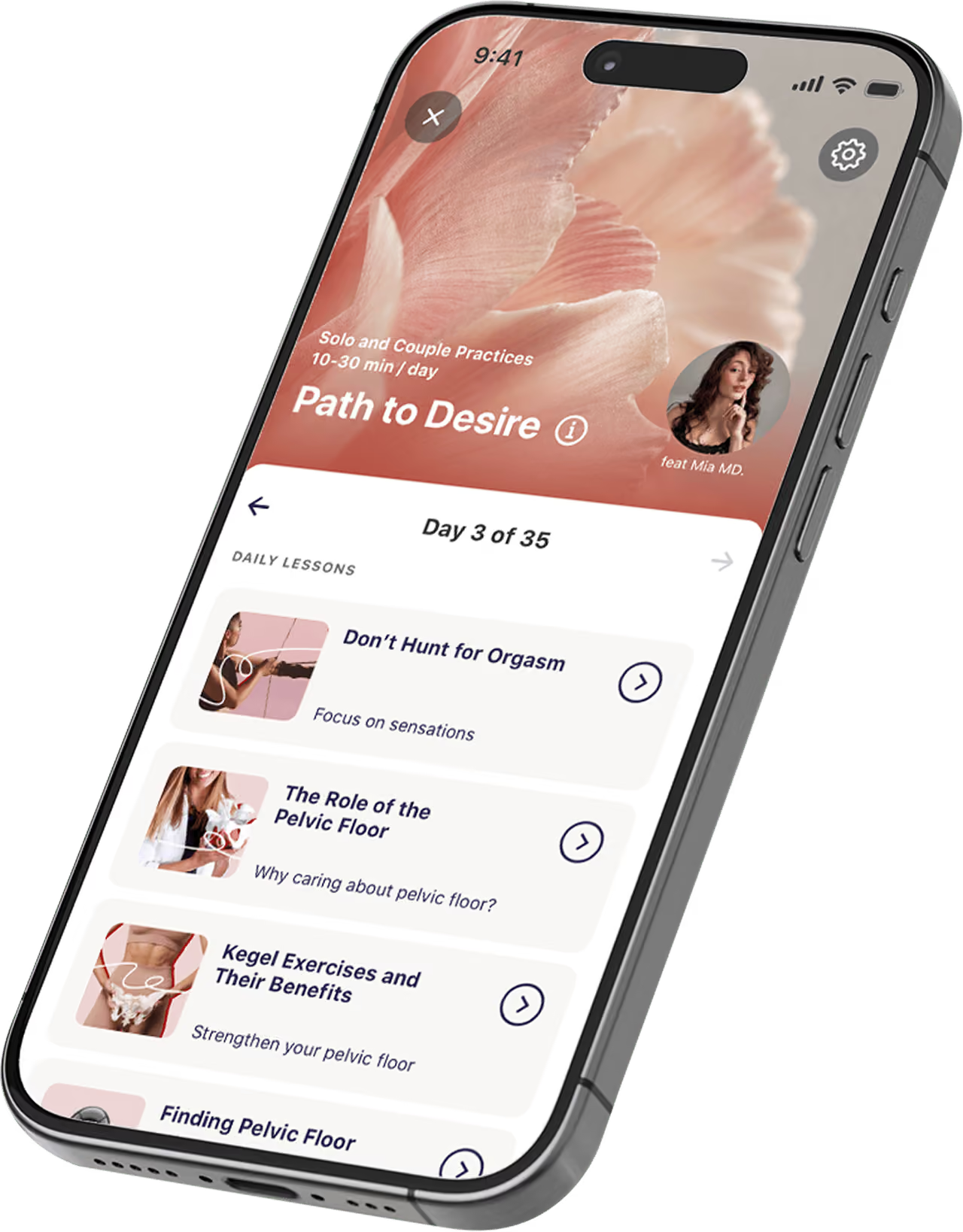
Path to Desire

Low desire isn't permanent. Bring it back in five weeks.

See the program

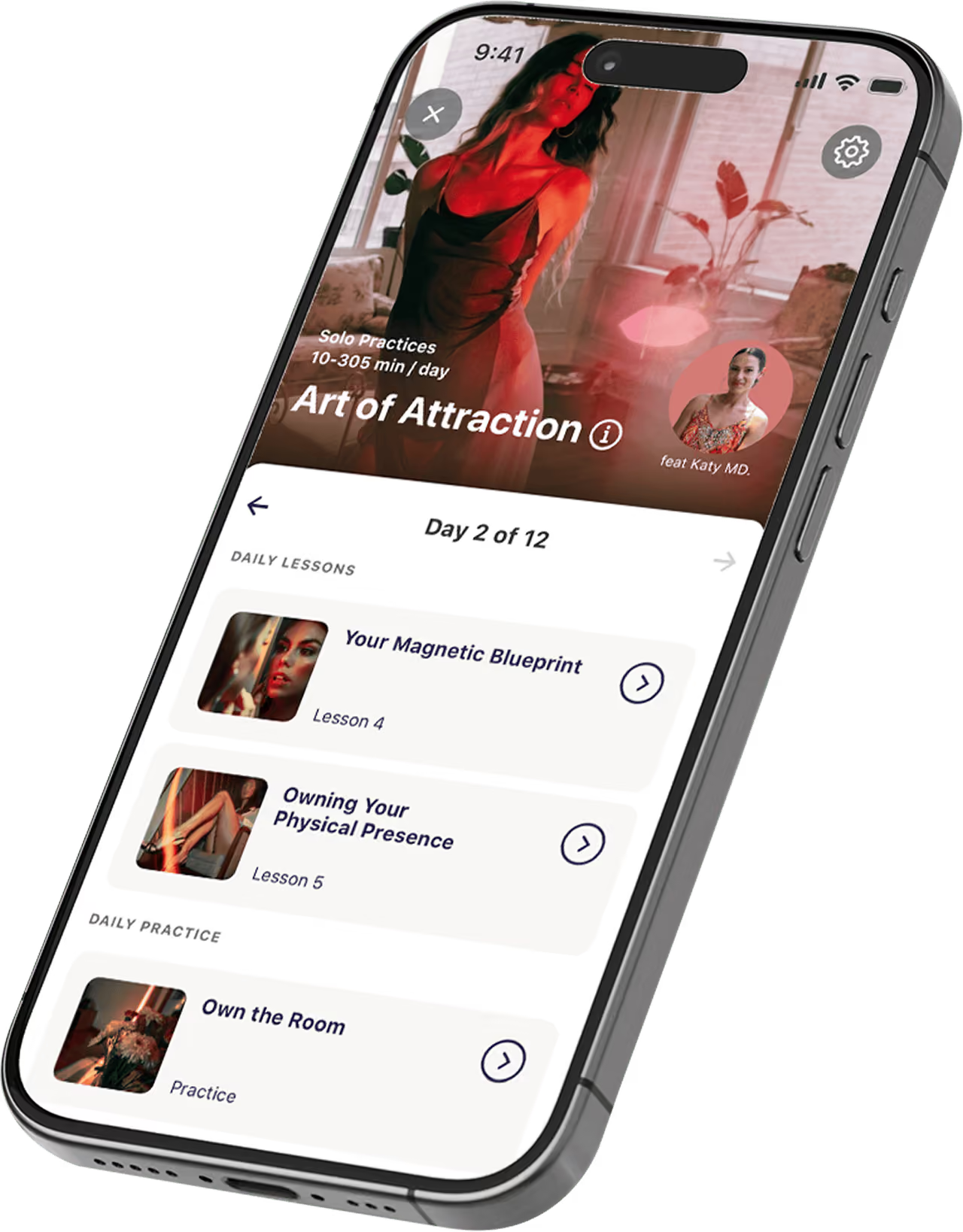
Art of Attraction

Attraction is energy, not looks.

See the program

The last step is the one that feels like giving up.

Three parts, your own body first, a lesson and a practice at a time — ten to thirty-five minutes, with the front-wall work arriving after the arousal work rather than instead of it.

Get my pleasure plan