Responsive Desire:
The Wanting Arrives After the Body Does

“I love him. I just never think about it.” That sentence gets read as a diagnosis, and it’s a description of a brake. Arousal in this program runs on two pedals at once: a gas pedal that answers touch, closeness, fantasy and mood, and a brake pedal that answers stress, thin walls, a body you are watching from the outside, and the thought that you are taking too long. Most low desire is not a shortage of gas. It’s a brake with four named strengtheners behind it — and three of the four are settled before anyone has taken anything off.

Get my turn-on plan
4.7
1M+
Downloads
7,000+
User reviews

What Is Responsive Desire, and What Makes a Woman Want Sex

Responsive desire is desire that shows up after arousal has already started rather than before it. Nothing has to be wrong for that to be your pattern. In the program’s model, arousal and inhibition run at the same time — a gas pedal and a brake pedal — so the answer to what makes a woman want sex is usually less about adding gas than about which brakes are down.

  1. The two pedals. The gas answers touch, fantasy, smell, closeness, a voice, a mood. The brake answers anything the nervous system reads as unsafe, rushed or watched. Arousal is both halves at once: gas on, brakes quiet.
  2. The brakes are usually the story. The program is blunt about it — most low desire in women means the brakes are simply too sensitive. That’s a fact about sensitivity, not about how much you love him.
  3. Two kinds of brake. Outside: kids down the hall, thin walls, a door that does not lock, fear of pregnancy or infection. Inside: “What if I don’t come.” “I’m taking too long.” “Do I look okay.” The inside ones are the stronger set.
  4. Stress moves both pedals, in opposite directions. For most women it slams the brakes down. For a few it does the reverse. Knowing which one you are explains most of a bad year.
  5. What triggers female arousal is your own mix. How easily your gas turns on and how fast your brakes answer is the combination you were born with — the program calls it your sexual temperament, and it describes you rather than scoring you.
  6. Wet is not the same as turned on. Lubrication and arousal run on separate systems, and the course spends a lesson pulling them apart. Neither one is evidence about the other.

So the honest order is: quiet what is loud, then start the touching, and let the wanting arrive second.

Where the Desire Lessons Sit in Sex is a Skill for Her

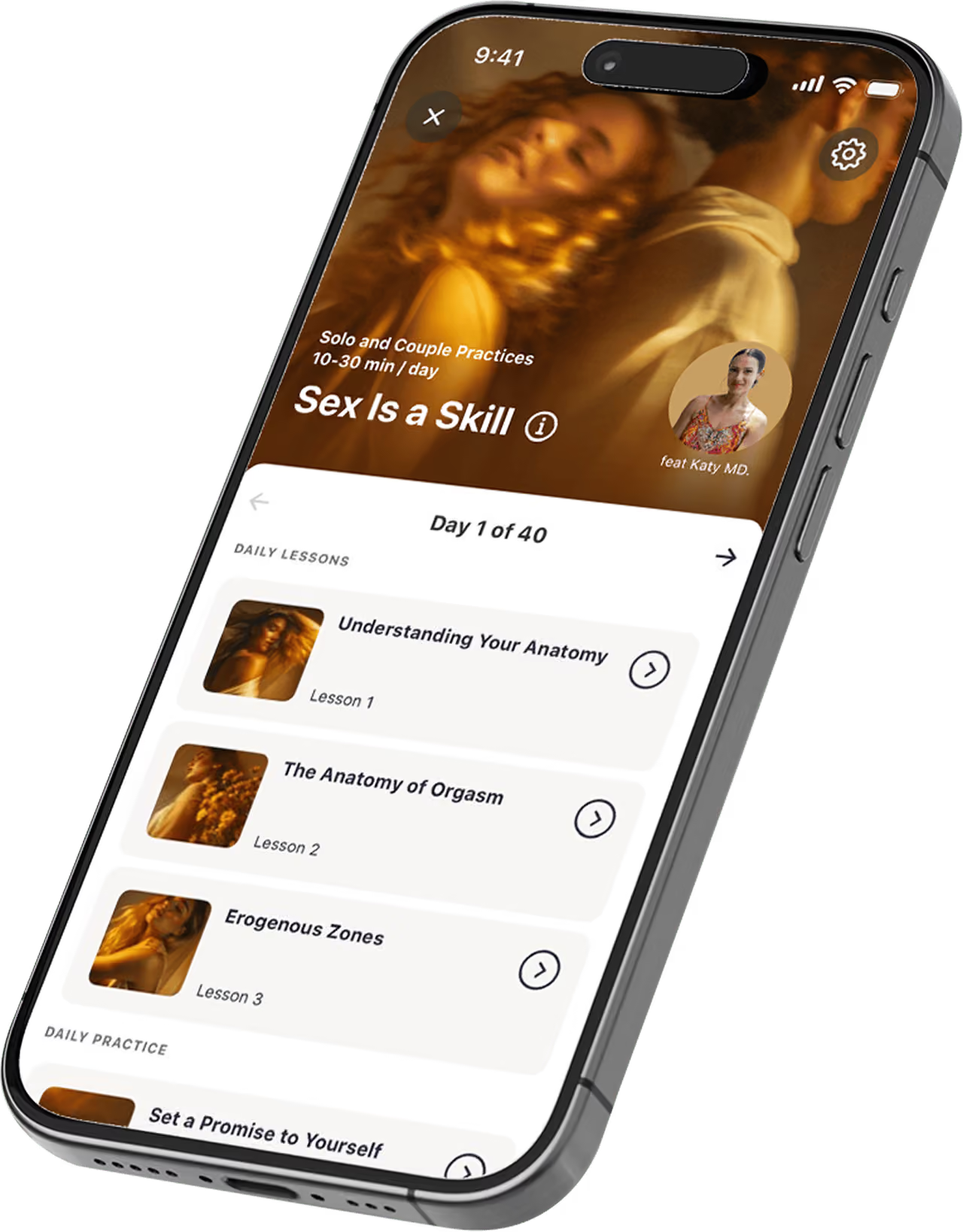
Sex is a Skill for Her is the women’s program inside The Coach. It runs in three parts: your own pleasure first, his body second, leading the connection third. The gas-and-brakes lesson sits in the first part, next to the practices that act on it — the ones for getting out of your head, and the ones that put your attention back into your skin. The app is paid.

  1. Answer the quiz. A few questions about what already turns things on for you, and what reliably turns them off.
  2. Get the order, not a tip list. The context work first, the technique after it — each one a lesson and a practice, ten to thirty-five minutes at a time.
  3. Practice with your hands free. Several of the practices are guided audio, so you are following a voice instead of remembering a paragraph.

A minute of questions, then the part of this that is actually yours.

The quiz asks what switches you on and what switches you off, and returns the plan built for that answer.

Get my turn-on plan

How to Get Turned On: Four Things That Open the Gas

The lesson’s claim is that your erotic system wakes up when it gets at least one of four things — not all four, and not a longer list. Adding a fifth is rarely the missing piece; supplying one of these four properly usually is.

  1. Emotional connection. Feeling wanted, appreciated, cared for, safe. For a large share of women this is not the romantic half of arousal, it is the mechanical half.
  2. Erotic cues. A fantasy, a story, a message that arrived at three in the afternoon, an image you keep. Mental input counts as input.
  3. Physical and visual stimulation. Seeing him close, deliberate, present and paying attention. Presence reads as intent, and intent is a cue.
  4. A sensual environment. Warm light, music, softness, build-up. The setting matters more than most women are willing to say it does.
  5. Give it longer than feels reasonable. The program’s foreplay lesson runs on a twenty-minute rule: roughly that much steady arousal before the body is properly open. Most women reach that point far later than they expect to.
  6. One is enough to start. The instruction is not to assemble all four. It is to notice which one is missing tonight and supply that one.

You cannot decide to want it. You can decide what is in the room when the touching starts.

Three things low desire almost never is

Three explanations that arrive long before anyone checks the brakes.

01Misread
A broken libido. Desire that arrives after arousal instead of before it is one of the two ordinary patterns. The lesson’s own closing line is that you are not broken, your libido is not too low, and your body is not failing you.
02Misread
A verdict on the relationship. Emotional tension is one of the four brakes, so a rough patch does register here — but so does a full inbox, a deadline on Monday, and a room where somebody else is still awake.
03Misread
Something to push through. Trying harder is itself on the brake list. Internal pressure — performing, comparing, chasing the ending — makes the system less responsive, not more.

What strengthens the brakes, and what quiets them

What strengthens them

Body-image stress — bloated, tense, observed
Fear of consequences — pregnancy, infection, someone walking in
Emotional tension — an argument, resentment, a week of not speaking properly
Internal pressure — trying to get there, timing yourself, comparing

What quiets them

A body felt from the inside rather than watched from the outside
Safety that is physical and specific — a lock, a closed window, a plan
The argument finished before the evening, not during it
An evening with no target on it, the orgasm included

Your brakes are not a fault in the system. They are the system, doing what it was built to do.

Spontaneous vs Responsive Desire: Which One You Are Running On

Two ways the wanting arrives, and the argument about which one is normal is a hundred years old and beside the point. One shows up unprompted; the other shows up once something has already started. Neither is the healthy version, and most women are not purely either.

Spontaneous desire

The wanting arrives first, unprompted, and the body follows it. It is what films and most advice assume, which is why the other pattern gets read as a symptom.

Responsive desire

The touching starts, the body answers, and the wanting arrives second. Asked in the cold, before anything has happened, you would have said no and meant it.

Neither one is the correct answer

What is responsive desire, in this program’s terms, is simply a temperament with a slower gas pedal and nothing wrong with it. It is the temperament that responds most to practice.

How to trigger responsive desire

You do not summon it. You assemble the conditions, start the touching, and let it show up second. The course puts it as an instruction: stop waiting for spontaneous desire, and cultivate the responsive kind.

You can name the brakes now.

Naming them on a Sunday and taking one off on a Wednesday are different jobs.

Get my turn-on plan

What Turns Women On: The Five Turn-On Triggers

Forget kinks and moods. A turn-on trigger is the specific condition that moves you from neutral to interested, and the lesson’s position is that they are patterns rather than rules: you will recognize one, maybe two. Your partner is probably wired for a different one, which is where most mismatches actually come from.

  1. Direct desire. Someone makes it obvious they want you — no hints, no negotiation. If this is you, certainty is the thing that works, and subtlety reads as nothing at all.
  2. Mental connection. The body follows the conversation. Being understood, being talked to properly, sharing something real before sharing anything else.
  3. Sensory and environmental. Dim light, warm skin, clean sheets, a room that feels like yours. If this is you, the setting is not an excuse — it is the mechanism.
  4. Playfulness and tease. Slow build, ambiguity, a text at lunchtime that goes nowhere for six hours. The delay is the turn-on; arriving straight at the point removes it.
  5. Relief and support. Desire arrives when the pressure lifts — after the day, after the crying, after someone takes something off your plate. Relief comes before release, in that order.
  6. Then time it. The practice is three steps: think back to a few times you were genuinely turned on and ask what had just happened; work out which trigger is his; then arrange one of the two deliberately instead of waiting to see.

Nothing here makes the mood appear on command. It tells you when the mood is already building, which is the part most people miss and then blame themselves for.

How to Stop Overthinking During Sex

The commentary during sex says nothing about your character and nothing about your partner. The program treats it as a nervous system that was never told the day had ended, and its answer to how to be present during sex is six ordinary moves — four of which happen before anything starts.

  1. Give yourself a transition. The mistake is going from doing life to being naked with nothing in between. Five minutes does it: a shower, music, a candle, slow moisturizer on your own arms. Something that tells your nervous system the state is changing.
  2. Three breaths out, with a sound. Three deep inhales through the nose, three slow exhales through the mouth with a soft “ahh”. Everything drops half a centimeter, and that’s the whole trick.
  3. Narrate instead of arguing. Give the thinking half a job: describe, silently, what is happening. “His hand is on my waist.” A brain cannot narrate and overthink in the same second.
  4. Change one thing when the attention drifts. New light, a different room, a different pace, a different touch. Drifting is usually the brain finding everything too familiar, which is neurological rather than emotional.
  5. Say the word “slow” out loud. Rushing is the reliable killer here: too fast and the mind never catches up with the body, and the body follows the mind. “More warm-up” is a sentence you are allowed to say.
  6. Count what happens outside the bedroom. A tense day makes tense sex. A walk on your own, a bath, an hour with the phone off — the calm has to exist somewhere before it can turn up here.

And how to feel sexy again turns out not to be a mirror question. The lesson’s route back is sensation — warmth, pressure, texture, breath — because attention spent on what you can feel is attention not spent on how you look while feeling it. The practice built entirely out of that attention is our walkthrough of guided masturbation.

What Changed After Four Weeks

From a survey of The Coach users who finished their first four weeks:

58%
Felt more connected to their bodies
55%
Said sex became much more satisfying
39%
Reported a higher libido
41%
Had stronger, more frequent orgasms

Four consecutive weeks did that.

Not four good evenings, and not four articles.

Get my turn-on plan

What women say once the pressure comes off

Unedited reviews from the App Store and Google Play.

“I am really loving this app!. For someone who really struggles to switch off and relax this is app has been teaching me how to awaken and become more aware of what is happening in my body! love it.”

Natalie Booth

“Sex and desire, in particular, are areas I want to improve in my personal life with my partner. For the first time, I don’t feel like an outsider, and I’ve realized that most of the things I was struggling with are actually quite normal.”

R.Appel

“This app absolutely helps me and understands me, there is no judgement taking place about my problem and it feels as if I am listening to a trusted source I can feel the excersices being effecting”

Luda Gerbs

“Amazingly educated. The material is simple and easy to understand. The app is very much user friendly. I love this app. It has been a great help for myself. It has helped me find the inner goddess that I lost so long ago. I am a better me today.”

Mema Armour

Read all reviews

Who Checks What The Coach Teaches

Clinical researchers, certified sex therapists and medical professionals, including practising urologists, shape what The Coach teaches. Sex is a Skill for Her is the women’s curriculum in that library: what opens the arousal system, what holds it shut, and the practices that work on both halves.

Dr. Jessica Yih

Urologist and director of women's sexual health and male infertility at UCI.

Dr. Kirti S. Patel

Board-certified ob/gyn and host of The Gynarchy, a women's-health podcast.

Dr. Justin Lehmiller

PhD in social psychology and senior research fellow at the Kinsey Institute.

Dr. Paula Hall

Accredited sexual and relationship psychotherapist, registered with leading professional bodies in psychotherapy.

Natalie Goldberg

Certified sex and family therapist dedicated to improving intimate relationships and personal well-being.

Dr. Susie Gronski

Licensed physical therapist, certified sexuality counselor, and founder of a men's pelvic health clinic.

Dr. Gary Shlifer

DO, board-certified internal medicine physician specializing in preventative care, nutrition, and anti-aging.

Dr. Joshua Roland

MD, sleep medicine specialist, and clinical instructor at the David Geffen School of Medicine, UCLA.

Questions About Desire and Arousal

What if I can’t get in the mood, and I’m too tired to try?

Almost all advice on how to get in the mood for sex means adding something — candles, lingerie, a plan for Saturday. Relief is one of the five triggers the program names, and for a lot of women the wanting arrives after the pressure lifts rather than before it, so subtraction usually beats addition. If nothing can lift tonight, the honest answer is that a tired nervous system holds the brakes down, and an evening that starts with twenty unhurried minutes beats one that starts with an attempt.

Is low desire something a doctor should look at?

Sometimes, and nobody here can rule that out for you — we make an app, not a diagnosis. Pain during sex, or a change that arrived suddenly and stayed, is a doctor’s question before it is ours. What the program works on is the context around desire: what quiets the brakes, what opens the gas, and when to start.

What is a sexual temperament, and can mine change?

It is the mix of how easily your gas turns on and how quickly your brakes answer, and the lesson is explicit that there is no right one. The most common temperament is also the one that responds most to practice — which is a statement about context and habit, not about willpower.

What do I actually get in the app?

Sex is a Skill for Her, the women’s program, in three parts and delivered a lesson and a practice at a time — ten to thirty-five minutes each, several of them guided audio. The gas-and-brakes material and the turn-on triggers are lessons inside it. The Coach is paid, and the quiz ends in checkout.

Do I need a partner, or anything to buy?

Neither. The first part of the program is entirely self-directed, and every partnered section later on carries a way out. Nothing in this material needs equipment; the course does recommend lubricant and, later, a toy for some practices — recommendations to buy, never things the program includes.

Is my data private?

Completely. What you do in The Coach stays in The Coach. No data is shared, and your activity is visible to no one but you.

How do I get in touch?

Two ways. Email support@the.coach and a real person on our team gets back to you — usually within a day. Or open the app, go to the Today tab, tap your profile, and hit Support. Both land with the same people.

More programs from The Coach

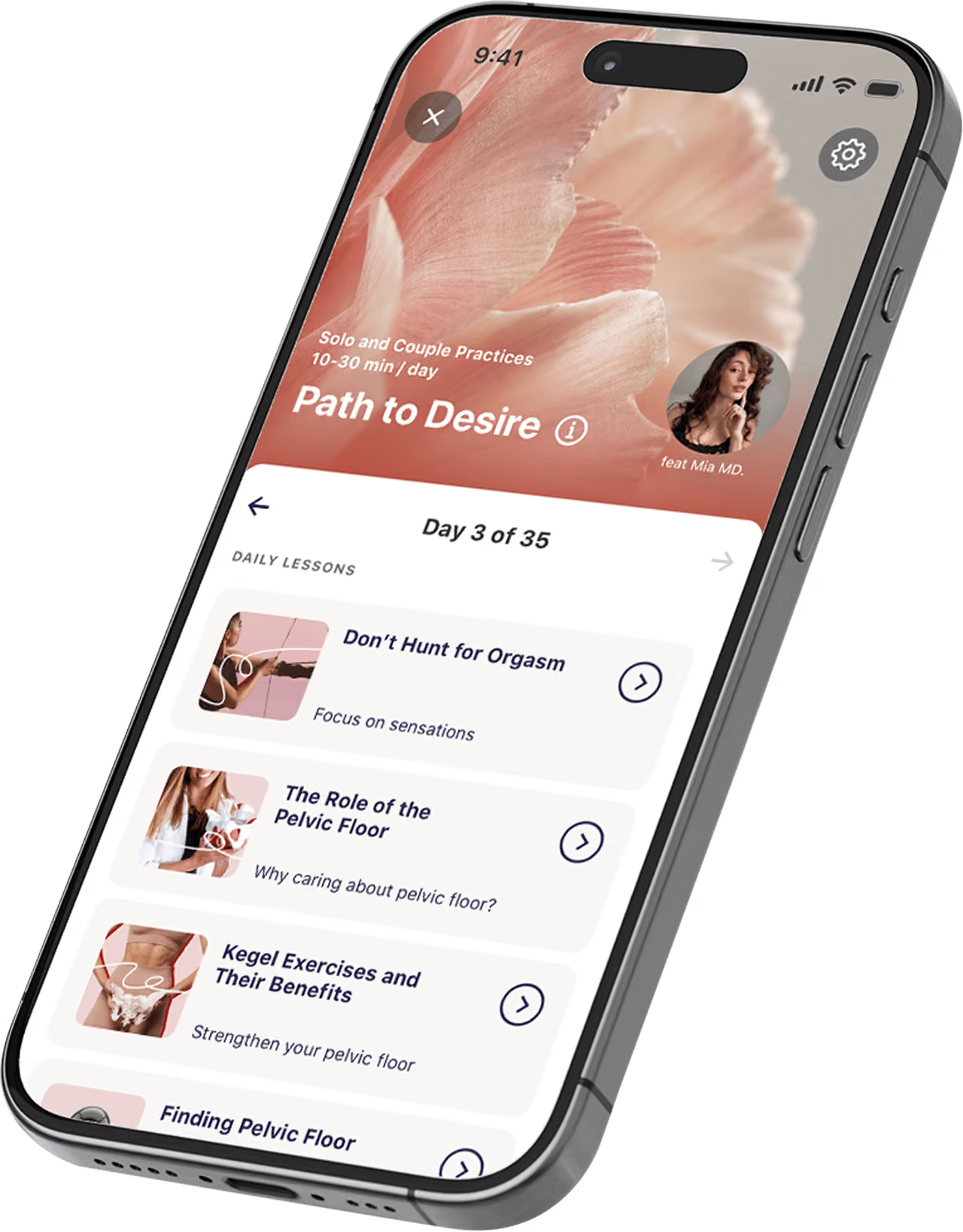
Path to Desire

Low desire isn't permanent. Bring it back in five weeks.

See the program

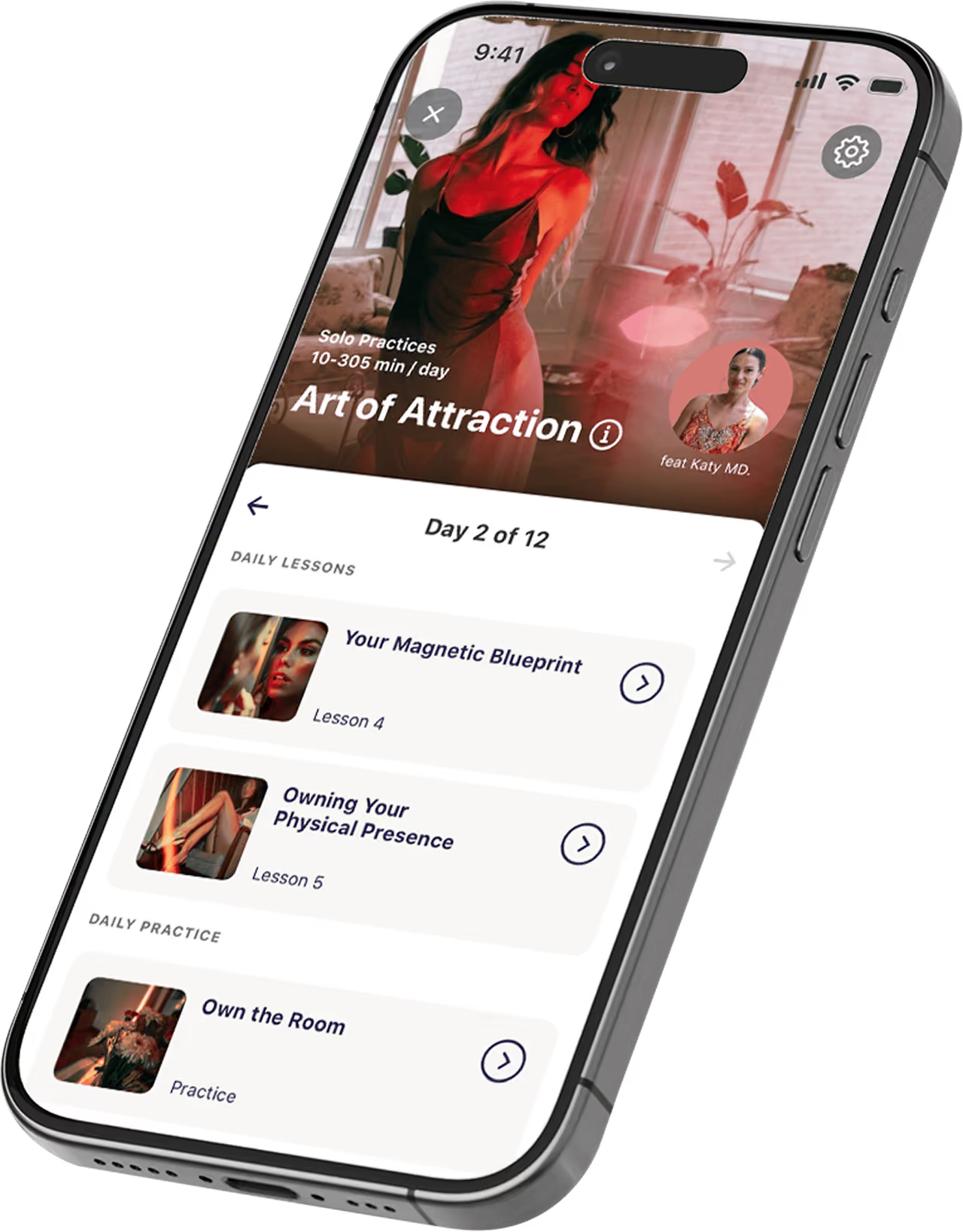
Art of Attraction

Attraction is energy, not looks.

See the program

Wanting it first was never the requirement.

Three parts, and the first one is entirely your own — lessons and practices of ten to thirty-five minutes, with the material that quiets the brakes arriving before anything that asks you for a result.

Get my turn-on plan