If you finish sooner than you’d like, it rarely means something is wrong with your body. Most often, arousal rises faster than you notice, and you’ve never practiced bringing it back down. Noticing your arousal and easing it down are skills you can learn. Last Longer, a program in The Coach app, teaches them step by step over eight weeks.
Take the quizFinishing early seldom has a single cause. Usually several of these work together:
Taken together, most of these causes come down to two things: you don’t notice how high your arousal is until it’s too late, and you haven’t trained your body to bring it down. Both can change with practice. If finishing early happens almost every time and has gone on for months, read about premature ejaculation.
Sex with a partner usually brings more stimulation and more pressure than you expect: new sensations, attraction, the wish for it to go well and sometimes the memory of last time. Alone, you set the pace and nobody is waiting, so it’s easier to stay calm.
How long you last also changes from day to day, and that’s normal. Four things often shift it:
So if one night goes well and the next doesn’t, take it as a sign of how you were that day, not as proof that something is wrong. A quick check before sex helps: are you stressed, tired or already very aroused?
By the strict medical definition, premature ejaculation means regularly ejaculating within about a minute, with any kind of sexual activity, for around six months. Most men last roughly five to seven minutes.
The clock isn’t the only measure, though. If you finish so fast in bed that it bothers you or your partner, it’s worth working on, whatever the stopwatch says. The aim is to finish when you choose to, not to hit a target time.
If early ejaculation started suddenly after years without it, comes with pain, or appears together with erection problems, talk to a doctor first.
To see where your own timing fits, read how long sex usually lasts.
Lasting longer doesn’t come from distraction or willpower. It comes from four skills that work together to help you notice your arousal and bring it down.
You can use these the next time you have sex or masturbate:
Tried once, these steps help a little. Practiced regularly and in a set order, they can change how your body responds. That’s what Last Longer is built for: a daily plan of guided sessions that starts with solo practice and adds partner practice later. Answer a few questions to get a plan that fits your starting point.
Finishing fast is often a habit your body learned, and your body can learn a new one.
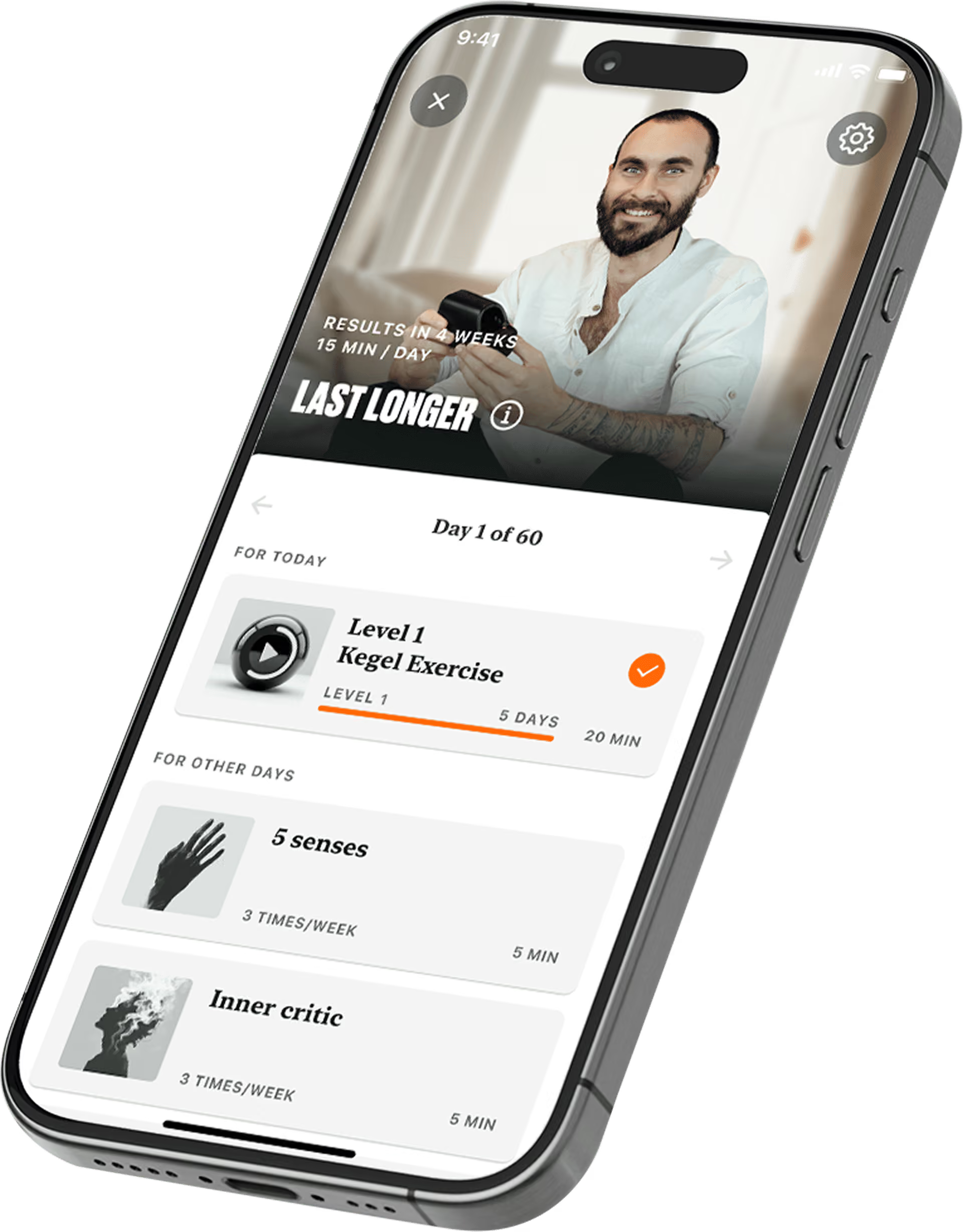
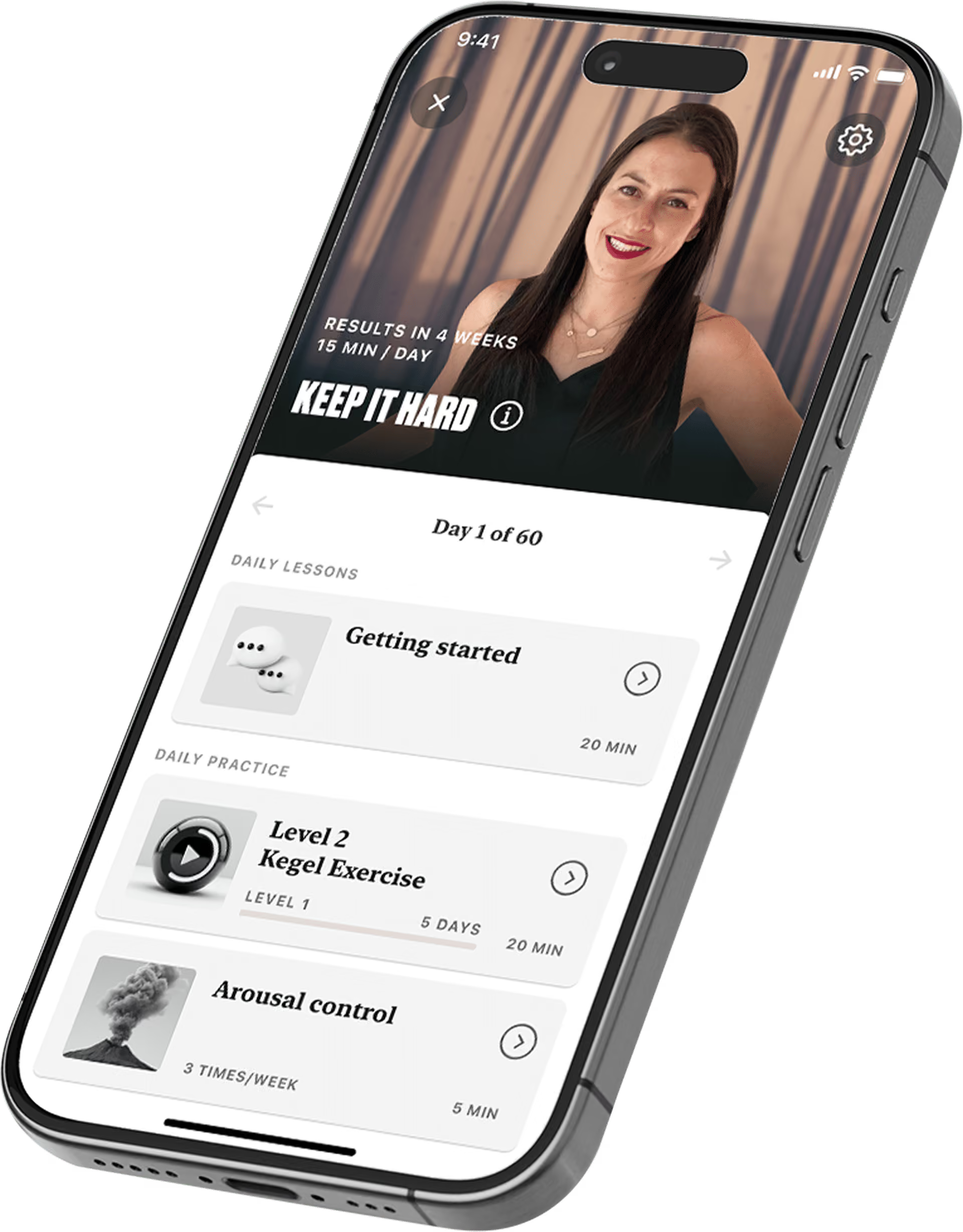
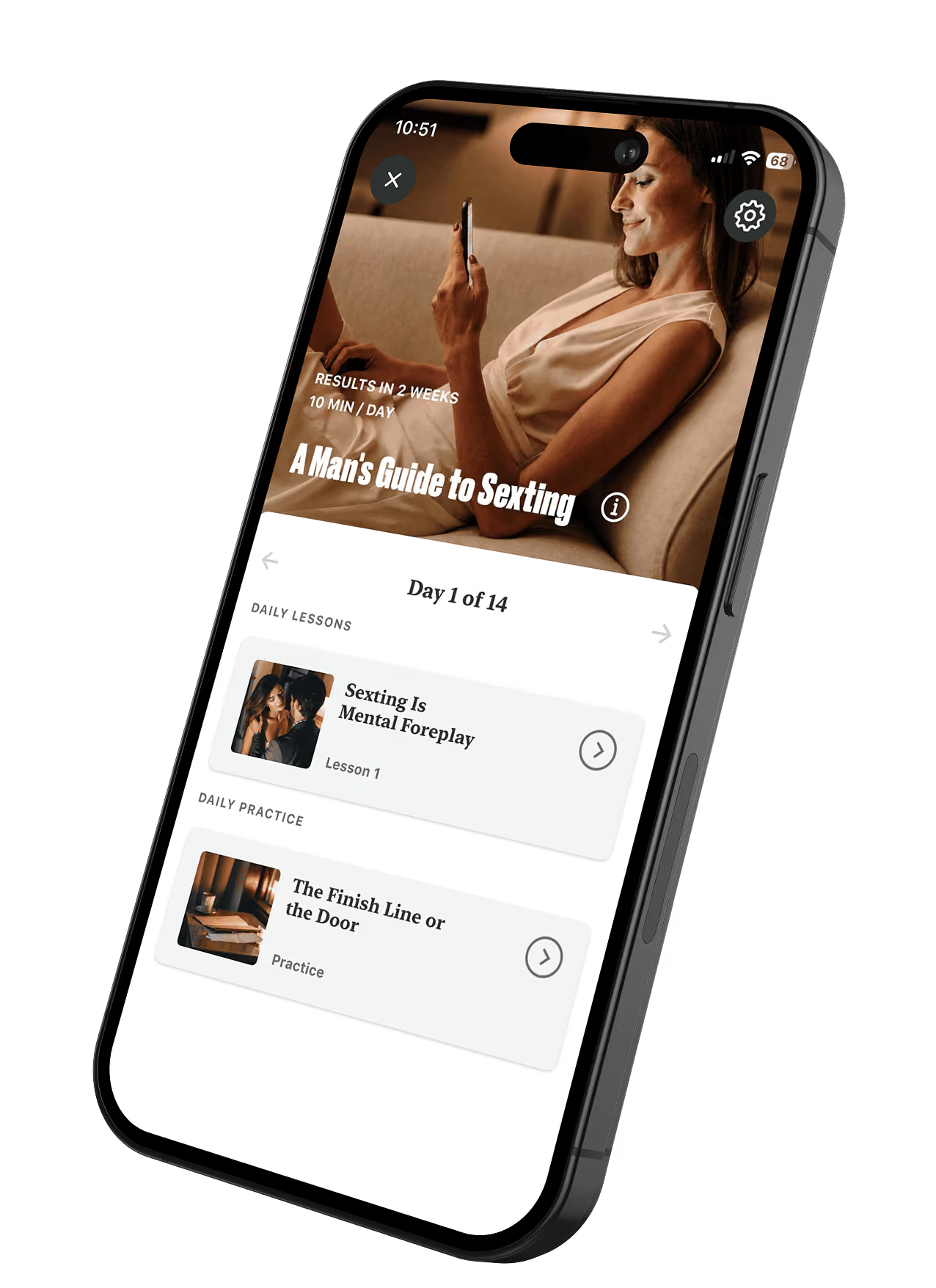
Last Longer is an eight-week program in The Coach app. It teaches the four skills in a set order, one step at a time.
Each day brings a lesson and guided practice: breathing, muscle relaxation and Arousal Practice, a slow, deliberate kind of solo stimulation.
You start alone, without pressure, and early on you also learn quiet techniques you can use during sex without your partner noticing. Partner exercises come in the later weeks.
The app includes a six-week Kegel program with reminders and daily guided audio sessions, so the muscle work becomes a habit.
A few questions about your habits and how sex goes right now set the starting point of your plan.
If you’re asking this about your partner, the same causes apply: habits, nerves, tension and arousal that rises faster than he notices. Finishing fast doesn’t mean he isn’t enjoying himself; strong attraction can itself add to the stimulation.
Pressure usually makes it worse, because worry speeds things up. A calm conversation away from the bedroom helps more, and so do a slower pace and more time for kissing and touching, which give him a natural pause without stopping.
For techniques he can practice, see how to last longer in bed.
These figures come from a survey of The Coach users after their first four weeks. They show what users reported, not a promise of the same result for you.
Progress comes from regular practice, not from one perfect night. Some days you’ll feel more in control than others, and that’s part of learning. You start alone, learn what each arousal level feels like, then carry the same skills into sex with a partner.
Reviews from men who practiced with the program, in their own words.
“55 yo. After months of being dubious about this app and what it promises, I took a chance on it based on the reviews. Am I ever glad I did! In just two weeks I’ve gone from ‘goodness you finished already? 🥲’ to ‘please finish baby I’m exhausted 🥵’ 🤣👍🏼”
“Have been taking these Kegel Exercises for a good three weeks. Superb results from this and the arousal control advice. Intercourse with my wife has gone from about 30 secs to 2 mins. Big thumbs up 👍”
“I have known all these exercises for a while but I was not able to stay consistent for a long time. I like that the app is engaging and makes you keep coming back to do your workouts. I also like that includes breathing exercises and psychological aspects as well. So it is all in one.”
“I was skeptical on how the exercises would help. I had tried pills to go longer and they had no impact. The exercises and practices in my path have been great to enable my body to learn how to control itself in the moment. Highly recommend as an alternative!”
The Coach programs are developed with clinical researchers, certified sex therapists and medical professionals, including practicing urologists.
Dr. Justin Houman
MD, UCLA-trained urologist and male reproductive specialist focusing on sexual health.
Dr. Susie Gronski
Licensed physical therapist, certified sexuality counselor, and founder of a men's pelvic health clinic.
Cameron Fraser
Australia's leading men's sex coach, specializing in male sexual wellness and performance.
Dr. Amy Pearlman
Board-certified urologist specializing in male sexual wellness, performance, and hormonal health.
Gerard Greene
Specialist men's health physiotherapist and senior lecturer at Coventry University.
Natalie Goldberg
Certified sex and family therapist dedicated to improving intimate relationships and personal well-being.
Dr. Paula Hall
Accredited sexual and relationship psychotherapist, registered with leading professional bodies in psychotherapy.
Dr. Justin Lehmiller
PhD in social psychology and senior research fellow at the Kinsey Institute.
Usually because arousal rises faster than you notice and your body has never been trained to slow it down. Habits from fast masturbation, nerves, muscle tension and intense stimulation all add to it. Each of these can change with practice.
Start with the basics: slow breathing before and during sex, noticing your arousal level, and easing off before you reach the edge. Practice alone first, where there’s no pressure. If it has happened almost every time for months, or started suddenly, talk to a doctor as well.
Often because you’ve always done it quickly: a firm grip, a fast rhythm and the goal of finishing. Your body learns that pattern. A lighter touch, a slower rhythm and stopping before the edge a few times per session teach it a different one.
Novelty, attraction and wanting it to go well add both stimulation and nerves, so arousal climbs faster than usual. A few minutes of slow breathing beforehand and plenty of time for foreplay give your body a chance to settle.
Masturbating an hour or two before sex can lower sensitivity for a while, so it may help on the night. It doesn’t teach your body control, though, so treat it as a short-term aid while you train.
They can. Your pelvic floor muscles help regulate ejaculation, and stronger muscles give you more control. 6 out of 10 men report significant improvement after 6 weeks of Kegel practice. Kegels work best together with breathing, relaxation and arousal awareness, not on their own.
See one if early ejaculation began suddenly, if ejaculating hurts, if you have trouble urinating or notice blood in your semen, or if it comes with erection problems. A doctor can check for a prostate problem or another medical cause.