Step 01
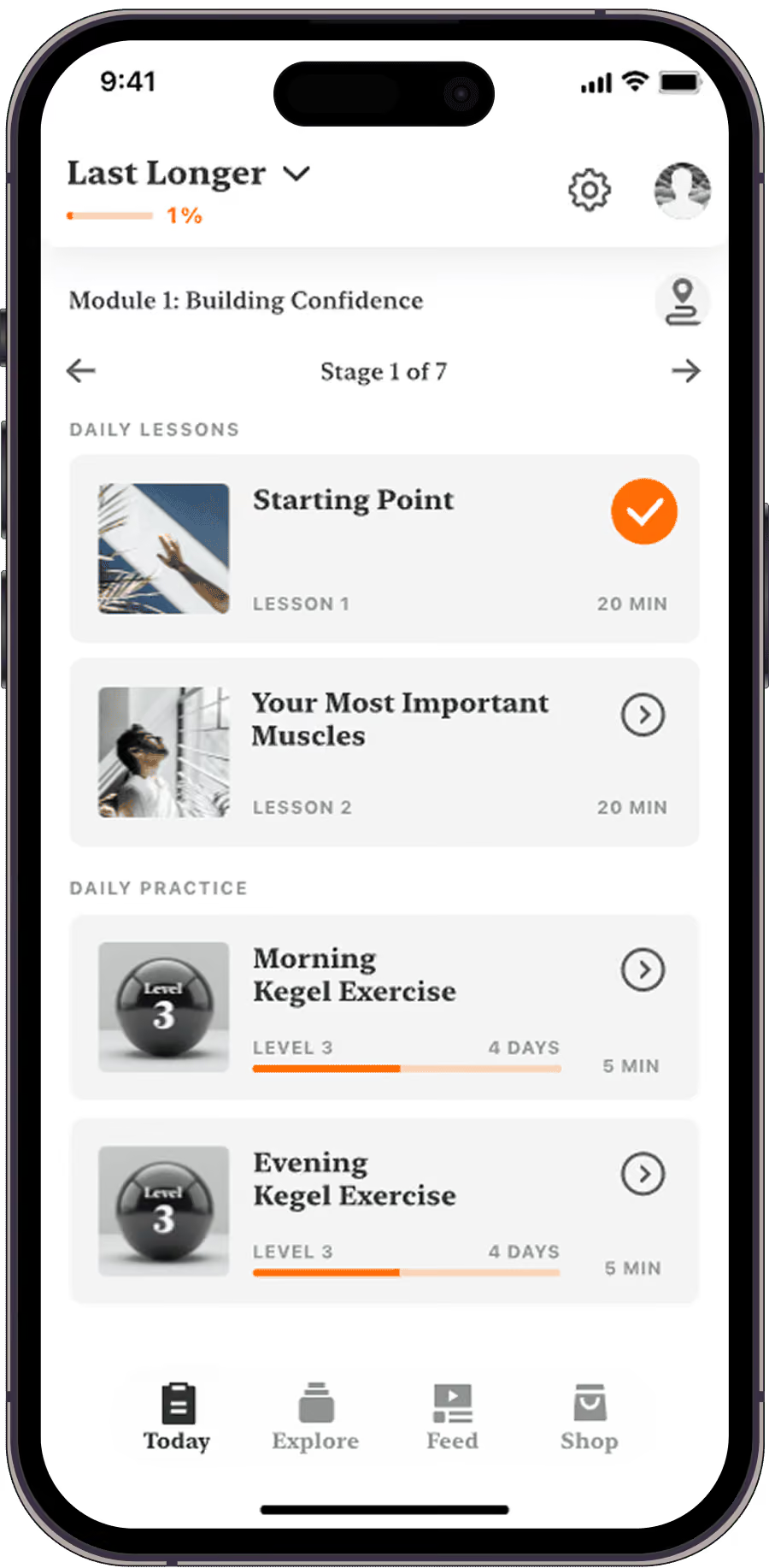
Answer the questions
A short questionnaire about your situation comes first, and your answers shape your personal plan.

About five and a half minutes, if you mean penetration and you mean the middle of the pack. In the largest stopwatch study on record, half the men finished before 5.4 minutes and half after, and the range ran from just over half a minute to forty-four. Sex therapists call three to seven minutes “adequate”. Your own time moves, three minutes one night and nine the next, and what moves it is how well you can feel your arousal and steer it. That part can be trained, and it’s what Last Longer, our program in The Coach app, is for.
Show me where to startThe biggest study is from 2005: 500 couples in the Netherlands, the UK, Spain, Turkey and the United States timed penetration with a stopwatch, from entry to ejaculation. It put the median at 5.4 minutes, the usual answer to “how long should sexual intercourse last?” That average time to ejaculate counts penetration only. Foreplay isn’t in it. Neither is anything that happens after.
None of these four findings was measured on you, and all of them are about penetration alone, not what comes before it. The therapists’ bands are the useful part. They put a floor under “adequate” that most men clear, and a ceiling on “desirable” that nobody needs to chase.
That is also why our program doesn’t use a stopwatch. It teaches you to read a one-to-ten arousal scale in the moment, and each stage of practice comes with a target level on it.
Therapists call three to seven minutes adequate, which raises the next question: what counts as premature ejaculation? The clinical description has three parts: ejaculation within about a minute of penetration, on nearly every occasion, for about six months. That is far below the typical five and a half minutes. So how long is considered premature ejaculation? Under about a minute, consistently, for months.
What the clock misses is how it feels, and most men describe it more simply: it happens before they chose to finish. A man who lasts four minutes and finishes exactly when he meant to has no problem. A man who lasts six and finishes a minute before he wanted to every night is the one who goes looking for answers. For a diagnosis the line is about a minute; for how it feels, it’s whether you chose when it ended.
Two situations call for something else. If it started suddenly after years of being fine, comes with pain, or arrived together with a change in your erections or your general health, that’s a conversation with a doctor before it’s anything an app should touch. And if what you want is the causes and what changes them, that’s covered in our guide to premature ejaculation.
Sex can last longer on some occasions than others. Here are eight factors that may affect the experience.
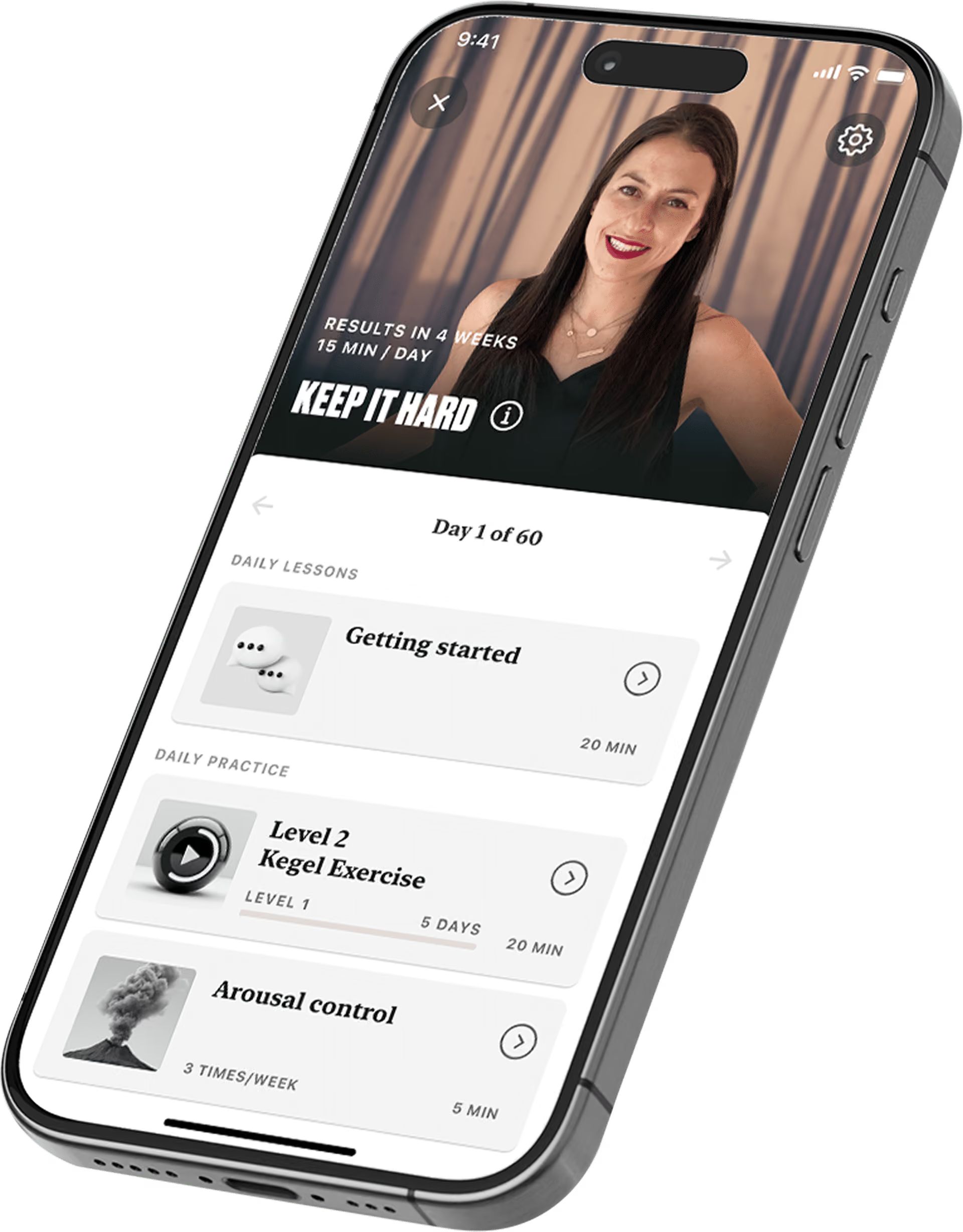
The eight-week program combines arousal awareness, breathing, relaxation and pelvic floor practice. A short questionnaire helps you find your starting point.
Step 01
A short questionnaire about your situation comes first, and your answers shape your personal plan.
Step 02
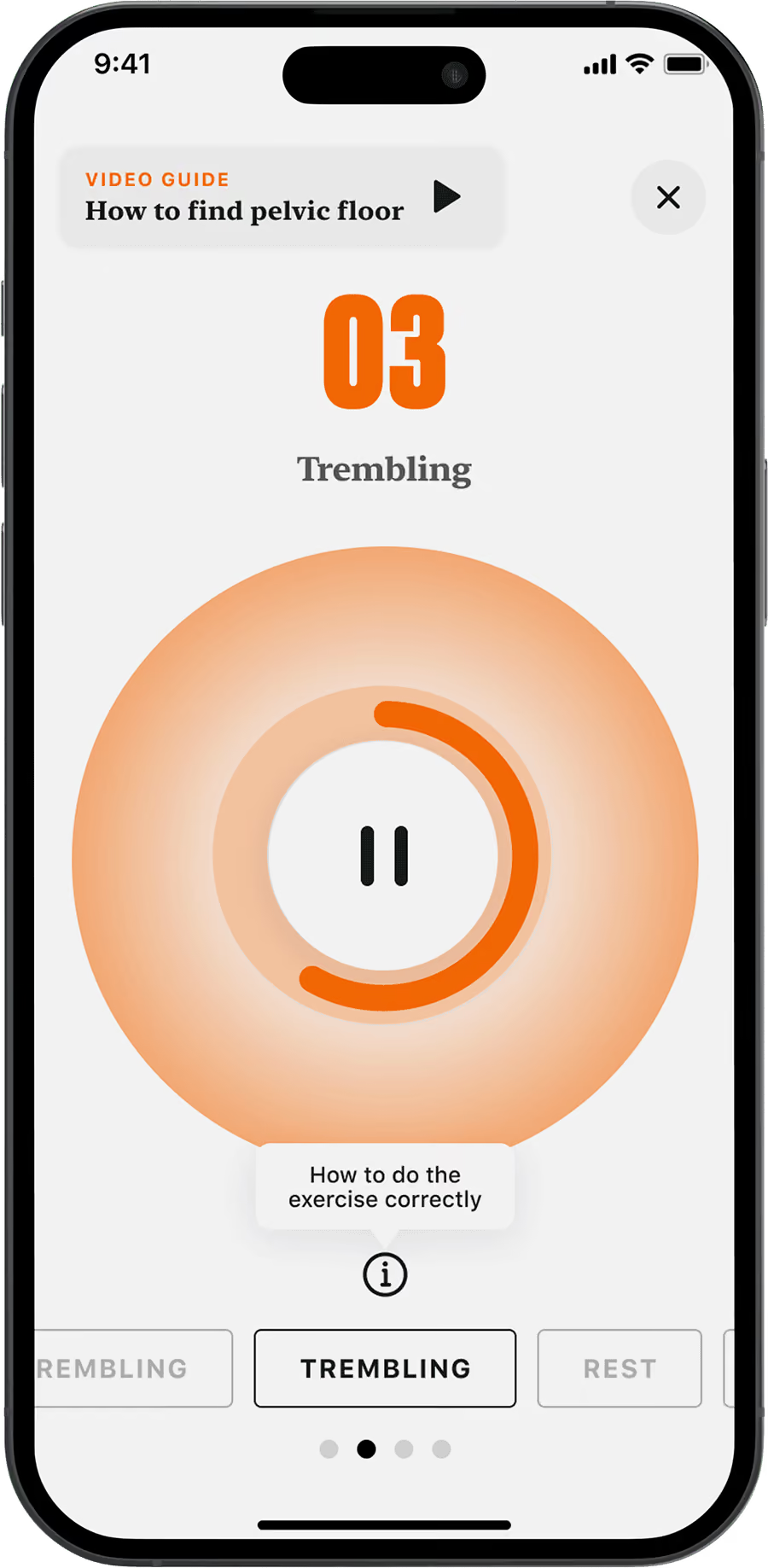
Ten levels, from relaxed to orgasm. Up to seven you stay loose and breathe; from eight you hold and steer. Learning to tell when you’re crossing from seven to eight is most of the work.
Step 03
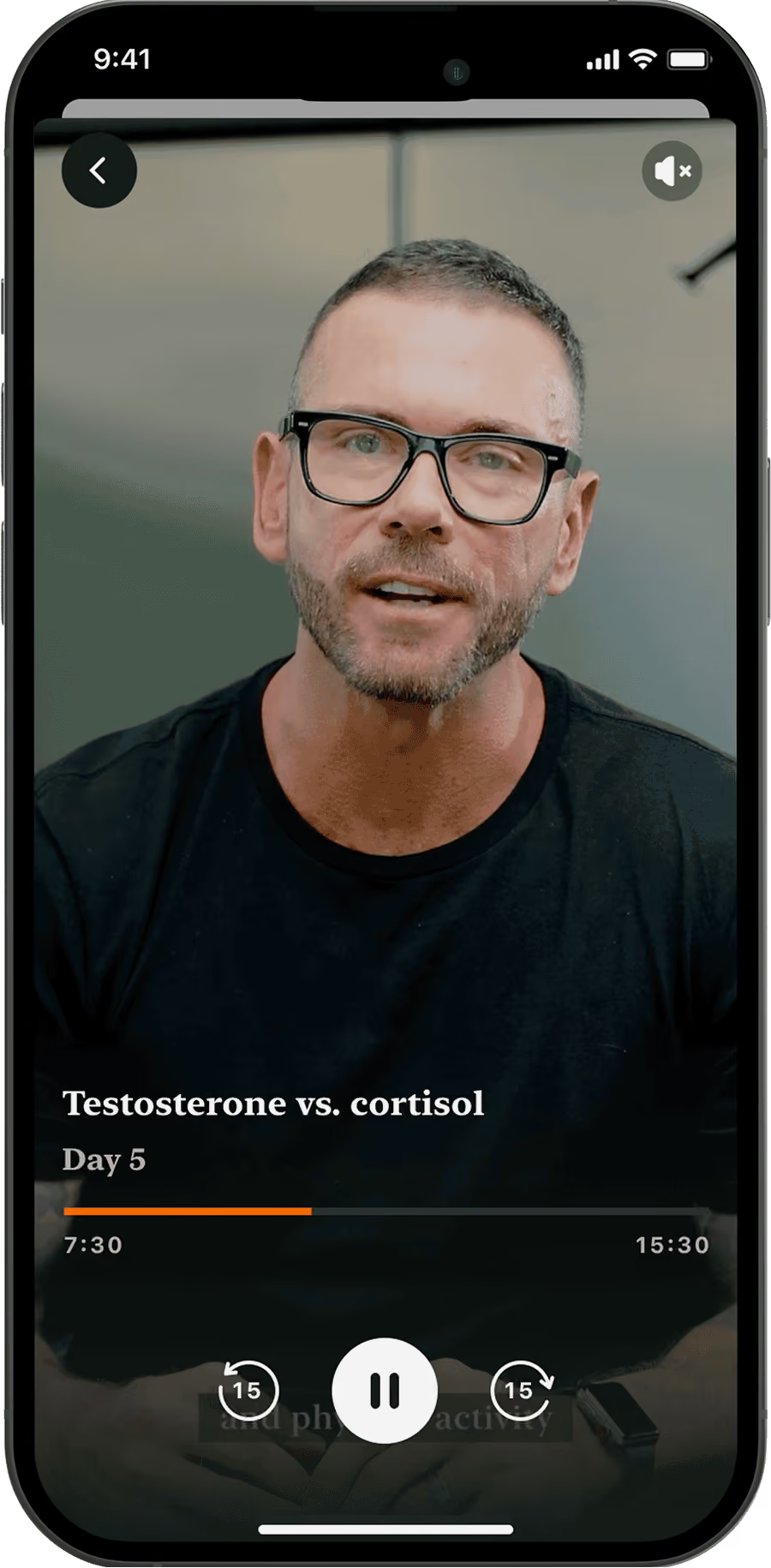
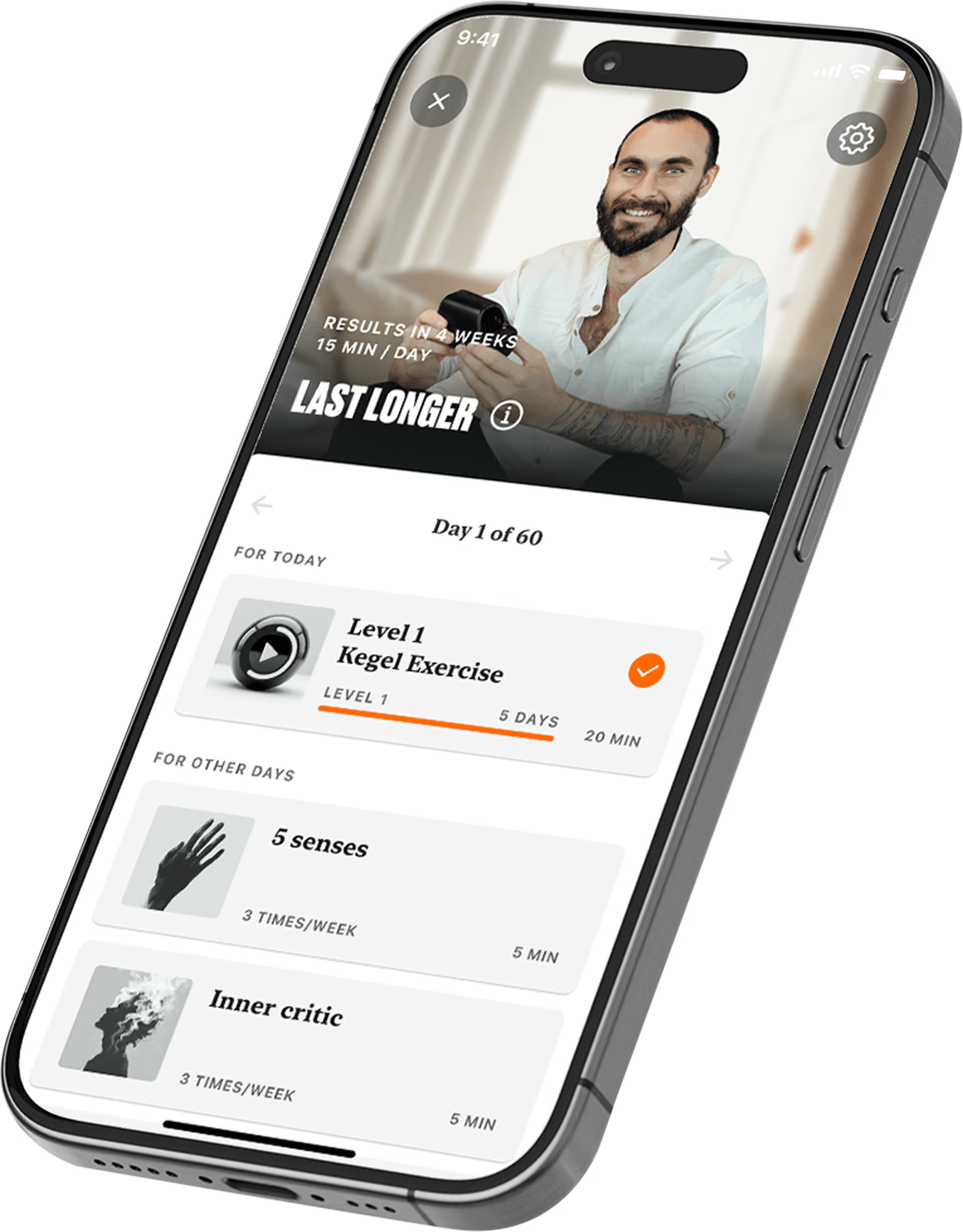
Three solo sessions a week, about twenty minutes each, keeping your arousal in the range where it’s still easy to control, plus a six-week Kegel program with daily guided audio that trains the strong pelvic-floor squeeze you use at nine.
A few questions, and your first day is ready.
The average is about five minutes; lasting past it when you choose to is a skill you can train.
Ask the couple instead of the stopwatch and the picture shifts. In a 2004 study of 152 heterosexual couples, both partners wanted intercourse to go on longer than it did. Men’s ideal was longer than their partners’, and women underestimated how long their partners wanted. So how long should sex ideally last? Longer than it does, say both of them, though not by as much as he assumes.
The women wanted more than they were getting, and still less than their partners believed they wanted. The gap between what she’d like and what he imagines she’d like is the part nobody measures at home.
Men named the longest ideal of anyone in the study, and both sexes shared the same wrong idea of what men want. If you take that figure as your target, you may be aiming at the stereotype rather than at what your partner wants.
Every duration study times penetration. The couples were asked about foreplay too, which the stopwatch never counts. In training, foreplay is where you practice control: time spent at a five or six on the scale, learning what your body does just before it tips over.
“Stamina” sounds like endurance, but the useful measure is how long you spend in control rather than how long before you ejaculate. A man who can hold a seven, drop to a five and come back has more of it than a man who lasts nine minutes on luck.
Guided sessions help you notice changes in arousal and practice responding to them. Progress varies from person to person.
From a survey of The Coach users after their first four weeks with the app:
Reviews left by men using the program, from the App Store and Google Play.
“Have been taking these Kegel Exercises for a good three weeks. Superb results from this and the arousal control advice. Intercourse with my wife has gone from about 30 secs to 2 mins. Big thumbs up 👍”
“55 yo. After months of being dubious about this app and what it promises, I took a chance on it based on the reviews. Am I ever glad I did! In just two weeks I’ve gone from ‘goodness you finished already? 🥲’ to ‘please finish baby I’m exhausted 🥵’ 🤣👍🏼”
“I was a skeptic at first, but 2 weeks in my wife told me to stop using the app because I’m lasting too long and her p***** raw. Well done The Coach! Also - not stopping Highly recommend it.”
“I was skeptical on how the exercises would help. I had tried pills to go longer and they had no impact. The exercises and practices in my path have been great to enable my body to learn how to control itself in the moment. Highly recommend as an alternative!”
The men in that survey had four weeks of practice behind them. Your plan starts with day one.
We built every program with urologists, pelvic-health physiotherapists and therapists who work in sexual health.
Dr. Justin Houman
MD, UCLA-trained urologist and male reproductive specialist focusing on sexual health.
Dr. Susie Gronski
Licensed physical therapist, certified sexuality counselor, and founder of a men's pelvic health clinic.
Cameron Fraser
Australia's leading men's sex coach, specializing in male sexual wellness and performance.
Dr. Amy Pearlman
Board-certified urologist specializing in male sexual wellness, performance, and hormonal health.
Gerard Greene
Specialist men's health physiotherapist and senior lecturer at Coventry University.
Natalie Goldberg
Certified sex and family therapist dedicated to improving intimate relationships and personal well-being.
Dr. Paula Hall
Accredited sexual and relationship psychotherapist, registered with leading professional bodies in psychotherapy.
Dr. Justin Lehmiller
PhD in social psychology and senior research fellow at the Kinsey Institute.
About five and a half minutes of penetration, if you go by the median of the largest stopwatch study: 5.4 minutes across 500 couples. If you’re asking “how long does sex last on average?”, it’s the same figure, with one caveat. The range in that study ran from half a minute to forty-four, so the average describes a crowd, not a man.
There’s no rule, only bands. Therapists rate three to seven minutes adequate and seven to thirteen desirable, and the same panel called ten to thirty minutes too long. So if you’re asking “how long should a male last before ejaculation?” or “how long should I last in bed?”, the useful answer is: long enough that you chose the moment.
Around five minutes of penetration is the median, and it drifts with age: the average time to ejaculate was 6.5 minutes for men aged 18 to 30 and 4.3 for men over 51 in the 2005 study. “Normal” covers the whole middle of that spread. The problem most men describe is finishing before they chose to.
Clinically: ejaculating within about a minute of penetration, nearly every time, for about six months. In practice the description most men recognize is finishing before they meant to, whatever the clock says. Causes, and what changes them, are covered in our guide to premature ejaculation.
Longer than it currently does, according to the couples who were asked, and by less than men assume. In a 152-couple study both partners wanted more time, men’s ideal was the longest, and women underestimated their partners’ preferences. Nobody in that study asked for a marathon; both sides simply wanted more time than they had.
Nobody has measured it the way penetration has been measured, so treat any figure you read as a guess. What does matter is the speed you practice. A fast, silent solo habit kept for years teaches the reflex to fire early, and that habit is what a new partner meets first. Slowing down alone, on purpose, is the first solo drill we teach for exactly that reason.
Minutes are the wrong unit. “Average stamina in bed for males” usually gets discussed as endurance, but the more useful measure is how long you spend in control, able to hold a level, drop a level and come back, rather than how long before you ejaculate. On that measure a man at six minutes who chose the ending has better stamina than one at twelve who couldn’t have told you when it would end.
It can, through about two months of practice rather than a trick. The classic drills are the squeeze and stop-start, run against an arousal scale; the fuller method (pelvic floor, breathing, relaxation and reading the scale) is what we cover in our guide to how to last longer in bed. How fast it changes varies from man to man, and what matters most is keeping up the practice.
The Last Longer program, week by week: the ten-level arousal scale and how to read it, solo practice with a target level for each stage, guided breathing and relaxation sessions, and a six-week Kegel program with reminders and daily guided audio. About two months of practice.
Neither. The first weeks are solo by design; that’s where you learn to read the scale without someone else’s rhythm in the room. Partner practice comes later, and some of it, like the long exhale and letting go of tension, works without your partner noticing.