Edging means bringing yourself close to orgasm and easing off before you climax. Done slowly and with a relaxed body, it isn’t known to harm your health. The side effects that do come up, such as an ache after a long session, tense pelvic muscles or dulled sensation, mostly trace back to habits you can change.
Answer a few questionsEdging is a way to practice arousal control. You build arousal until you are close to the point of no return, the moment when orgasm becomes inevitable, and then you let it come back down. Nothing in that cycle is known to damage the body.
So edging is not unhealthy or dangerous in itself, and it is not a health treatment either. It is practice for one skill: staying in control when arousal is high. Like any practice, it can be done in a way that works against you. Racing to the edge, gripping hard, holding your breath and clenching your thighs are the habits behind most of the problems men run into.
So whether edging does you any harm comes down mostly to pace, tension and rest.
The technique itself is covered in our guide to what edging is and how to do it.
Can edging cause problems? It can, though they tend to be mild and reversible, and each one points to a habit you can change.
Does edging hurt? It shouldn’t. If you feel pain, stop the session. See a doctor about pain that doesn’t pass, swelling, or blood in your semen or urine.
No one can give you a safe number of minutes or days, because there is no established limit. What we can say is where the trouble starts. You have been edging for too long once your body stops being relaxed. In a session that runs for hours, the grip tends to get harder, the muscles tighten, and you need stronger stimulation to stay aroused. At that point you are practicing the opposite of control.
The same goes for edging every day. Daily practice is fine while it stays short and easy, and even five to ten focused minutes count. It becomes too much when you feel sore, tense or irritable, or when you keep pushing through sessions you don’t enjoy. Then take a break. Rest is when your body and nervous system adapt.
Ending a session without ejaculating isn’t known to cause harm either; at most, long arousal can leave a passing ache in the testicles. Whether you finish at the end is up to you.
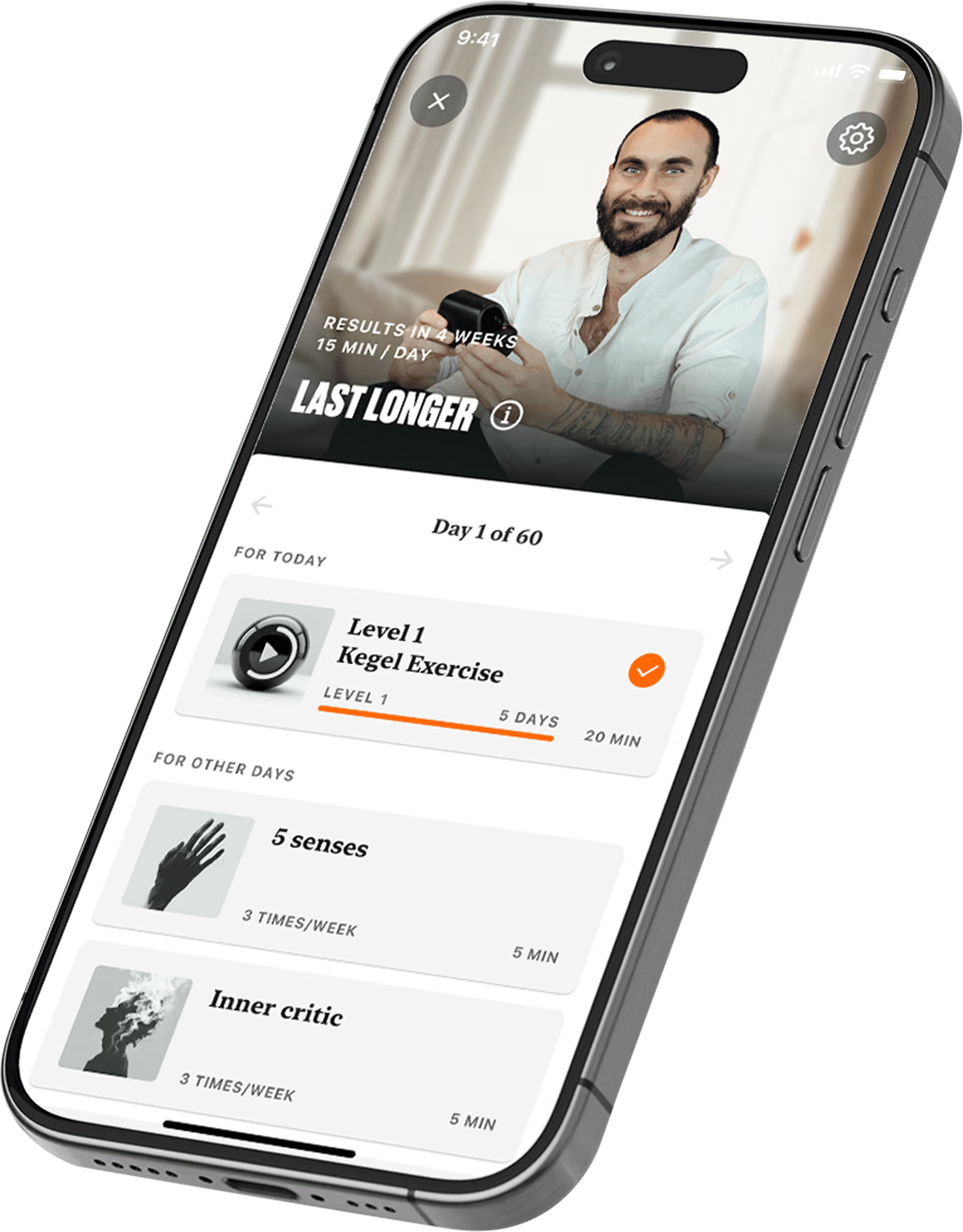
If you would rather follow a set pace than guess at one, Last Longer, a program in The Coach app, sets it week by week. Answer a few questions and you get a plan matched to your starting point.
Edging by itself doesn’t strain the pelvic floor. Clenching does. If you hold back by squeezing these muscles the whole way up, they get tight, tire quickly and can make ejaculation harder to hold off.
For most of a session the pelvic floor should stay loose. You can tell it is working too hard when your legs tense, you feel pressure low in your belly, or your breathing turns short and shallow. When you notice them, slow down, breathe out for longer than you breathe in, and let your thighs, abs and jaw soften.
A strong squeeze has one job. Right before the point of no return, a short, firm contraction followed by a full release can interrupt the reflex, but only when the muscle is trained and rested. That strength comes from Kegel exercises, a separate squeeze-and-release training for these muscles. Edging itself is neither good nor bad for the pelvic floor: it is where you learn to keep these muscles relaxed until you need them.
The squeeze and the release are explained step by step in Kegel exercises for men.
Rate your arousal on a scale from 1 to 10, where 1 is no arousal at all, 9 is the point of no return and 10 is orgasm. For most of a session, stay between 6 and 8. These seven habits keep practice comfortable and safe.
Edging is often treated as the whole method for lasting longer. It works better as the last step of one. Control over ejaculation is built in two stages, and edging belongs to the second.
Last Longer teaches the two stages in that order over eight weeks. The first weeks cover breathing, relaxation and basic Kegels, and work at the edge comes after. A short quiz builds your plan from where you are now.
Most trouble with edging comes from rushing, clenching and never taking a day off.
Safe edging depends on pace, a relaxed body and a trained pelvic floor. Last Longer works on all three before it takes you to the edge.
Eight weeks, each with its own goal, so you always know what to work on now and what comes next. Solo practice comes first and practice with a partner later.
Guided breathing, muscle relaxation and arousal practice are part of your daily plan, so you learn each technique by doing it.
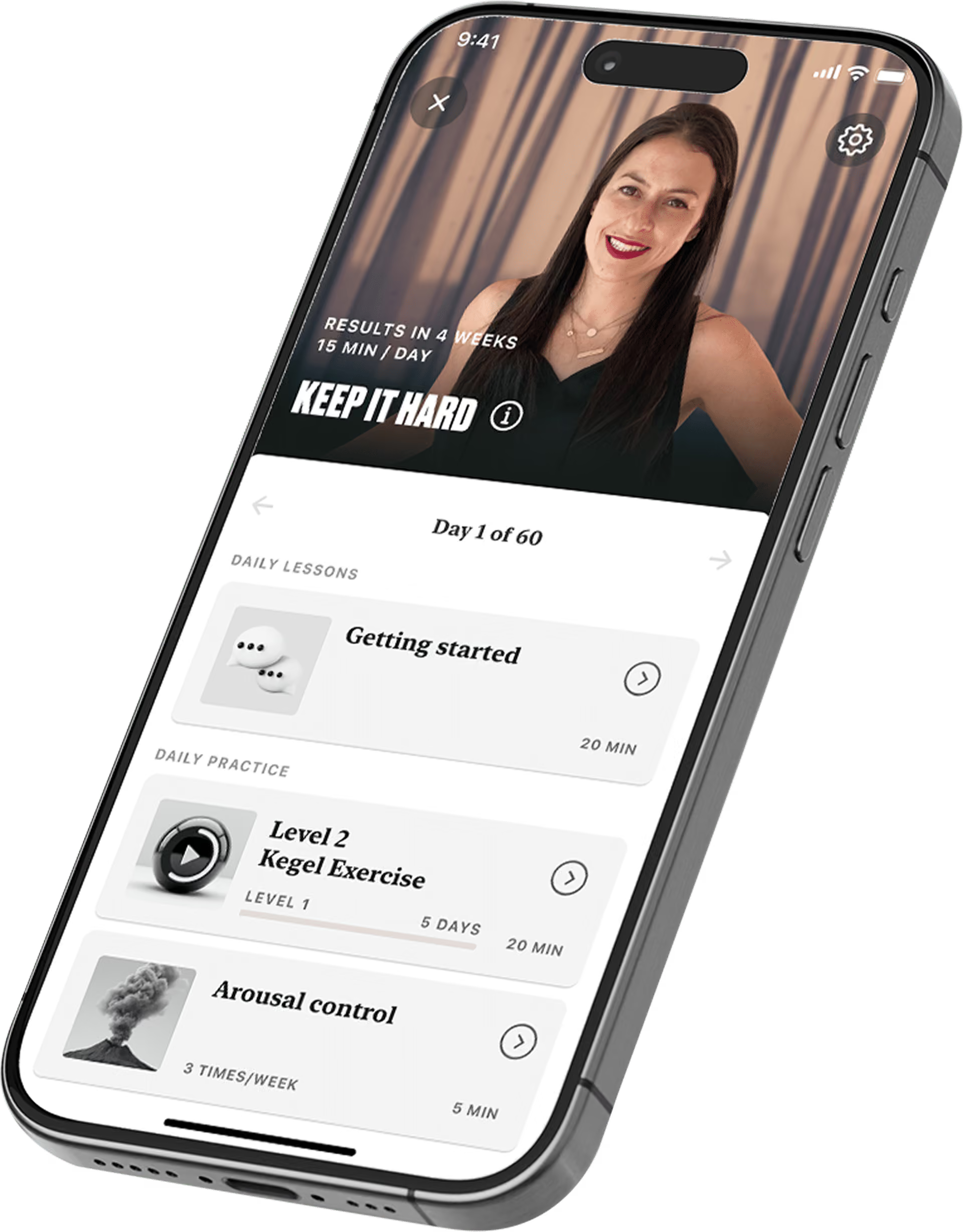
A six-week Kegel program with reminders and daily guided audio sessions, about ten minutes a day, helps you build the pelvic floor strength that control at the edge depends on.
Tell us where you are starting from in a few questions, and you get a personal Last Longer plan paced week by week.
End the session if you feel pain, numbness or soreness, and rest before the next one.
See a doctor if pain in the penis, testicles or pelvis doesn’t go away or keeps coming back, if you notice swelling or blood in your semen or urine, or if problems with erection or ejaculation persist. Those need a medical check: an app can teach a skill, but a diagnosis is a doctor’s job.
Some men get close within moments, even with light touch. That doesn’t mean something is wrong, and it doesn’t make edging risky for you. It means the middle of the scale deserves more of your time.
Hold arousal between 5 and 7 with a lighter grip and a slower rhythm, and stay relaxed while you are there. Vary the kind of touch, and when arousal climbs toward the edge, pause and let it come back down. Each session at that level teaches your body to take more stimulation without reacting automatically.
There is more on the causes in our guide to a penis that feels too sensitive.
These figures come from a survey of The Coach users after their first four weeks. They show what users reported, not a promise of the same result for you.
Edging works when breathing, relaxation and pelvic floor strength are already in place. Last Longer builds them first, in guided daily sessions, so you reach the edge prepared.
Reviews from men who practiced with The Coach, in their own words.
“I have known all these exercises for a while but I was not able to stay consistent for a long time. I like that the app is engaging and makes you keep coming back to do your workouts. I also like that includes breathing exercises and psychological aspects as well. So it is all in one.”
“I was skeptical on how the exercises would help. I had tried pills to go longer and they had no impact. The exercises and practices in my path have been great to enable my body to learn how to control itself in the moment. Highly recommend as an alternative!”
“Have been taking these Kegel Exercises for a good three weeks. Superb results from this and the arousal control advice. Intercourse with my wife has gone from about 30 secs to 2 mins. Big thumbs up 👍”
“55 yo. After months of being dubious about this app and what it promises, I took a chance on it based on the reviews. Am I ever glad I did! In just two weeks I’ve gone from ‘goodness you finished already? 🥲’ to ‘please finish baby I’m exhausted 🥵’ 🤣👍🏼”
The Coach programs are developed with clinical researchers, certified sex therapists and medical professionals, including practicing urologists.
Dr. Justin Houman
MD, UCLA-trained urologist and male reproductive specialist focusing on sexual health.
Dr. Susie Gronski
Licensed physical therapist, certified sexuality counselor, and founder of a men's pelvic health clinic.
Cameron Fraser
Australia's leading men's sex coach, specializing in male sexual wellness and performance.
Dr. Amy Pearlman
Board-certified urologist specializing in male sexual wellness, performance, and hormonal health.
Gerard Greene
Specialist men's health physiotherapist and senior lecturer at Coventry University.
Natalie Goldberg
Certified sex and family therapist dedicated to improving intimate relationships and personal well-being.
Dr. Paula Hall
Accredited sexual and relationship psychotherapist, registered with leading professional bodies in psychotherapy.
Dr. Justin Lehmiller
PhD in social psychology and senior research fellow at the Kinsey Institute.
Edging itself isn’t known to be bad for your health. The problems linked to it, such as a tight pelvic floor, dulled sensation or soreness, come from practicing too hard, too often or with too much tension, and those are habits you can change.
Edging isn’t considered dangerous, and done slowly, with a relaxed body and regular breaks, it stays comfortable. Stop a session that hurts, and see a doctor about pain that doesn’t pass.
Not while the sessions stay short and relaxed. If you feel sore, tense or worn out, take a break and come back when you have recovered.
It can be. The longer a session runs, the harder the grip and the tenser the body tend to get, and the more stimulation you need to stay aroused. Shorter, regular practice trains control better.
Ending a session without ejaculating isn’t known to cause harm. A dull ache in the testicles can follow long arousal, and it passes by itself.
It shouldn’t. With a light grip and a relaxed body, edging is comfortable. If it hurts, stop, and see a doctor if the pain keeps coming back.
Neither, as long as you keep the muscles relaxed for most of the session. Constant clenching makes the pelvic floor tight and tired. Strength comes from Kegel exercises done separately.
Usually because arousal dropped too far, too fast. On an arousal scale from 1 to 10, go from 8 to 6 before going lower, and keep some slow touch going while you cool down.
Edging isn’t known to harm your health, and it isn’t a health treatment either. It trains one skill, staying in control when arousal is high, and you lose nothing health-wise by skipping it.