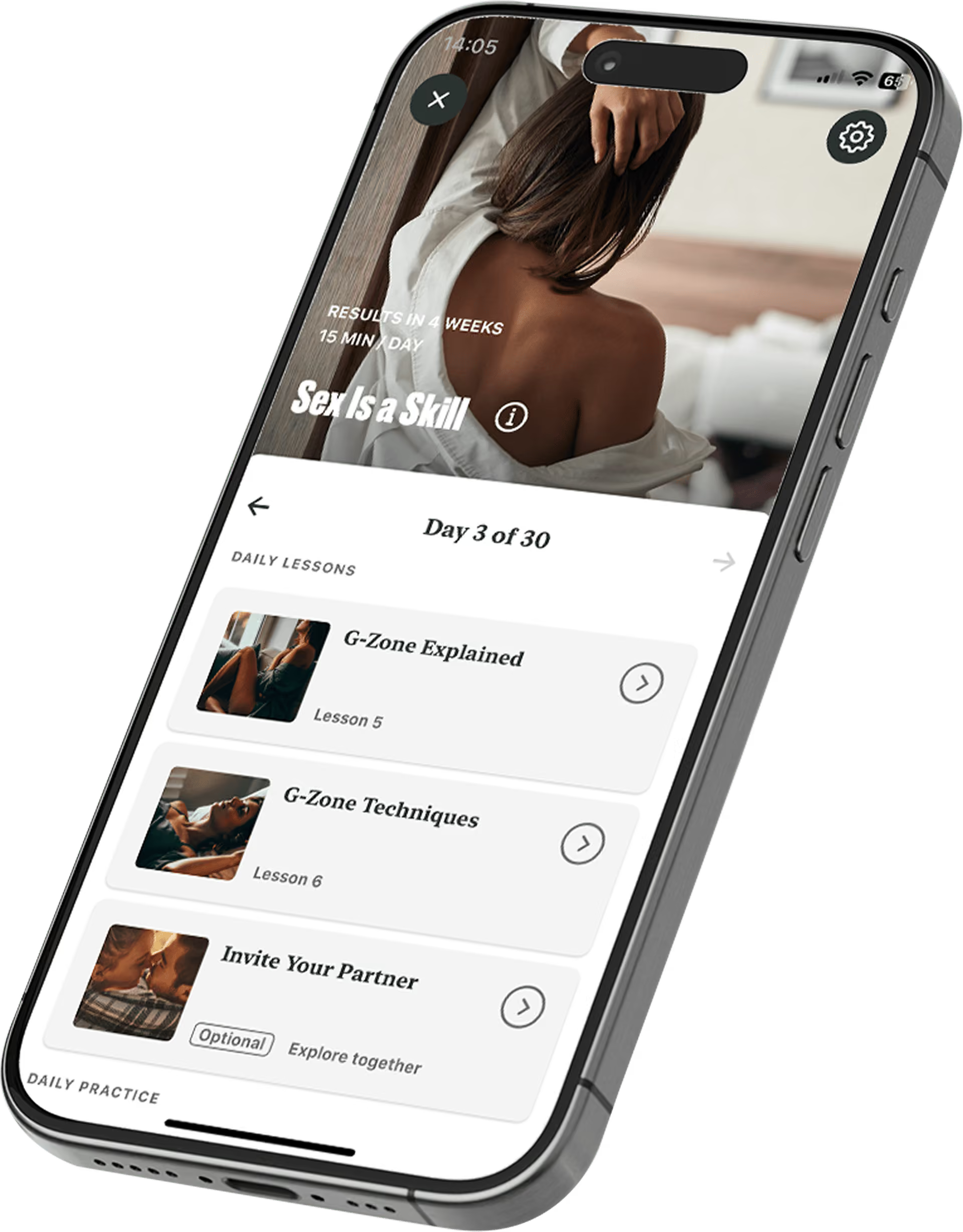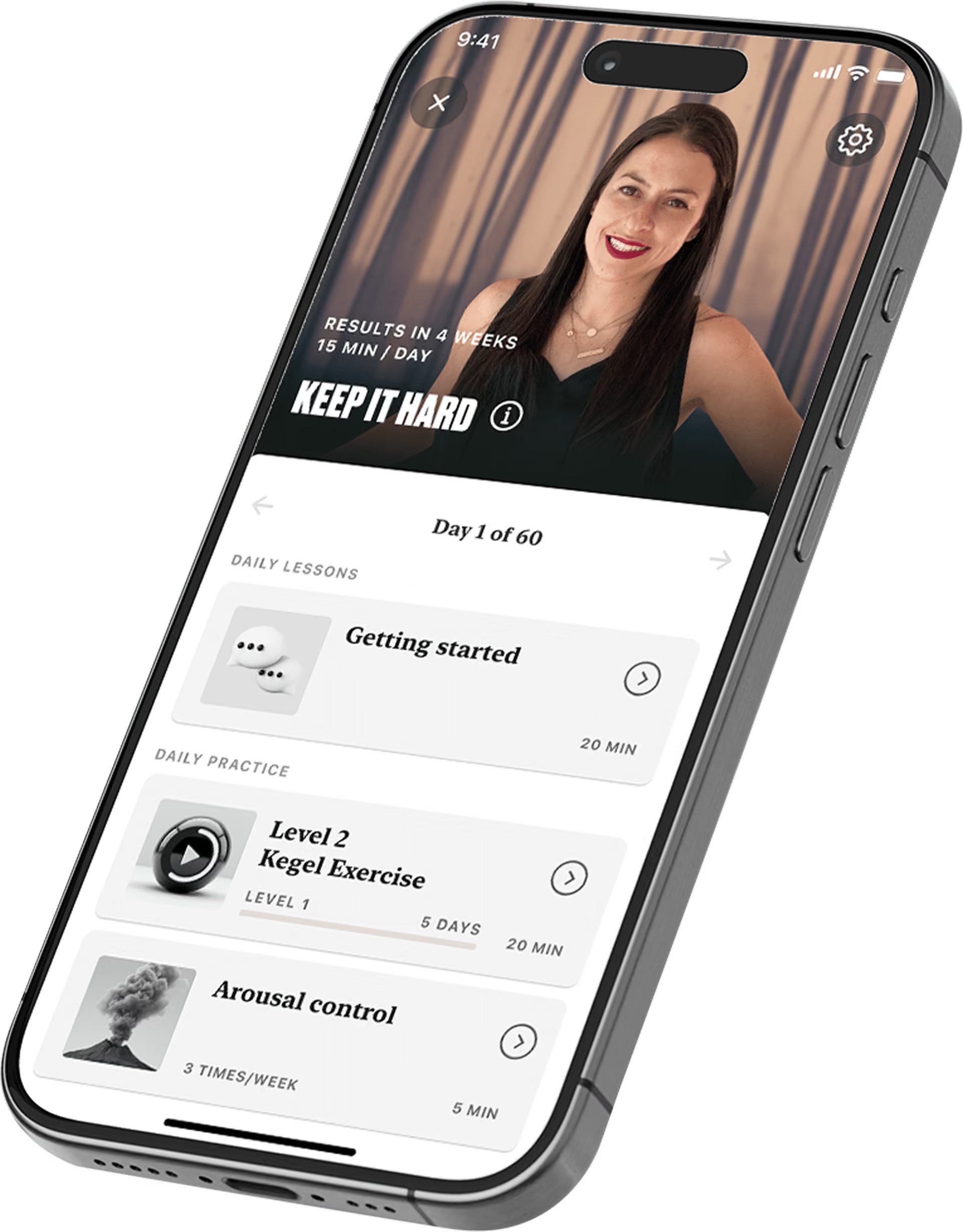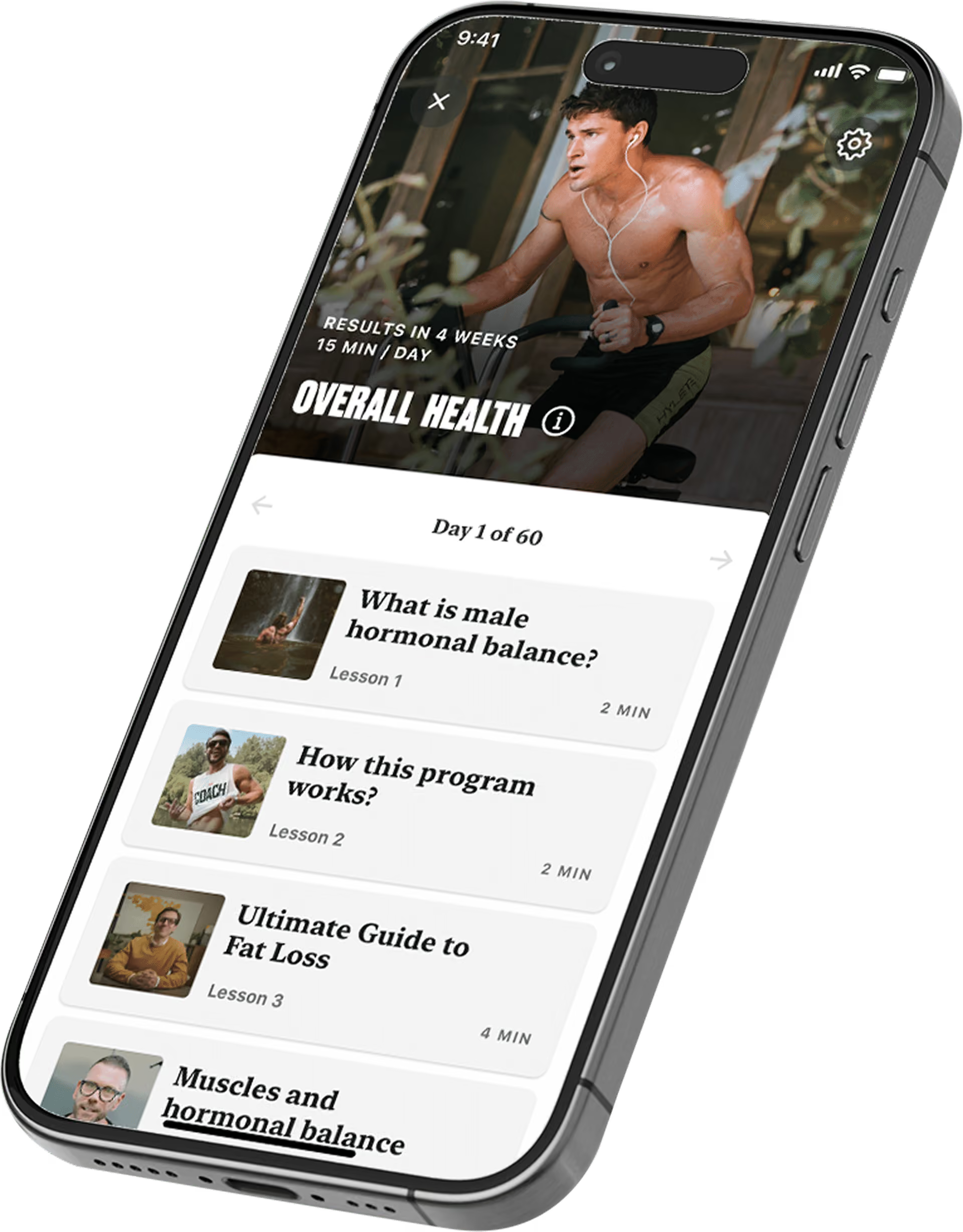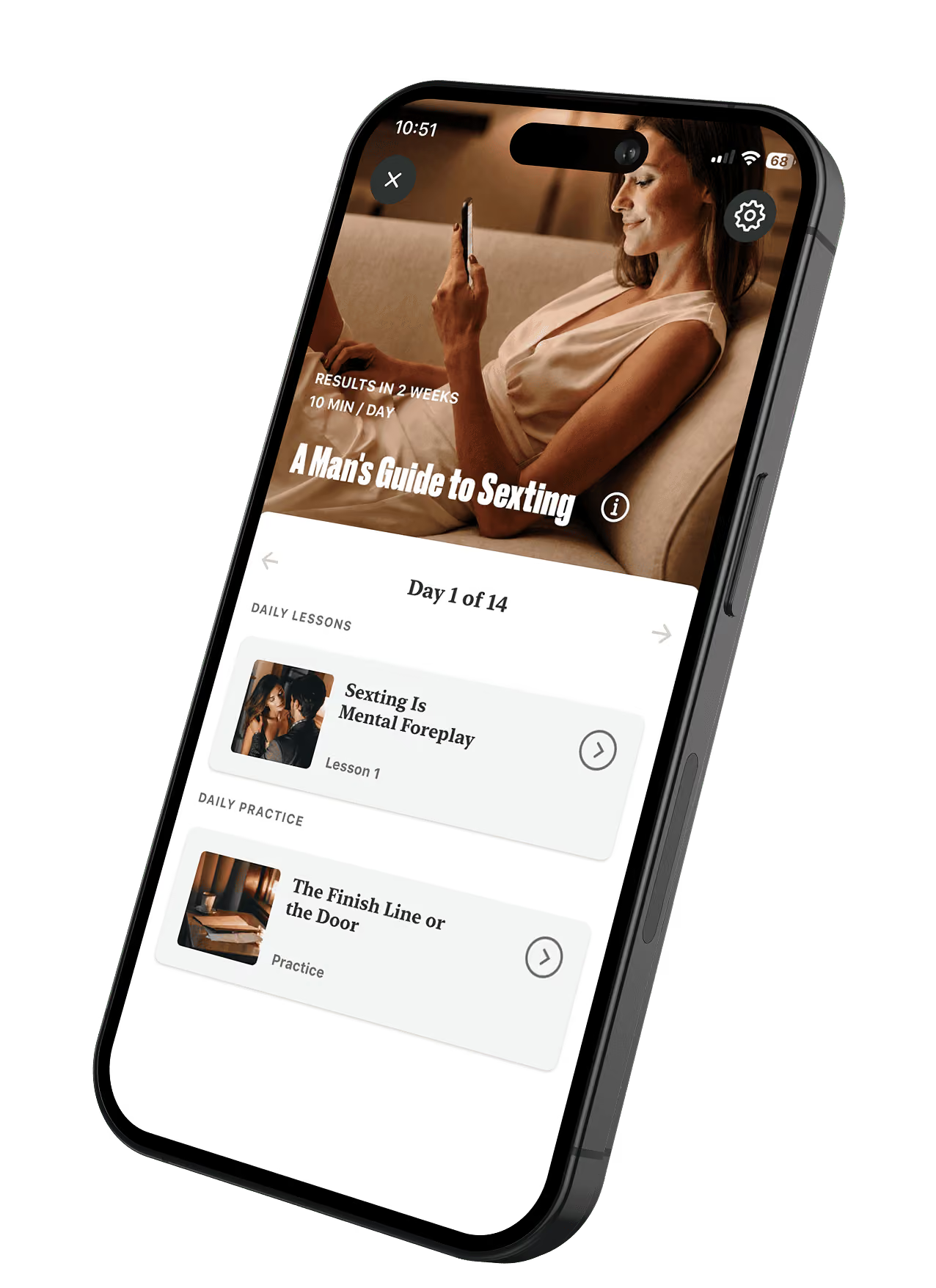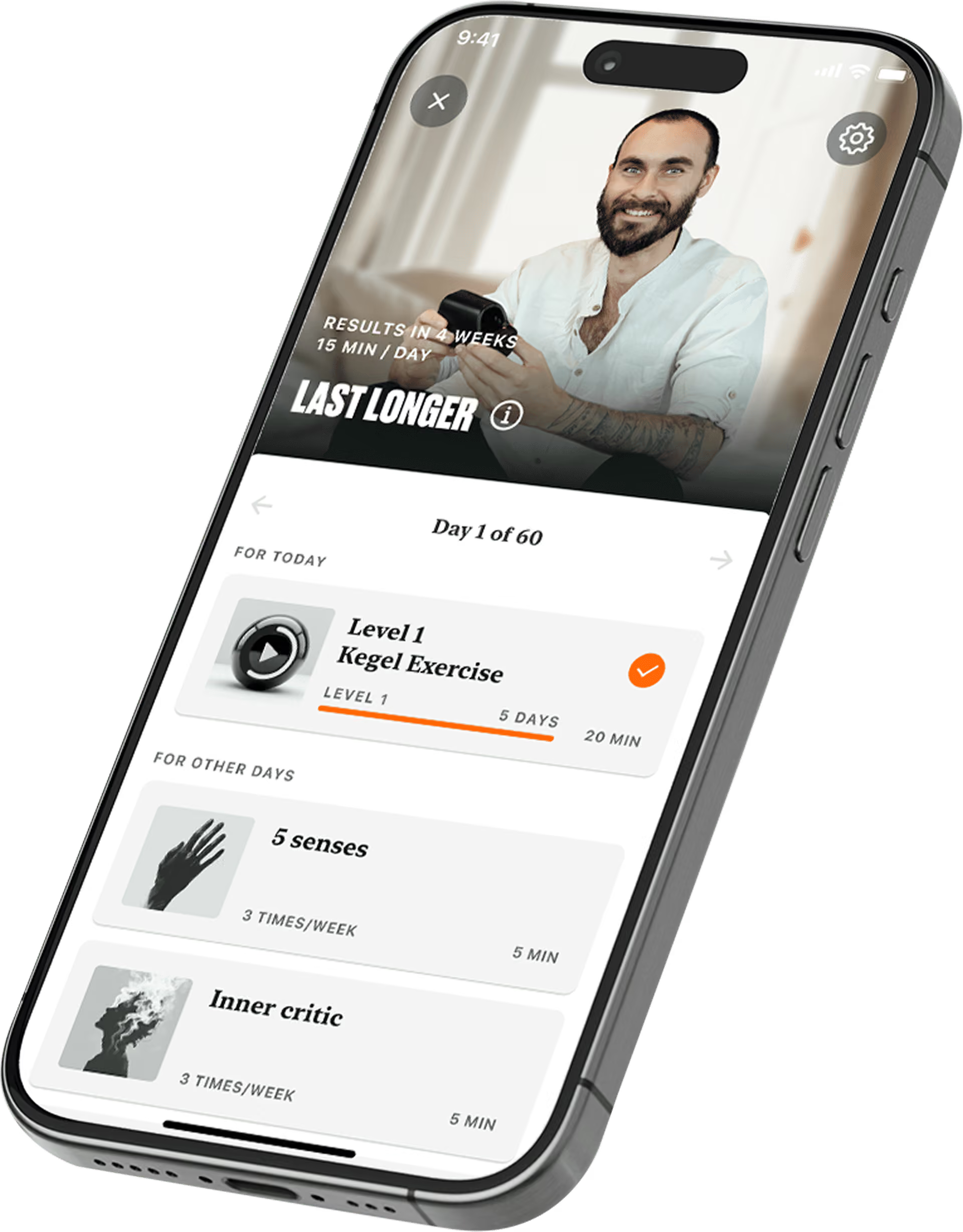
Step 01
Answer the questions
A short questionnaire about your situation comes first, and your answers shape your personal plan.

If you are wondering how to reduce penis sensitivity, start by noticing what feels uncomfortable and what happens as arousal increases. Sensitivity and ejaculation timing are related, but they are not the same thing. The Last Longer program in The Coach app focuses on arousal awareness, breathing, relaxation and gradual solo practice. The aim is to help you respond to stimulation with more awareness. If sensitivity is new, painful or accompanied by irritation, seek medical advice before trying exercises.
Show me where to startBefore deciding how to desensitize your penis, distinguish between uncomfortable sensitivity and reaching orgasm sooner than you want. These concerns can have different causes. Training focuses on recognizing arousal and practicing pauses or changes in pace; it does not diagnose or treat a skin condition.
If you are looking for how to reduce penis sensitivity because you finish sooner than you want, it helps to understand your response to stimulation. The program focuses on recognizing arousal and practicing ways to slow down or pause.
In the app that shape is the solo arousal practice: a target level for each stage, a lighter grip and a slower rhythm, three evenings a week for about two months, with the Kegel program running alongside.
This sensory adaptation practice gives you time to notice how you respond to touch, changes in pace and pauses. It is designed to build arousal awareness through repeated, guided sessions.
Here is the session. You stimulate yourself with a lighter grip and a slower rhythm than usual, with a number in your head from a ten-point scale: one and two neutral, five and six aroused and still choosing, seven and eight hard to think past, nine just before the point of no return. You climb to a five or a six and stay there, thirty seconds at first, with your thighs, abs and pelvic floor soft and your exhale longer than your inhale. Vary the type of touch instead of making it stronger. When it climbs toward eight, you pause before the edge and let it fall back to a two, then go again. Five to ten rounds, about twenty minutes, and no porn while you’re training solo. Over the weeks the number you hold goes up and the time you hold it stretches, from thirty seconds toward two or three minutes.
During each round, you practice recognizing your arousal and responding before it feels difficult to manage. A slower pace and lighter pressure give you time to notice those changes. The aim is to become more familiar with your own responses.
The program works on two practical skills: noticing changes in arousal and practicing what to do when you want to slow down. These are learning goals, not a complete explanation of why early ejaculation happens. Progress varies, and persistent concerns can be discussed with a clinician.
A short questionnaire, then a daily plan: the sessions for each day, a target level for each stage, guided breathing and rest days.
Step 01
A short questionnaire about your situation comes first, and your answers shape your personal plan.
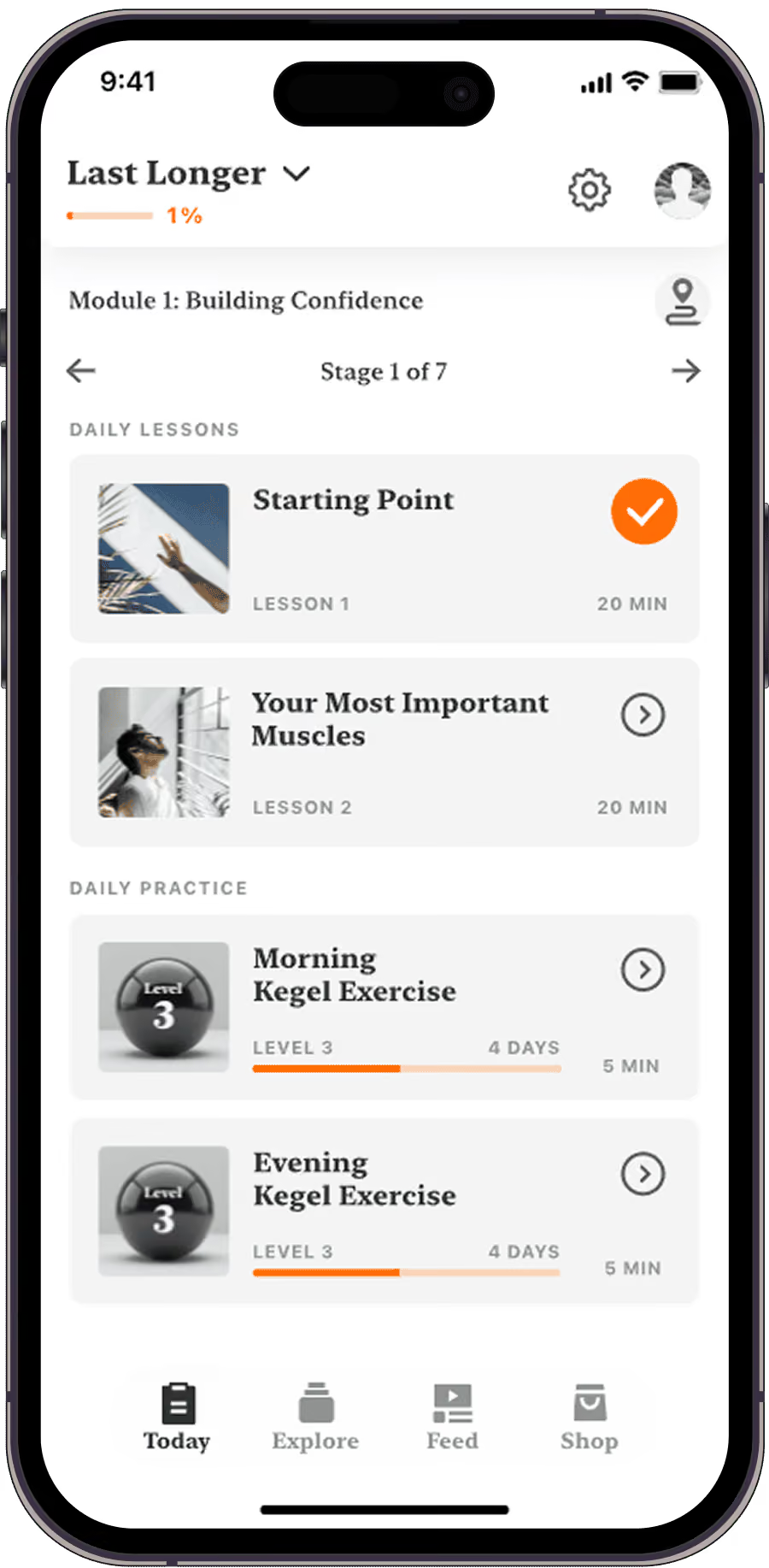
Step 02
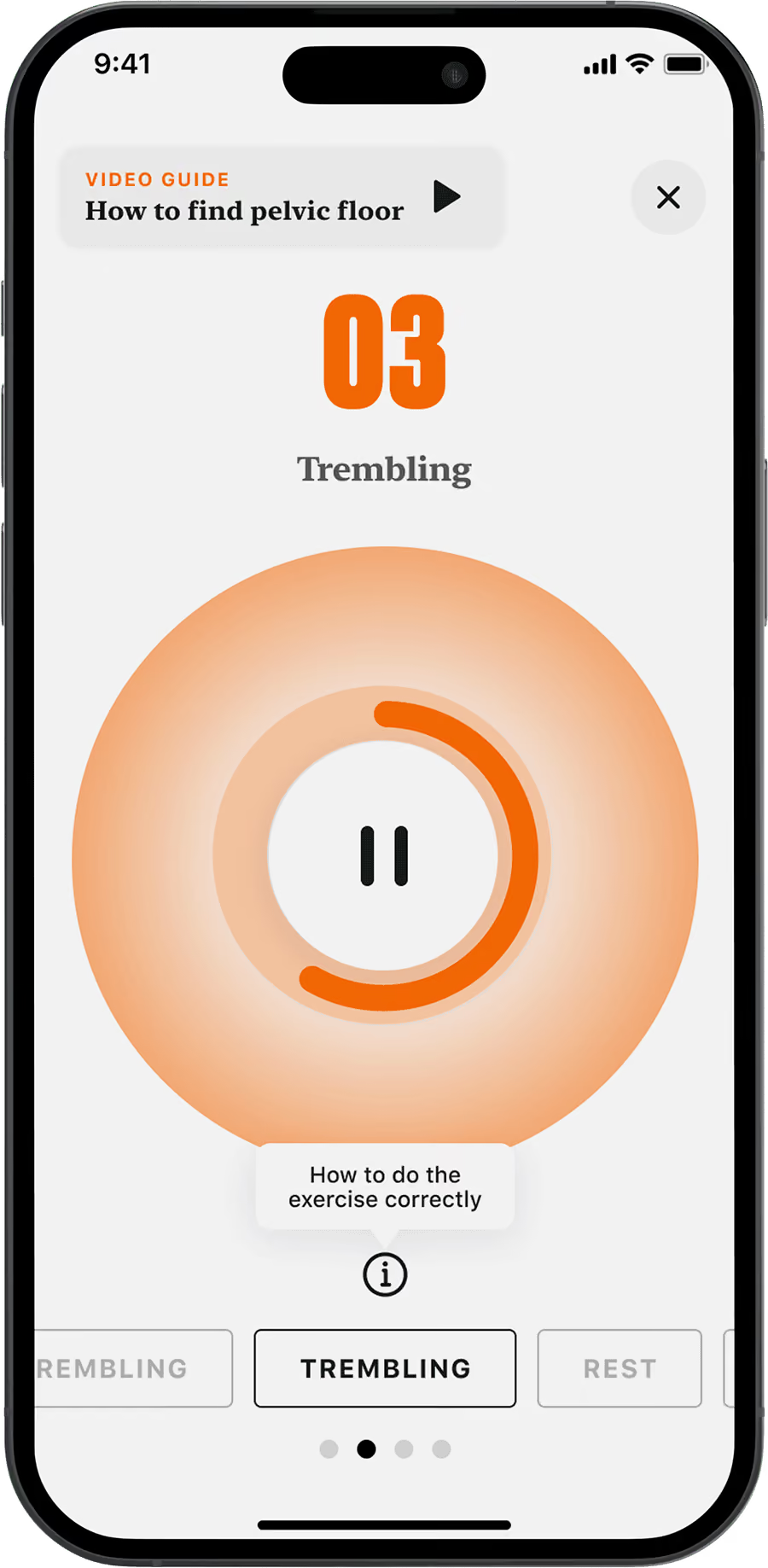
Each stage has a target level: a five, then a six, then a seven, held with less pressure and less speed than you’re used to, thirty seconds and then longer. The six-week Kegel program with daily guided audio and reminders runs alongside, and the muscle release and belly breathing are guided too.
Step 03
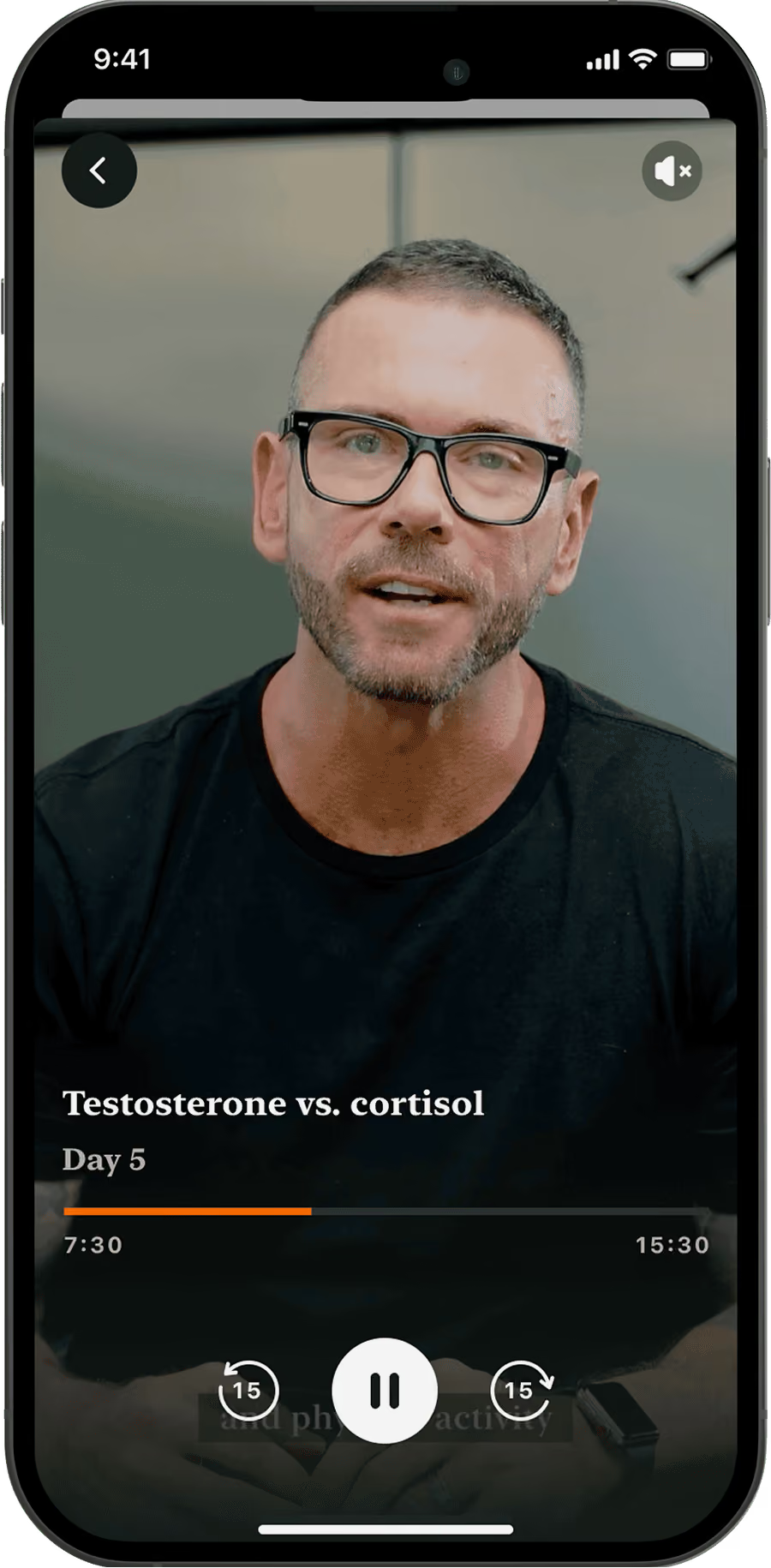
Weeks three and four take you up toward nine, just before the point of no return, and rehearse the pause before it until it stops feeling like a last-second rescue. From week five the holds stretch to minutes, and the partner versions come last: the same sensation, with her there, and a longer exhale she doesn’t notice.
A few questions set your starting point.
There are five common reasons a body learns a fast response, and none of them is the sensitivity. Each one is a habit, and each one has a training version.
The program helps you notice changes in arousal and practice responding to them.
These stages describe practice goals, not guaranteed results. Notice how you respond during each session and progress at a pace that feels manageable.
Practice describing your arousal on a ten-point scale. Notice the difference between moderate and high arousal, and what happens when you slow down or pause.
Practice holding a manageable level instead of passing through it, thirty seconds at first, then longer. Then take arousal up toward nine and practice the pause before it, using the session guidance to decide when to slow down.
Hold just below eight for up to a minute, then eight to nine for up to three. Changes in breathing and muscle tension tell you early enough to try a pause or a slower pace.
The goal is to use what you practiced with a partner: notice your arousal, breathe comfortably, relax and adjust the pace together. Results and timing vary from person to person.
For the exercises and their schedules, see our guide to premature ejaculation exercises; for one session minute by minute, see our guide to how to train yourself to last longer in bed. The question behind penis sensitivity is narrower: which half of “too sensitive” you can actually change.
Answer a short questionnaire to find your starting point and see your first guided session.
From a survey of The Coach users after their first four weeks with the app:
Reviews from men using the program.
“I was skeptical on how the exercises would help. I had tried pills to go longer and they had no impact. The exercises and practices in my path have been great to enable my body to learn how to control itself in the moment. Highly recommend as an alternative!”
“55 yo. After months of being dubious about this app and what it promises, I took a chance on it based on the reviews. Am I ever glad I did! In just two weeks I’ve gone from ‘goodness you finished already? 🥲’ to ‘please finish baby I’m exhausted 🥵’ 🤣👍🏼”
“I was a skeptic at first, but 2 weeks in my wife told me to stop using the app because I’m lasting too long and her p***** raw. Well done The Coach! Also - not stopping Highly recommend it.”
“Have been taking these Kegel Exercises for a good three weeks. Superb results from this and the arousal control advice. Intercourse with my wife has gone from about 30 secs to 2 mins. Big thumbs up 👍”
The program explains each exercise and helps you build a regular practice. Start with a short questionnaire.
We built every program with researchers, therapists, and clinicians who work in sexual health and psychology.
Dr. Justin Houman
MD, UCLA-trained urologist and male reproductive specialist focusing on sexual health.
Dr. Susie Gronski
Licensed physical therapist, certified sexuality counselor, and founder of a men's pelvic health clinic.
Cameron Fraser
Australia's leading men's sex coach, specializing in male sexual wellness and performance.
Dr. Amy Pearlman
Board-certified urologist specializing in male sexual wellness, performance, and hormonal health.
Gerard Greene
Specialist men's health physiotherapist and senior lecturer at Coventry University.
Natalie Goldberg
Certified sex and family therapist dedicated to improving intimate relationships and personal well-being.
Dr. Paula Hall
Accredited sexual and relationship psychotherapist, registered with leading professional bodies in psychotherapy.
Dr. Justin Lehmiller
PhD in social psychology and senior research fellow at the Kinsey Institute.
Possibly to the first, and only partly to the second. “Premature ejaculation due to sensitivity” is a common way to explain it, and the signal your penis sends may well be a strong one. But the signal doesn’t decide when you finish. The reaction your nervous system has attached to it does, and that reaction fires at a level of arousal you can learn to read and hold. Penile hypersensitivity, in the sense that matters here, is a fast learned reply to a normal signal. For what the condition is, its short list of causes and why it doesn’t go away on its own, see our guide to premature ejaculation.
No, and it doesn’t have to. An overly sensitive penis head produces the strongest feelings, but the reaction to them is decided further up, in a nervous system that has learned to treat that loudness as the cue. You train the reply, not the tip. In practice that means less pressure on it during solo sessions, a slower rhythm, the kind of touch varied rather than the amount, and a level held while it reports. The head stays as sensitive as it was. It stops being the thing that ends the evening.
There is, and it isn’t what the phrase usually means. Whether you ask how to decrease your sensitivity naturally or how to reduce penile sensitivity without a product, the answer is the same: the natural route doesn’t reduce the sensitivity at all. It trains the reaction to it, in solo sessions, at a level you hold under less pressure and at a slower pace, and it takes about two months. Nothing goes on the skin. The only thing that changes is what your body does when the skin reports.
The sensitivity never leaves, so there is nothing to come back. What you build is a different reply to it, and a reply rehearsed for two months holds the way anything rehearsed for that long holds: the sessions taught your reflex to wait at a level where it used to fire, and it keeps waiting there as long as the habit isn’t retrained the other way. If you’re asking how to make my penis less sensitive, you’re probably hoping for something permanent. The closest thing is a skill you can come back to, not a coating that wears off by morning.
When it hurts, when the skin is red, cracked, itchy or looks different from how it did, when the sensitivity arrived with an infection, a new medication or after a procedure, or when it changed suddenly after years without any change. The opposite belongs there too: numbness, or feeling less than you used to, is not something to train through. All of that is a check-up first. Training assumes a healthy penis, and a doctor is the one who confirms that. We don’t offer medication, and we can’t diagnose skin problems.
Neither. The sessions that do the work are solo by design, because the reaction is easiest to retrain where nothing is at stake: a number in your head, a door that’s shut, twenty minutes. No product, no device. She comes in last, in the final weeks, and what you bring into that room is built not to show: an exhale she never notices, a jaw kept loose, a slower beat for a moment.
Everything the training needs and nothing for the skin. The scale, taught before anything is aroused. Guided belly breathing and muscle release. The six-week Kegel program, with daily guided audio and a reminder. Solo arousal practice three evenings a week, with a target level for each stage. Mental techniques for the moment you reach an eight and notice what’s happening before the reflex does. And the partner versions, last. About two months, on iOS and Android.
Finishing once beforehand lowers the signal for one evening and teaches nothing, so it belongs with the sprays: a workaround, not training. Stopping altogether removes the one place the reaction can be retrained. What changes the reaction is how you do it: a lighter grip and less pressure, a slower rhythm, a level held rather than a finish chased, no porn while you train, and a stop short of the edge instead of a run at it. It’s the same act, done differently.
It’s an emergency stop for the moment you reach nine on the scale, and used before that, it rehearses the very reflex you want to lose. It also does nothing about sensitivity, because it isn’t meant to. For when the squeeze helps and how it compares with the drill that does the training, see our guide to the squeeze technique.