
Step 01
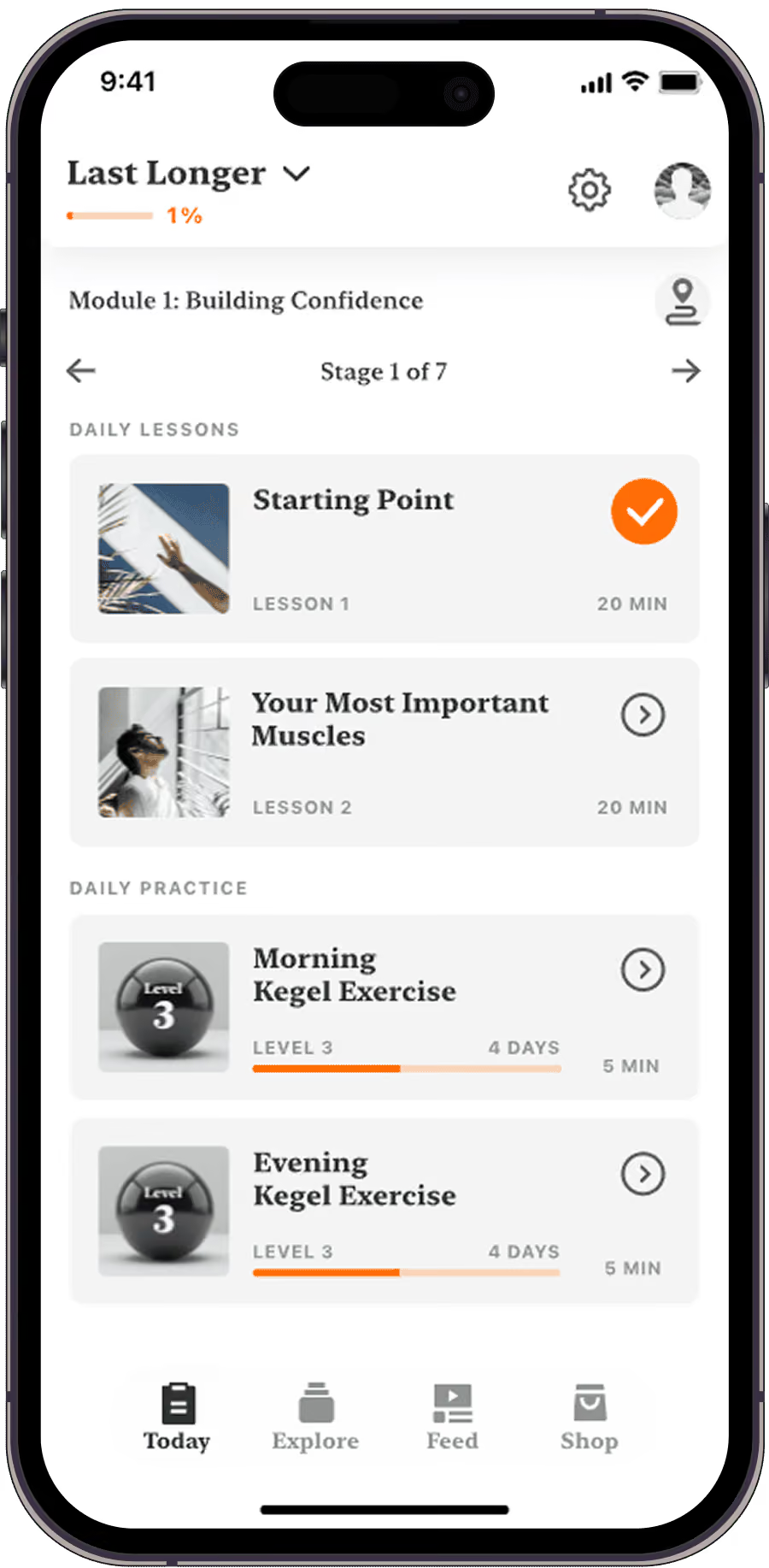
Answer a few questions
A short questionnaire about your situation comes first, and your answers shape your personal plan.

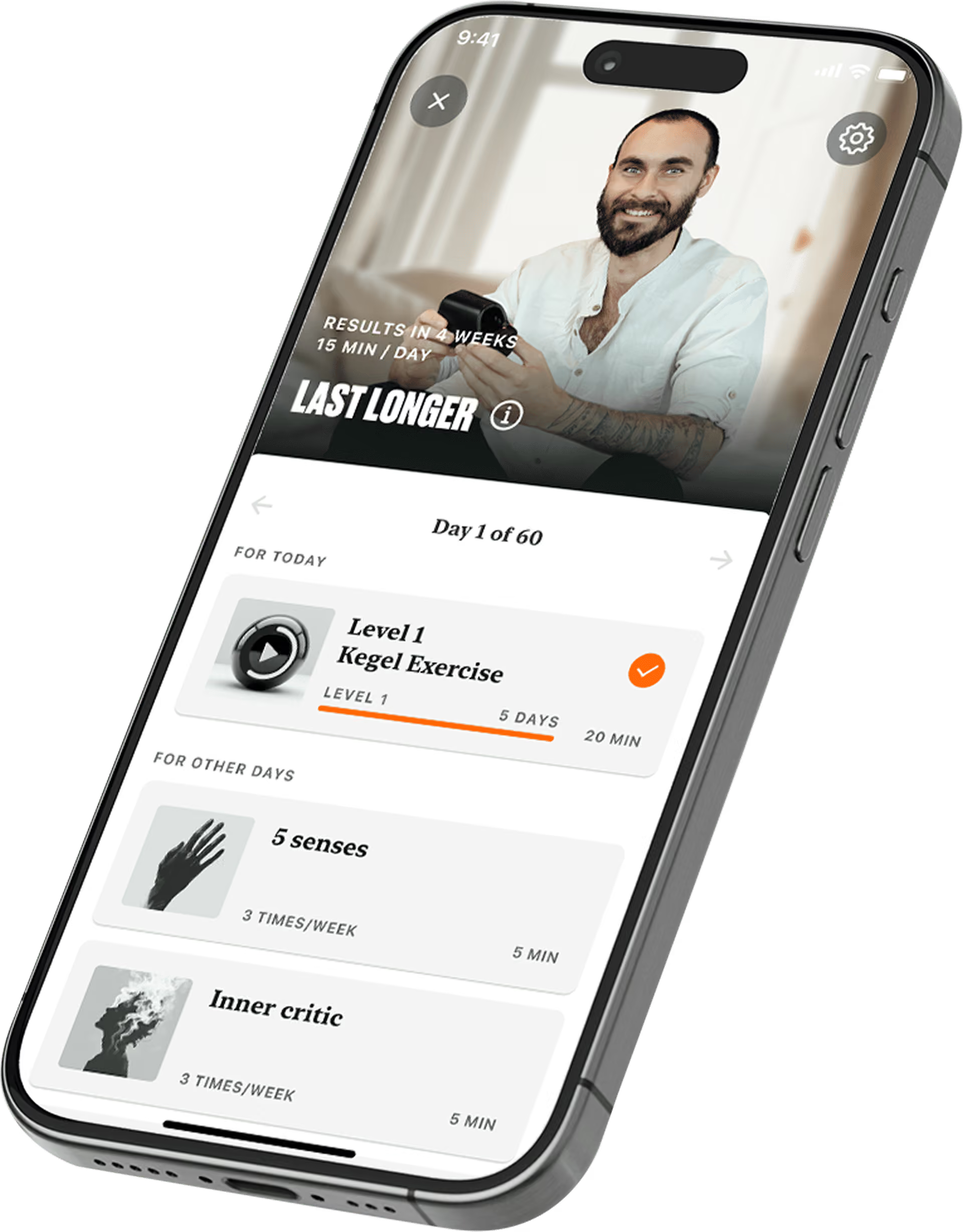
Plenty of men who start Kegel exercises squeeze the wrong muscle, and nothing tells them they’re wrong. There’s no movement to watch and no ache the next day. So the order matters: first find the right muscle and feel it contract once on its own, then learn seven exercises, each one building on the last. All of it takes about ten minutes a day. The Last Longer program in The Coach app brings these skills into a guided practice routine.
Get my planA Kegel is a squeeze of the pelvic floor, the sling of muscle that runs from your pubic bone to your tailbone. It supports the bladder and bowel, and it fires during orgasm. Kegels for men train that sling the way a curl trains a bicep: contract, hold, release, repeat.
Doctors call that sling the pelvic diaphragm. It works alongside two smaller muscles at the base of the penis that help with erections and the ejaculatory reflex. You can’t see any of them work, which is why it’s easy to train them wrong for months. It helps to have something else count the holds, so your attention stays on which muscle is doing the work.
The pelvic floor is the muscle you’d use to stop yourself going to the toilet, or to lift your penis slightly without using your hands. Find it once, deliberately, and you’ll know what you’re looking for every time after.
If nothing moves at all, the muscle is still there; you just haven’t found the connection to it yet. Repeat the lift test until you feel it move. Once you can feel one clean rep, you’re ready for the seven exercises.
Strength is only half of it. The pelvic floor also has to relax on command and fire at the right moment, and those are separate skills, which is why the best Kegel exercises for men are a progression rather than one movement repeated. Learn them in this order and each one sets up the next. Six in ten men report a significant improvement after six weeks of Kegel practice.
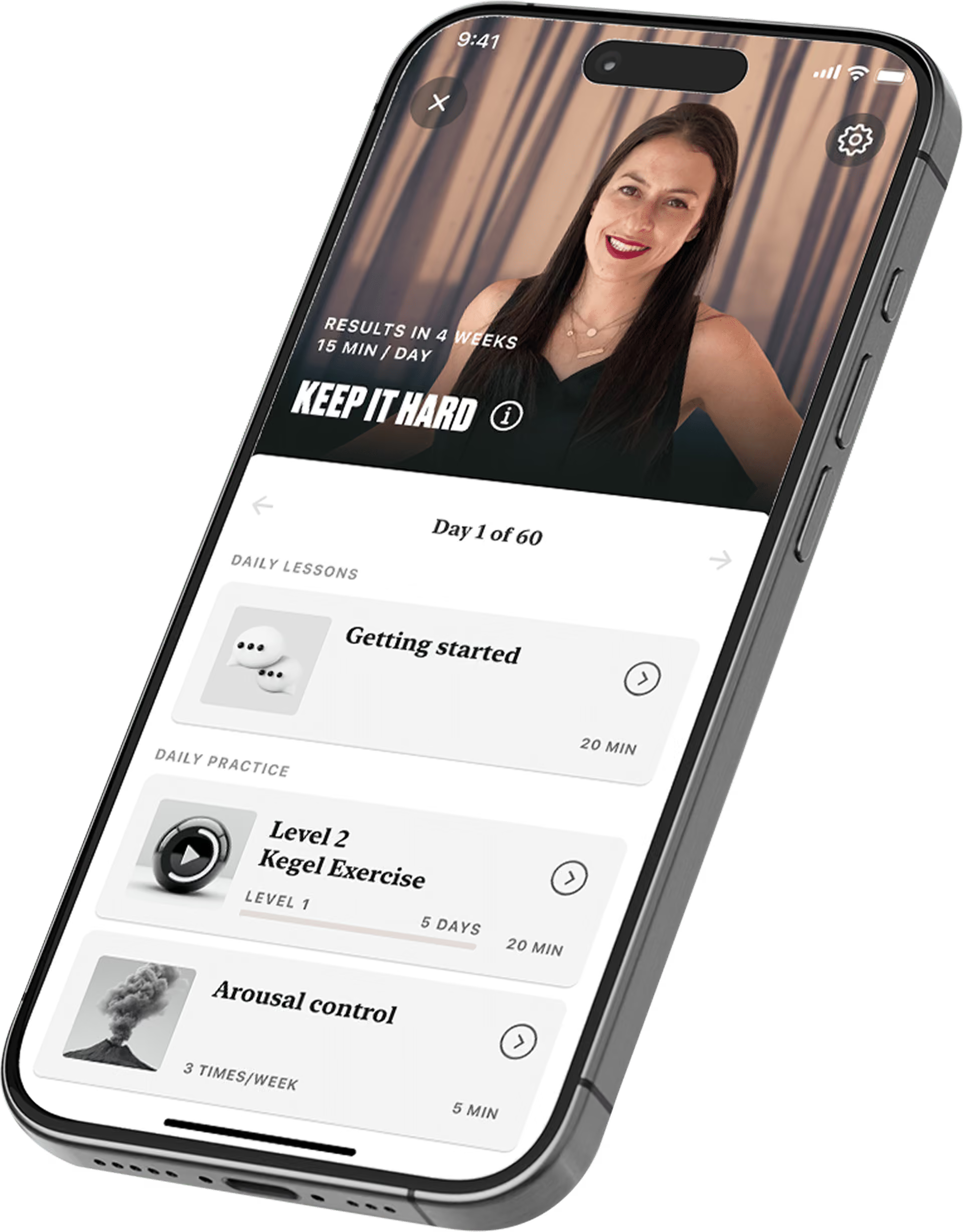
The app guides you through six weeks of practice, with daily sessions and timed holds and rests.
Step 01
A short questionnaire about your situation comes first, and your answers shape your personal plan.
Step 02
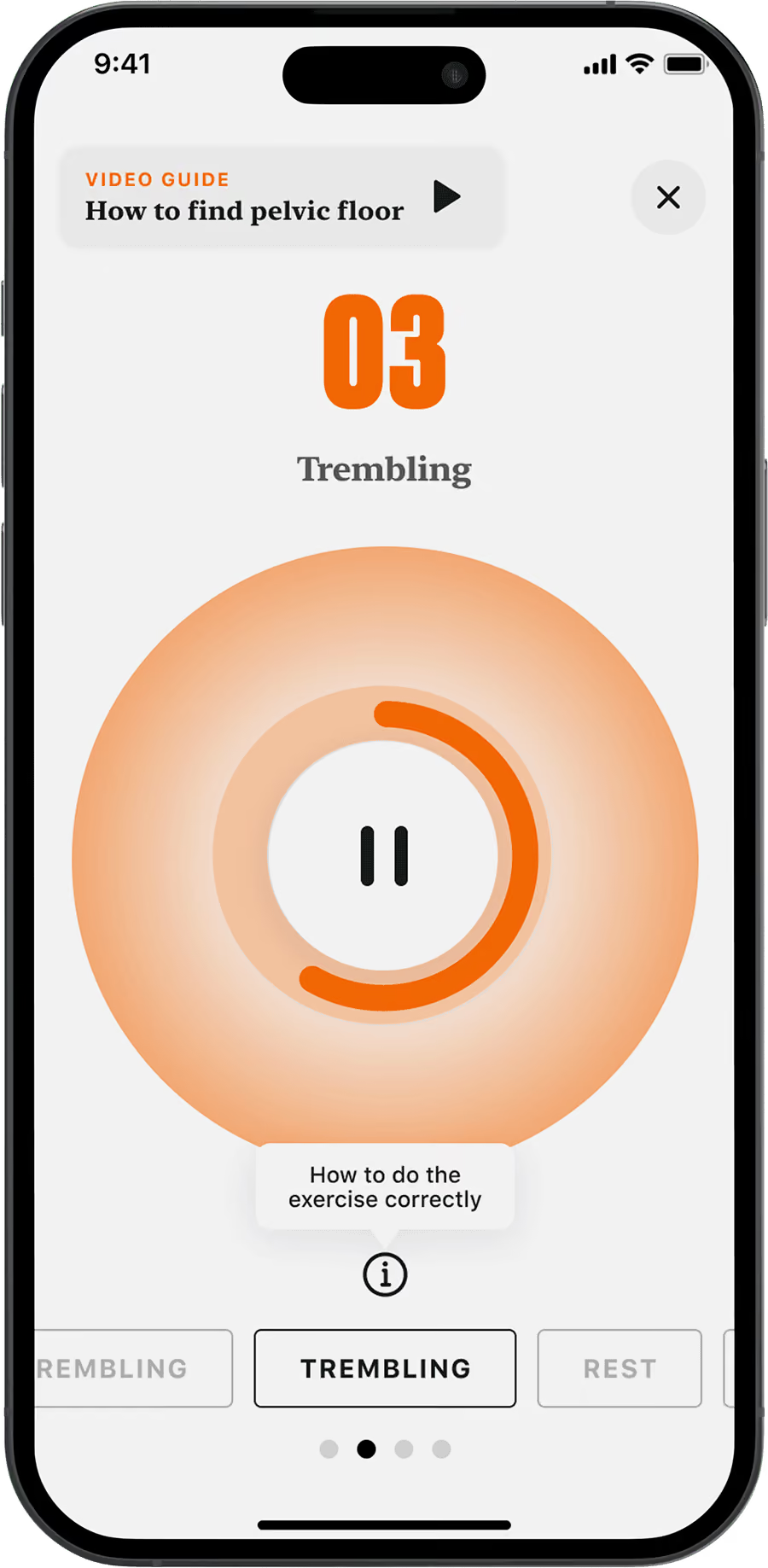
Guided audio sessions tell you when to contract and when to rest. A daily reminder helps you keep practicing.
Step 03
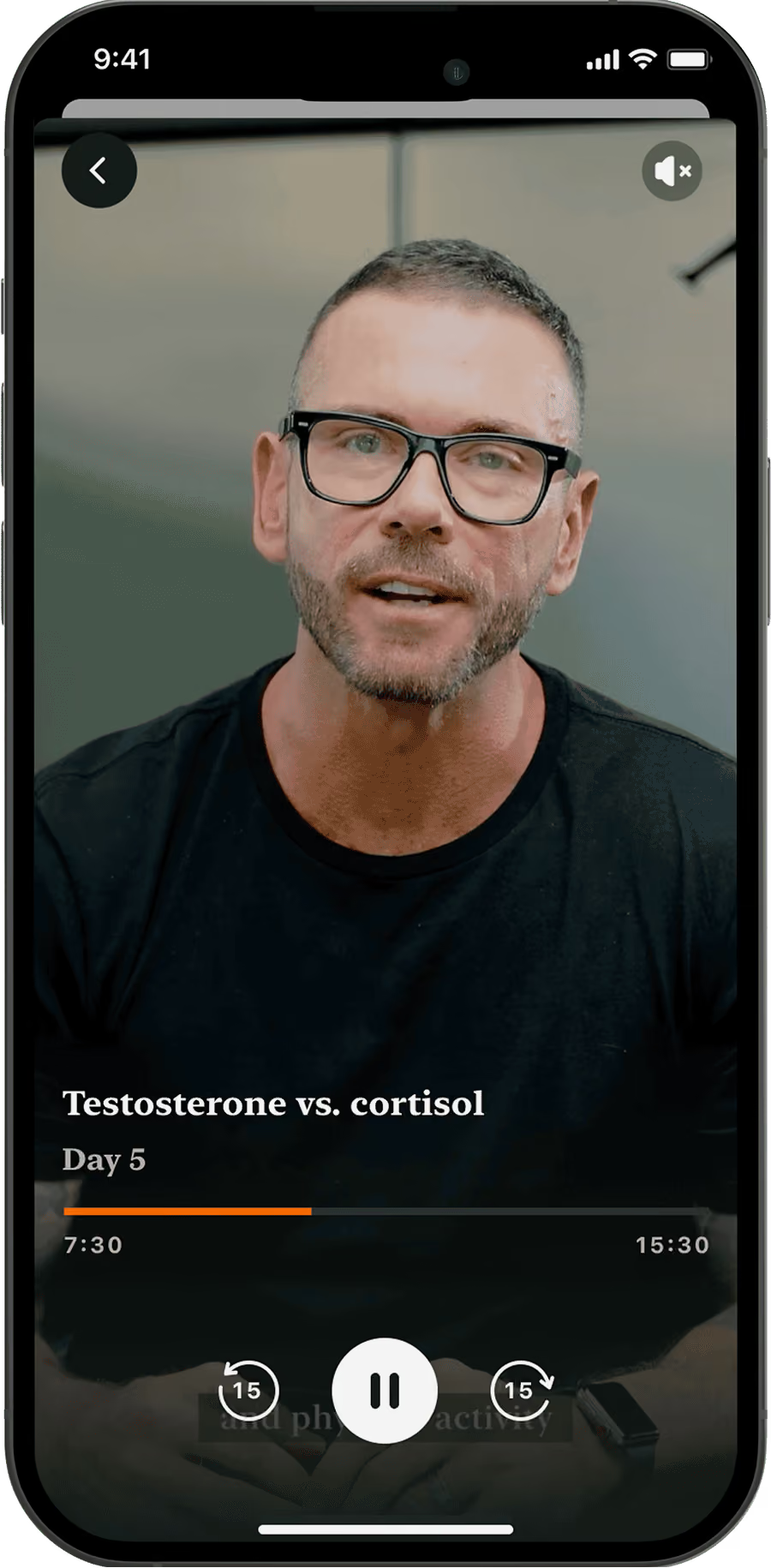
Short holds first, then longer ones, then the strong squeeze you can use during sex, step by step over the six weeks.
You can do all seven exercises on your own. The plan adds the order, the count and a daily reminder, so you’re still training in week four.
Ten minutes a day isn’t much. What makes the difference is keeping it up for six weeks.
You can learn to contract and relax your pelvic floor muscles deliberately. Regular practice can help with the functions described below.
It’s the same type of muscle as your biceps: load makes it stronger and neglect makes it weaker. Sitting all day, age and extra weight all work against it.
Those contractions you feel at orgasm come from this group. Train them and the reflex becomes something you can influence instead of something that happens to you.
They squeeze around the base of the penis during an erection, which is why research on them looks at erection quality and orgasm intensity, not only at how long you last.
A pelvic floor that can’t let go causes problems of its own, and hard training with no release builds exactly that. So a good routine trains both: the squeeze and the release.
The app counts every hold, makes the sessions harder week by week and reminds you each day, so you get through all six weeks.
From a survey of The Coach users after their first four weeks with the app:
Unedited reviews from the App Store and Google Play:
“The kegel exercises are easy to follow and every day, it has a great guide to what you need to do for the day. It not only helps improve your sexual health, but your physical and mental health as well.”
“The kegel exercises and timer make it a serious workout that you want to do and it helps!”
“The progressive escalation in the exercises and the clear explanations have allowed me to progress rapidly. I highly recommend this for general pelvic health as well.”
“I’ve used Kegel apps before but none explained the reasoning and how to use the kegel exercise as clearly as The Coach app.”
Same muscle, same ten minutes a day. A few questions, and your plan starts at your level, not at someone else’s week one.
We built every program with researchers, therapists and clinicians in sexual health.
Dr. Justin Houman
MD, UCLA-trained urologist and male reproductive specialist focusing on sexual health.
Dr. Susie Gronski
Licensed physical therapist, certified sexuality counselor, and founder of a men's pelvic health clinic.
Cameron Fraser
Australia's leading men's sex coach, specializing in male sexual wellness and performance.
Dr. Amy Pearlman
Board-certified urologist specializing in male sexual wellness, performance, and hormonal health.
Gerard Greene
Specialist men's health physiotherapist and senior lecturer at Coventry University.
Natalie Goldberg
Certified sex and family therapist dedicated to improving intimate relationships and personal well-being.
Dr. Paula Hall
Accredited sexual and relationship psychotherapist, registered with leading professional bodies in psychotherapy.
Dr. Justin Lehmiller
PhD in social psychology and senior research fellow at the Kinsey Institute.
One contraction of the pelvic floor: squeeze, hold, release. That’s the whole movement. No equipment, nothing visible from the outside, which is why it can be done anywhere. It takes its name from Arnold Kegel, the American gynecologist who first documented it. For training the whole muscle group, see our guide to pelvic floor exercises for men.
Ten minutes a day. The program in the app runs six weeks, about the minimum for a muscle to get noticeably stronger. Keep going after that and it keeps improving; stop and it fades.
Here’s how to do Kegel exercises. Find the muscle first with the stop test and the lift test; together they take about a minute. Then do one rep: squeeze only the pelvic floor, hold for three seconds and release all the way. Your stomach, glutes and thighs stay still, and you keep breathing. Everything after that is a variation: longer holds, faster reps, standing instead of lying down.
If your abs, glutes or thighs tense up, or you catch yourself holding your breath, you’re recruiting the wrong muscles. A correct rep is almost invisible from the outside. Put a hand on your stomach and check.
Yes, and it’s a common mistake. Clenching out of habit builds pelvic tension and fatigue, and can make the ejaculatory reflex quicker, the opposite of what you’re training for. Strong squeezes are for the moments that need them. And if you feel pain rather than fatigue, in the pelvis, the perineum or the genitals, stop and get it looked at. That’s a pelvic health physiotherapist’s job, not an app’s.
Yes, and that’s most of the appeal, because nobody can tell. Learn the movement lying down first, though: it’s much easier to isolate the muscle when you’re not also holding yourself upright.
They help, but they’re one of four things that do, along with relaxation, breathing and arousal control. Our Last Longer program combines all four over eight weeks, with Kegels as the physical base. For the condition itself, see our guide to premature ejaculation.
Think in minutes rather than reps. The guided sessions count for you and add more week by week. Training on your own, watch the quality of the release more than the count: half as many reps with a full release are worth more than twice as many half-finished ones.
It’s ordinary muscle, so yes, on one condition: you have to contract the right thing and release it fully. Men who feel nothing after a few weeks are often recruiting their abs or glutes instead, which is why you start by finding the muscle, not working it.
The opposite of a Kegel, and the same idea as the full release in exercise 06. Instead of lifting and squeezing, you lengthen and let go. It matters because a pelvic floor that can’t relax causes as much trouble as a weak one, and men who only ever train in one direction tend to end up tight rather than strong. Both directions belong in a routine.
They are part of the picture. Two of the muscles at the base of the penis help keep blood in the penis during an erection, which is why pelvic floor work appears in our Keep It Hard program as well as in Last Longer. On its own it isn’t a treatment for anything; it’s the physical base the rest of the work builds on. If erection problems are new or keep coming back, see a doctor. For the condition and its causes, see our guide to erectile dysfunction.
The six-week Kegel program: a guided audio session of about ten minutes a day, the holds and the rests counted for you, a daily reminder, and the rest of The Coach’s male-health programs alongside it.
No. The pelvic floor needs nothing but your own body and somewhere to sit or lie down, which is why this training travels so well. What the program adds is the timing, the schedule and the progression, not hardware.