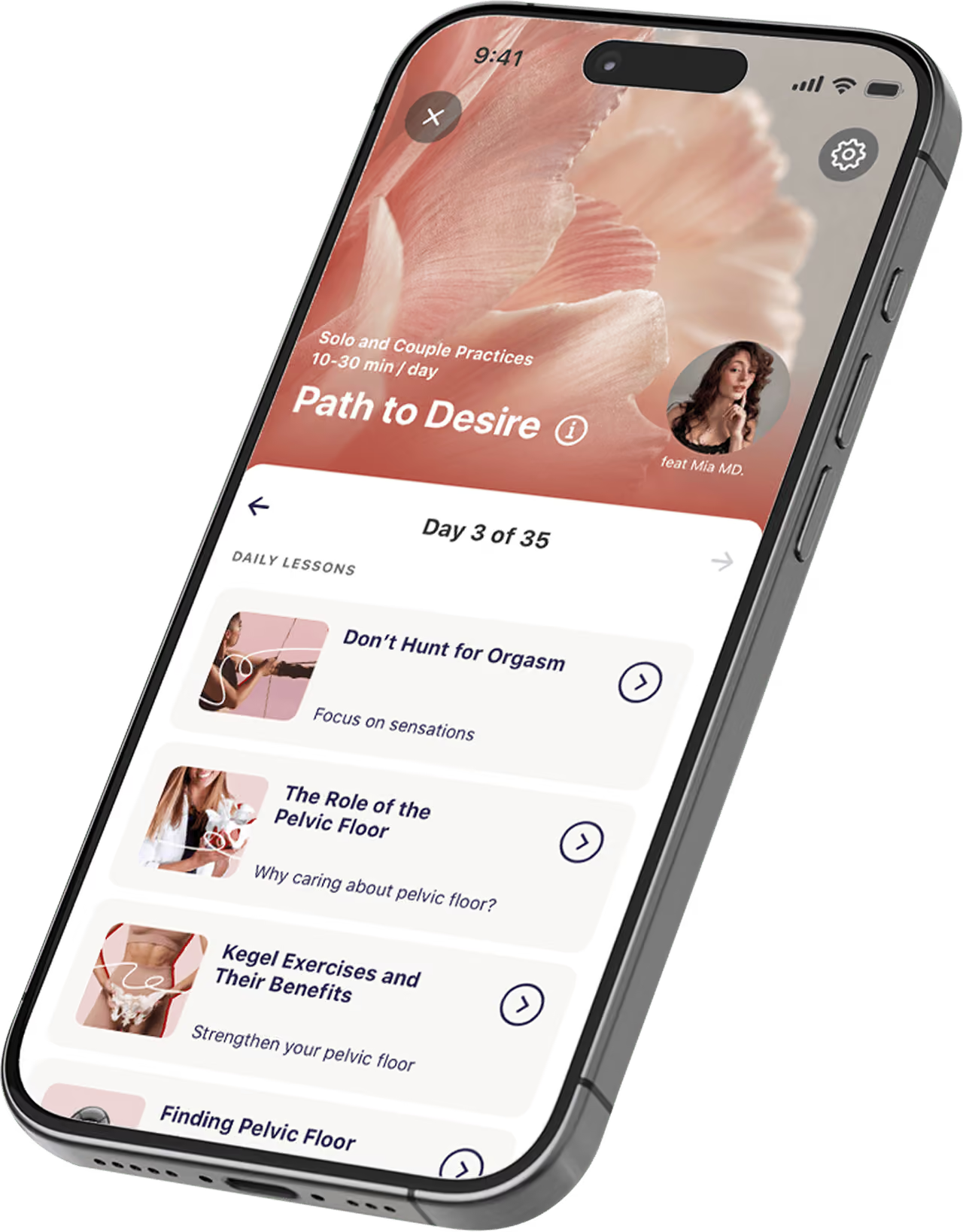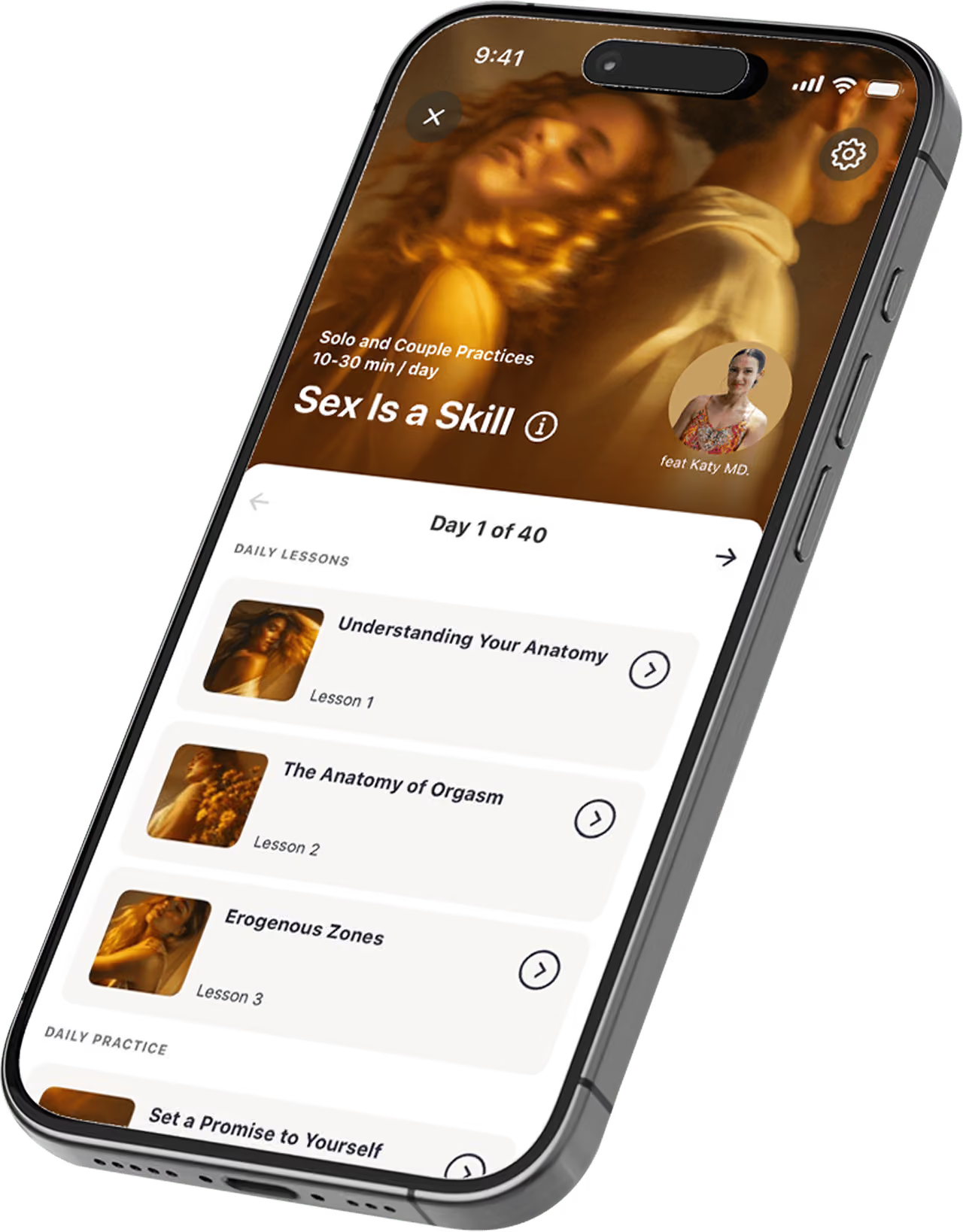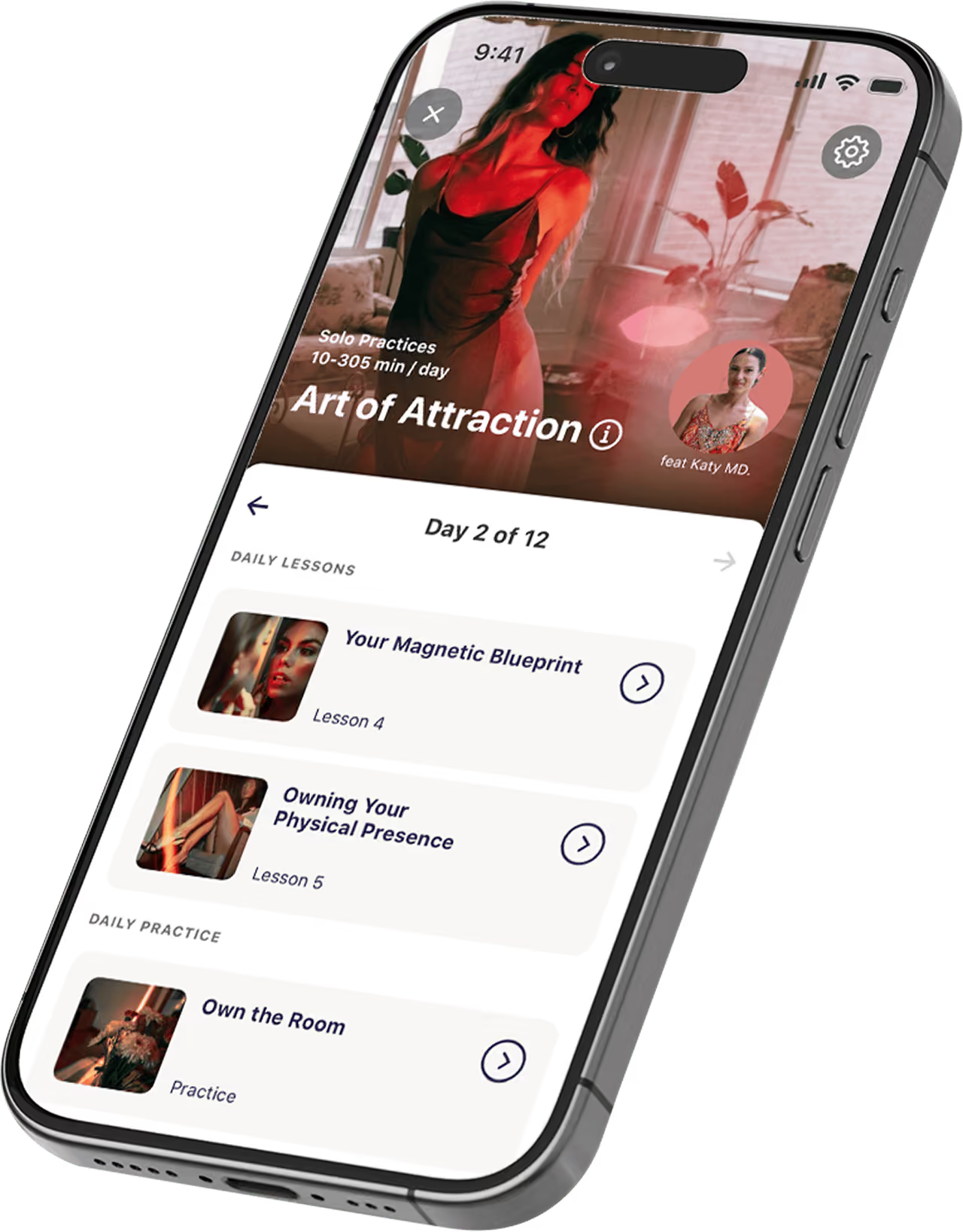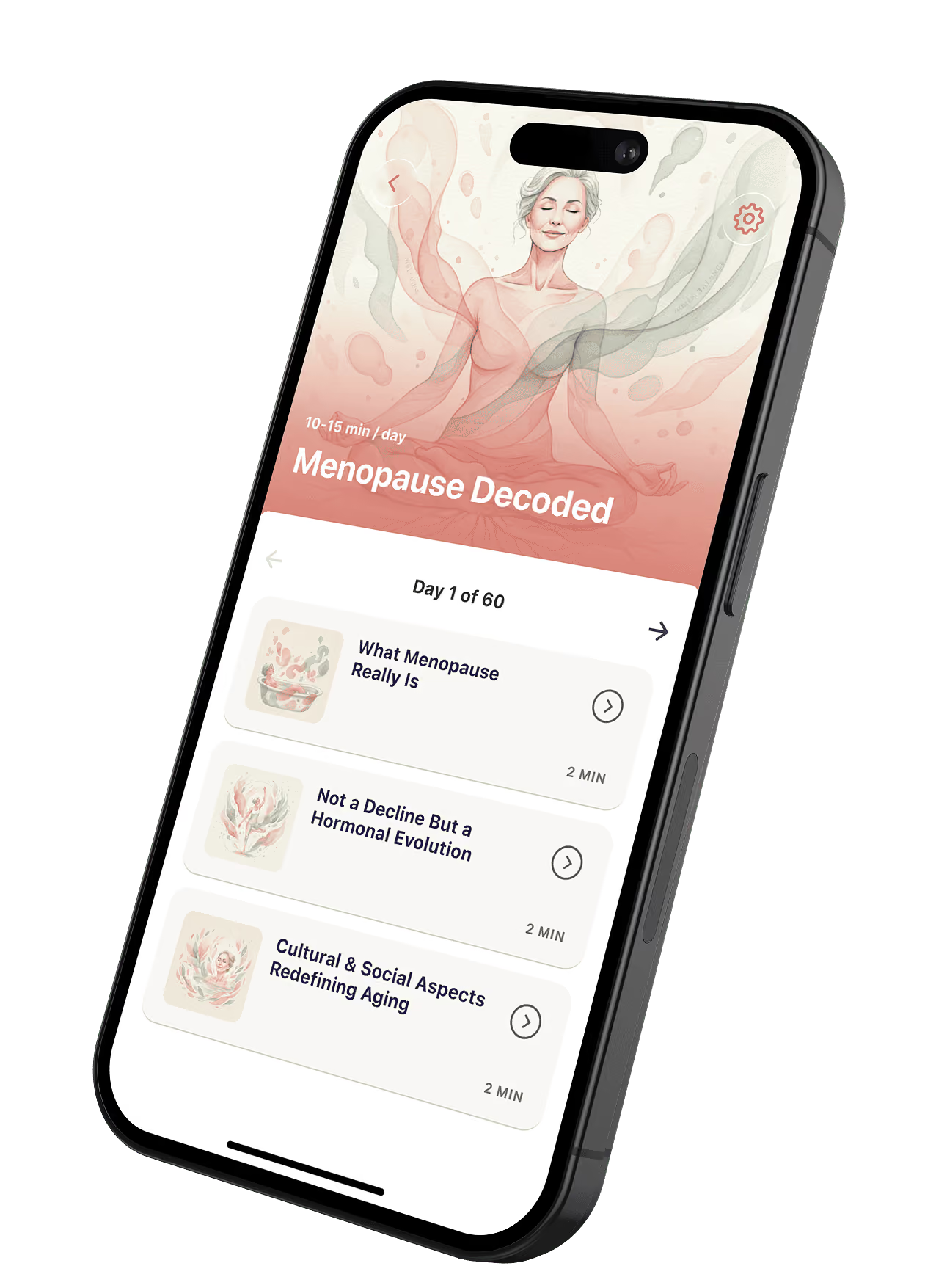
Losing interest in sex is common, and it usually has more than one cause. Stress, tiredness, tension or distance in a relationship, a routine that has gone flat, hormonal changes, health problems and some medicines can all lower desire. Losing interest doesn’t mean you’re broken or that you’ve stopped loving your partner. Path to Desire, a program in The Coach for Her app, helps you work out what is holding your desire back and practice small changes that make room for it.
Get my planIf you’ve been wondering why you’re never in the mood anymore, or why your sex drive is so low these days, look at three areas: your body, your mind and your relationship. Desire responds to all three, and the causes often overlap.
For many women, desire shows up after closeness and touch begin, not before, and starting to touch doesn’t oblige you to go further. This pattern is called responsive desire, and it’s just as normal as desire that arrives on its own.
If you’ve lost interest in sex, it can feel unsettling, especially when you can’t say why. A few facts can help put it in perspective.
Researchers Erick Janssen and John Bancroft describe sexual response with their dual control model: one system responds to what excites you, and another responds to signals of stress, discomfort or distraction that hold arousal back. Low desire can come from too many of those signals, not only from too little excitement. So start by easing what holds you back, then add more of what excites you.
Try one change at a time, so you can tell what makes a difference.
If you want a structured way to work through these steps, Path to Desire turns them into lessons and daily practices. A short quiz is the first step toward a personal plan.
Desire changes with your circumstances, and it can change again.
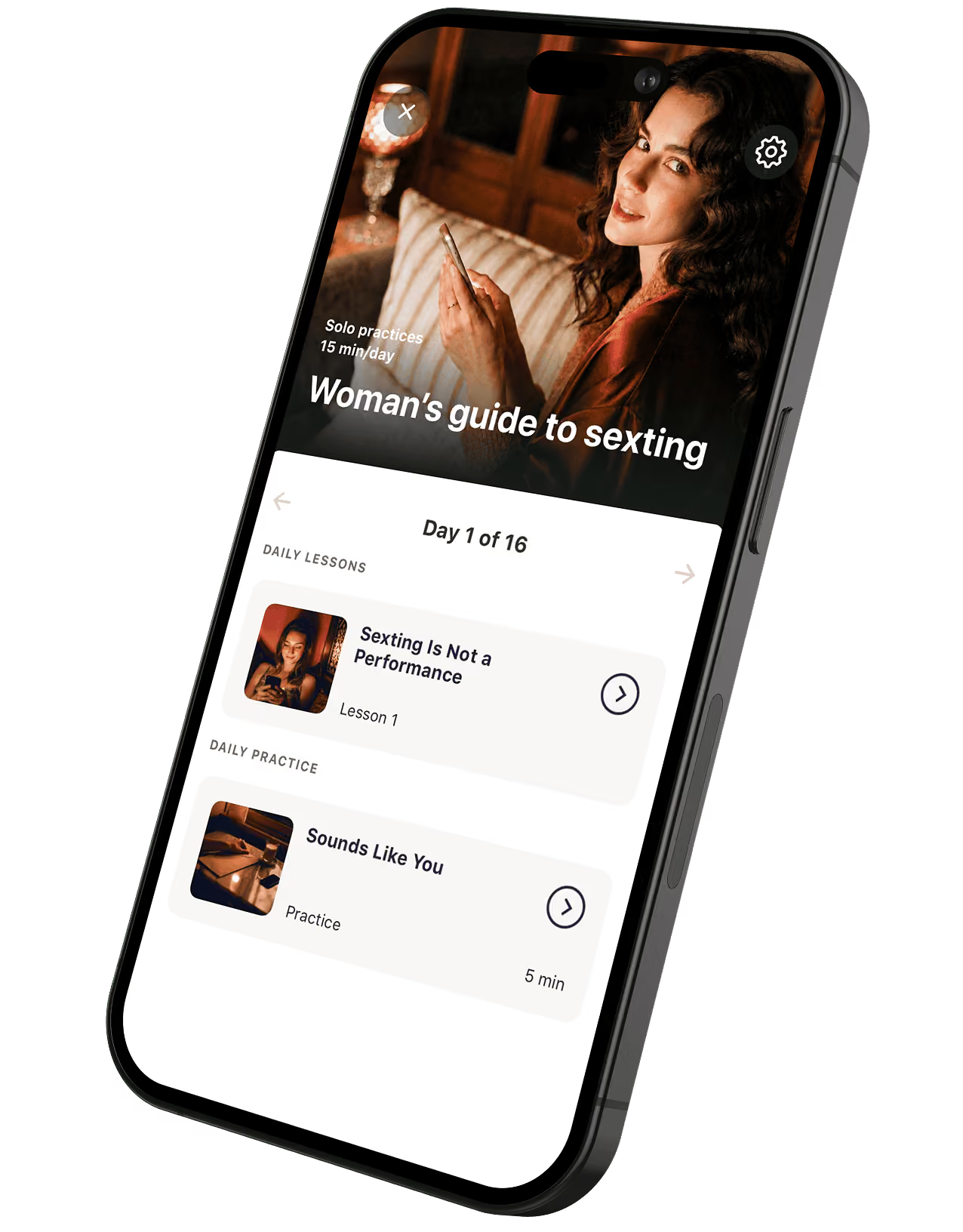
Path to Desire is a self-paced, five-week program in The Coach for Her. It combines short lessons with daily practices, starting with your own desire, then turning to your partner and to what you can explore together.
Lessons on the dual control model, responsive desire, stress and relationship barriers help you name what affects you, with quizzes and journals to keep track of what you notice.
Guided breathing, body scans and solo touch practices help you get out of your head and pay attention to sensation.
Learn why partners often want sex at different rates, how to negotiate instead of settling for a compromise, and how to stay close when sex isn’t on the table.
It starts with a few short questions about you. The quiz isn’t a medical assessment and doesn’t diagnose low libido.
If your husband or boyfriend gets upset when you’re not in the mood, it helps to know that couples rarely want sex at the same rate. Sex therapists talk about a lower-desire and a higher-desire partner: the first often feels pressured or inadequate, the second rejected. Neither role is a flaw. Seeing the gap as something you share, not something one of you causes, takes the blame out of the argument.
Pressure itself lowers desire, so arguing about how often you have sex tends to widen the gap. Instead of a compromise in which neither of you gets what you really want, look for an arrangement that gives each of you something. For example, you might plan time together that can include sex or other closeness: the partner who wants sex less takes the lead more often, and the other accepts closeness that doesn’t lead to sex.
If you’d like to take the lead yourself, see our guide on how to initiate sex.
Talk to a doctor or gynecologist if your desire drops suddenly without an obvious reason, if sex has become painful, if you notice other changes such as vaginal dryness, irregular periods or hot flashes, or if you think a medicine may be involved. Don’t stop a prescribed medicine without medical advice.
Clinicians use the term hypoactive sexual desire disorder (HSDD) for low desire that persists and causes distress. Only a clinician can assess that; wanting sex less than you used to doesn’t mean you have a disorder.
If your periods are changing too, read about what perimenopause is.
From a survey of The Coach users who finished their first four weeks:
You might want to understand why your desire dropped, ease stress, feel more present or talk with your partner without arguing. Answering a few questions is the first step toward your personal plan.
Women describe their experience with The Coach for Her in their own words.
“Sex and desire, in particular, are areas I want to improve in my personal life with my partner. For the first time, I don’t feel like an outsider, and I’ve realized that most of the things I was struggling with are actually quite normal.”
“It helps me understand myself better, not just emotionally but also in how I connect with others. I like that everything is broken into small, simple lessons, so it doesn’t feel overwhelming.”
“I was not expecting such a complete app. There’s so much helpful information, practical tips, and exercises.”
“I recently started using The Coach (for her) and am so pleased so far. The information included is educational and also so fun. I love that the lessons are broken down into small lessons making it easy to learn in whatever time you have, whether that be minutes or hours.”
The Coach works with clinical researchers, certified sex therapists and medical professionals, among them a urologist and an OB-GYN.
Dr. Jessica Yih
Urologist and director of women's sexual health and male infertility at UCI.
Dr. Kirti S. Patel
Board-certified ob/gyn and host of The Gynarchy, a women's-health podcast.
Dr. Justin Lehmiller
PhD in social psychology and senior research fellow at the Kinsey Institute.
Dr. Paula Hall
Accredited sexual and relationship psychotherapist, registered with leading professional bodies in psychotherapy.
Natalie Goldberg
Certified sex and family therapist dedicated to improving intimate relationships and personal well-being.
Dr. Susie Gronski
Licensed physical therapist, certified sexuality counselor, and founder of a men's pelvic health clinic.
Dr. Gary Shlifer
DO, board-certified internal medicine physician specializing in preventative care, nutrition, and anti-aging.
Dr. Joshua Roland
MD, sleep medicine specialist, and clinical instructor at the David Geffen School of Medicine, UCLA.
Yes. Many women go through periods of low desire, especially during stressful times, after having a baby, around menopause or when a relationship is under strain. It is worth looking into when it bothers you or your partner, or when it comes with other changes in your body.
Look at what changed recently: more stress, poor sleep, a conflict, a new medicine or contraceptive, having a baby or changes in your cycle. A sudden drop with no clear reason, or one that comes with pain or other symptoms, is worth discussing with a doctor.
No. Desire and love are connected, but they are not the same thing. Stress, tiredness, routine and unresolved tension can lower desire even in a close, loving relationship.
Remove the sense of obligation for a while. Agree on time together that doesn’t have to end in sex, slow down, and talk about what you’d like more or less of. When sex stops being a task to get through, pleasure is easier to notice.
They can for some women. Certain antidepressants, blood pressure medicines and hormonal treatments, including some contraceptives, can reduce desire as a side effect. Talk to your doctor before changing or stopping anything; together you can consider whether another option suits you.
Not by itself. When low desire lasts and causes distress, a clinician may assess it as hypoactive sexual desire disorder (HSDD). Path to Desire is an educational program; it doesn’t diagnose or treat medical conditions.
No. Much of the early work is about your own body, stress and what affects your desire, and you can do it alone. Later lessons include exercises for couples, which you can try when you feel ready.