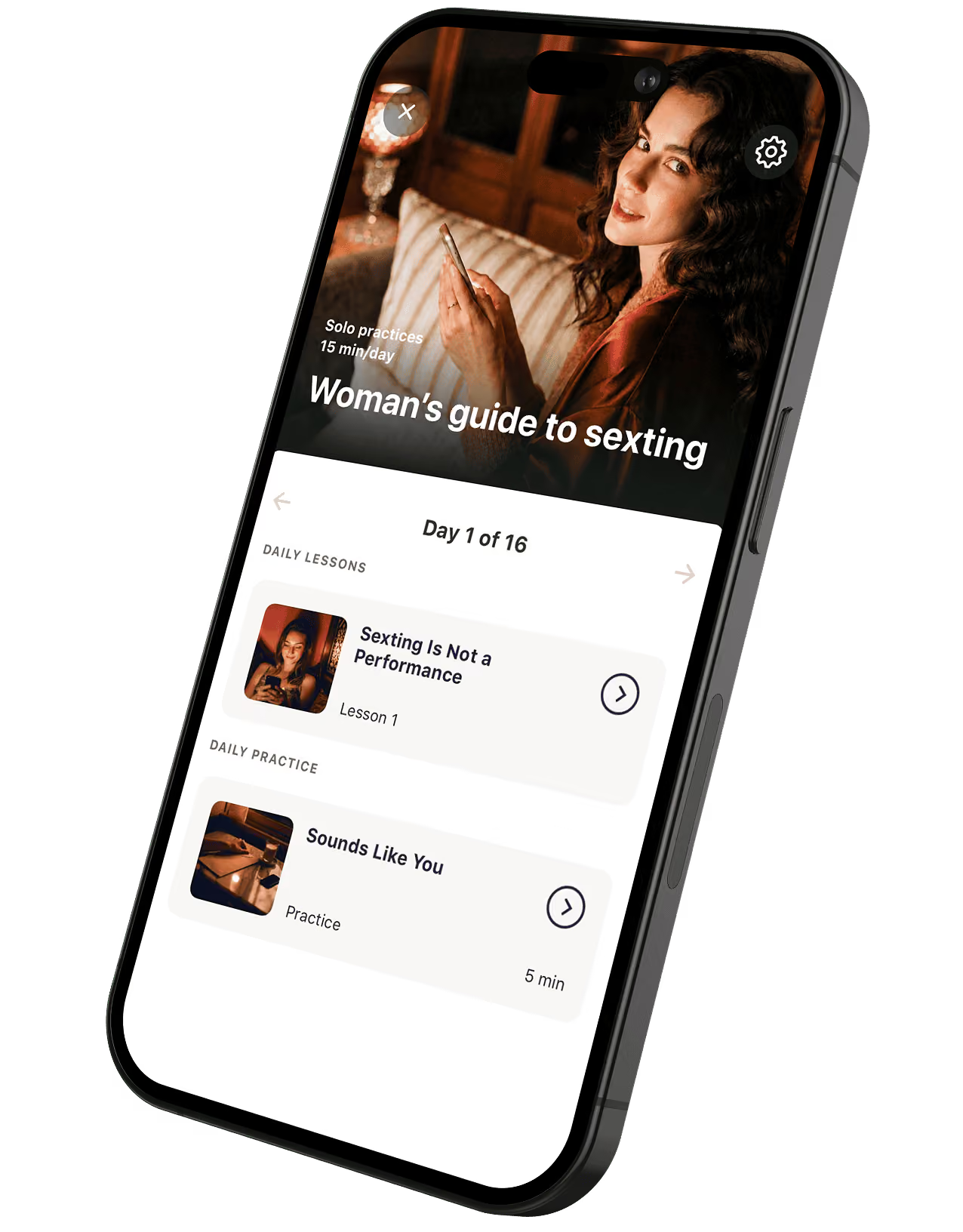
A sex drive quiz can’t tell you whether your desire is normal, because healthy desire varies widely from woman to woman. What it can do is show you how high your sex drive is right now, what sparks your desire and what gets in its way. Answer the six questions below about the past month, then see what your answers suggest. If you want to go further, Path to Desire, a program in The Coach for Her app, offers lessons and daily practices. You start with a personal plan.
Get my planThink back over the last month and answer each question with “rarely”, “sometimes” or “often”. There are no right or wrong answers, and you don’t need to add up a score.
If your answers to the first three questions were mostly “rarely” and that worries you, our guide on why you might not want sex anymore looks at the common reasons.
Start with the first three questions, which show how often desire turns up for you, and see which answer you gave most. The result describes the past month, not a fixed trait, and it can change with your circumstances. The other three questions add detail: whether desire follows closeness, what holds it back and whether your level of desire bothers you.
A quiz shows how the past month felt. Short notes kept over a few weeks show more: when desire turns up, what helps it and what switches it off.
A line or two a day is enough.
Path to Desire includes journals where you can keep notes like these, and its first lessons focus on your own desire before turning to your partner. To begin, you answer a few questions and get a personal plan.
The better you know your desire, the easier it is to care for it.
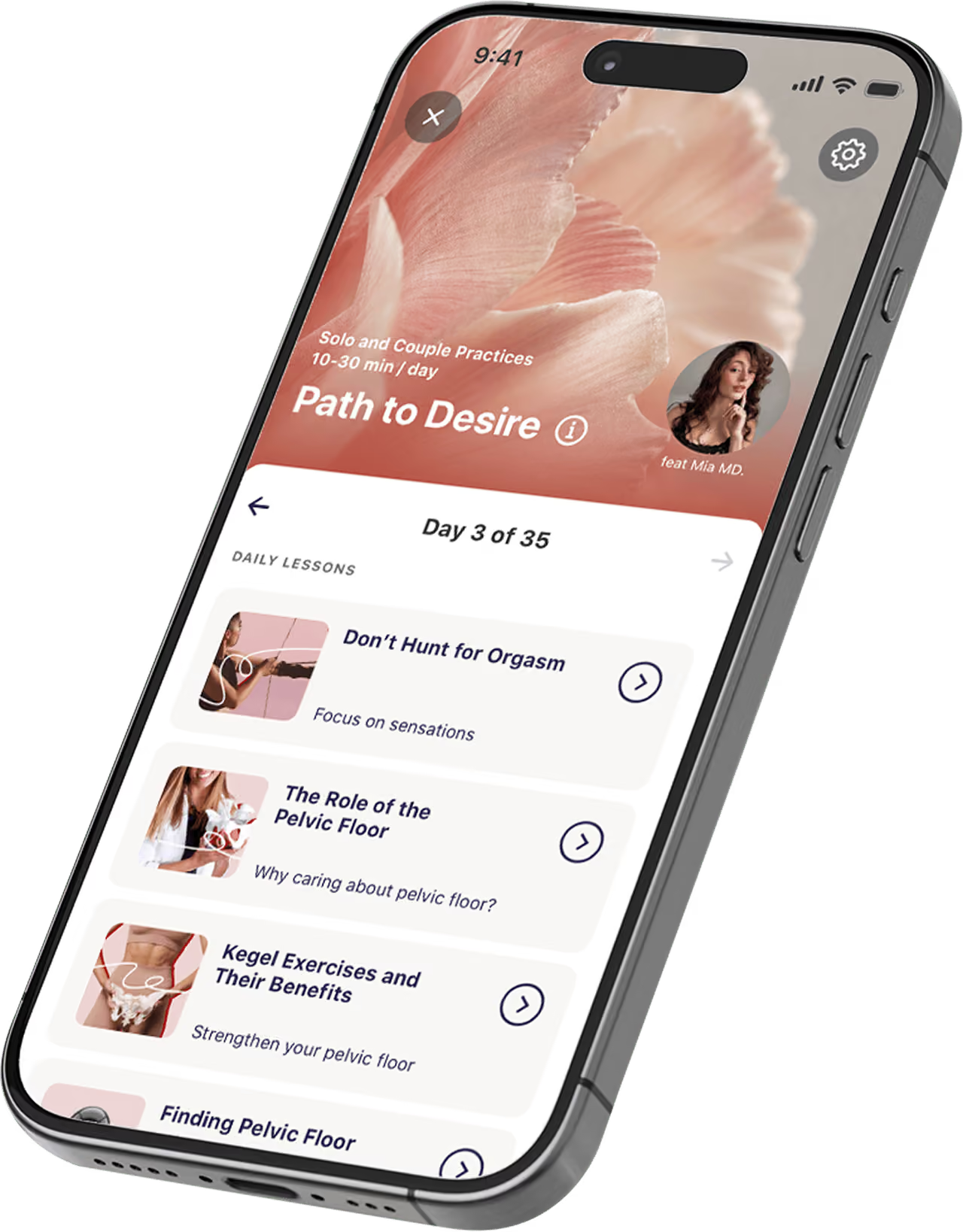
Path to Desire is a self-paced, five-week program in The Coach for Her, made up of short lessons and daily practices. You begin with your own desire and your own body, then move on to your partner and to what you can explore together.
Short quizzes on how strong your desire is and whether it tends to be spontaneous or responsive.
Lessons on what switches desire on and off, from stress and sleep to hormones and the relationship.
Breathing and body-awareness practices that help you unwind and notice what you feel.
Answer a few short questions, and your plan shows you where to begin. Much of the early work is done on your own, so you can start before involving your partner.
There’s no single normal level. Some women want sex most days, others rarely think about it, and both can be healthy. Desire also shifts over time: with the menstrual cycle, pregnancy and the months after birth, perimenopause and menopause, stress, illness and the stage of a relationship. What matters is whether your desire feels right to you.
See a doctor if your desire drops suddenly or for no clear reason, or if the change comes with pain during sex, low mood, unusual tiredness or other changes in your body. Hormones, some medications and a number of health conditions can affect libido, and a doctor can check for them.
If the real issue is that one of you wants sex more often than the other, see our guide to mismatched libido.
Asexuality is a sexual orientation: an asexual person feels little or no sexual attraction to others. Many asexual people are content as they are and see nothing to fix, and some still have a libido and enjoy pleasure on their own.
Low libido usually means your desire is lower than it used to be, or lower than you’d like. Stress, health or what’s happening in your relationship are often behind it, and it can change. Sometimes what feels like low libido is responsive desire: you rarely think about sex, yet you enjoy it once you’ve started.
To see how that pattern works, read our guide to responsive desire.
From a survey of The Coach users who finished their first four weeks:
Whether your desire feels lower than you’d like or simply different from your partner’s, your personal plan gives you a first step.
Women describe their experience with The Coach for Her in their own words.
“Sex and desire, in particular, are areas I want to improve in my personal life with my partner. For the first time, I don’t feel like an outsider, and I’ve realized that most of the things I was struggling with are actually quite normal.”
“It helps me understand myself better, not just emotionally but also in how I connect with others. I like that everything is broken into small, simple lessons, so it doesn’t feel overwhelming.”
“I have learnt so much about myself and relationships that I never thought was possible”
“The programs are super easy to follow and have taught me so much about my own body! Definitely recommend”
The Coach works with clinical researchers, certified sex therapists and medical professionals, among them a urologist and an OB-GYN.
Dr. Jessica Yih
Urologist and director of women's sexual health and male infertility at UCI.
Dr. Kirti S. Patel
Board-certified ob/gyn and host of The Gynarchy, a women's-health podcast.
Dr. Justin Lehmiller
PhD in social psychology and senior research fellow at the Kinsey Institute.
Dr. Paula Hall
Accredited sexual and relationship psychotherapist, registered with leading professional bodies in psychotherapy.
Natalie Goldberg
Certified sex and family therapist dedicated to improving intimate relationships and personal well-being.
Dr. Susie Gronski
Licensed physical therapist, certified sexuality counselor, and founder of a men's pelvic health clinic.
Dr. Gary Shlifer
DO, board-certified internal medicine physician specializing in preventative care, nutrition, and anti-aging.
Dr. Joshua Roland
MD, sleep medicine specialist, and clinical instructor at the David Geffen School of Medicine, UCLA.
No. A quiz can’t diagnose anything, and there’s no single normal level to measure yourself against. It can help you put what you feel into words. If your desire worries you, talk to a doctor or a sex therapist.
You may, if you think about sex often and want it most days. A high sex drive isn’t a problem in itself. If your urges feel hard to control or cause you distress, a therapist can help.
Desire shifts with stress, sleep, health, hormones, medication, the stage of your relationship and big life events such as having a baby or menopause. A change doesn’t necessarily mean something is wrong with you or your relationship. If it’s sudden or comes with other symptoms, see a doctor.
For many women it does: desire often rises around ovulation and dips in the days before a period. Noting your desire alongside your cycle for a few months shows you your own pattern.
That’s common, and it doesn’t mean either of you is wrong. Talking openly about what each of you wants, and finding ways to be close that don’t always lead to sex, can take the pressure off both of you.
You can often influence it, because desire responds to how you feel and what’s around you. Less stress, enough sleep, feeling close to your partner and time to relax into touch can all help. If a health problem or medication might be involved, ask your doctor.
Yes. The first part of the program focuses on your own desire and body, so you can start by yourself. The practices for couples are there when you and your partner feel ready.