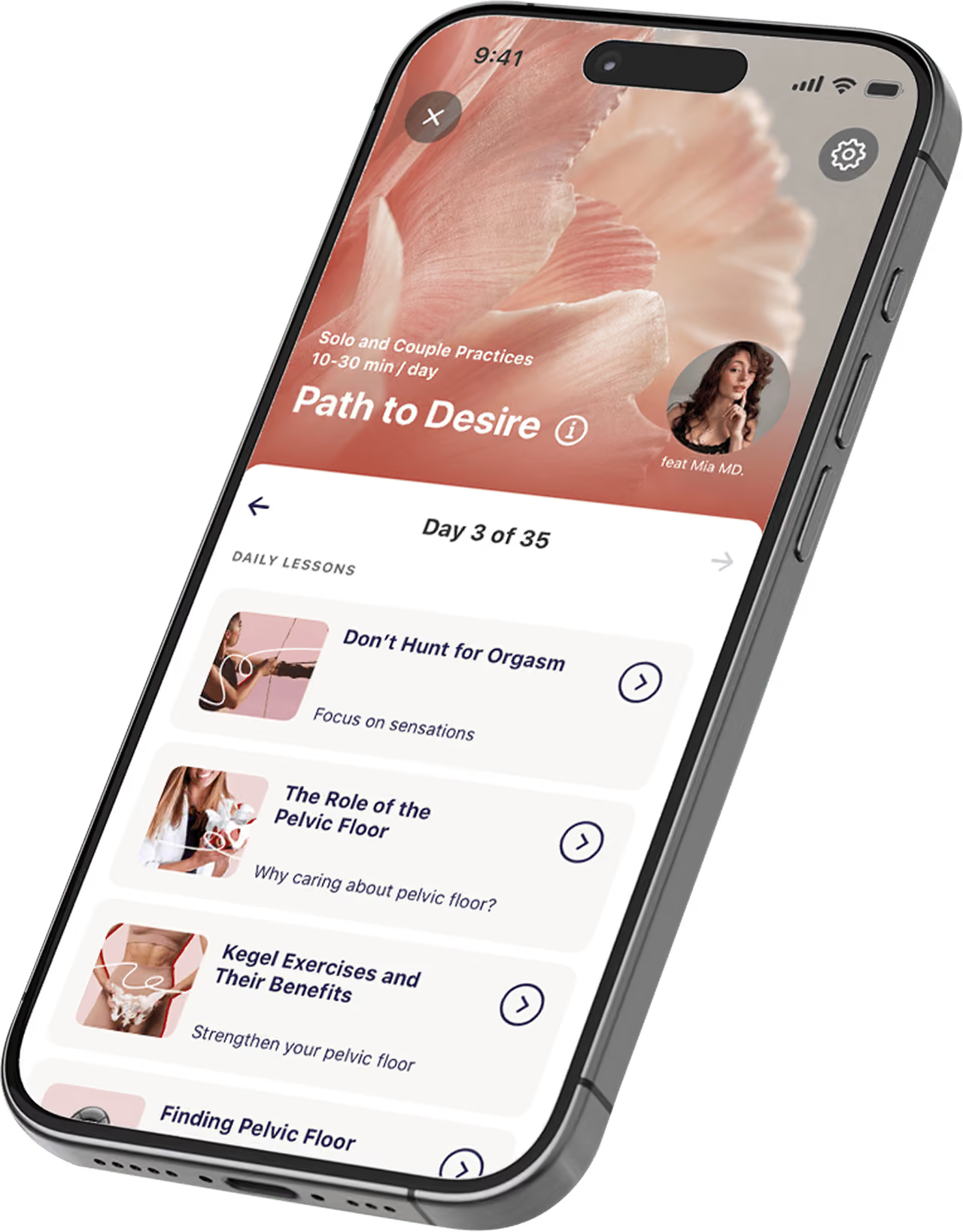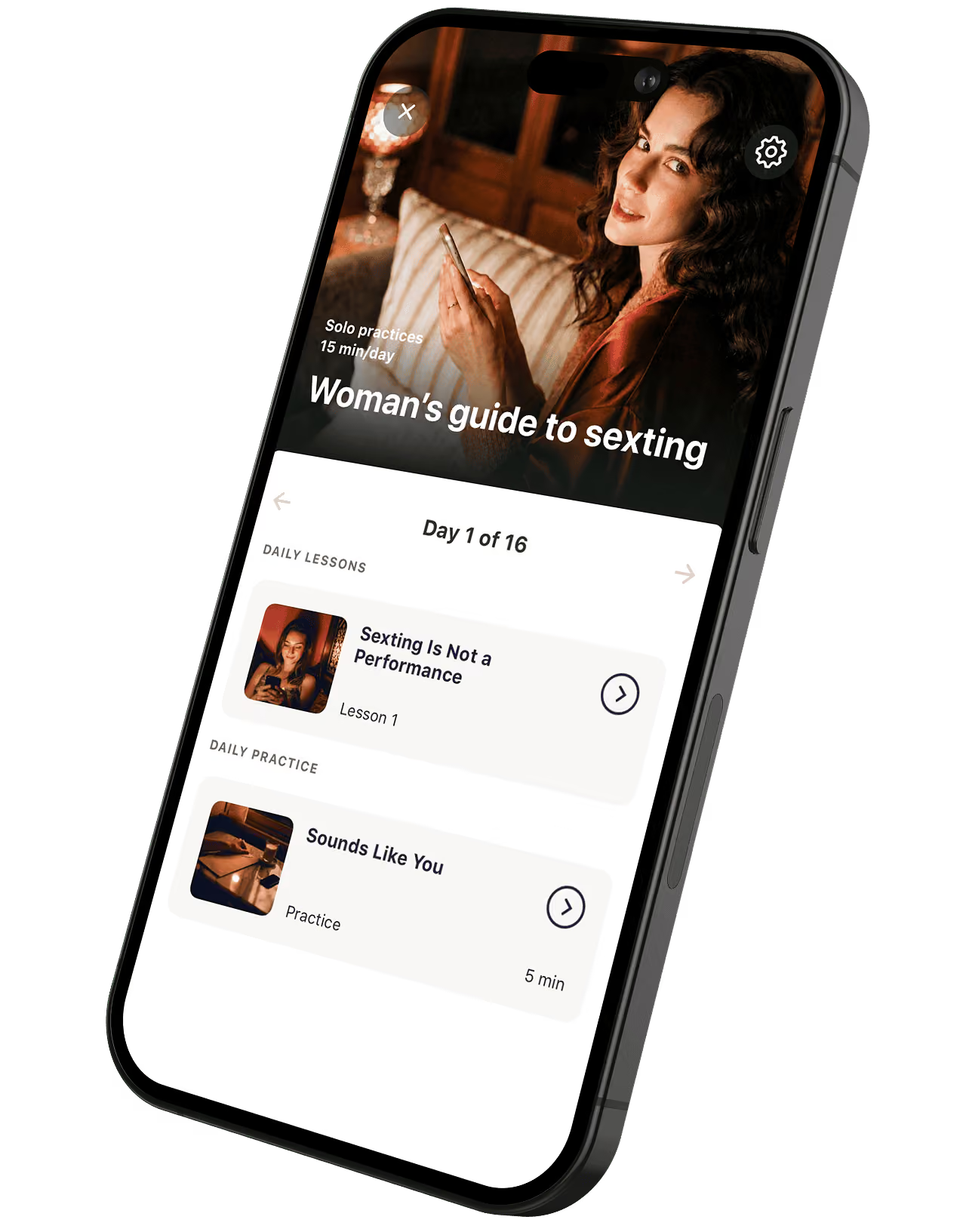
New things to try in the bedroom don’t have to be extreme. A different room or time of day, a blindfold, warm massage oil, longer foreplay or a simple role-play can all make sex feel new. Talk about an idea first, start small and agree on a safe word so either of you can stop at any moment. Path to Desire, a program in The Coach for Her app, helps you understand what you want and explore it with your partner, starting with a personal plan.
Get my planEach of these ideas is easy to suggest and easy to stop if it doesn’t feel right. Pick one that you both like the sound of and save the rest for another night.
If none of these ideas appeals because you’ve lost interest in sex itself, see our guide on why you might not want sex anymore.
Many couples follow the same order every time, from the first kiss to falling asleep. Changing that order, even slightly, is one of the easiest new things to try.
Trying something new goes best when you both feel able to say what you think. Six simple steps keep it relaxed, whether the idea is a blindfold or a whole role-play.
One rule matters most: you try something only when both of you say yes.
If you’d like a guided way to explore, Path to Desire includes lessons and practices on curiosity, sensory play and trying new things in a way that feels safe for both of you. A short quiz is the first step toward your personal plan.
Curiosity takes the pressure off.
Path to Desire is a self-paced, five-week program in The Coach for Her, made up of short lessons and daily practices. You start with your own desire, then move on to his, to talking about sex and to new things you can try as a couple.
Learn what helps you feel desire and what holds it back, so you can tell which ideas you’d enjoy.
Lessons on curiosity, novelty and sensory play, with practices for trying something new together.
How to set limits together, agree on a signal to pause and talk afterward about how it felt.
Answer a few short questions, and your plan shows you where to begin. Much of the early work is about your own desire, so you can start on your own before you suggest anything new.
Pick a time away from the bedroom when neither of you is tired or rushed. Start with something you already enjoy, then add the idea: “I love it when we take our time. I’d like to try a blindfold one evening. What do you think?” Put that way, it sounds like an invitation rather than a complaint.
If he hesitates, ask what puts him off and whether a gentler version would feel better. If the answer is no, accept it and look for an idea you both like. The same goes for you: you never have to agree to something just because he asked.
If talking about sex feels hard because you’ve drifted apart, see our guide on how to rekindle intimacy.
A safe word is a word you agree on in advance that means “stop now.” When either of you says it, you both stop right away, and nobody needs to explain or apologize. Having that way out makes it easier to try something new.
Good safe word examples are words you’d never say by accident during sex, such as “pineapple,” “banana” or the name of a city. Some couples use colors instead: “red” for stop and “yellow” for slow down. It also helps to agree on a signal, such as two taps on the arm, for moments when words don’t come easily.
To agree on limits before you ever need a safe word, try a yes, no, maybe list.
From a survey of The Coach users who finished their first four weeks:
Whether you want more variety in bed or a clearer sense of what you enjoy, your personal plan gives you a first step.
Women describe their experience with The Coach for Her in their own words.
“The coach has awoken my mind to new sensations and ideas on a much deeper thoughtful level I am really enjoying it. Thanks”
“Friendly daily practices that gently and compassionately bring you closer to your sensual self”
“I am super impressed with how well explained is everything, the practices are soft, relaxed, nothing is pushed or forced. Honestly is a lot more than I expected ❤️”
“Very approachable. I hadn’t ever used an app like this but I feel like it has given me perspective about my own body and has enhanced intimacy. Educational and engaging, I am enjoying it.”
The Coach works with clinical researchers, certified sex therapists and medical professionals, among them a urologist and an OB-GYN.
Dr. Jessica Yih
Urologist and director of women's sexual health and male infertility at UCI.
Dr. Kirti S. Patel
Board-certified ob/gyn and host of The Gynarchy, a women's-health podcast.
Dr. Justin Lehmiller
PhD in social psychology and senior research fellow at the Kinsey Institute.
Dr. Paula Hall
Accredited sexual and relationship psychotherapist, registered with leading professional bodies in psychotherapy.
Natalie Goldberg
Certified sex and family therapist dedicated to improving intimate relationships and personal well-being.
Dr. Susie Gronski
Licensed physical therapist, certified sexuality counselor, and founder of a men's pelvic health clinic.
Dr. Gary Shlifer
DO, board-certified internal medicine physician specializing in preventative care, nutrition, and anti-aging.
Dr. Joshua Roland
MD, sleep medicine specialist, and clinical instructor at the David Geffen School of Medicine, UCLA.
A new room, a blindfold, a slow massage before sex or a short role-play are all easy places to start. Anything counts if it changes the place, the pace, the senses involved or who leads.
“Spicy” means something different for every couple. Ideas to consider include new lingerie, a vibrator you use together, a new position, sex somewhere other than the bed or a game of dares you write together. Start with what you both say yes to, and keep the rest for later.
Yes. After years together, sex can start to feel routine because the familiar stops being exciting on its own. That doesn’t mean something is wrong with your relationship. Small changes, such as a new setting, a slower pace or letting the other person lead, often bring back some of the excitement.
Not for everything. For small changes, such as a new room or a longer massage, checking in now and then is enough. A safe word helps with anything less familiar, such as a blindfold or a role-play, because one agreed word is quicker to say in the moment than an explanation.
You can say no, and you don’t need to explain why. If you’re unsure rather than against it, say what would make it feel better, such as a gentler version or more time. If he keeps pushing after a no, take that seriously; talking it through with a therapist can help.
That’s normal, especially when you’re tired or stressed, and there’s no need to force it. Start with something relaxing rather than exciting, such as a massage with no expectation of sex. If you’ve had little interest in sex for months and it bothers you, talk to a doctor or a sex therapist.
Yes. The first part of the program focuses on your own desire, including what turns you on and what holds you back, and you can do it alone. The practices for exploring new things as a couple are there when you and your partner feel ready.