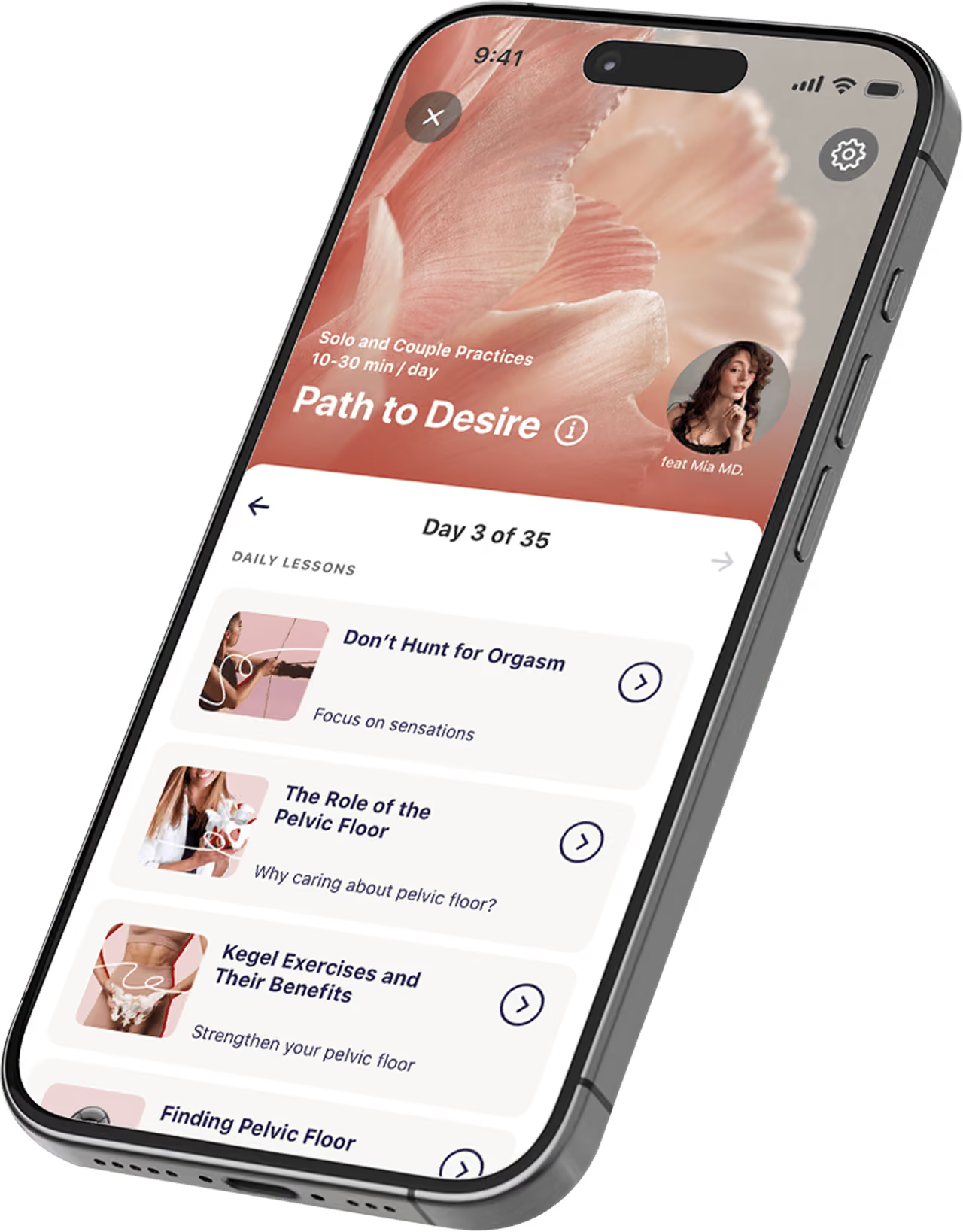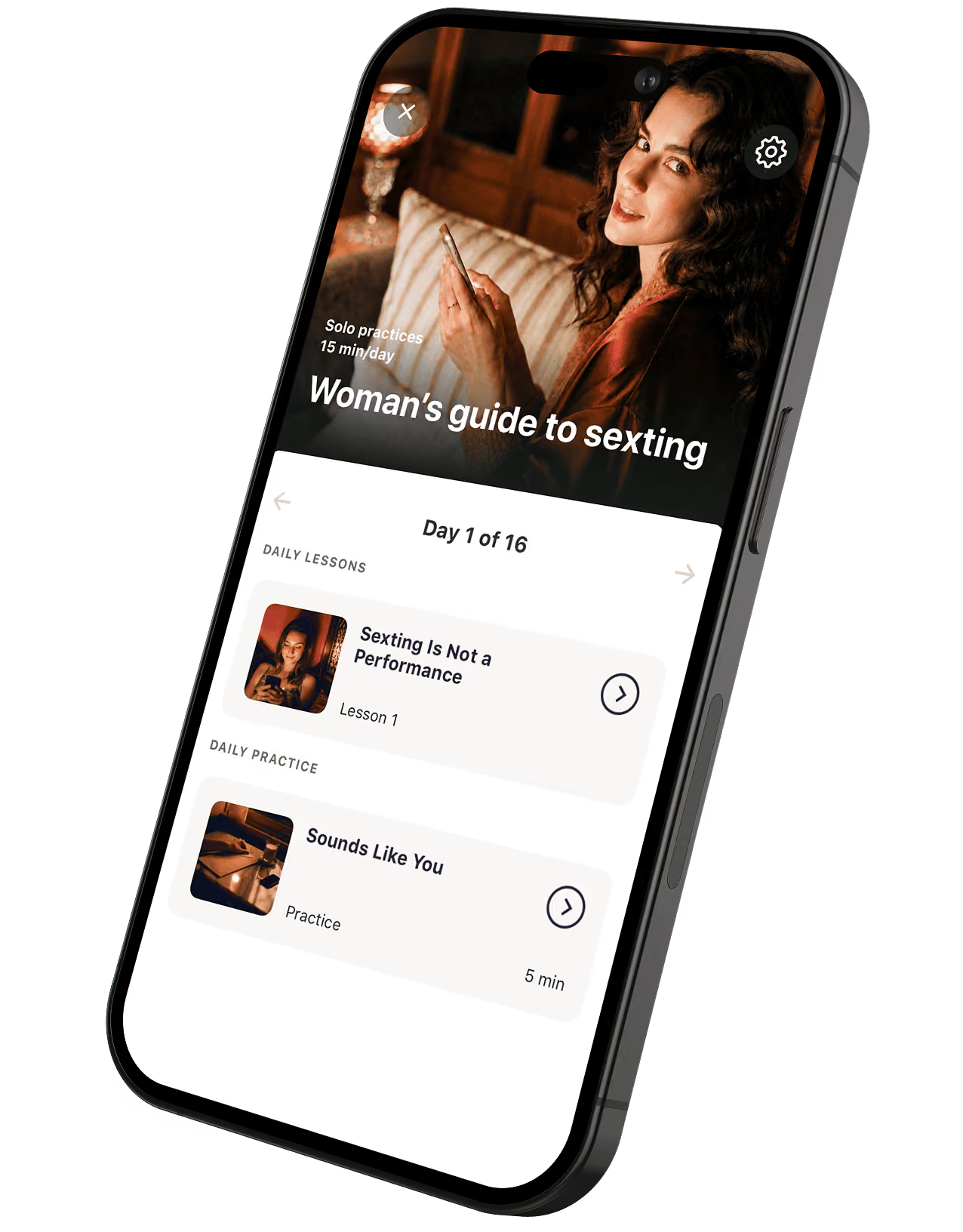
Mindful sex means giving your full attention to what is happening during sex: the touch, your breath, the sensations in your body and the person you’re with, rather than your to-do list, how you look or whether you’ll reach orgasm. It isn’t a special technique or a spiritual practice. It’s a way of paying attention that you can learn, often starting outside the bedroom with a few minutes of slow breathing or a body scan. Path to Desire, a program in The Coach for Her app, includes lessons and practices on awareness, relaxation and touch without pressure, starting with a personal plan.
Get my planIt’s normal for your thoughts to drift during sex now and then. Knowing what usually pulls your attention away makes it easier to notice when it happens and come back.
If what has changed is your desire for sex itself, our guide on why you might not want sex anymore looks at the common reasons.
Paying attention to sensations instead of thoughts can change sex in several ways.
Mindful sex is a skill, and like any skill it is easier to build in small steps. You can start on your own, then bring it into sex with your partner.
The first two steps take only a few minutes and don’t involve sex at all.
If you’d like guidance with steps like these, Path to Desire has short lessons and daily practices on awareness, breathing, slow touch and letting go of the pressure to orgasm. You answer a few questions and get a personal plan.
Pleasure grows when your attention is on what you feel, not on how you’re doing.
Path to Desire is a self-paced program in The Coach for Her that runs over five weeks, with short lessons and daily practices. It begins with your own desire and body, then turns to your partner and to what you can explore together.
Guided practices, such as a body scan and mindful eating, that help you notice sensations and step out of autopilot.
A slow breathing practice with long exhales that you can use to calm your body whenever you feel tense.
Slow touch practices on your own and with your partner, focused on what you feel rather than on where it leads.
A few questions shape a plan that shows you where to begin. Much of the early work is done on your own, so you can practice being present before you bring it into sex with your partner.
Mindfulness means paying attention to the present moment on purpose, without judging what you notice. During sex, worries easily pull that attention away, which is why it helps to train it first in calmer moments. A few minutes a day of noticing your breath, your body or your food builds the habit of coming back to what you feel.
A body scan is a simple way to start. Lie down or sit comfortably, take three slow breaths, then move your attention from your feet up to your head, pausing on each area to notice warmth, tension or the surface beneath you. You don’t have to change anything; you simply notice what is there. With regular practice, it becomes easier to bring the same attention to touch.
If you rarely feel desire before sex begins, our guide to responsive desire explains why it often appears once you’re relaxed and being touched.
Spectatoring is the term sex therapists use for watching and judging yourself during sex as if from the outside: checking how your body looks, how you sound, whether you’re aroused enough or whether you’ll reach orgasm. Your attention moves away from your sensations and your partner, and the worry itself can make arousal and orgasm harder. It often goes together with worries about your body or pressure to perform.
To step out of the spectator’s seat, notice the moment you start commenting on yourself and bring your attention back to one physical sensation, such as your breath or the touch on your skin. A setting where you feel comfortable, from the lighting to what you wear, can quiet the inner critic, and so can telling your partner what feels good. If worries about your body or about sex keep getting in the way, a sex therapist can help.
For a structured way to explore touch with your partner without any goal or pressure, see our guide to sensate focus exercises.
From a survey of The Coach users who finished their first four weeks:
Whether your mind races, you worry about how you look or you feel pressure to orgasm, you can begin with a personal plan based on your answers to a few questions.
Women describe their experience with The Coach for Her in their own words.
“For someone who really struggles to switch off and relax this is app has been teaching me how to awaken and become more aware of what is happening in my body! love it.”
“I am super impressed with how well explained is everything, the practices are soft, relaxed, nothing is pushed or forced. Honestly is a lot more than I expected ❤️”
“The coach has awoken my mind to new sensations and ideas on a much deeper thoughtful level I am really enjoying it. Thanks”
“Very approachable. I hadn’t ever used an app like this but I feel like it has given me perspective about my own body and has enhanced intimacy. Educational and engaging, I am enjoying it.”
The Coach works with clinical researchers, certified sex therapists and medical professionals, among them a urologist and an OB-GYN.
Dr. Jessica Yih
Urologist and director of women's sexual health and male infertility at UCI.
Dr. Kirti S. Patel
Board-certified ob/gyn and host of The Gynarchy, a women's-health podcast.
Dr. Justin Lehmiller
PhD in social psychology and senior research fellow at the Kinsey Institute.
Dr. Paula Hall
Accredited sexual and relationship psychotherapist, registered with leading professional bodies in psychotherapy.
Natalie Goldberg
Certified sex and family therapist dedicated to improving intimate relationships and personal well-being.
Dr. Susie Gronski
Licensed physical therapist, certified sexuality counselor, and founder of a men's pelvic health clinic.
Dr. Gary Shlifer
DO, board-certified internal medicine physician specializing in preventative care, nutrition, and anti-aging.
Dr. Joshua Roland
MD, sleep medicine specialist, and clinical instructor at the David Geffen School of Medicine, UCLA.
They overlap, but they aren’t the same. Slow sex puts the emphasis on a slower pace, and tantra comes from spiritual traditions with their own practices and beliefs. Mindful sex only asks you to pay attention to what you feel, at whatever pace suits you both.
That’s normal, especially at first. Each time you notice it, gently bring your attention back to your breath or to a sensation, without criticizing yourself. A few minutes of practice a day outside the bedroom make it easier to do the same during sex.
It can help when stress, distraction or pressure leaves little room for desire, because when you relax and notice pleasant sensations, arousal and desire have a chance to build. If your desire has dropped suddenly or you notice other changes in your health, see a doctor, since hormones, medications and health conditions can play a part.
Yes. Breathing exercises, a body scan and slow, curious touch on your own help you learn what you feel and what you like, without any pressure. You can then bring the same attention into sex with a partner.
Choose a relaxed moment outside the bedroom and say what you’d like, for example “I’d love us to take our time and just enjoy touching each other.” Suggest trying slower touch without a goal, and agree that either of you can pause or change the pace.
Paying close attention to your body can feel awkward at first, and that usually eases with practice. If sex is painful, see a doctor. If staying present brings up fear or painful memories, stop and consider talking to a therapist who works with sexual concerns.
Yes. The program begins with your own desire and body, and much of the early work is done on your own. The practices for couples are there when you and your partner feel ready.