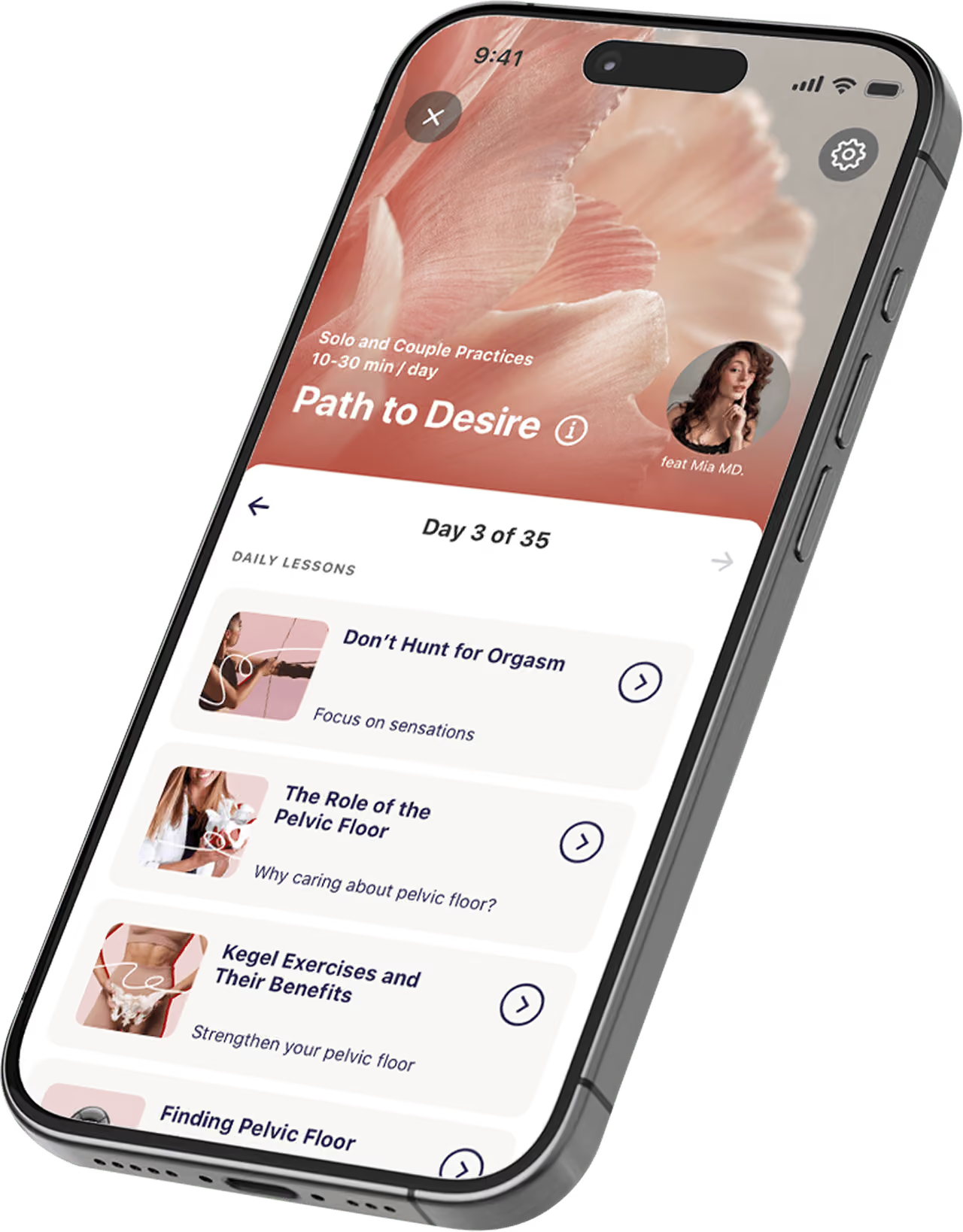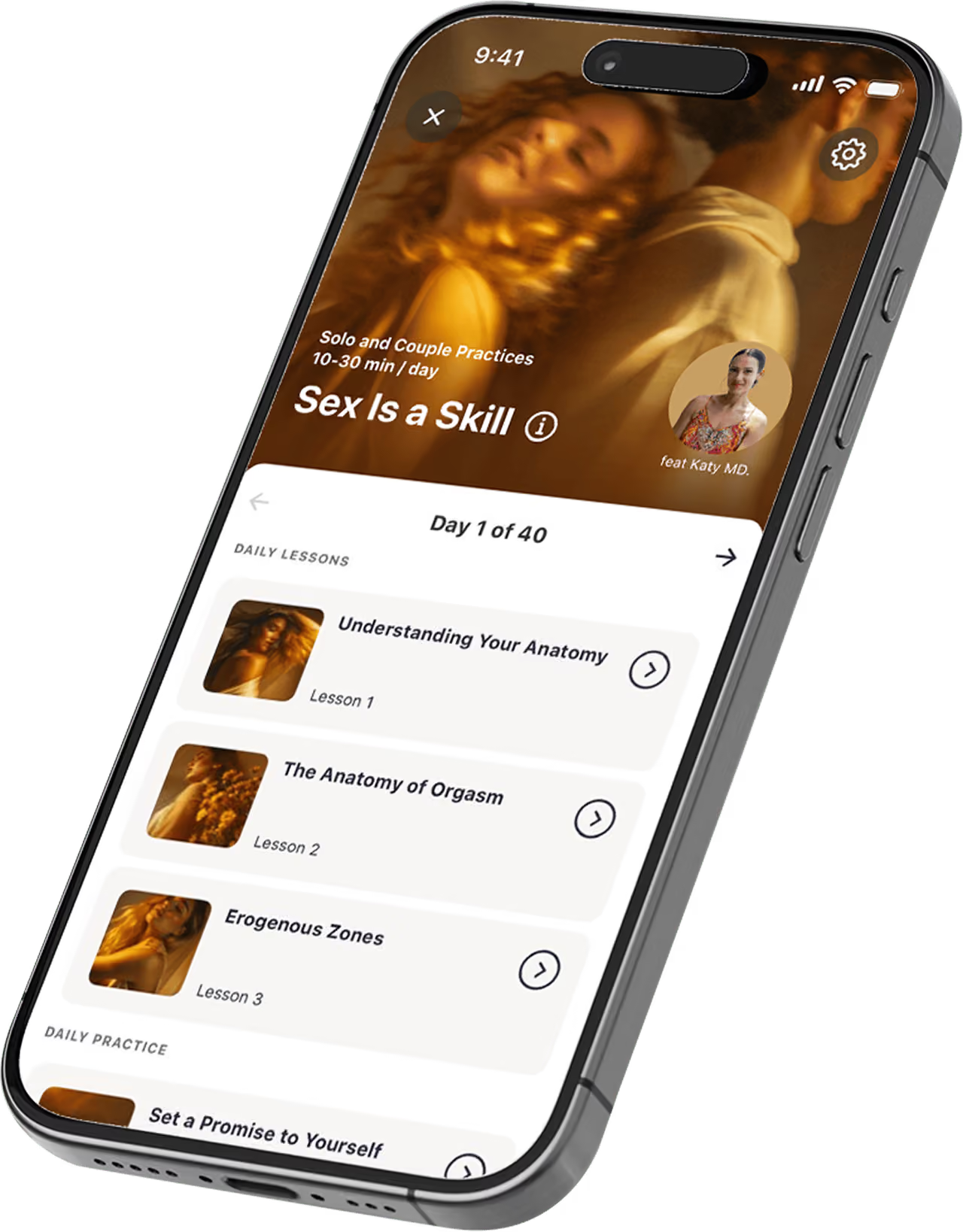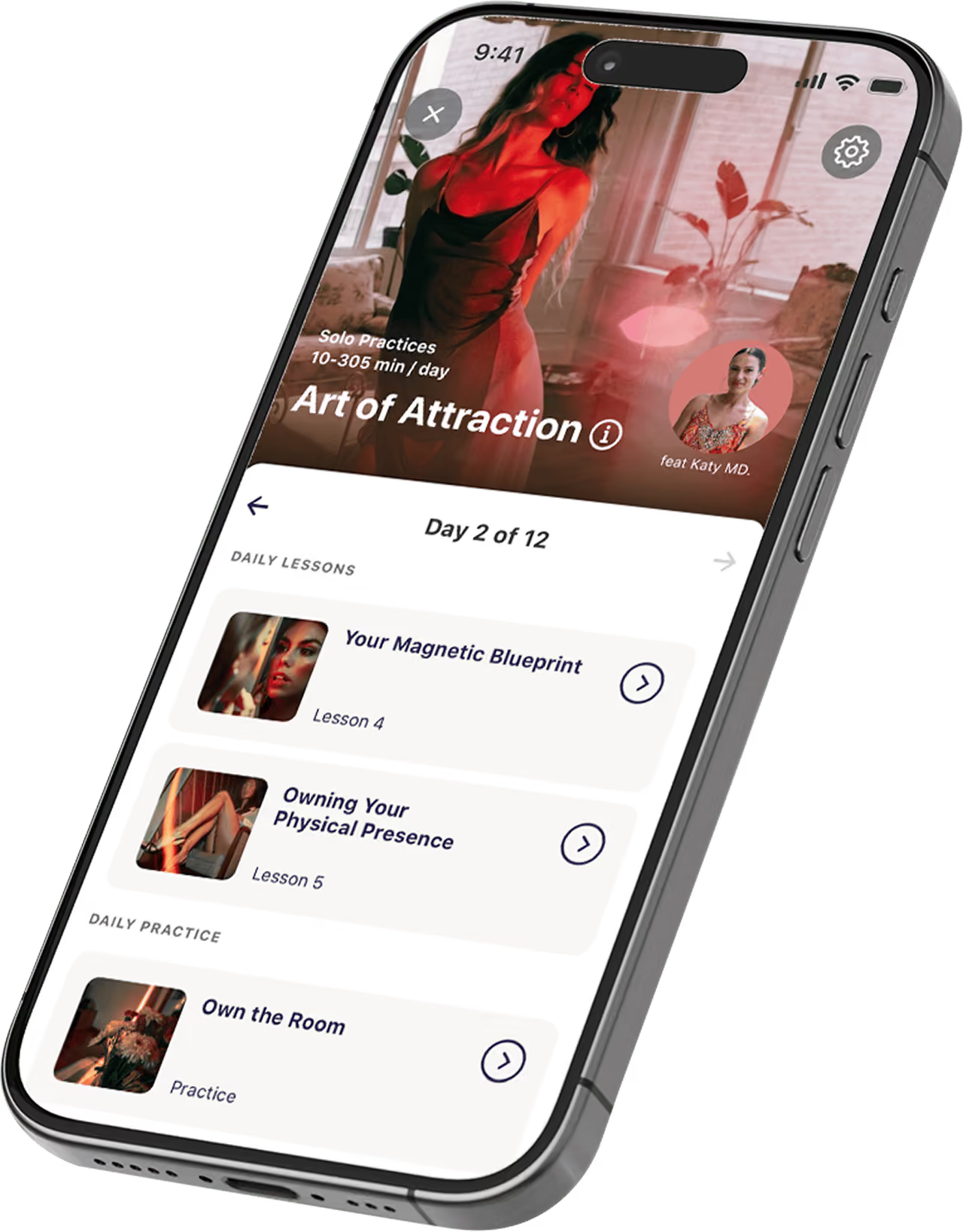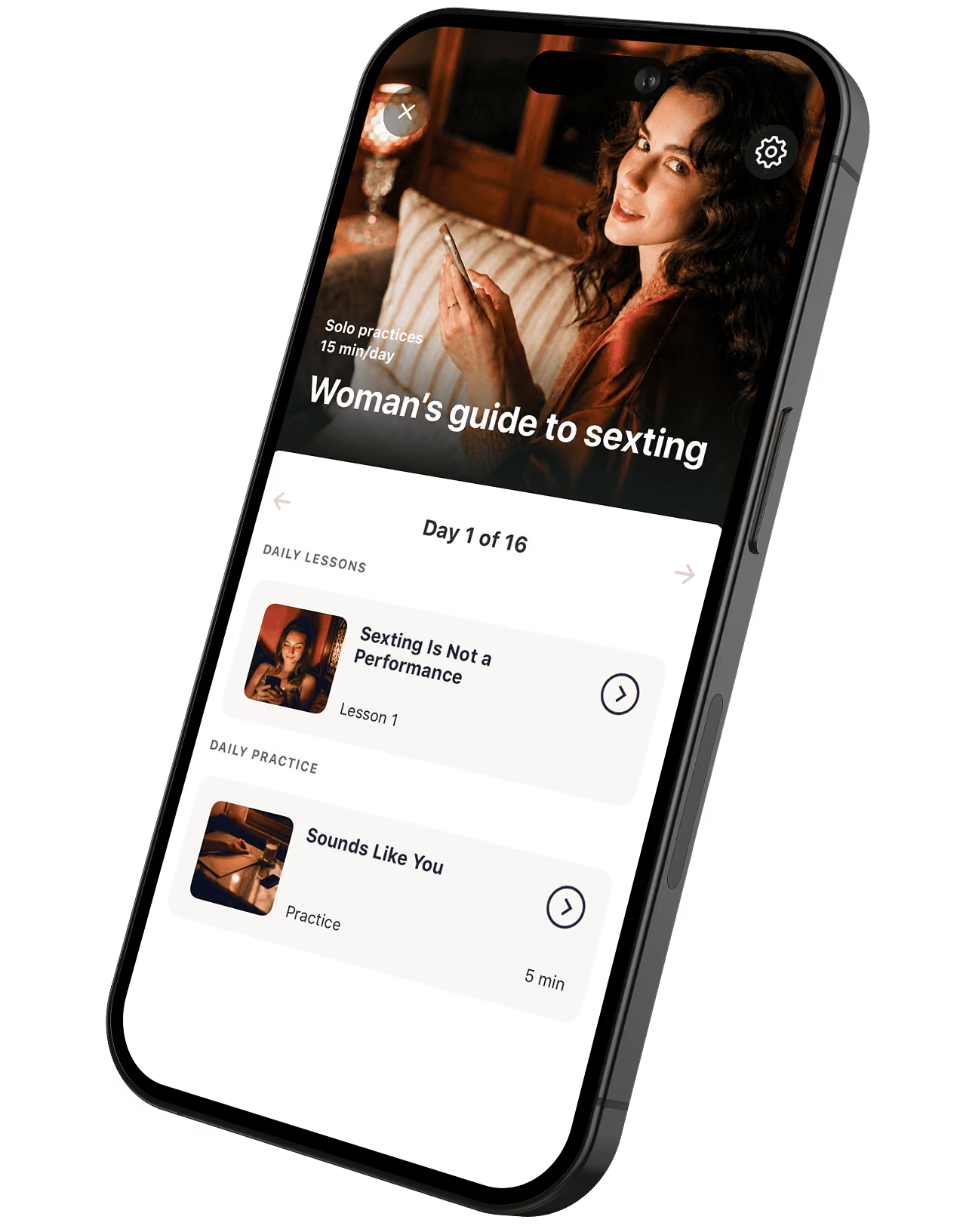
Good intimacy questions are open and personal: they ask how your partner feels and what they want, rather than what happened. Start with easy questions about feeling close, move on to questions about sex once you’re both comfortable, and ask at a calm moment when neither of you is rushed or upset. Path to Desire, a program in The Coach for Her app, helps you understand your own desire and talk about it with your partner, starting with a personal plan.
Get my planThese questions are about how you feel with each other, and they’re often easier to answer than questions about sex. Asking them now and then is one of the simplest ways to build emotional intimacy. Pick one or two at a time and see where the conversation goes.
If talking about closeness shows you that your own interest in sex has faded, see our guide on why you might not want sex anymore.
A few simple ground rules help both of you answer honestly.
Once you’re comfortable talking about closeness, sexual intimacy questions help you talk about desire, pleasure and limits. They work best when you both answer, so take turns.
Start with what already works before you ask about changes.
If you’d like a guided way to keep these conversations going, Path to Desire includes lessons and practices on talking about sex, from first open questions to regular check-ins and talking after sex. A short quiz is the first step toward your personal plan.
Talking about sex gets easier with practice.
Path to Desire is a self-paced, five-week program in The Coach for Her, built on short lessons and daily practices. It starts with your own desire, then turns to your partner and to what you can explore together.
Learn what turns you on and what holds you back, so you have something concrete to say when your partner asks.
Practices for open conversations, listening without judging and talking after sex about what felt good.
Lessons on what shapes his desire, and an exercise in which you answer questions the way you think he would, to check your assumptions.
Answer a few short questions, and your plan shows you where to begin. You can do much of the early work on your own, before you bring your partner in.
After years together, it’s easy to assume you already know every answer. But desires and limits change with stress, age, health and new stages of life, so what was true years ago may not be true now. A regular check-in, for example once a month, keeps you up to date with each other.
Keep it short and specific. You might ask: “What has made you feel most loved this month?”, “Is there something you’d like more of, or less of?” and “Is there anything new you’ve been curious about?”
If the closeness between you has faded and you want it back, see our guide on how to rekindle intimacy.
How you react to an answer affects whether your partner will open up again next time. Listen without arguing or defending yourself, and thank your partner for being honest, especially when the answer surprised you.
Different answers are normal. If one of you wants to try something the other doesn’t, agree to try new things only when both of you say yes, and look for a version you’re both happy with. If a question stirs up hurt or anger, stop and come back to it later; if that keeps happening, a couples therapist can help.
If it turns out one of you wants sex more often than the other, see our guide on mismatched libido.
From a survey of The Coach users who finished their first four weeks:
Whether you want easier conversations, more closeness or a clearer sense of what you like in bed, your personal plan suggests a first step.
Women describe their experience with The Coach for Her in their own words.
“It really helped me learn more about my health and how to improve my intimacy with my husband. I would recommend it”
“I have learnt so much about myself and relationships that I never thought was possible”
“I am super impressed with how well explained is everything, the practices are soft, relaxed, nothing is pushed or forced. Honestly is a lot more than I expected ❤️”
“The coach has awoken my mind to new sensations and ideas on a much deeper thoughtful level I am really enjoying it. Thanks”
The Coach works with clinical researchers, certified sex therapists and medical professionals, among them a urologist and an OB-GYN.
Dr. Jessica Yih
Urologist and director of women's sexual health and male infertility at UCI.
Dr. Kirti S. Patel
Board-certified ob/gyn and host of The Gynarchy, a women's-health podcast.
Dr. Justin Lehmiller
PhD in social psychology and senior research fellow at the Kinsey Institute.
Dr. Paula Hall
Accredited sexual and relationship psychotherapist, registered with leading professional bodies in psychotherapy.
Natalie Goldberg
Certified sex and family therapist dedicated to improving intimate relationships and personal well-being.
Dr. Susie Gronski
Licensed physical therapist, certified sexuality counselor, and founder of a men's pelvic health clinic.
Dr. Gary Shlifer
DO, board-certified internal medicine physician specializing in preventative care, nutrition, and anti-aging.
Dr. Joshua Roland
MD, sleep medicine specialist, and clinical instructor at the David Geffen School of Medicine, UCLA.
Good intimacy questions are open and focus on feelings. Try “When do you feel closest to me?”, “What makes you feel loved?” or “What does great sex mean to you?” They invite your partner to tell you something, not just to say yes or no.
Choose a relaxed moment and say why you’re asking, for example: “I love being close to you, and I’d like to know more about what you enjoy.” Start with an easy question about feeling close, answer it yourself as well and leave questions about sex for when you’re both comfortable.
Let it go for now and don’t push. Some people need time to think, and some find it easier to talk side by side, on a walk or in the car, than face to face. Say you’d like to come back to it another day, and keep sharing your own answers in the meantime.
There’s no rule, but a regular check-in, for example once a month, helps you notice changes before they turn into distance. Talk again whenever something big changes, such as a new baby, a new job, a stressful period or a health problem.
Deep intimacy questions ask about things people rarely say out loud: worries, hopes, what they need when they feel low or a wish they’ve never mentioned. Ask them when you both have time, and be ready to share your own answer too.
Take a breath before you respond and thank your partner for being honest. You don’t have to settle anything on the spot; agree to talk again in a day or two. If conversations about sex often end in arguments or one of you feels pressured, a couples therapist can help.
Yes. Much of the early work is about your own desire and the stress that can hold it back, and you can do it alone. Practices for couples, such as open conversations about sex and talking after sex, are there when you both feel ready.