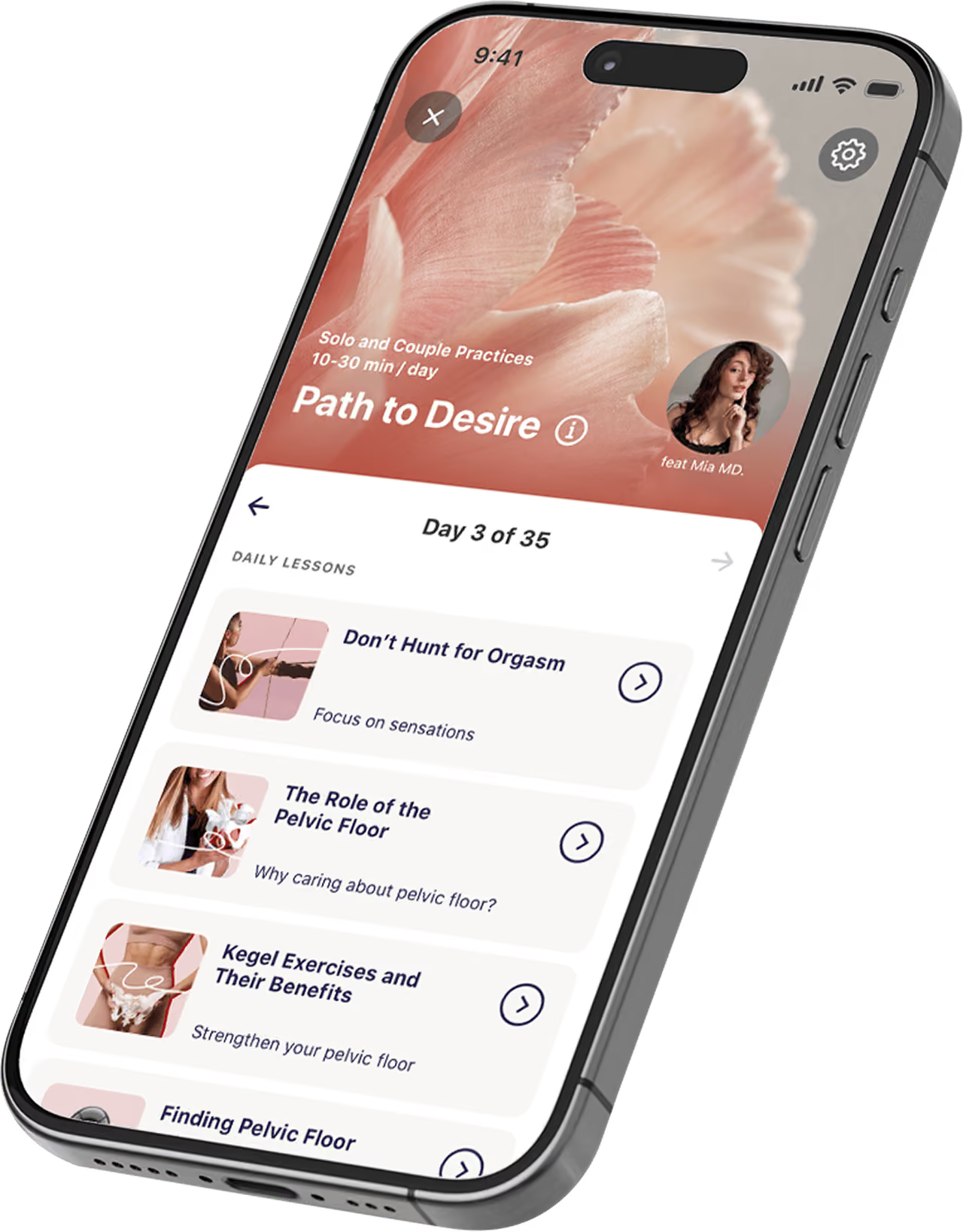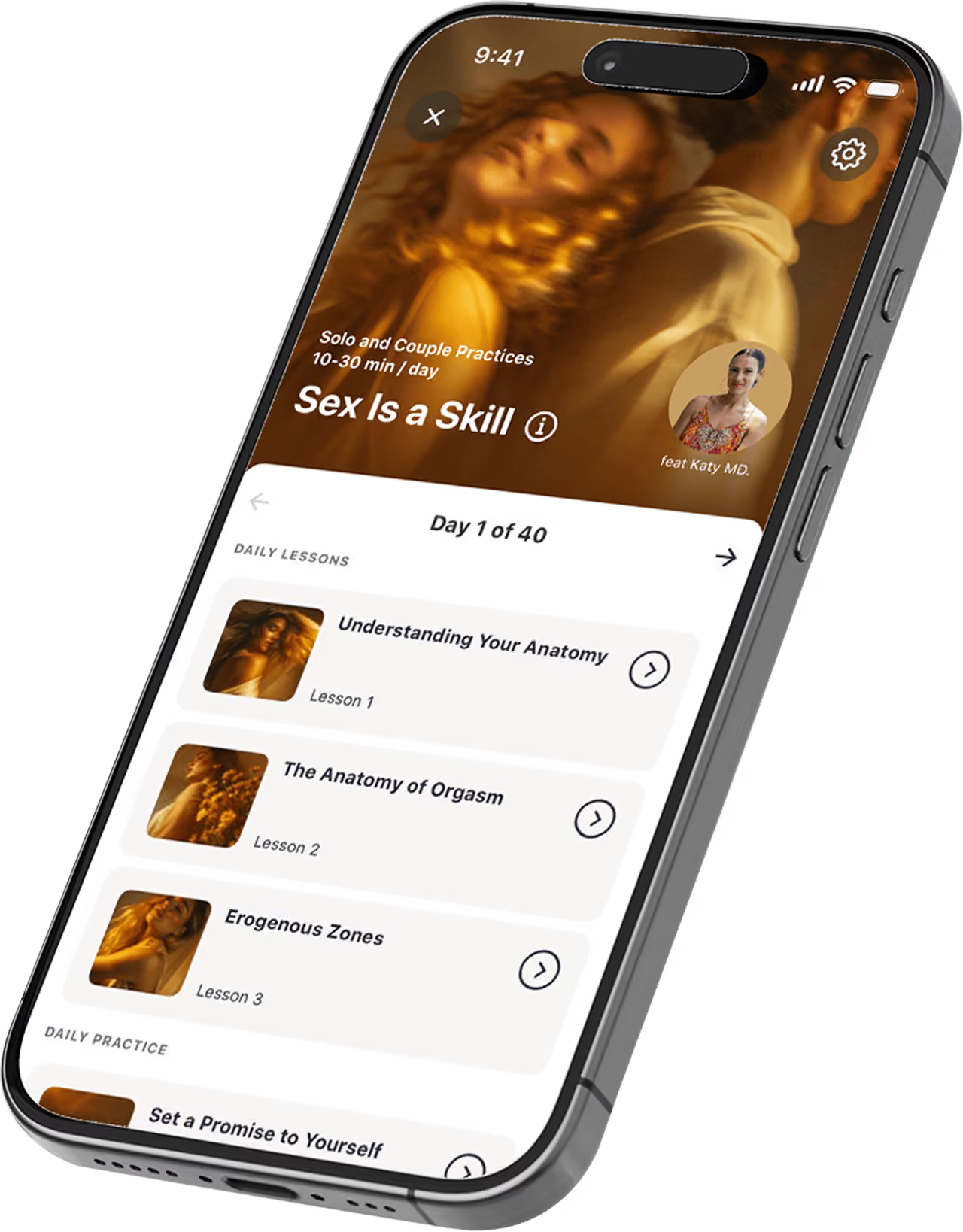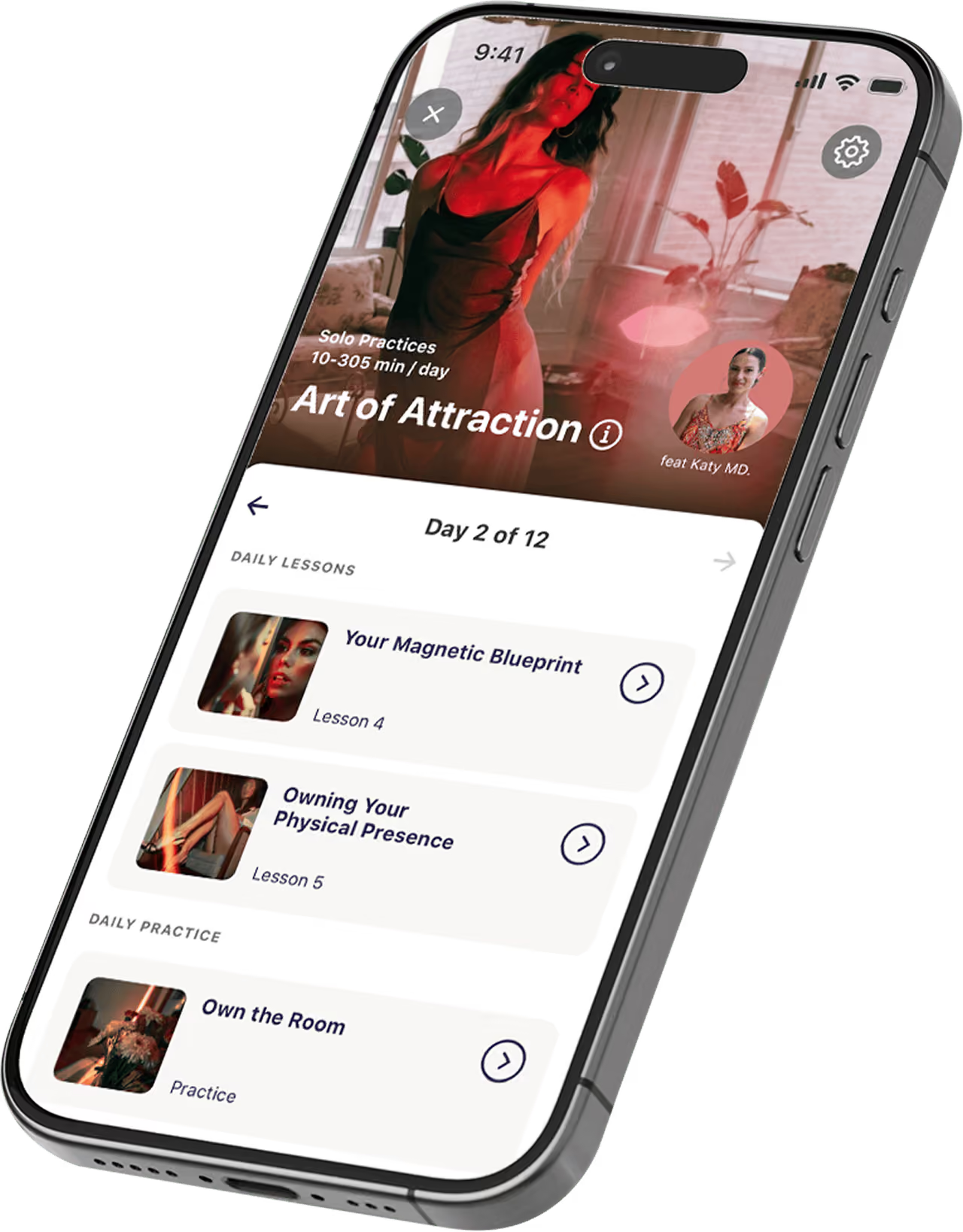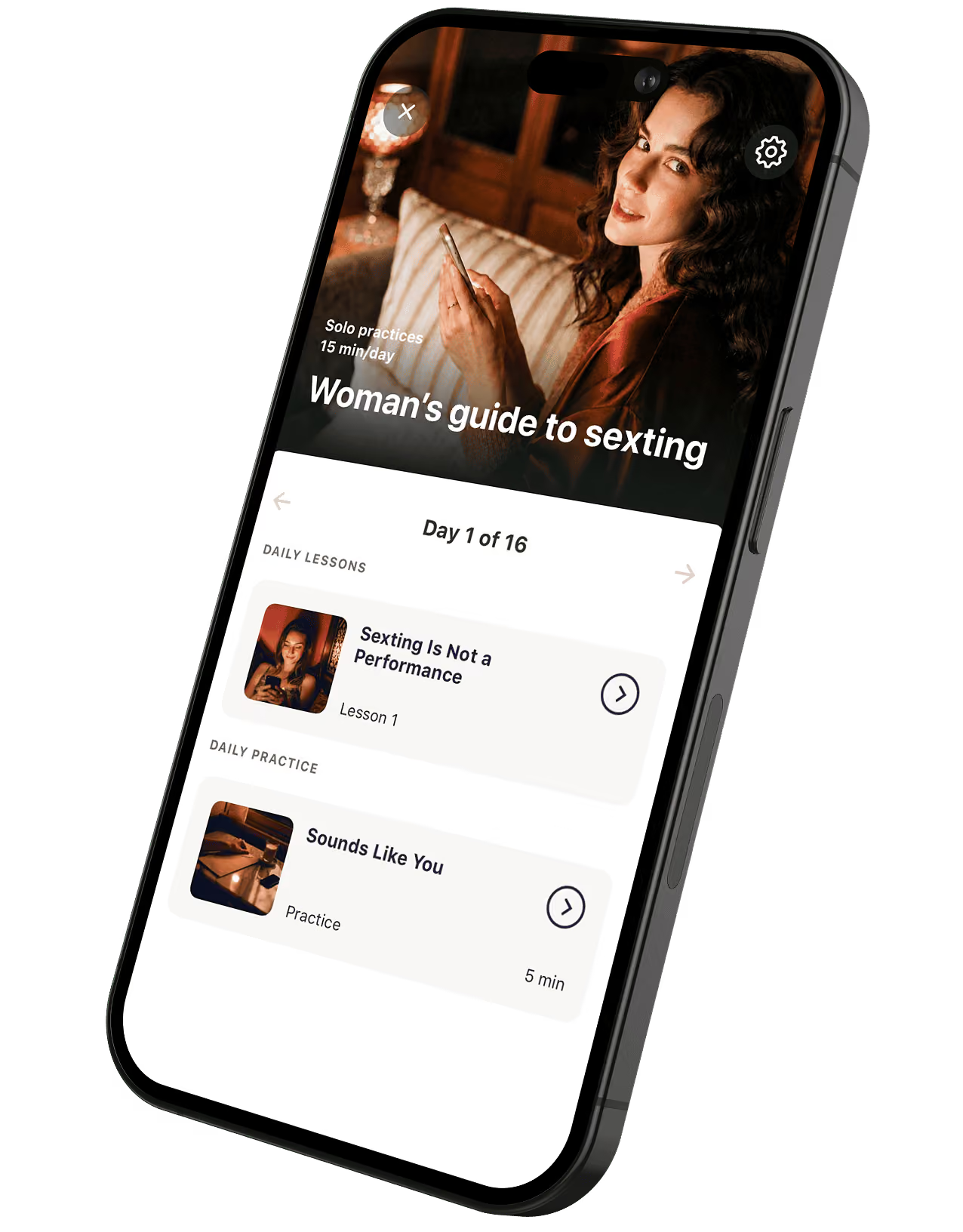
On average, married couples have sex about once a week. In the US General Social Survey, married and cohabiting adults reported having sex around 55 times a year in 2014. That average covers very different couples, and there’s no number you’re supposed to reach. What matters more is whether you both feel good about how often you have sex and how you handle it when you want different things. Path to Desire, a program in The Coach for Her app, helps you understand your own desire and talk about it with your partner.
Show me where to startThe average has shifted over time: in the same survey, couples reported having sex less often than in the 1990s. Several things shape how often a couple has sex, and often more than one is at work.
Desire also works differently for many women than people expect: it often appears once touch and closeness have begun, rather than before. This is called responsive desire.
There’s no right number. Research and experience point to a few things that are more useful than any target.
If you and your partner are at odds over how often to have sex, or you’d simply like more closeness, these steps can help you find a pace you both feel good about.
You don’t need to try them all at once. Start with the one that feels easiest.
If you’d like guidance, Path to Desire covers what to do when your levels of desire differ, how to schedule time for intimacy and how to talk about sex, with practices you can try together. A short quiz is the first step toward a personal plan.
How often you have sex matters less than how it feels and whether you can talk about it.
Path to Desire is a self-paced, five-week program in The Coach for Her, built on short lessons and daily practices. It starts with your own desire, then helps you understand your partner’s and find new ways to connect.
Learn what turns you on and off, how stress affects desire and why, for many women, desire follows closeness rather than coming first.
Lessons on mismatched desire help you treat the difference as a shared problem rather than anyone’s fault, with ideas for negotiating and scheduling time together.
Practices for open conversations, active listening and regular check-ins make it easier to say what you want and hear what your partner needs.
A few short questions are enough to shape your plan, and you can start on your own, whether or not your partner joins in.
It’s common for one partner to want sex more often than the other, and it can be either of you. Different levels of desire aren’t a disorder or a sign that the relationship is failing. They can still hurt: the partner who wants less may feel pressured or inadequate, and the partner who wants more may feel rejected.
If once a week isn’t enough for you, say so as a wish rather than a complaint, and ask what would make sex more appealing to your partner: less stress, more time, a different way to start. If you’re the one who wants less, you may find that desire shows up once you begin, in a relaxed setting and without pressure to go all the way. Agreeing that either of you can stop at any point makes it easier to say yes to starting.
If you’d like to be the one who starts more often, read our guide on how to initiate sex.
Many couples go weeks or months without sex, after a baby, during an illness or in a stressful period. If you’re both fine with it, there’s nothing to fix. If it bothers one of you, look first at what has changed: stress, sleep, health, conflict or simply no time alone.
If sex has become painful, if your desire dropped suddenly or after starting a new medication, or if you notice changes around menopause, talk to a doctor. If tension about sex keeps coming back between you, a couples therapist can help you talk it through.
If what has faded is your own interest in sex, read about why you might not want sex anymore.
From a survey of The Coach users who finished their first four weeks:
You might want to feel more desire, find it easier to talk about sex or close the gap between what you and your partner want. A short quiz leads to a personal plan that shows you where to begin.
Women describe their experience with The Coach for Her in their own words.
“Sex and desire, in particular, are areas I want to improve in my personal life with my partner. For the first time, I don’t feel like an outsider, and I’ve realized that most of the things I was struggling with are actually quite normal.”
“Very approachable. I hadn’t ever used an app like this but I feel like it has given me perspective about my own body and has enhanced intimacy. Educational and engaging, I am enjoying it.”
“I founded the Coach App very informative. It really helped me learn more about my health and how to improve my intimacy with my husband. I would recommend it”
“I am super impressed with how well explained is everything, the practices are soft, relaxed, nothing is pushed or forced. Honestly is a lot more than I expected ❤️”
The Coach works with clinical researchers, certified sex therapists and medical professionals, among them a urologist and an OB-GYN.
Dr. Jessica Yih
Urologist and director of women's sexual health and male infertility at UCI.
Dr. Kirti S. Patel
Board-certified ob/gyn and host of The Gynarchy, a women's-health podcast.
Dr. Justin Lehmiller
PhD in social psychology and senior research fellow at the Kinsey Institute.
Dr. Paula Hall
Accredited sexual and relationship psychotherapist, registered with leading professional bodies in psychotherapy.
Natalie Goldberg
Certified sex and family therapist dedicated to improving intimate relationships and personal well-being.
Dr. Susie Gronski
Licensed physical therapist, certified sexuality counselor, and founder of a men's pelvic health clinic.
Dr. Gary Shlifer
DO, board-certified internal medicine physician specializing in preventative care, nutrition, and anti-aging.
Dr. Joshua Roland
MD, sleep medicine specialist, and clinical instructor at the David Geffen School of Medicine, UCLA.
About once a week. In the US General Social Survey, married and cohabiting adults reported having sex around 55 times a year in 2014, according to an analysis published in Archives of Sexual Behavior in 2017. That was less often than in the 1990s.
Yes. Once a week is close to the average for married couples, and research suggests that, for people in relationships, sex more often than that isn’t linked to greater happiness. Less often can be normal too, as long as it suits you both.
Maintenance sex means having sex regularly to keep a sense of closeness, even when you’re not strongly in the mood at the start. It can work for people whose desire builds once things begin. It should never mean sex you don’t want: if it starts to feel like an obligation, talk about it and look for other ways to be close.
It can. A planned evening takes away the guessing about when sex will happen, which can ease pressure on one partner and feelings of rejection in the other. It works best when the time is about being together, with sex as one possibility rather than a requirement.
Then say so, kindly and without blame. Talk about what you each want and why, and look for an arrangement that gives both of you something: more time together, a different way to start or more closeness without sex. If you keep getting stuck, a couples therapist can help.
Yes. In US survey data, people in their 20s report having sex far more often than people in their 60s. Health, hormones, children and the length of the relationship all play a part, and a lower number doesn’t have to mean a less satisfying sex life.
No. Much of the early work focuses on your own desire, body and stress, and you can do it alone. Lessons for couples, such as planning time together and talking about sex, are there when you and your partner feel ready.