Internal and external touch can feel different
Internal pressure may feel different from touch on the clitoris. You can enjoy either, both or neither in a particular moment; one kind of touch doesn’t have to replace the other.

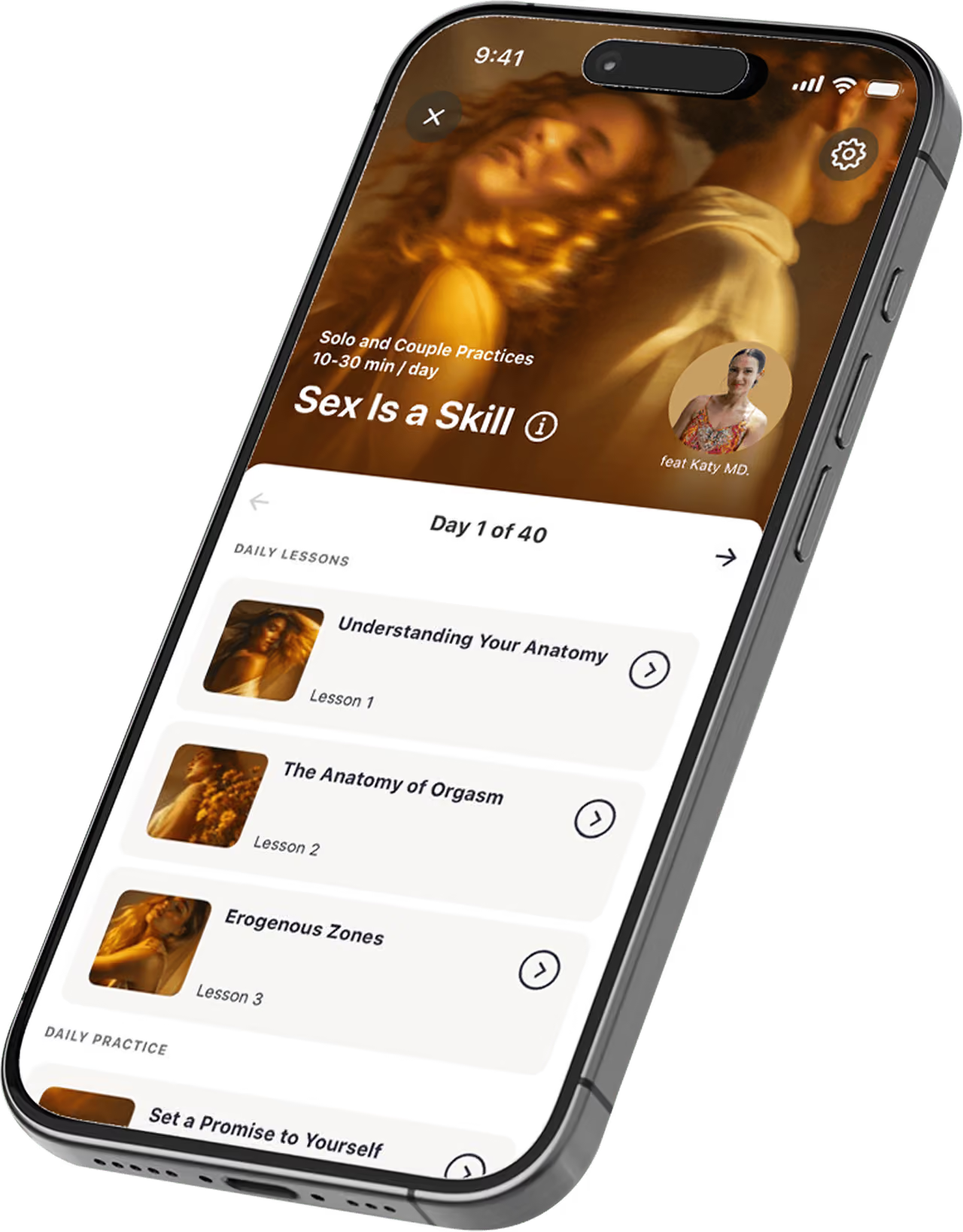
The term cervical orgasm is used to describe orgasm associated with deep stimulation near the cervix. Sensations vary, and not everyone enjoys this kind of contact. If you want to explore it, begin with touch you already enjoy and continue only while you feel comfortable. Greater depth doesn’t necessarily mean more pleasure, and pain is a reason to stop. The Sex is a Skill program in The Coach for Her app includes lessons and guided practices on internal touch. A few questions will show you where to start.
Show me where to startCervical orgasm is a term people use for orgasm associated with deep vaginal stimulation near the cervix. You may also encounter the terms uterine orgasm and A-spot orgasm. These labels don’t describe a separate reflex or a sequence you must complete. Sensations vary, and deeper contact may feel pleasant, neutral or uncomfortable.
If penetration doesn’t feel particularly pleasurable, you don’t need to make it your goal. You can keep the external touch you enjoy while exploring internal sensations, or choose external touch alone. These options let you compare sensations without expecting a particular kind of orgasm.
Exploring at your own pace can help you learn which kinds of internal touch you enjoy.
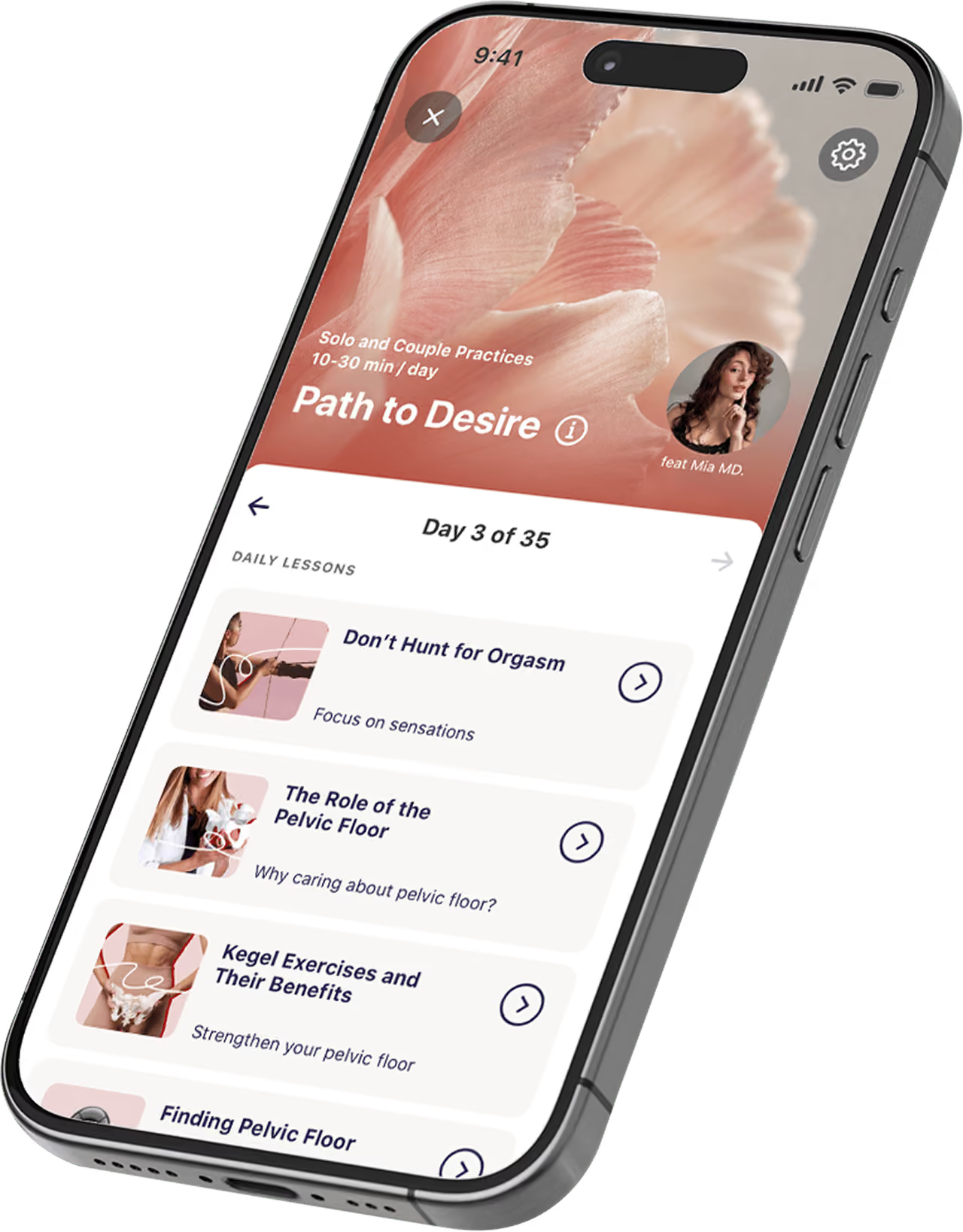
Sex is a Skill for Her is a program in The Coach for Her app. It begins with your own pleasure, then explores your partner’s body and taking the lead. Lessons and guided practices introduce internal touch, including the front vaginal wall and the area near the cervix. You can follow the sequence while choosing which practices feel right for you.
You don’t have to live up to any of them.
Allow time for arousal before exploring internal touch.
The orgasm gap describes how much less often women than men report orgasm during partnered sex. It doesn’t tell you which kind of touch should work for you. If you’re exploring orgasm from penetration, these points can help you keep the focus on what feels enjoyable.
Internal pressure may feel different from touch on the clitoris. You can enjoy either, both or neither in a particular moment; one kind of touch doesn’t have to replace the other.
You may already know which clitoral touch you enjoy and be less familiar with internal sensations. Take time to explore, and keep the kinds of stimulation that feel best to you.
You may want more time, lubricant, a different position or a pause. Tell your partner what you notice. Discomfort is a reason to change or stop the activity, not to wait for your body to catch up.
Pairing means combining clitoral stimulation with penetration. If you enjoy that combination, choose a position that leaves room for a hand or toy. There is no requirement to progress to penetration alone.
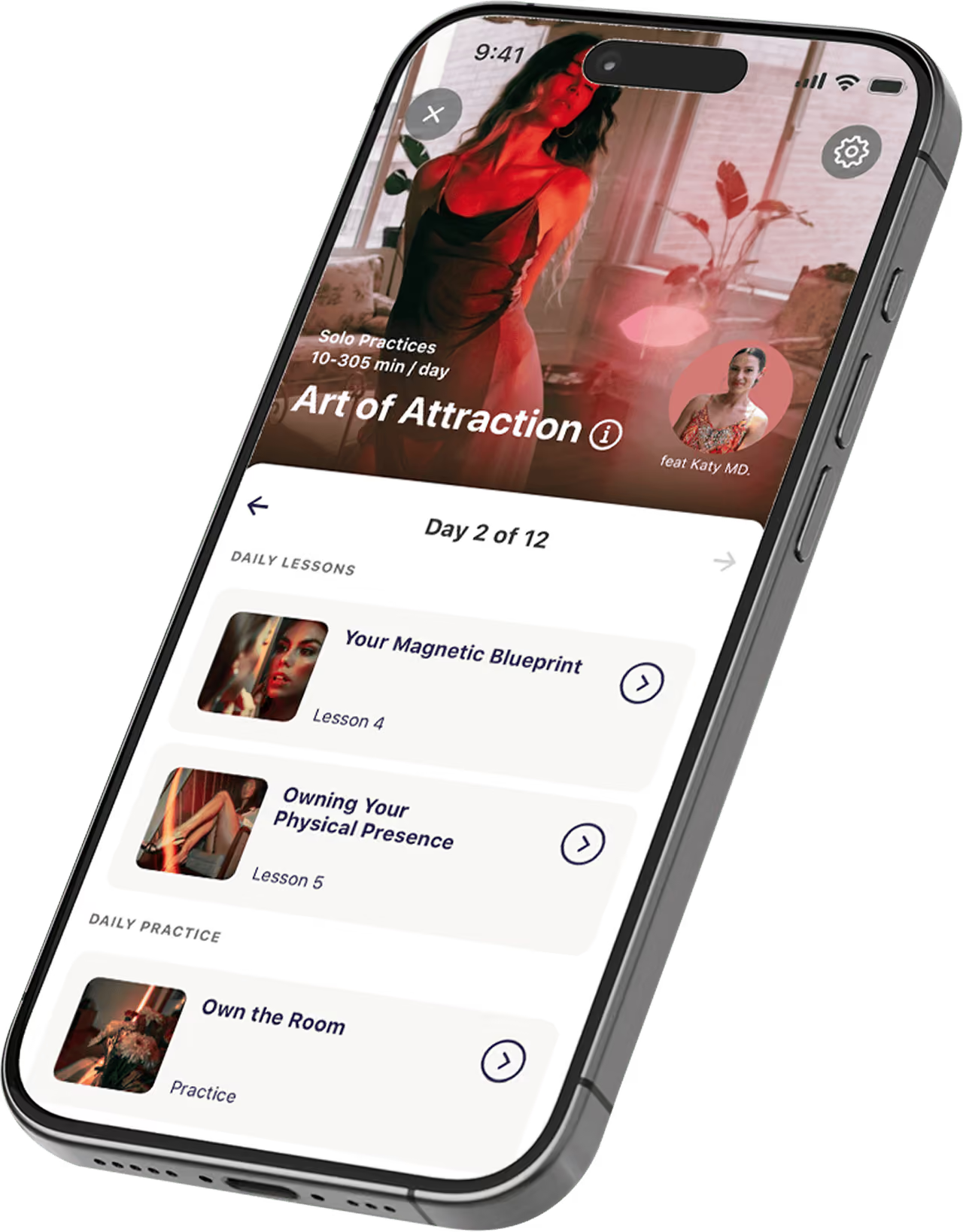
Guided practices offer a sequence you can follow at your own pace. Take the quiz to get a personal plan.
No sequence guarantees a cervical orgasm. If you want to explore deeper contact, start with touch you already enjoy, use only a comfortable depth and keep the option to stop. The following suggestions are choices, not stages you have to complete.
A cervical or uterine orgasm isn’t a better result than another kind of orgasm. You can enjoy exploring without experiencing it, and you can decide that deep touch isn’t for you.
If you enjoy penetration and clitoral stimulation together, you can keep both. Explore the combination at a pace that feels comfortable instead of treating external touch as something to outgrow.
You can briefly pause one kind of touch to compare sensations, then bring it back if you prefer. Keep the combination you enjoy.
A pillow under your hips during sex may change the angle of contact. Being on top or lying on your side can also give you different ways to adjust movement. Choose the position and depth you enjoy, and tell your partner when you want a change.
Different questions may come up as you explore. For information about fluid release, see our guide to squirting. Descriptions of varied sensations are in our guide to what an orgasm feels like. For solo practices focused on noticing what you enjoy, see our guide to guided masturbation.
From a survey of The Coach users who finished their first four weeks:
Answer a few questions to get a personal plan, then explore the guided practices at your own pace.
Reviews of The Coach for Her, including verbatim excerpts.
“It helps me understand myself better, not just emotionally but also in how I connect with others. I like that everything is broken into small, simple lessons, so it doesn’t feel overwhelming.”
“I was not expecting such a complete app. There’s so much helpful information, practical tips, and exercises. I also love that it’s focused not just on sex, but on women’s health as a whole. I’m really excited to dive deeper into everything the app has to offer.”
“Honestly one of the only apps that is made for women that actually teaches you something!”
“Friendly daily practices that gently and compassionately bring you closer to your sensual self”
The Coach works with clinical researchers, sex therapists and medical professionals.
Dr. Jessica Yih
Urologist and director of women’s sexual health and male infertility at UCI.
Dr. Kirti S. Patel
Board-certified ob/gyn and host of The Gynarchy, a women’s-health podcast.
Dr. Justin Lehmiller
PhD in social psychology and senior research fellow at the Kinsey Institute.
Dr. Paula Hall
Accredited sexual and relationship psychotherapist, registered with leading professional bodies in psychotherapy.
Natalie Goldberg
Certified sex and family therapist dedicated to improving intimate relationships and personal well-being.
Dr. Susie Gronski
Licensed physical therapist, certified sexuality counselor, and founder of a men’s pelvic health clinic.
Dr. Gary Shlifer
DO, board-certified internal medicine physician specializing in preventative care, nutrition, and anti-aging.
Dr. Joshua Roland
MD, sleep medicine specialist, and clinical instructor at the David Geffen School of Medicine, UCLA.
Vaginal orgasm is a broad term for orgasm associated with internal stimulation. Cervical orgasm usually describes experiences linked with deeper contact near the cervix. The labels don’t mean that everyone feels the same sensations or must experience one before the other.
Start only if you want internal touch and feel comfortable. You can try gentle pressure on the front vaginal wall and adjust it according to what you enjoy. Keep external touch if you like it too. There is no fixed time or prior orgasm required, and you can stop if the contact feels unpleasant.
It shouldn’t hurt, and pain is a reason to stop. Deep penetration can be uncomfortable or cause injury, so stop if it hurts rather than changing the angle and pushing through. Seek medical advice for persistent pain or bleeding after sex.
You can explore touch with your fingers if you want to. A toy is optional, and greater length isn’t a requirement for pleasure. If you choose one, follow its instructions and use a compatible lubricant. Toys and lubricant aren’t included with the app.
Internal pressure can sometimes feel like an urge to urinate. Pause if you need to use the bathroom, and continue only if you want to and feel comfortable. You don’t need to push through the sensation.
Sex is a Skill for Her includes lessons and practices about your own pleasure, your partner’s body and taking the lead. The first part includes guided exploration of internal touch. Practices range from ten to thirty-five minutes, and several include audio guidance.