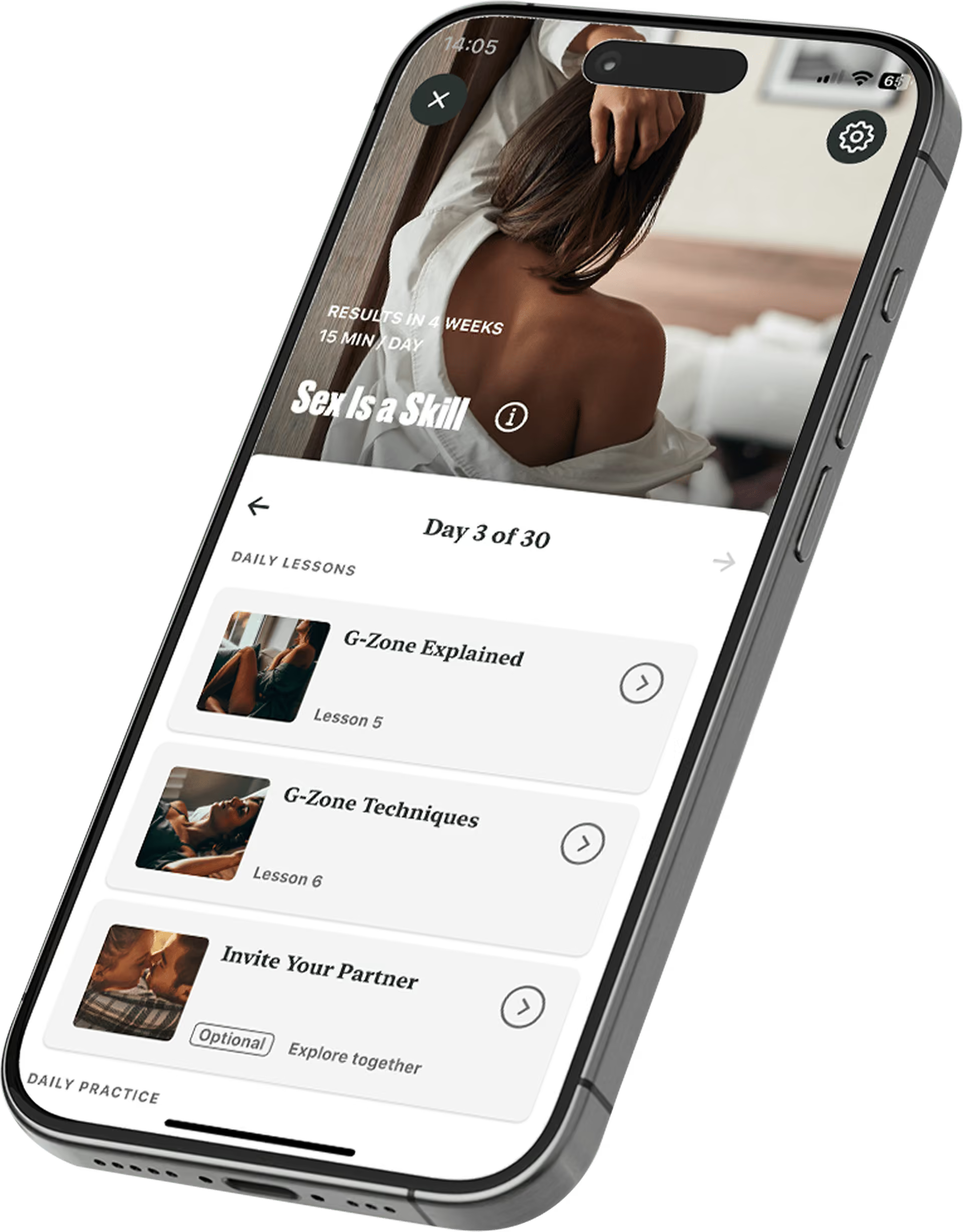
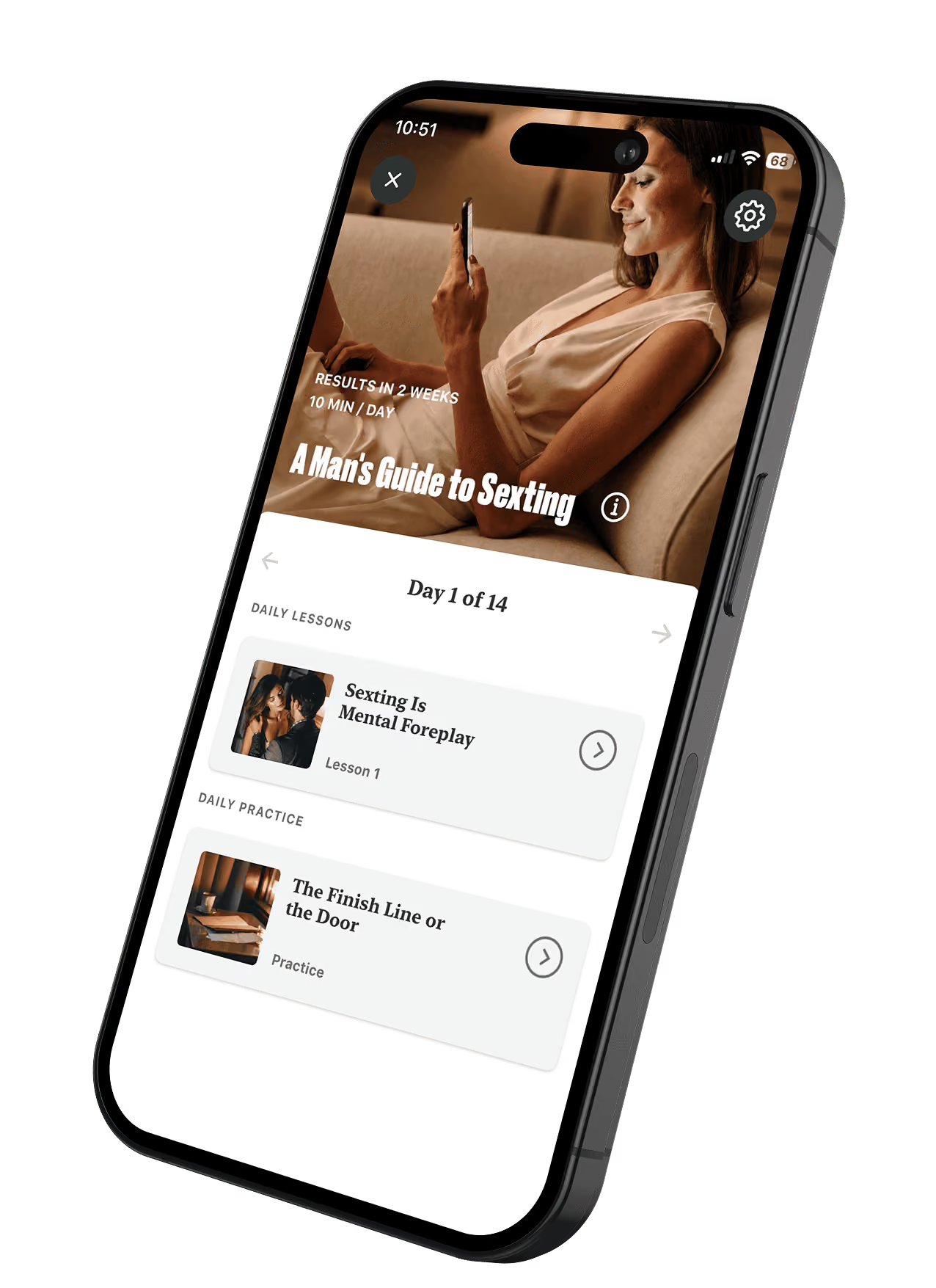
Neither one is better by default. Start slow, build the pace gradually, and once she responds to a rhythm, keep it steady instead of speeding up. The Sex is a Skill program in The Coach app covers pace, force and depth in its lessons on penetration, with practices to try together.
Show me where to startSpeed alone doesn’t decide how sex feels to her. Two things matter more: whether she’s aroused enough for the pace you’re using, and whether the rhythm stays the same long enough for sensation to build. So the order is simple: slow first, faster only as she responds, and steady once something is working.
Rapid thrusting from the very start is the mistake to avoid. Right after you enter, her body is still adjusting to you, and a fast thrust at that point is more likely to make her tense up than to turn her on.
For the basics, from the opening pause to the angle, see our guide on how to thrust during sex.
Slow thrusting works best at four moments, and at each of them the slower pace gives her time to feel what’s happening.
Easing off and building again when she’s close is called edging, and the full steps are in our guide on how to edge a woman.
Fast thrusting has its moment, and she’s the one who signals it. When she’s highly aroused and already moving with you, a faster pace can be exactly what she wants. Earlier, the same pace is more likely to feel like too much.
Build up to it in steps. Raise the pace a little, hold it there, and see how she responds before you raise it again. If her hips keep meeting yours and she pulls you closer, stay at that pace. If she goes still or tenses, go back to the one that was working.
The urge to switch to fast thrusts is strongest when she’s getting close, because speeding up feels like the natural thing to do. But it changes the very sensation she was responding to. If you want her to come, keep the speed, the pressure and the movement exactly as they are, and let her get there. Easing off at that point only makes sense when you both want to draw it out.
Holding a pace while you’re aroused takes practice. A plan for that practice starts with a short quiz.
Her body often shows how the current pace feels before she says anything. When the signs aren’t clear, ask.
Signs only take you so far, and thrusting speed is easy to ask about because the question can be very short: “Faster, or like this?” “Slower?” “Show me the pace you like.” Questions this short don’t break the mood, and her answer is more reliable than any guess.
You can also let her set the pace first. When she’s on top, she moves at the speed and depth that suit her. Notice both, and keep to them when you take over the movement again.
Finding a pace together gets easier with practice. In Sex is a Skill, the lessons on penetration come with practices for two, and your answers to the quiz shape your personal plan.
The pace that works is the one she’s responding to. Keep it steady.
Sex is a Skill is a thirty-day program in The Coach app. Most days pair one or two lessons with a practice, and days thirteen to twenty-two are about penetration.
One lesson and its practice deal only with the start: holding still after you enter, then moving in very small steps.
A lesson on changing depth slowly, followed by a practice where you adjust depth, angle and rhythm and ask her as you go.
You learn the signs that she’s getting close, how to keep the rhythm unchanged, and how to ease off and build again.
Your plan gives you one practice at a time, in order, so you know what to try together next.
Thrusting harder can look like the obvious way to give her more. But extra force mostly adds impact, and a hard impact doesn’t feel the same to her as steady pressure where she’s sensitive. A steady, repeated stroke with controlled pressure often does more, and so does going deep and holding still for a few breaths so she can press back against you.
If she tells you she wants it rough, vigorous thrusting still needs a build-up: add force in small steps and keep checking how it feels to her. Stop right away if anything hurts either of you.
One moment calls for the opposite of hard thrusting: when she starts to come, stay deep and hold still instead of adding force.
Deeper isn’t automatically better. For many women the deepest part of the vagina feels like too much until they’re fully aroused, so a deep thrust that feels good later on can be uncomfortable at the start. Depth, like speed, is something to arrive at gradually.
It helps to think of three kinds of stroke: shallow ones at the entrance, mid-depth ones and deep presses. Mix them, and move from one to another slowly so nothing comes as a surprise. Deep thrusts often work best as presses, where you go deep, stay there for a few breaths and let her push back if she wants more.
If a deep thrust hurts her, stop and go back to shallower strokes. If pain during sex keeps coming back, it’s worth seeing a doctor.
From a survey of The Coach users who finished their first four weeks:
Your answers to a few questions decide where your plan begins.
Reviews from The Coach users, shortened where they ran long and otherwise left as written.
“I have learned so much from your 30 day presentation, I have started implementing some of the points I have learned. Slow down, connect, it’s not about me it’s about learning her body.”
“Just as important as the techniques, being attentive and listening and observing and staying consistent in those moments was absolutely crucial. Just keep doing what you have been coached to do when you observe that she is responding!”
“I am grateful for the reminders and techniques to enhance and revitalize my love for my wife. Technique that makes you own the confidence that you’re doing the right stuff. Anatomy that we forgot about and sensory stuff that makes her squirm. Thank you”
“After only five or six lessons, I was tuned in to making the experience more pleasurable for her, which actually made me feel sexier! I’m not ashamed to admit that the Coach made me a better partner and lover.”
The Coach works with clinical researchers, certified sex therapists and medical professionals, practicing urologists among them.
Dr. Justin Lehmiller
PhD in social psychology and senior research fellow at the Kinsey Institute.
Dr. Jessica Yih
Urologist and director of women's sexual health and male infertility at UCI.
Dr. Kirti S. Patel
Board-certified ob/gyn and host of The Gynarchy, a women's-health podcast.
Cameron Fraser
Australia's leading men's sex coach, specializing in male sexual wellness and performance.
Dr. Paula Hall
Accredited sexual and relationship psychotherapist, registered with leading professional bodies in psychotherapy.
Natalie Goldberg
Certified sex and family therapist dedicated to improving intimate relationships and personal well-being.
Dr. Justin Houman
MD, UCLA-trained urologist and male reproductive specialist focusing on sexual health.
Dr. Amy Pearlman
Board-certified urologist specializing in male sexual wellness, performance, and hormonal health.
There’s no number worth aiming for. A count per minute says nothing about how it feels to her, and the same pace can be right at one moment and wrong a minute later. Go by her response instead: if she’s moving with you and her breathing deepens, the pace is working.
It varies from woman to woman, and for the same woman from one moment to the next. A slow start, a gradual build and a steady rhythm once she responds suit many women, but the reliable way to know is to ask her and watch how she reacts.
Yes, it can, especially before she’s fully aroused or when it comes without warning. Ask before you thrust harder, build up in small steps, and stop if she says it hurts or you notice her tense up.
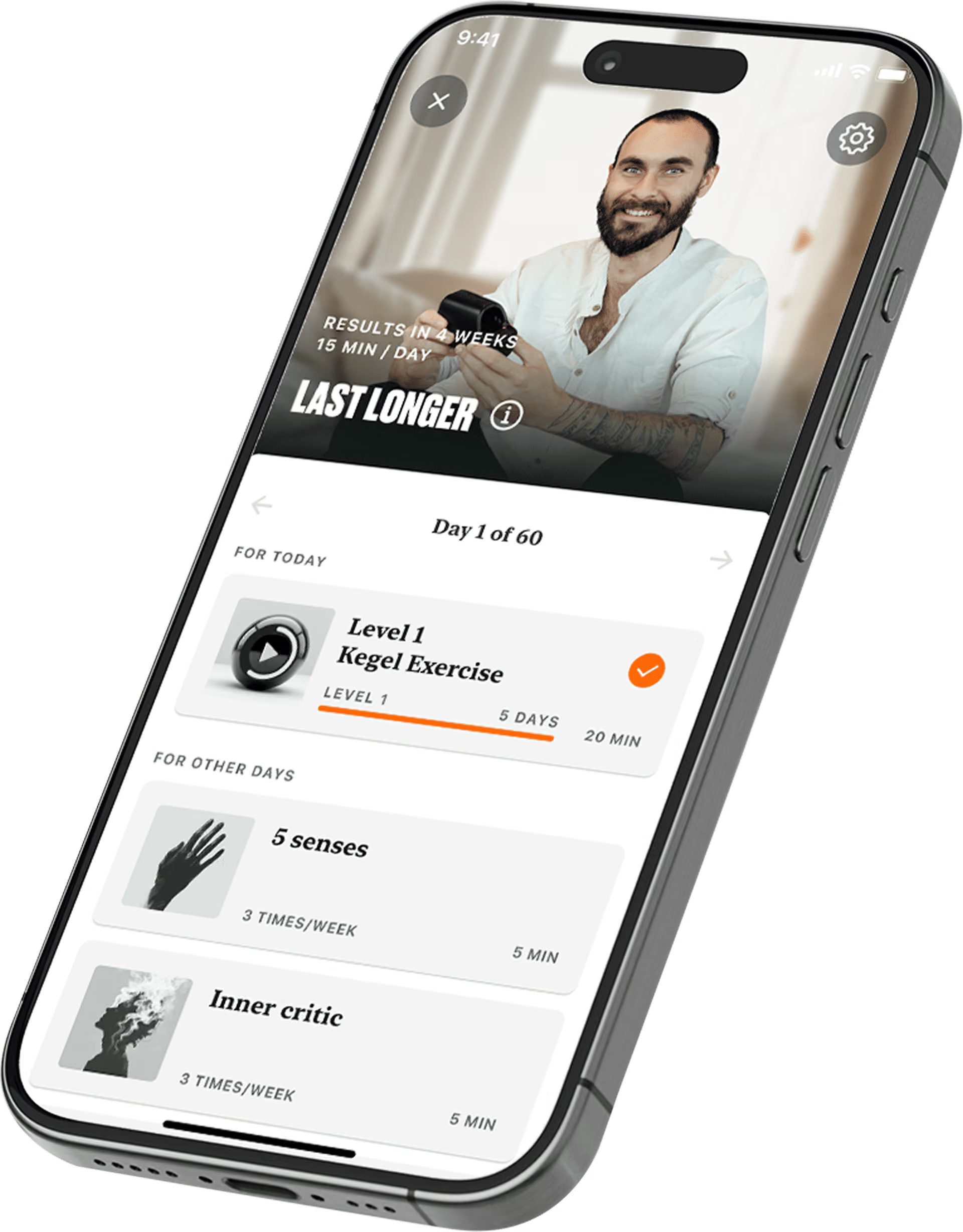
Not necessarily, and that isn’t the reason to slow down: the pace follows her response, not a wish to delay your orgasm. Sex is a Skill covers lasting longer separately, on day twenty-four.
Days thirteen to twenty-two are about penetration, with lessons on the first thirty seconds, on depth and angle, and on easing off and building again when she’s close. Practices take ten to thirty-five minutes.
Yes, for almost all of it. Nearly every practice in Sex is a Skill is written for two people, so it works best when she knows what you’re trying and can tell you how it feels.