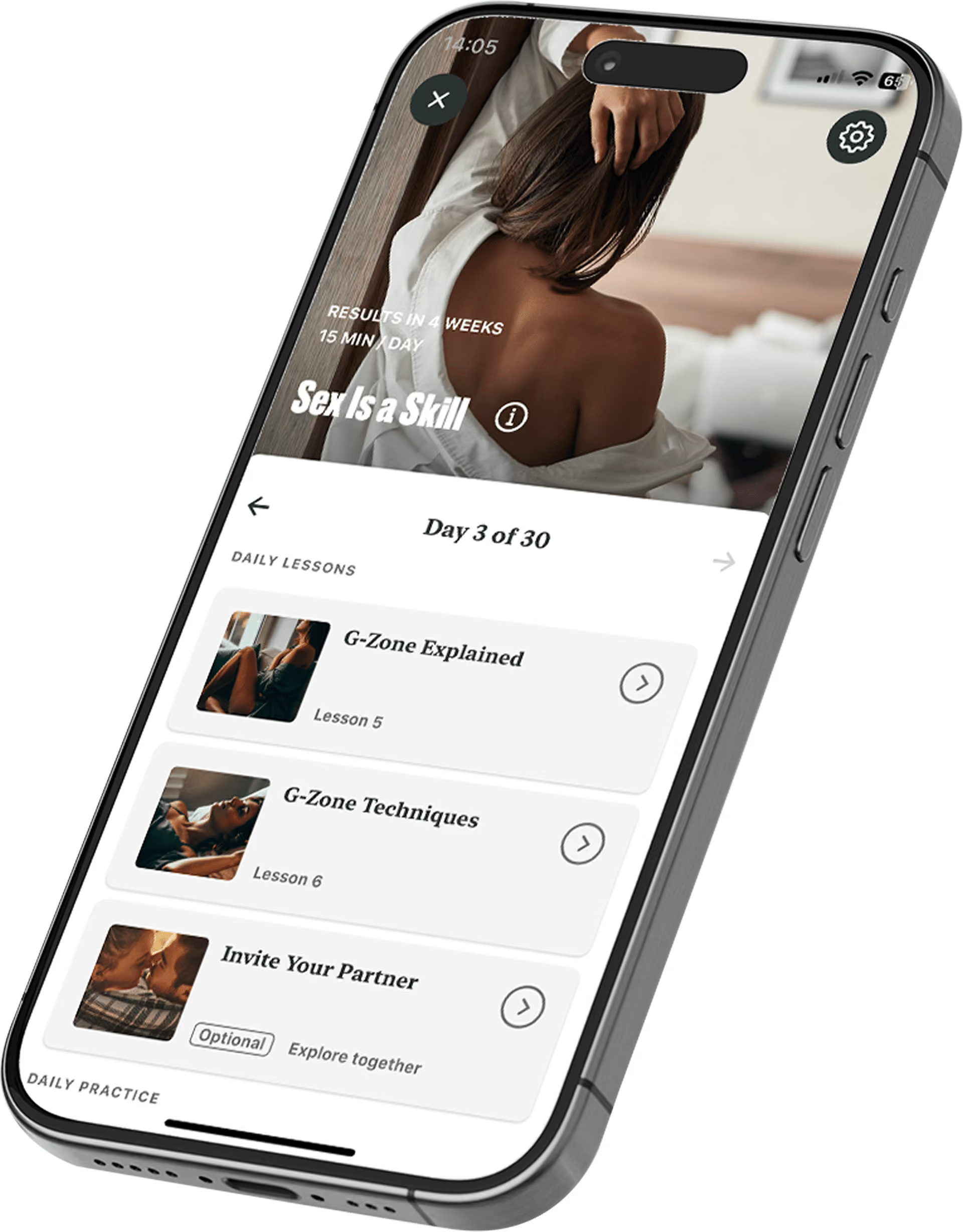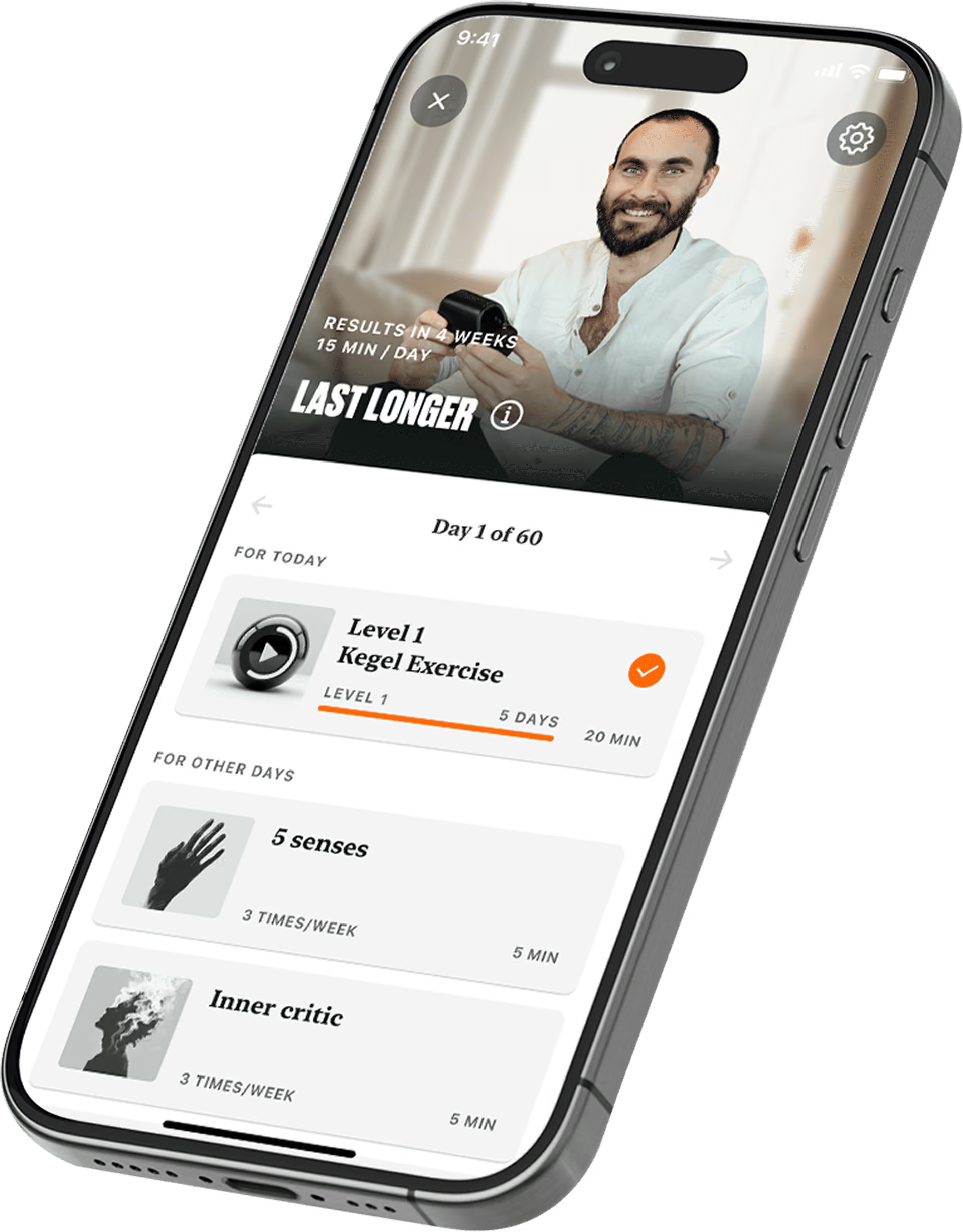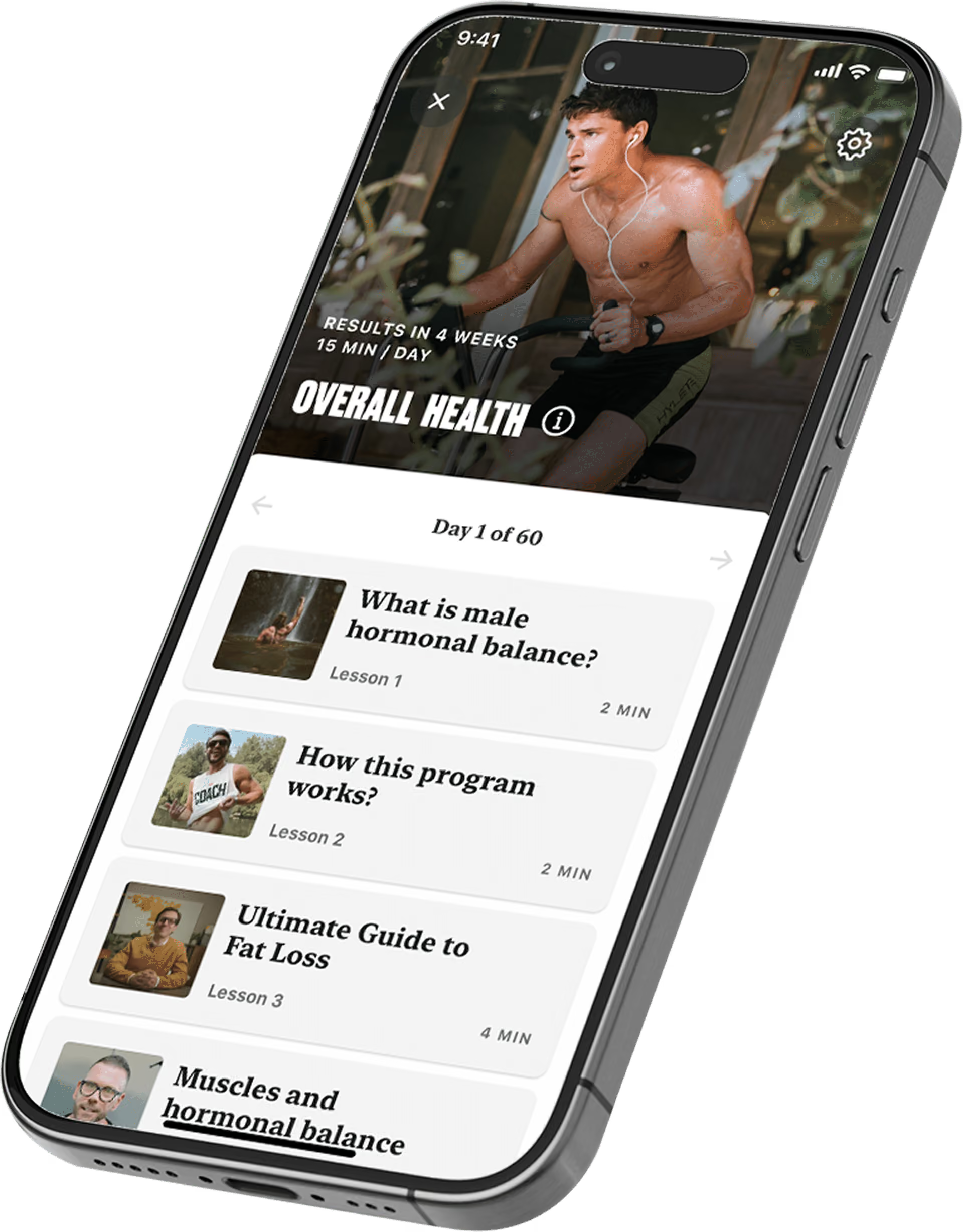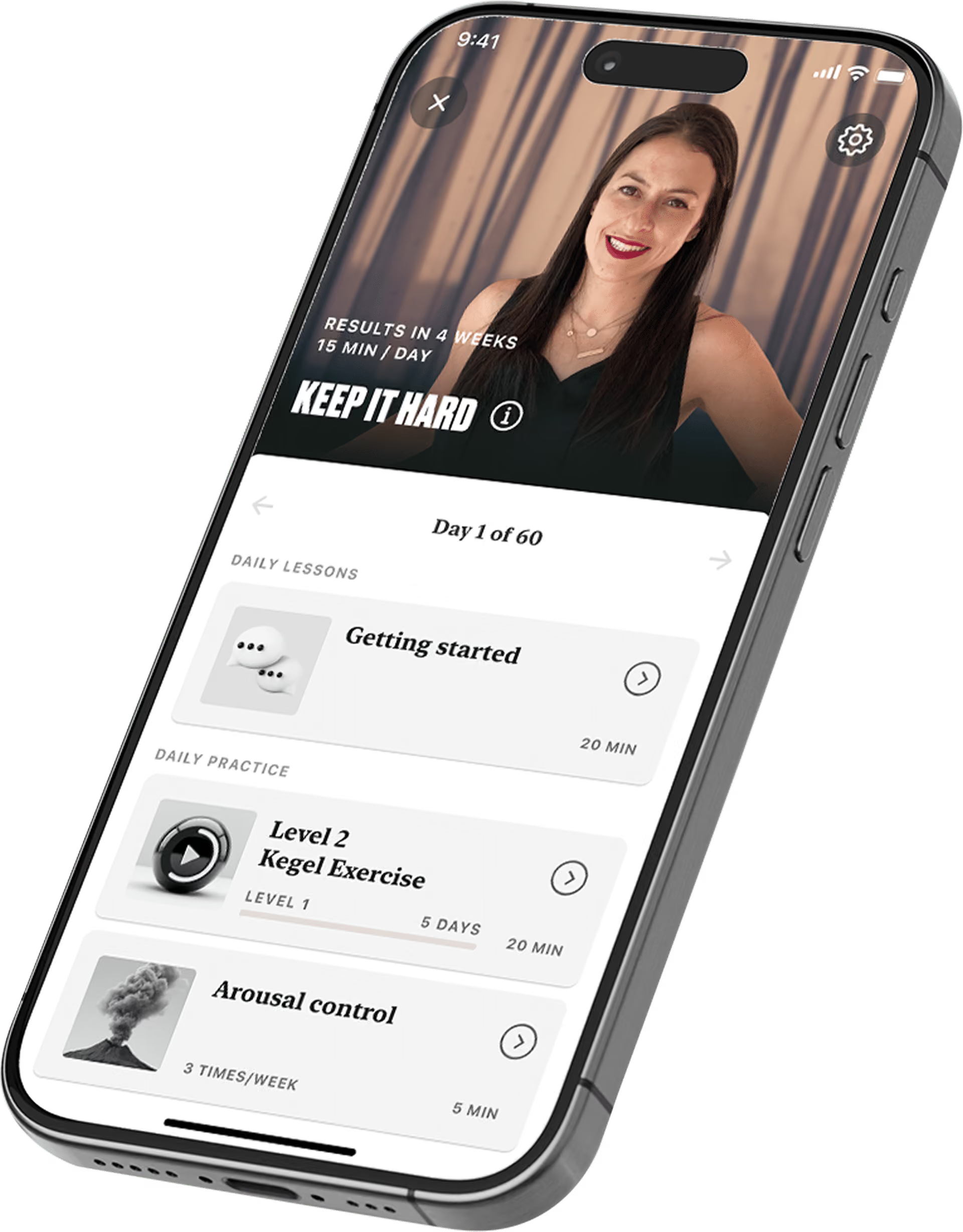
Step 01
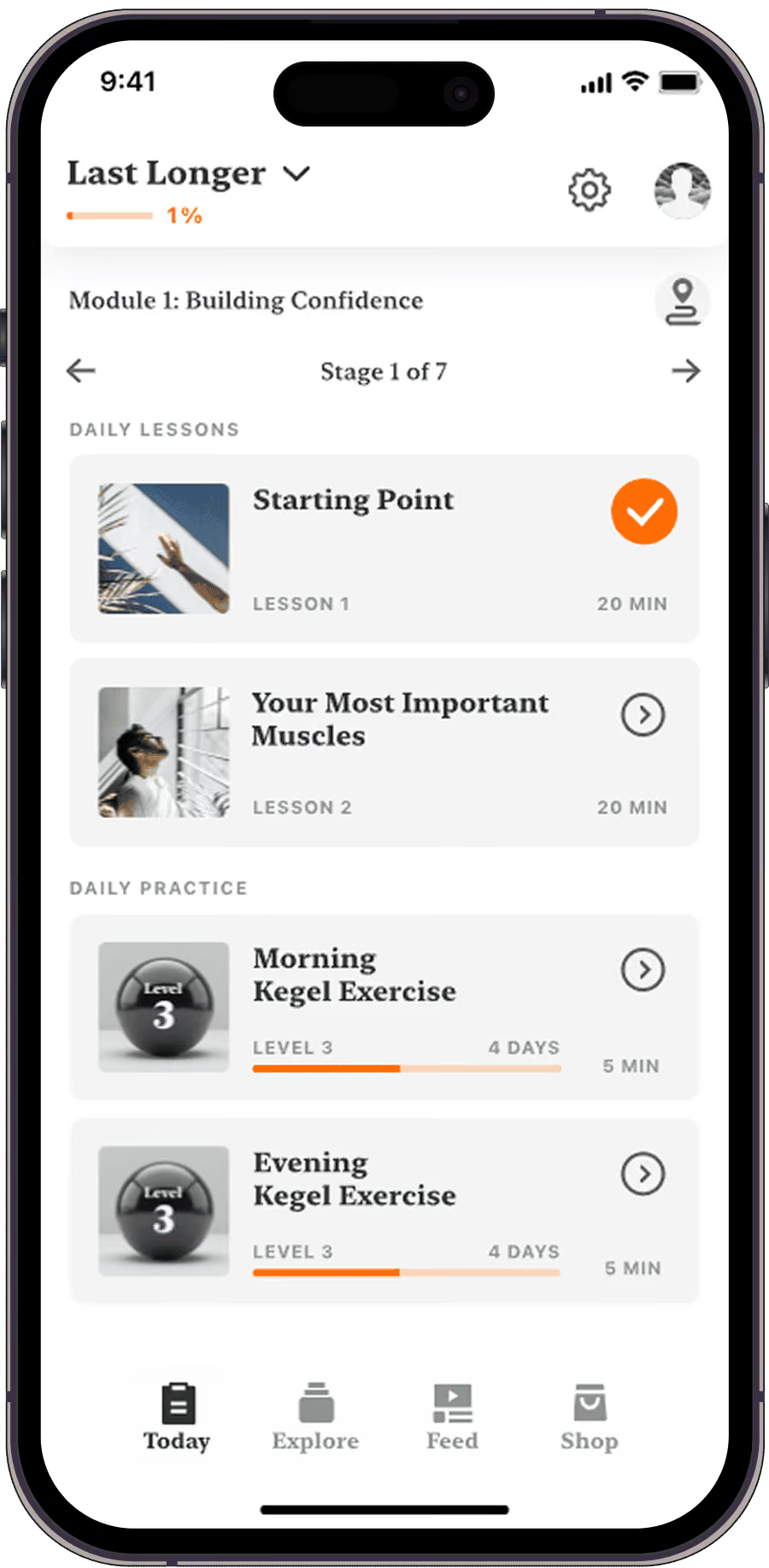
Answer the questions
A minute of them, and the plan comes back built around what you said: which program, what runs daily, how long a session is. Ten to twenty minutes a day is the estimate it gives you, and it doesn’t round it down.

You get hard, and then a second thing has to happen: the blood that just arrived has to be stopped from leaving. Two tubes of spongy tissue fill under pressure, and a sheath of veins gets pinched shut against them so nothing drains back out. That pinch is muscle — your pelvic floor — and it’s the one part of the chain that trains. So when men ask how to increase blood flow to the penis, the half worth working on is almost never the arriving. It’s the staying. When the staying fails, when an erection starts fine and drains a few minutes in, the clinical name for it is a venous leak.
Get my Keep It Hard planStart with the arteries, because they’re the part nobody practices. Arousal signals come down from the brain, the vessels feeding the penis relax, and blood arrives under pressure into two tubes of spongy tissue that run its length. That’s the filling. Nerve signal and chemistry, a few seconds long, and you have no more say in it than you have in your own blood pressure.
The second half is mechanical, and it’s why how to increase blood flow to penis tissue only ever answers part of what’s going on. As those two tubes swell they press the veins that drain them against the tough sheath around the outside, and the veins close. Blood in, blood held. Your pelvic floor — the sling of muscle at the base of the pelvis, the one you’d use to stop yourself mid-stream — squeezes those same veins from below and adds to the seal.
So the failure most men are describing happens after the blood has already arrived. The erection is there, it’s fine, and then a few minutes later it isn’t, with nothing happening to explain it. Urologists have a name for that pattern, and a scan that confirms it: a venous leak. The man typing those two words and the man looking for ways to get more blood down there are usually the same man, describing the same minute two different ways.
An erection isn’t a delivery. It’s a seal, and the seal is the part with a muscle on it.
Keep It Hard is the erection program inside The Coach: seventeen lessons and a set of daily practices. It doesn’t treat anything and doesn’t pretend to. What it does is the muscular half of everything above, in an order somebody else has already decided, so you’re not guessing at it one evening at a time.
Step 01
A minute of them, and the plan comes back built around what you said: which program, what runs daily, how long a session is. Ten to twenty minutes a day is the estimate it gives you, and it doesn’t round it down.
Step 02
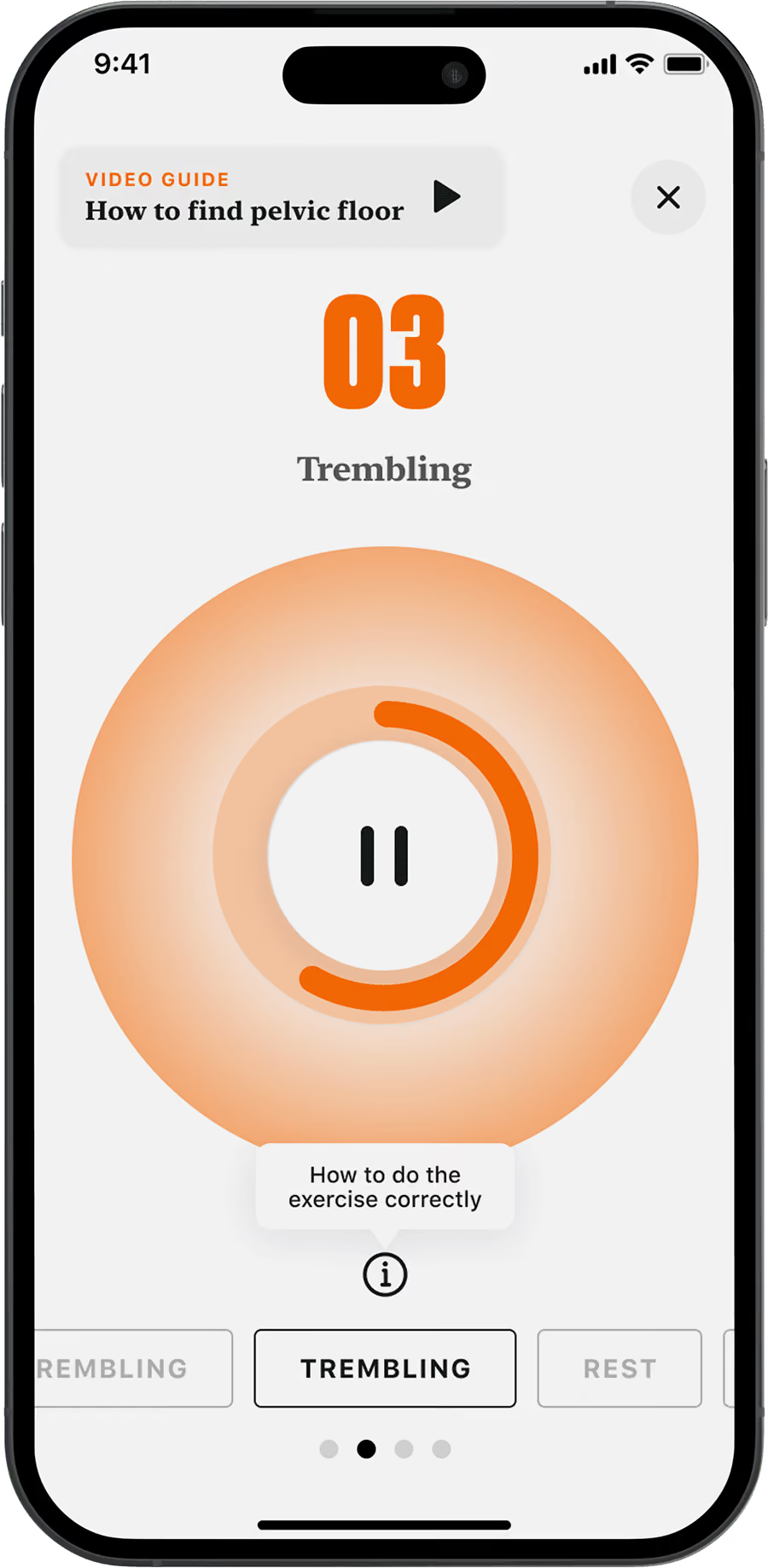
Lessons arrive in small bites — video, audio, text — and each practice goes into a Daily Action plan at the frequency it needs. Some are daily. Some come round two or three times a week and then stop, because that’s all they were ever meant to take.
Step 03
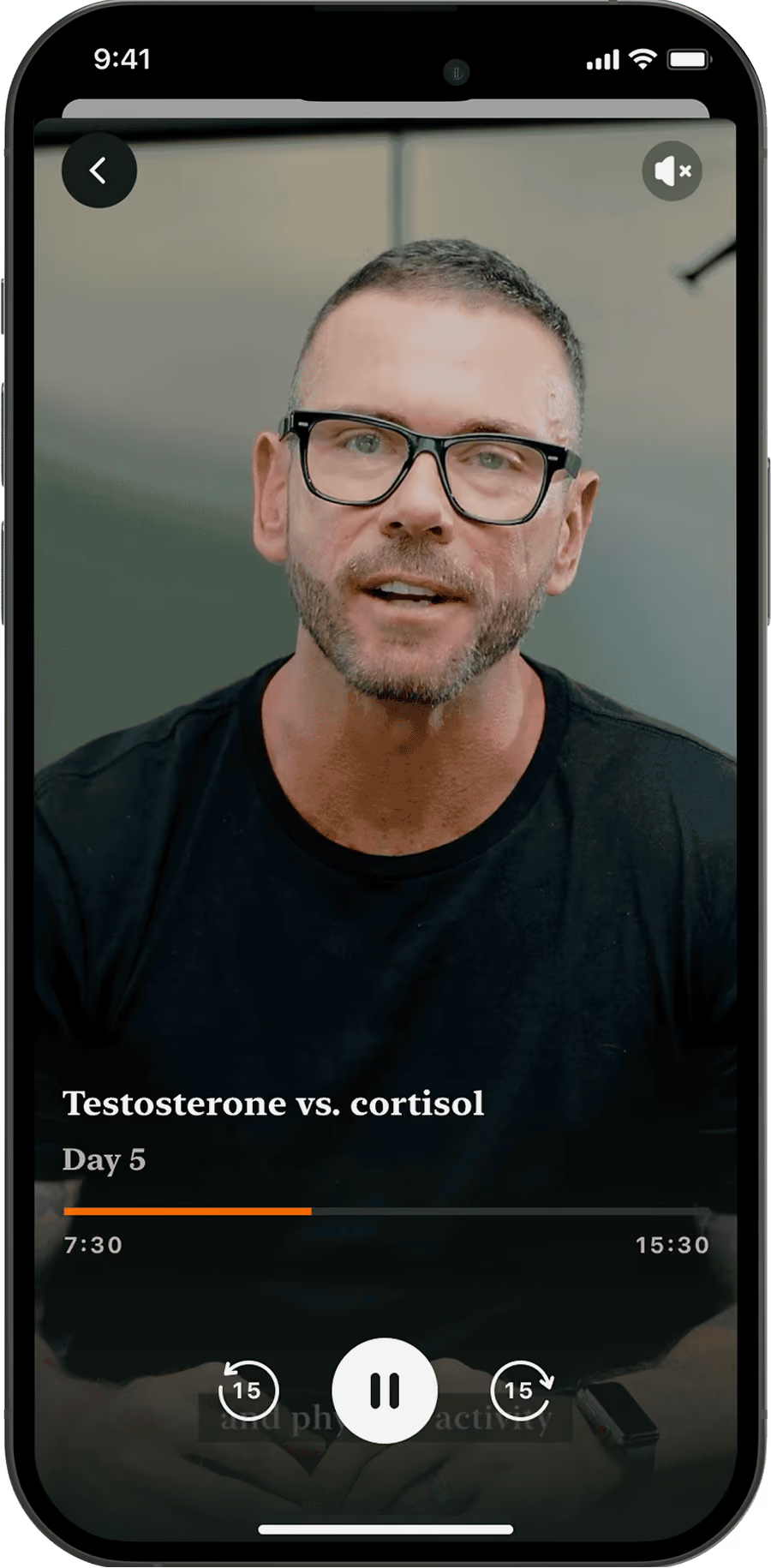
Keep It Hard triages your pelvic floor before it trains it. If the eight-item check says the muscle is holding tension, the first three weeks go to letting go rather than building, and the strengthening waits until the tension has started to come down.
A minute of questions, and the order stops being your problem.
How to increase blood flow for erectile dysfunction is really two questions, and they have two different owners. Narrowed or stiffened arteries are a medical matter with medical answers — how to improve blood flow to penis arteries is a real question, it just gets answered in a consulting room rather than an app. A seal that opens early is muscular, and that one’s yours.
The arterial list is long and all of it belongs to a doctor: cardiovascular disease, raised blood pressure, raised cholesterol, diabetes, nerve conditions, thyroid and testosterone problems, surgery or radiation in the pelvis, injury, prescribed and recreational drugs, alcohol, smoking, weight, sitting still. Four are worth pulling out. They’re the ones men recognize in themselves and then do nothing about.
One thing worth being blunt about. If you can’t get an erection in any circumstance — not alone, not in the morning, not with anyone — that pattern points at the physical side, and that’s a doctor’s appointment before it’s an app’s. How to increase penis blood flow on the arterial side starts with somebody taking your blood pressure. The whole picture is in our guide to erectile dysfunction. That half is a doctor’s job, and it stays there.
There are about five standing answers to how to increase blood flow to penis naturally, and four of them act on the same half. Sorted below by which half of the mechanism each one reaches, not by how well any of them works. The search results promise the whole thing in a minute. A minute is a rep, not a result.
The fifth has a daily session, an order to do it in, and someone counting the weeks.
Pelvic exercises for men to increase blood flow aren’t a special category of movement, and no exercise reaches a blood vessel directly. They’re Kegels, the stretch that comes before them, the reverse of a Kegel, and the two things most lists leave out — the breathing and the positions. Cadences included, all of it overlaps with what we set out in exercises for erectile dysfunction.
None of that is hard to understand, and none of it is hard to do once. The difficulty is that it has to still be happening in week six, on an ordinary Tuesday, before anything visible has changed. Kegels take six to eight weeks to show up as firmer, longer-lasting erections. That’s the real number, not the encouraging one. Then there’s the fork, and the fork isn’t yours to guess at: an eight-item check decides whether your floor needs three weeks of releasing before it earns any strengthening at all, because squeezing a tight floor presses on the artery and makes the arriving worse. So the movements were never the part that fails. Being on the right one, still, in week six — that’s the part with a program attached to it. This is a penis blood flow exercise in the only sense that means anything. You’re not training a vessel. You’re training the muscle that closes one, and something has to keep you turning up for it.
A scan can see the leak. It can’t squeeze.
If a urologist has used the words with you, they mean something specific and it wasn’t a guess: a venous leak is what an ultrasound shows when it watches blood arrive normally and then watches it leave too early. The venous leak symptoms men describe are almost always the same one — it starts, it’s fine, and then it’s going. Exercises for venous leak are what most men look for first, and venous leak exercises deserve a more careful answer than the one they usually get.
Venous leak treatment, as a clinic uses the phrase, means the things a clinic can do, and that list comes from the clinic. What can be said plainly is what venous leakage treatment isn’t. It isn’t a set of exercises. There are no exercises to stop venous leak the way a valve gets closed, and venous leak treatment exercises, as a category, promise a repair that movement doesn’t perform. That needs saying in a subject where the loudest answers promise a cure in a minute.
What a venous leak exercise reaches is the muscular half of the same seal. The pelvic floor compresses the penile veins from below; trained, it compresses them harder and holds longer. That’s real, it’s the mechanism the pelvic floor work is built on, and it’s still not a repair of tissue a scan found leaking. Venous leakage exercises can make a marginal seal hold. They can’t make a failed one watertight.
So, about the venous leak exercise men are sold online. Train the floor, because it’s yours to train and it is part of the same seal — and keep the appointment, because the other half of that seal was never going to answer to a squeeze.
Everything above can be found in pieces, scattered across a dozen search results. What can’t be found there is the sequence — and the sequence is what decides whether any of it does anything.
Release or strengthen, stretch before squeeze, reverse Kegels from week two. Every one of those is a sequencing decision, and sequencing is the thing a list of exercises structurally can’t give you.
One of the names on it is a doctor of physical therapy who owns a men’s pelvic health clinic — which is exactly where the program sends you if your floor turns out to be the tight kind.
No medication, no hormones, no diagnosis. Where a symptom belongs to a doctor, it says so out loud rather than working around it.
Not an hour, not a gym. Short enough to survive a bad week — and six to eight weeks of Kegels will contain a few.
From a survey of The Coach users who finished their first four weeks:
From Trustpilot and the app stores, in their own words:
“This app is just what I needed when my confidence was at an all time low. I felt stressed and completely lost all interest to the point where I struggled to get it up. But then I took a chance on this app. Daily listening and going through the exercises sometimes even half-mindedly. Well! Let’s just say she definitely noticed the change and now can’t seem to get enough of it 😁👍”
“The daily pelvic floor (Kegel) exercises are short, only 5 to 10 minutes each, and they’re split nicely: one session in the morning and one in the evening. This makes it very easy to stay consistent without feeling overwhelmed. In just a few weeks, I’ve noticed clear improvements in my erection quality, stamina, and ability to ‘stay hard’ longer.”
“I wish I found this app 20 years ago when I got married. I saw the ad and read the symptoms I could check most of the boxes. I take medication as a last resort, so when I saw the natural approach I thought I would give it a try. I am happy for the results I have gotten and I appreciate the tips and advice. Thank you The Coach Team”
“Before signing on to the coach I struggle have erection. I started using the coach in the first week of January, 2026 and by the 2nd week I'd already started seeing improvement in my erection. The Coach is not only about kegel exercise but is a complete package and includes psychological , emotional and physical exercise as well and this has improved my wellbeing in all these areas.”
Doing it did — most days, for a month, in ten-to-twenty-minute sessions. Not four weeks of reading about it.
We built this program with urologists, endocrinologists, sex therapists and sex coaches who’ve helped thousands of men overcome ED.
Gerard Greene
Specialist men's health physiotherapist and senior lecturer at Coventry University.
Dr. Susie Gronski
Licensed physical therapist, certified sexuality counselor, and founder of a men's pelvic health clinic.
Natalie Goldberg
Certified sex and family therapist dedicated to improving intimate relationships and personal well-being.
Dr. Amy Pearlman
Board-certified urologist specializing in male sexual wellness, performance, and hormonal health.
Dr. Justin Houman
MD, UCLA-trained urologist and male reproductive specialist focusing on sexual health.
Cameron Fraser
Australia's leading men's sex coach, specializing in male sexual wellness and performance.
Ben Greenfield
13-time Ironman triathlete, bestselling author, and recognized expert in health, fitness, and performance.
Dr. Gary Shlifer
DO, board-certified internal medicine physician specializing in preventative care, nutrition, and anti-aging.
Not in the way the results promise it. How to get more blood flow to the penis in one minute has an answer of sorts — a set of Kegels takes about that long — but a set isn’t a change, and nothing in this mechanism moves at that speed. What a minute buys you is the start of a plan that runs the check for you: whether your floor needs releasing before it needs strengthening. Everything after that gets counted in weeks.
They help with the muscular part of it, and it’s worth being exact about which part that is. The honest answer to how to fix venous leak is that exercises aren’t what fixes one — a leak found on a scan is a clinic’s matter. But the pelvic floor compresses the penile veins, so kegel exercises for venous leak are training the same seal from the other side. The exercises to fix venous leak you’ll find online are mostly ordinary Kegels, and ordinary Kegels do something real. Just not that.
That’s the only way we work. We don’t work with medication and never have, and there’s nothing to swallow anywhere in the program. What’s left is the muscular half: stretching, Kegels, reverse Kegels, breathing that keeps your nervous system out of the way, and positions that hold an erection rather than fight it.
Four to six weeks for the first noticeable change, six to eight before Kegels specifically show up as firmer, longer-lasting erections — longer than that for some men. The part most timelines leave out is the offset: if you start on the release track because your floor is tight, the first three weeks go to letting go rather than building, so count from the end of them. Anyone telling you how to improve blood flow to the penis in a weekend is selling you the weekend.
The Keep It Hard program — seventeen lessons in short pieces of video, audio and text, and a Daily Action plan that schedules each practice at the frequency it needs. Kegel workouts with reverse Kegels added after your first training week, the stretching that goes before them, breathing and grounding practices, arousal control, the partner and position lessons, and check-ins that ask how it’s going. The app is paid.
No equipment and no device. Everything in the pelvic floor track is done lying down, sitting or standing, with nothing in your hands. A partner is a longer answer: the arousal work and the sensate-focus practice both have solo versions written for men doing this on their own, but the communication and position lessons do assume somebody else is there.
If you can’t get an erection under any circumstances, if it came on gradually alongside other health changes, or if it started with a new prescription — yes, and before this rather than after it. The work-up is listed above for exactly that reason. Training the floor isn’t an alternative to being checked. It’s the half you can start tonight while you wait for the appointment.
Two ways. Email support@the.coach and a real person on our team gets back to you — usually within a day. Or open the app, go to the Today tab, tap your profile, and hit Support. Both land with the same people.