How to Get Morning Wood Back:
It’s a Sleep Event Before It’s a Sex Event

You didn’t lose a morning thing. You lost a night thing, and the morning’s only where you used to notice it. A night’s sleep normally carries three to five erections, spread through your REM cycles, and the one you remember is the one you happened to wake up inside. So the honest answer to why don’t I get morning wood anymore lives in your nights — how they run, what you weigh, and what you drink before them.

See my plan
4.7
1M+
Downloads
7,000+
User reviews

What Morning Wood Actually Is, and Why It Isn’t About Sex

Erections during sleep have close to nothing to do with what you were dreaming about. They run on a clock rather than on desire. Every ninety minutes or so your body drops into REM, and each time it does, the brake that holds an erection off through the waking day comes off with it. Three to five times a night, most nights. You sleep through all of them but the last, and you only meet that one because your alarm happens to land inside it.

  1. Sleep that gets deep enough. The erections ride the REM cycles, so a night that never settles into them produces fewer — which is why broken sleep, shift work and untreated snoring turn up here before they turn up anywhere else.
  2. A hormonal floor. Testosterone does most of its rebuilding overnight, and short nights cost you twice over — less of it made, more of the stress hormones that work against it. The program treats that as one problem, not two.
  3. Vessels that fill on demand. Blood has to arrive and then stay. Anything that narrows the pipework over years shows up in the smallest vessels first, and these are the smallest.
  4. Nerves that carry the message. The signal travels a long way from the base of the spine, and conditions that wear on nerves quietly — diabetes among them — blunt it well before anything hurts.

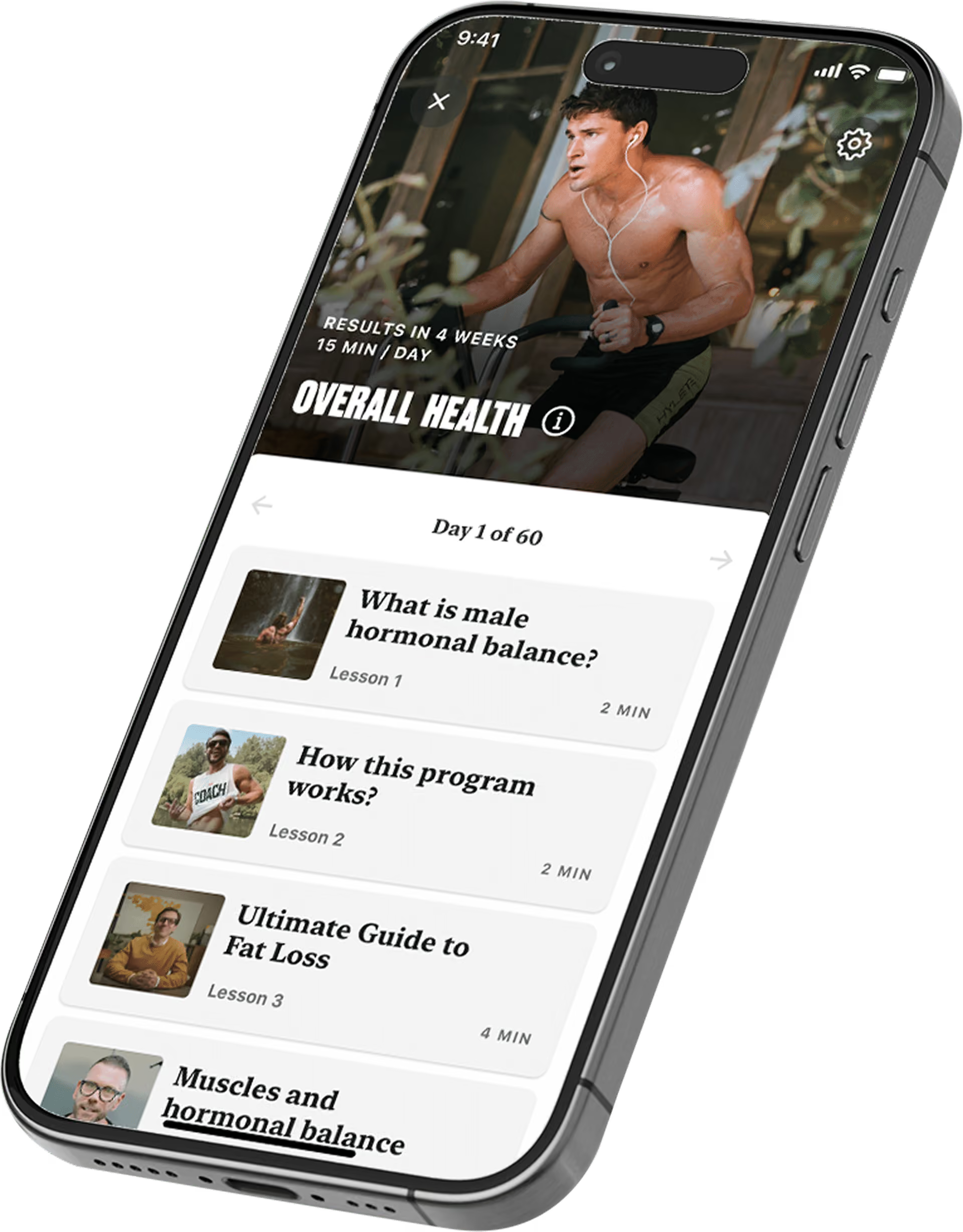
It’s a systems check your body runs every night whether you asked for one or not. That’s why a quiet run of mornings is worth reading, and also why it’s worth reading calmly. In the app that’s the Overall Health program: fifteen lessons across sleep, food and training, built to run as one routine instead of four separate projects.

How to Get Morning Wood Back — the Program Version

Everything above is the mechanism. How to get my morning wood back is the next question, and this is what the answer looks like as something you actually run.

  1. Answer a minute of questions. What you answer sets which plan comes back and where it starts, because sleep, body fat, drinking and training are never equally out of place in the same man.
  2. Work through the fifteen lessons. Sleep and stress, nutrition, training, and an honest section on what supplements can and can’t do — one protocol rather than four hobbies.
  3. Give it six to eight weeks. That’s the program’s own figure for a first noticeable difference. The hormonal side usually takes three to four months.

You’ve got the mechanism. The order is the other half.

A minute of questions decides whether you start with your sleep, your evenings, your training or your waistline.

See my plan

How Often Is Morning Wood Normal, and Why “Every Day” Is the Wrong Target

Type how to get morning wood into a search bar and the autocomplete finishes the sentence for you: how to get morning wood everyday. The honest answer is that every day was never the standard. What you’re counting isn’t how many erections you had — it’s how many times you woke up inside the last one. That depends on where your alarm falls in the final REM cycle, whether you got up in the night, and what you drank the evening before. Men sleeping perfectly well still have mornings with nothing to report.

So the count on any one morning tells you very little, and the direction over a month or two tells you nearly everything. No morning wood for months is a different sentence from a quiet Tuesday. When a man says I don’t get morning wood anymore, he’s almost always describing the first one — a run long enough to notice — and that’s the version worth acting on. You’re not looking for a streak. You’re looking for a trend.

What Actually Moves Morning Wood, in Order

Every explainer hands you the same six causes and leaves them in a heap. They aren’t equal, and the order isn’t a matter of taste — it follows from what an erection at five in the morning is made of.

01Sleep
The one the others sit on. You can’t get an erection out of a REM cycle you never entered, and short nights pull testosterone down while you’re missing them. Start anywhere else and you’re working against the floor.
02Body fat
The program’s blunt version: excess body fat is the main disruptor of male health. In most cases the body hasn’t stopped making testosterone — fat tissue converts a share of it into estrogen, so the question is where it’s going, not whether it’s being made.
03Alcohol
It costs you the second half of the night, which is exactly where the last erections live. A heavy evening doesn’t have to leave you drunk to leave the morning quiet.
04Training
Some training supports the hormonal side and some only adds stress without the benefit. Early on, consistency does more than intensity — the program says so in as many words.
05Not yours
Blood pressure, blood sugar, thyroid, low mood and a long list of ordinary prescriptions all land here. Habits move some of them, but none is a problem a routine settles on its own — and none of it is ours to diagnose.

No Morning Wood: What Men Do About It, and What Actually Changes It

What men do

Buy a testosterone booster and wait for the mornings to answer
Start counting mornings, and let the count set the mood for the day
Put it down to age and stop asking the question
Assume it’s erectile dysfunction and avoid the subject entirely

What changes it

Set the sleep window first: the same hours, a dark room, nothing left to wake you
Move the drinking out of the last three hours before bed
Work on body fat, because that’s where testosterone goes to be converted
Get the medical half looked at — blood pressure, blood sugar, and whatever you’re already prescribed

Whatever went wrong, it went wrong hours before you woke up.

Why Getting Morning Wood Back Takes Weeks, Not Days

Six to eight weeks is the honest number, and it isn’t padding. Four separate clocks have to turn over first, and only one of them is quick.

The night has to change before the morning can.

How to get morning wood back again is a question about your nights, not your mornings. You’re changing what sleep is made of, and that shows up a cycle at a time.

Body fat moves on the slowest clock in the list.

Fat tissue is where testosterone goes to be converted, and that ratio moves slowly: the program’s own figure is three to four months for consistent hormonal change, with the first noticeable difference at six to eight weeks. Body fat is why both numbers sit that far out.

One week can’t tell you anything.

The signal is noisy by design — that’s the whole point of the counting above — so a week of watching buys you anxiety and no information.

The order does more work than the effort.

Two weeks of doing all four badly is better than nothing, and worse than two months of doing the first one properly.

Knowing the order and running it are different problems.

The second one is what a program is for, on the Tuesday in week five when nothing has visibly changed yet.

See my plan

When No Morning Erections Is a Doctor’s Question

Some of this was never ours. Book the appointment if the quiet mornings arrive with company: tiredness that sleep doesn’t touch, a mood that’s flattened out, a prescription that changed recently, or a blood-pressure or blood-sugar number you’ve been meaning to deal with. Book it too if months have gone by with nothing at all — a lack of morning erections over that kind of stretch is worth a proper look rather than a longer wait.

We train; we don’t diagnose, treat or prescribe, and we’ve never worked with medication. The checks worth running here are ordinary ones — a blood panel, a cuff on your arm, a look at what you’re already taking — and they cost you one morning in a waiting room. Nothing below replaces that, and none of it has to wait for it either.

What changed for the men who ran it for four weeks

From a survey of The Coach users after their first four weeks on the app.

  1. 58 % felt more in control during sex.
  2. 55 % said sex became much more satisfying.
  3. 41 % had sex more often.
  4. 39 % reported a higher libido.

Men who stopped guessing at it

From the app stores, in their own words:

“This makes it very easy to stay consistent without feeling overwhelmed. In just a few weeks, I’ve noticed clear improvements in my erection quality, stamina, and ability to ‘stay hard’ longer.”

Muzzamil Javed

“Been using the app for a couple weeks now and if anything it has helped with my overall health. The work out does a good job at getting the blood flowing. There is lots of great information about men’s health and your sexual health.”

Trent

“I have been consistently doing this program for about 5 weeks now. This has made a big improvement in my sexual and overall health. Great program. Would highly recommend.”

Kyle

“You have to do program everyday and there’s no quick fix. Anything thats body related takes time so stick with it.”

Anthony Dang

Read all reviews

Those numbers came out of four weeks of doing it.

Not four mornings of counting. A minute of questions is where the four weeks start.

See my plan

Built with more than twenty-five specialists — sleep doctors among them

Not one fitness guru with an opinion. More than twenty-five specialists — sleep medicine, urology, endocrinology, nutrition — on the same fifteen lessons.

Dr. Gary Shlifer

DO, board-certified internal medicine physician specializing in preventative care, nutrition, and anti-aging.

Rick Brennan

Certified personal trainer, strength coach, sports nutritionist, and professional WFF athlete.

Dr. Joshua Roland

MD, sleep medicine specialist, and clinical instructor at the David Geffen School of Medicine, UCLA.

Ben Greenfield

13-time Ironman triathlete, bestselling author, and recognized expert in health, fitness, and performance.

Caleb Jude Packham

Sattva yoga teacher and founder of Wellness Warrior, focused on holistic male wellness.

Dr. Justin Houman

MD, UCLA-trained urologist and male reproductive specialist focusing on sexual health.

Dr. Amy Pearlman

Board-certified urologist specializing in male sexual wellness, performance, and hormonal health.

Gerard Greene

Specialist men's health physiotherapist and senior lecturer at Coventry University.

Questions men ask about morning wood

Should I be getting morning wood every day?

No, and nobody is. Why am I not getting morning wood anymore is the better question, because a blank morning is mostly a fact about your alarm clock. A few of them in a month mean very little on their own. Weeks of them in a row is the pattern worth doing something about.

Does morning wood stop when you get older?

It thins out, and not because of a switch that flips at fifty. What rises with age is how often the things underneath it turn up: lighter sleep, more body fat, more prescriptions, and more years of whatever your bloodwork has been drifting towards. Age tells you which of those to check first, and not much else.

Is no morning wood a sign of low testosterone?

It can be one sign among several, which isn’t the same as a test. Testosterone is the simplest indicator of hormonal balance rather than the whole of it, and only a blood test answers the question properly. If that’s the thread you want to pull, our guide to increasing testosterone naturally covers what moves it and what doesn’t.

Will a testosterone booster or a supplement bring it back?

Not on its own, and we don’t sell any. The program’s own line is that supplements aren’t magic pills; they sit behind sleep, food and training for a mechanical reason, which is that none of them changes how much of your testosterone is being converted away in fat tissue. Take a cause away and you’ve changed something. Add a capsule on top of the cause and you’ve changed the receipt.

I get erections fine otherwise — is no morning wood but no erectile dysfunction still worth looking at?

Yes, and it’s a milder conversation than the one you’re probably having with yourself. The morning ones are the most sleep-dependent erections you have, so they’re often first to thin out and first to come back. That makes them an early reading on your nights rather than a verdict on anything else. If the trouble has spread past the mornings, our guide to erectile dysfunction is the more useful place to be.

What do I actually get in the app?

The Overall Health program: fifteen lessons across hormones, sleep, nutrition, sport and stress, built as one routine rather than a pile of tips, with The Coach’s other male-health programs alongside it. The app is paid.

Do I need equipment, a partner or a device?

None of the three. All of it is your own sleep, your own kitchen and your own week. If a prescription enters the picture, that’s between you and your doctor.

Can I cancel anytime?

Yes — from your account settings, with no questions and no retention call.

How do I get in touch?

Two ways. Email support@the.coach and a real person on our team gets back to you — usually within a day. Or open the app, go to the Today tab, tap your profile, and hit Support. Both land with the same people.

More programs from The Coach

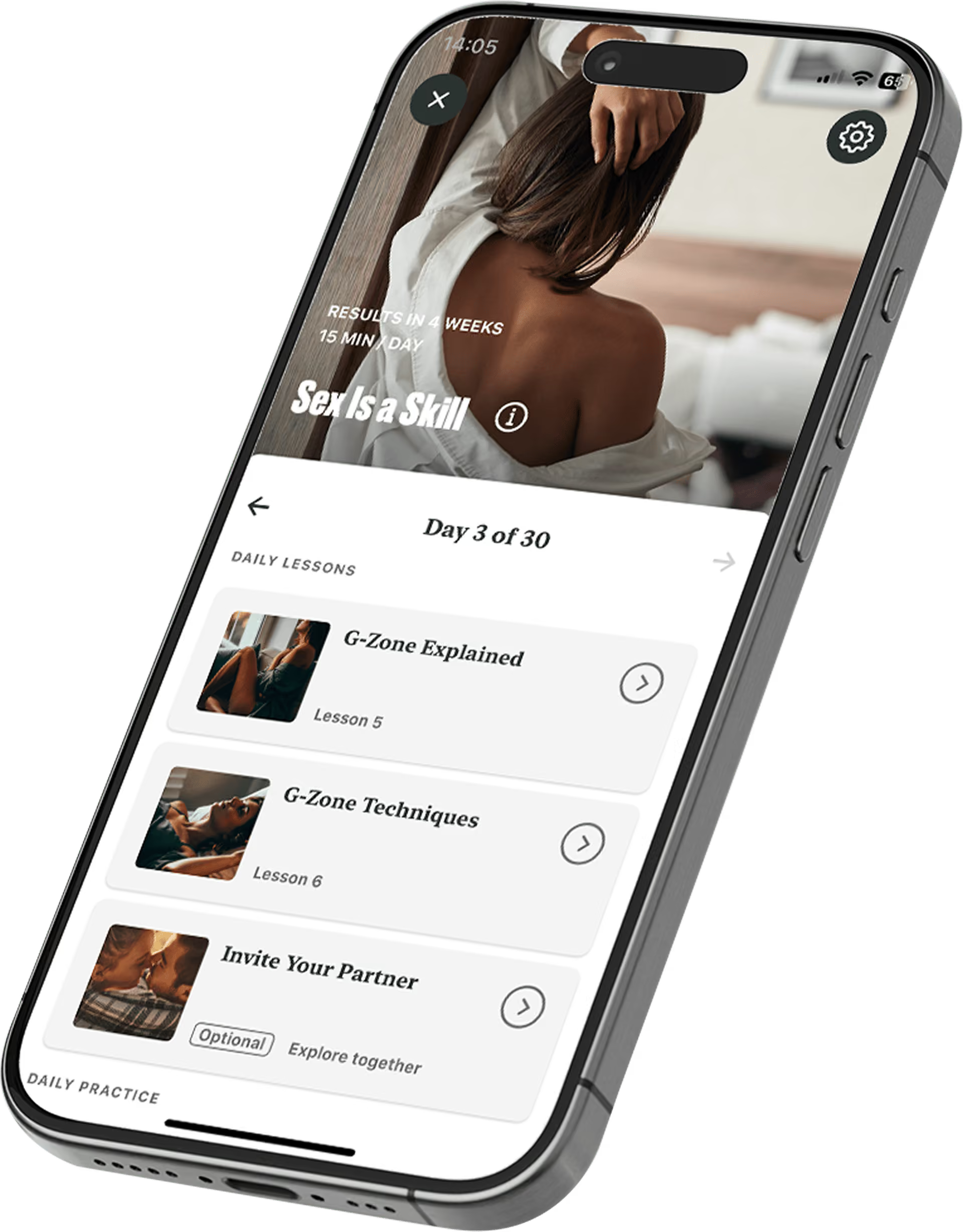
Sex is a Skill

Master her pleasure, stage by stage.

See the program

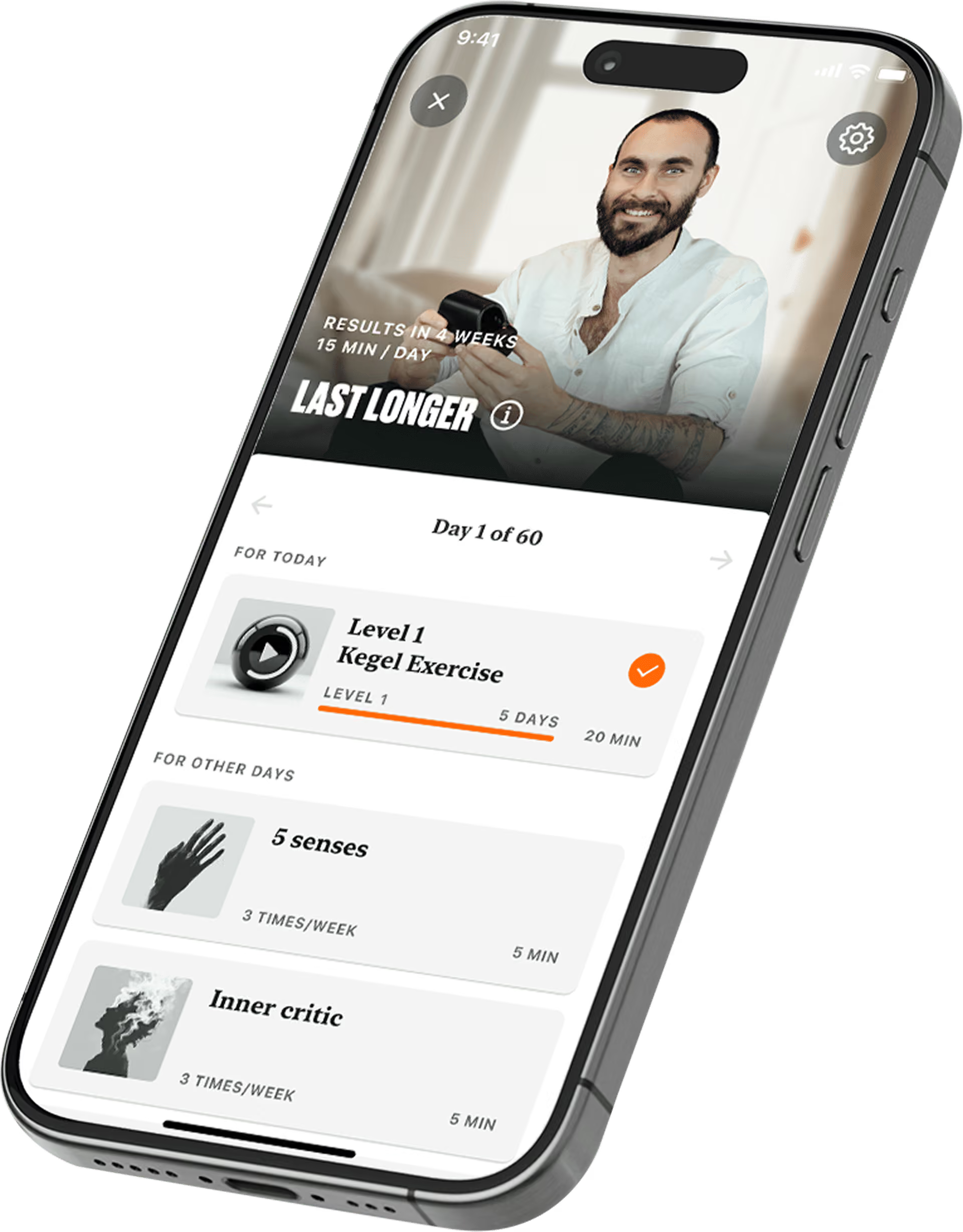
Last Longer

Real arousal control in eight weeks.

See the program

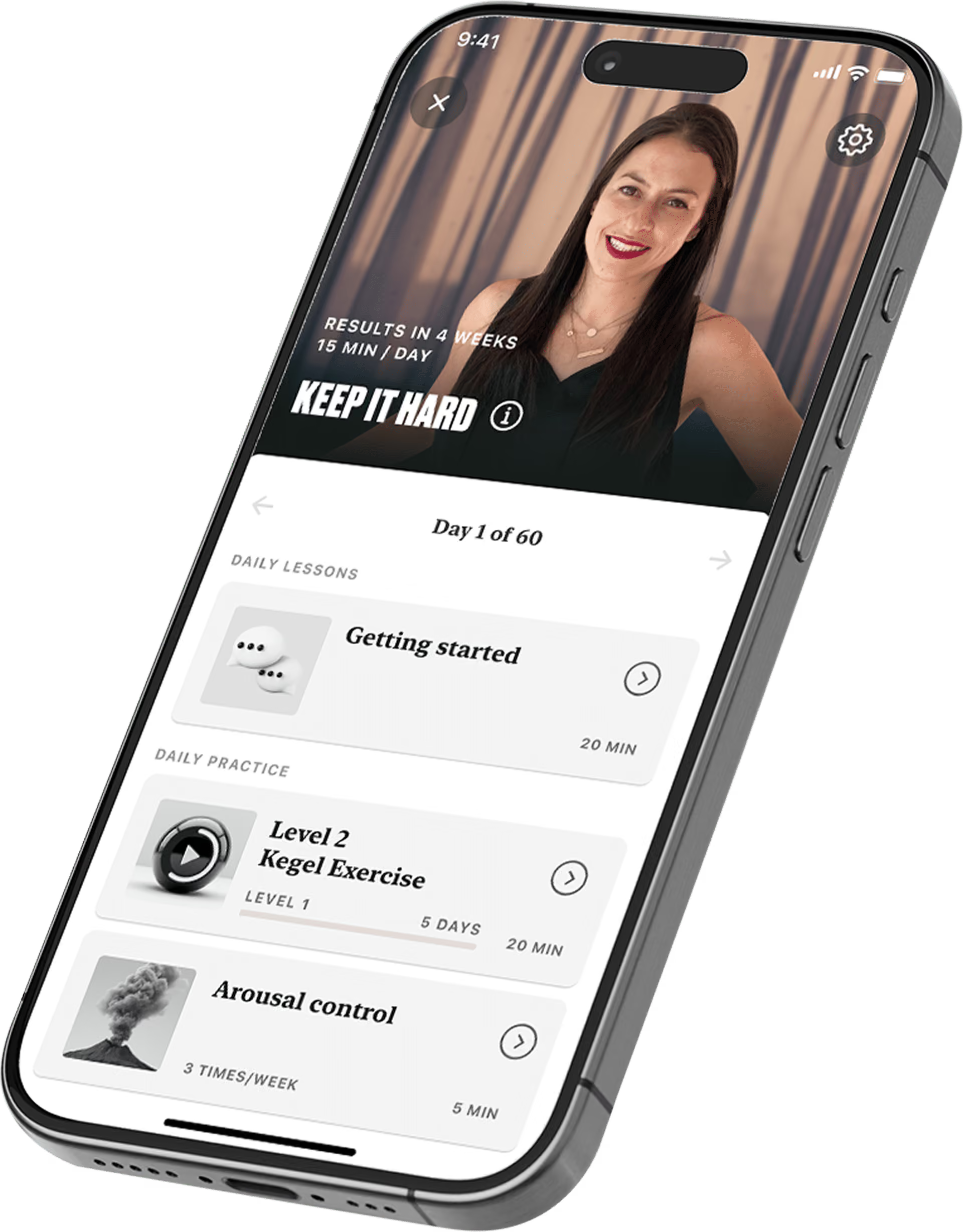
Keep It Hard

Stay hard without the pills.

See the program

The mornings were never the thing to work on.

Sleep, body fat and the last hour of the evening are. The program’s own figures are six to eight weeks for a first noticeable difference and three to four months for the hormonal side — the waiting happens either way, and the only question is whether anything is happening during it.

See my plan