Step 01
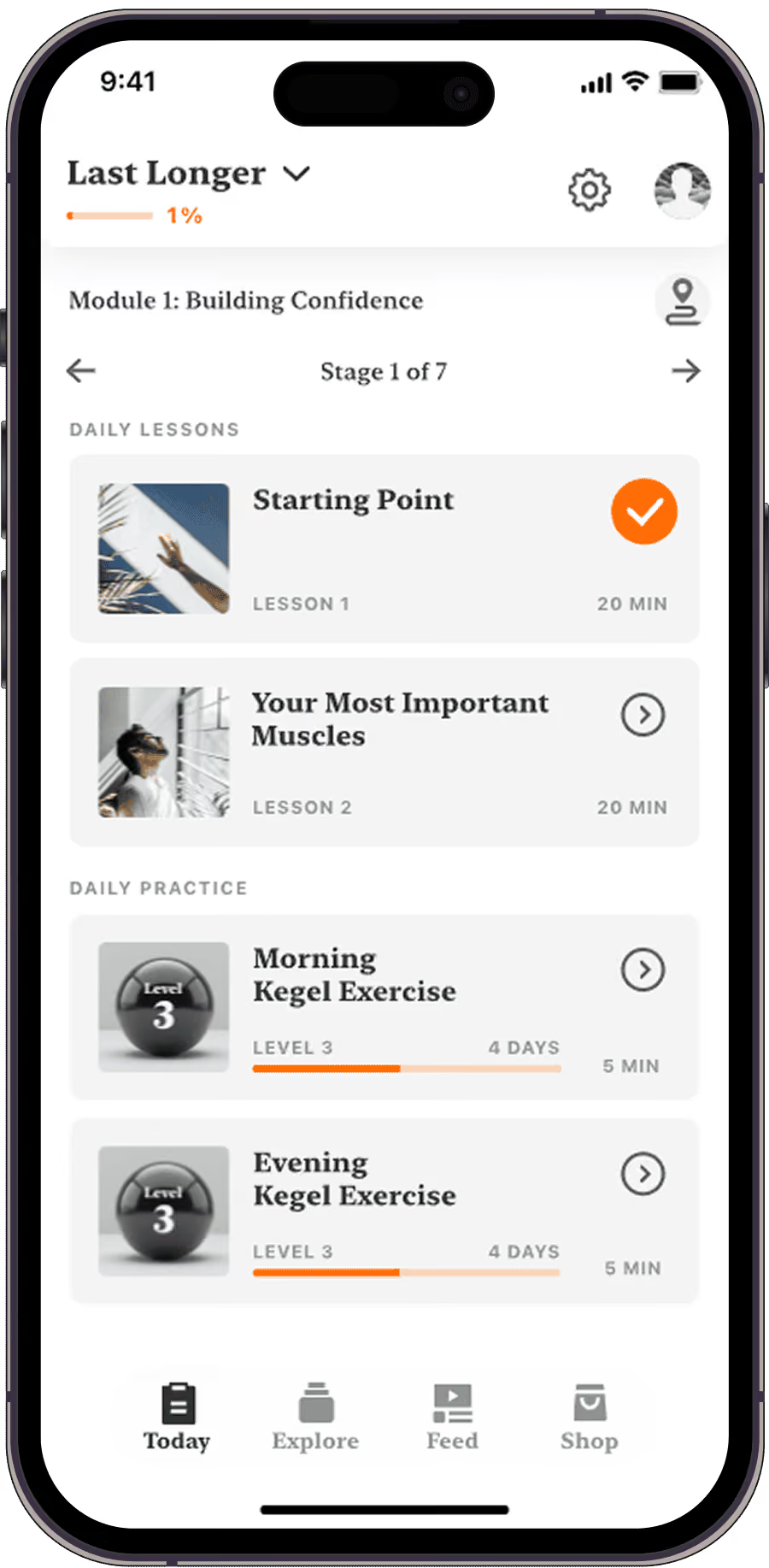
It opens with questions
A short questionnaire about your situation comes first, and your answers shape your personal plan.

A useful Kegel app helps you understand the exercise and keep a regular routine. Check the guidance, session length, reminders and information about the program. Below are eight questions to compare apps, including the information we do and don’t publish about The Coach app.
Take the quizWhen choosing a Kegel exercise app, look for clear instructions and a routine you can follow. These five features are a useful starting point.
Most of this shows on the store listing and the first screen, and all of it shows by the second week.
Kegels need no equipment and no software. A phone timer and a line in your calendar will run the whole thing, and for some men that genuinely is the answer. It just moves four jobs onto you.
That doesn’t make a timer wrong. It makes it the right tool for a man who already knows the exercise and doesn’t need reminding, and if that’s you, close the tab and go do a set.
You can answer all eight from a store listing and the first screen, whether the listing says Kegel app or pelvic floor app.
Three things happen once you’re in the Kegel program.
Step 01
A short questionnaire about your situation comes first, and your answers shape your personal plan.
Step 02
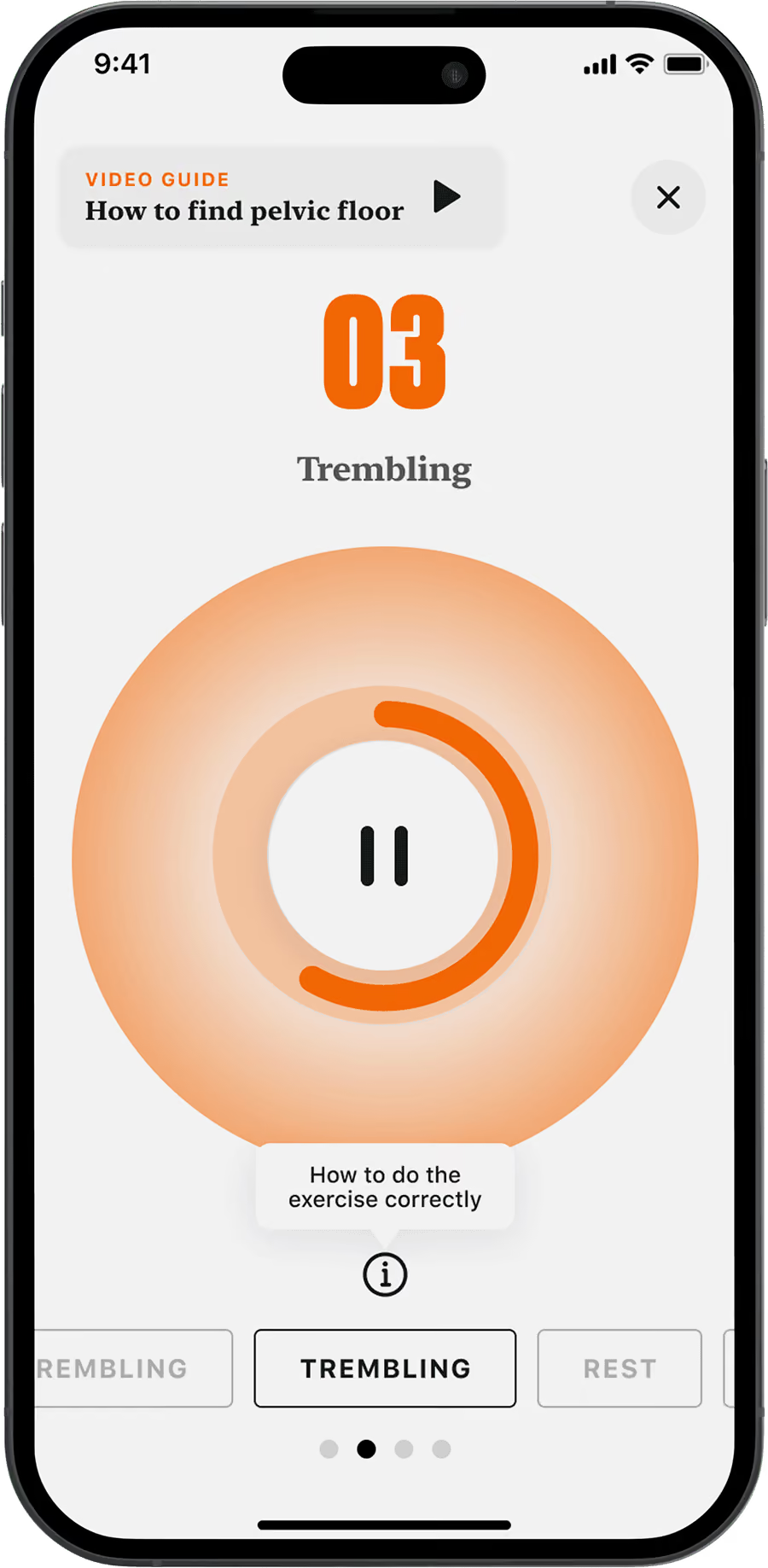
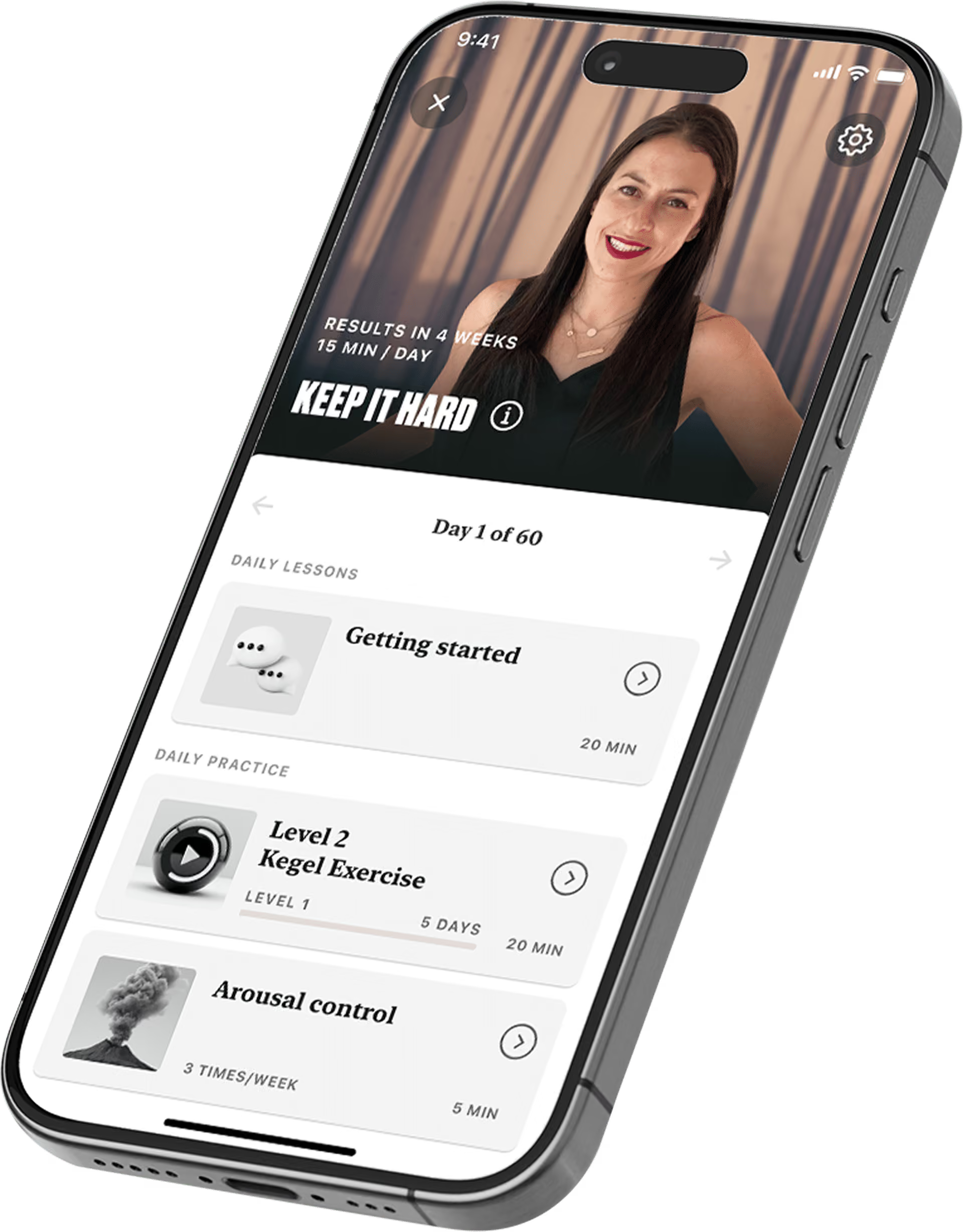
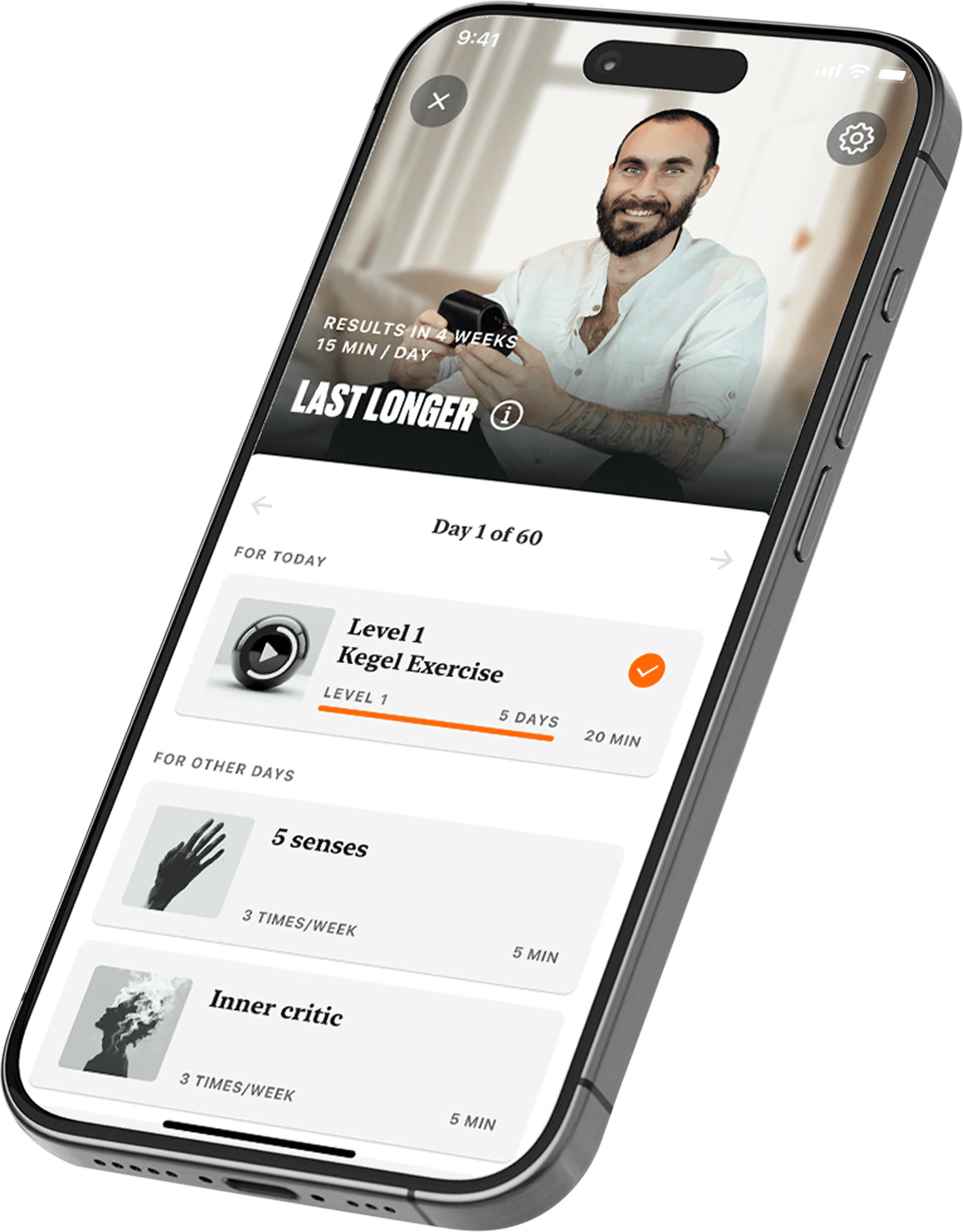
The day’s Kegel work arrives as guided audio: when to contract, how long to hold, when to release. Ten minutes, and none of it is yours to remember.
Step 03
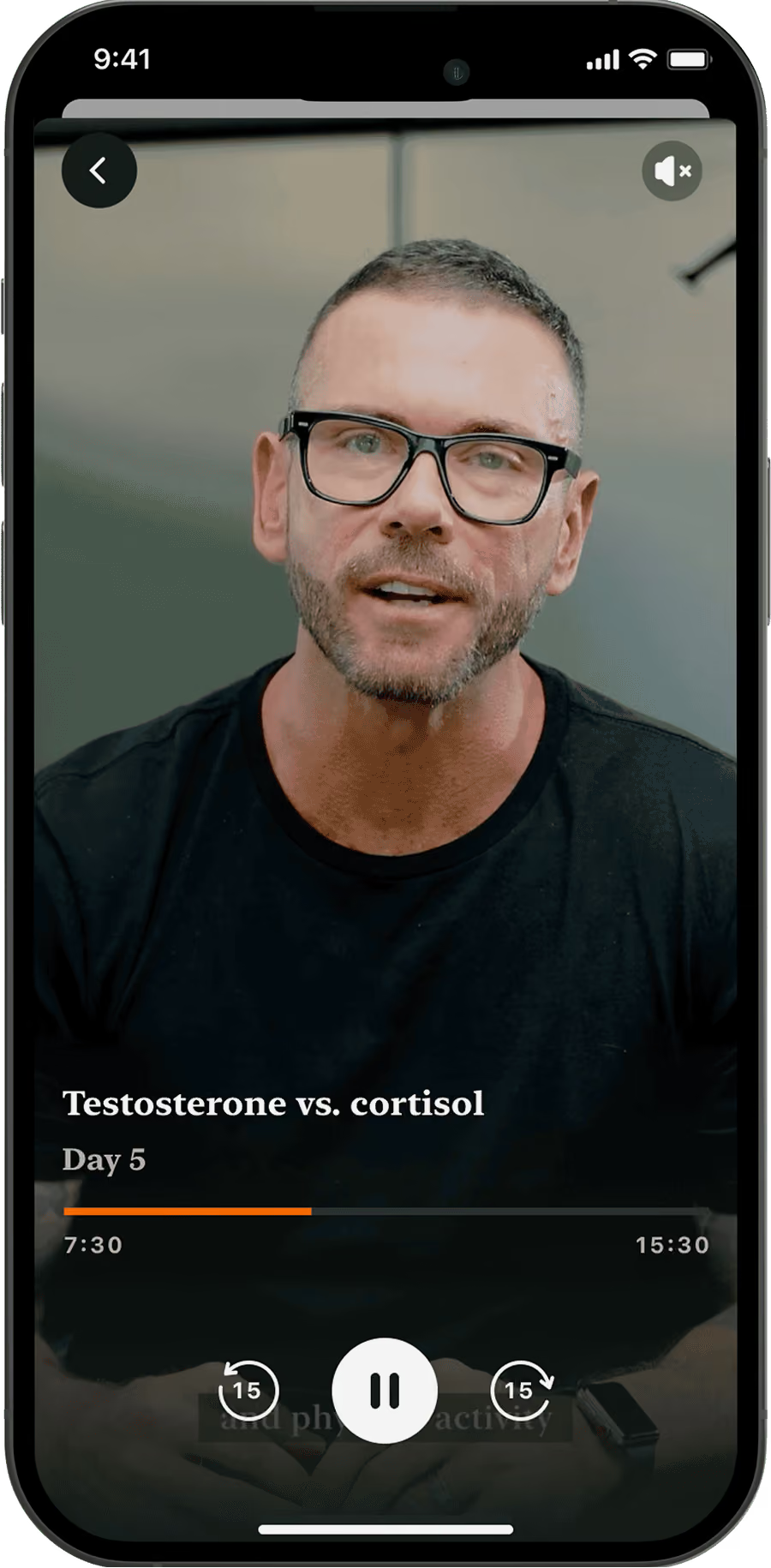
Skipped sessions tend to come in the middle weeks, not the first few days, and that’s where a daily reminder earns its place.
Ours opens with a few questions. At the end, the six-week program is set up and waiting.
The first week is easy. The weeks after it are where Kegel routines usually stall.
Learning the movement is the first step. An app can then help you practice regularly, follow instructions and keep to a routine.
The Coach’s Kegel program runs for six weeks. Focus on controlled contractions and full relaxation, and follow the session guidance instead of adding extra repetitions.
Knowing when not to squeeze matters as much as knowing how, and most instructions skip it. Squeeze at every spare minute and you train a quicker ejaculatory reflex, not a stronger floor. During sex, squeeze too early and you only build tension; squeeze too late, once you’re past the point of no return, and it does nothing. A counter can’t tell you any of that; it only records that you squeezed.
You can’t feel a pelvic floor getting stronger the way you feel a bicep. With nothing scheduling the change, you’ll either stay at an easy level for six weeks or push too hard early and quit.
Listening to the sessions won’t do it on its own, and the most common mistake is stopping once you see the first results. Software can get you to the session and hand you the day’s work; the ten minutes are still yours.
If you know what you’re looking for now, a few questions set up your six weeks.
From a survey of The Coach users after their first four weeks with the whole app, not only the Kegel program:




Real reviews, quoted as written and trimmed only where they ran long.
“This app has been so helpful. I’ve used Kegel apps before but none explained the reasoning and how to use the kegel exercise as clearly as The Coach app.”
“I wasn’t sure what to expect from the app but the videos are information is legit and goes into detail. The kegel exercises and timer make it a serious workout that you want to do and it helps!”
“Great app. The lessons and exercises are well-explained and laid out. Easy to navigate and stay on track. The options for lessons are varied too and hit multiple areas. Tried other apps and this one is by far the best.”
“The Coach is a well-designed and easy-to-use app that really focuses on improving men’s health in a practical way. The exercises are clearly explained, the programs are structured, and the daily reminders help stay consistent.”
The quiz sets up your program, and you can judge it against the eight questions yourself.
All eight questions, answered about our own Kegel exercise app. Six we pass. Two are a no, and they’re the ones worth reading if you’re deciding today.
That’s the scorecard, two noes included. Run the same eight past anything else you’re weighing up: the best Kegel app for men is the one with the fewest noes on the questions that matter to you.
Clinical researchers, certified sex therapists and medical professionals, practicing urologists among them: the people the program was built with. Names and credentials in full, because question eight only counts if you can check the answer.
Dr. Justin Houman
MD, UCLA-trained urologist and male reproductive specialist focusing on sexual health.
Dr. Susie Gronski
Licensed physical therapist, certified sexuality counselor, and founder of a men's pelvic health clinic.
Cameron Fraser
Australia's leading men's sex coach, specializing in male sexual wellness and performance.
Dr. Amy Pearlman
Board-certified urologist specializing in male sexual wellness, performance, and hormonal health.
Gerard Greene
Specialist men's health physiotherapist and senior lecturer at Coventry University.
Natalie Goldberg
Certified sex and family therapist dedicated to improving intimate relationships and personal well-being.
Dr. Paula Hall
Accredited sexual and relationship psychotherapist, registered with leading professional bodies in psychotherapy.
Dr. Justin Lehmiller
PhD in social psychology and senior research fellow at the Kinsey Institute.
Nobody can answer that for you, and we’re the wrong people to try: we make one of the apps. What we can offer is the standard: score whatever you’re looking at against the same eight questions. Ours passes six; the two it doesn’t are progression and rest days, because we don’t publish the week-by-week schedule.
No. A phone timer runs the exercise perfectly well, and if you already know how a rep is done and you’re reliable about it, that’s a complete answer. What an app is for is the six weeks after the novelty wears off: the guidance, the reminder on the day you’d skip, and the rest of the method sitting next to the muscle work.
Not directly, and any app that implies otherwise is overselling. Nothing on your phone can see which muscle you contracted. What guided audio does is remove the other reasons a rep goes wrong: squeezing too briefly, too weakly, or with no idea how many you’ve done.
It helps a great deal, and it takes about five minutes to learn. An app can run a program for you; it can’t teach you the movement from scratch and count it at the same time.
Same muscle, different word on the store listing. “Kegel” names the exercise and “pelvic floor” names what it trains, and apps use whichever their audience searches for. Where that muscle sits and how to find it is covered in our guide to pelvic floor exercises for men.
The six-week Kegel program with guided audio on each session, the reminders, and the rest of the men’s health library around it: the breathing, relaxation and arousal-control work that sits beside the muscle work.
Six weeks, ten minutes a day. Six weeks is about the minimum for muscle strength to change, not a finish line. Six in ten men report significant improvement after six weeks of Kegel practice.
They add resistance, and added resistance is a real technique and not a gimmick. The Coach doesn’t use or connect to one, so if hardware is what you want, this isn’t the product. Nothing here needs equipment: the exercise is invisible from the outside and you can do it sitting down.
Depends what you’ve been doing. Squeezing at odd moments with no intensity target, no hold time and no rest trains a habit, not a muscle. A program mostly changes how you do them, not whether you do them.
It’s audio and a phone. Nothing gets delivered, nothing needs a room to yourself, and a session works with headphones anywhere you can sit still for ten minutes.