Desire is not chased.
Day twenty-seven builds craving out of unpredictability, steadiness, and being wanted for something other than sex. It opens by throwing out the pickup hacks and the text-her-this advice, and there is no script anywhere in it.

It’s Wednesday, she’s making tea, and you put a hand on her hip. She tenses — barely, and you both know why: the last four times, that hand meant something. That half-second decides more about whether you’re a better lover than anything you do later with the lights off. Sex is a Skill, thirty days on her pleasure, ends on five markers of one, and not one of them is a technique.
Get my month of practiceAsk how to be a better lover and the answer usually arrives as advice about being a nicer person. The final lesson of the thirty days does not end on a move either — it ends on a description of a man: five things that are true of him by day thirty, each one something he does rather than something he knows. They read like character. They are habits, and every one of them is trained on a numbered day.
Those five are the destination. What sits under them is ordinary, teachable and mostly verbal — and the first thing men change is how they talk. The other half of it, what she notices while it is happening, is how to be better in bed for men.
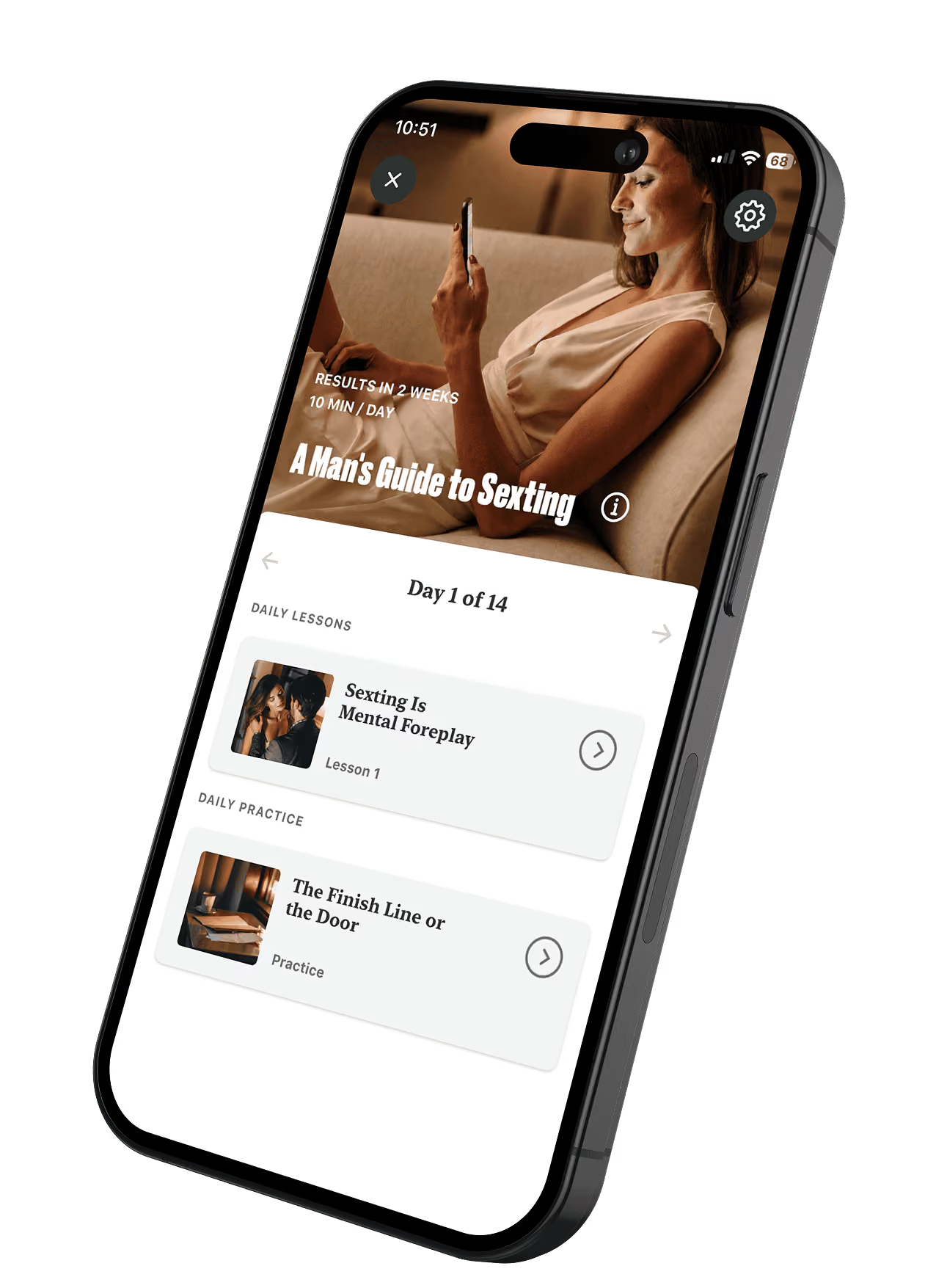
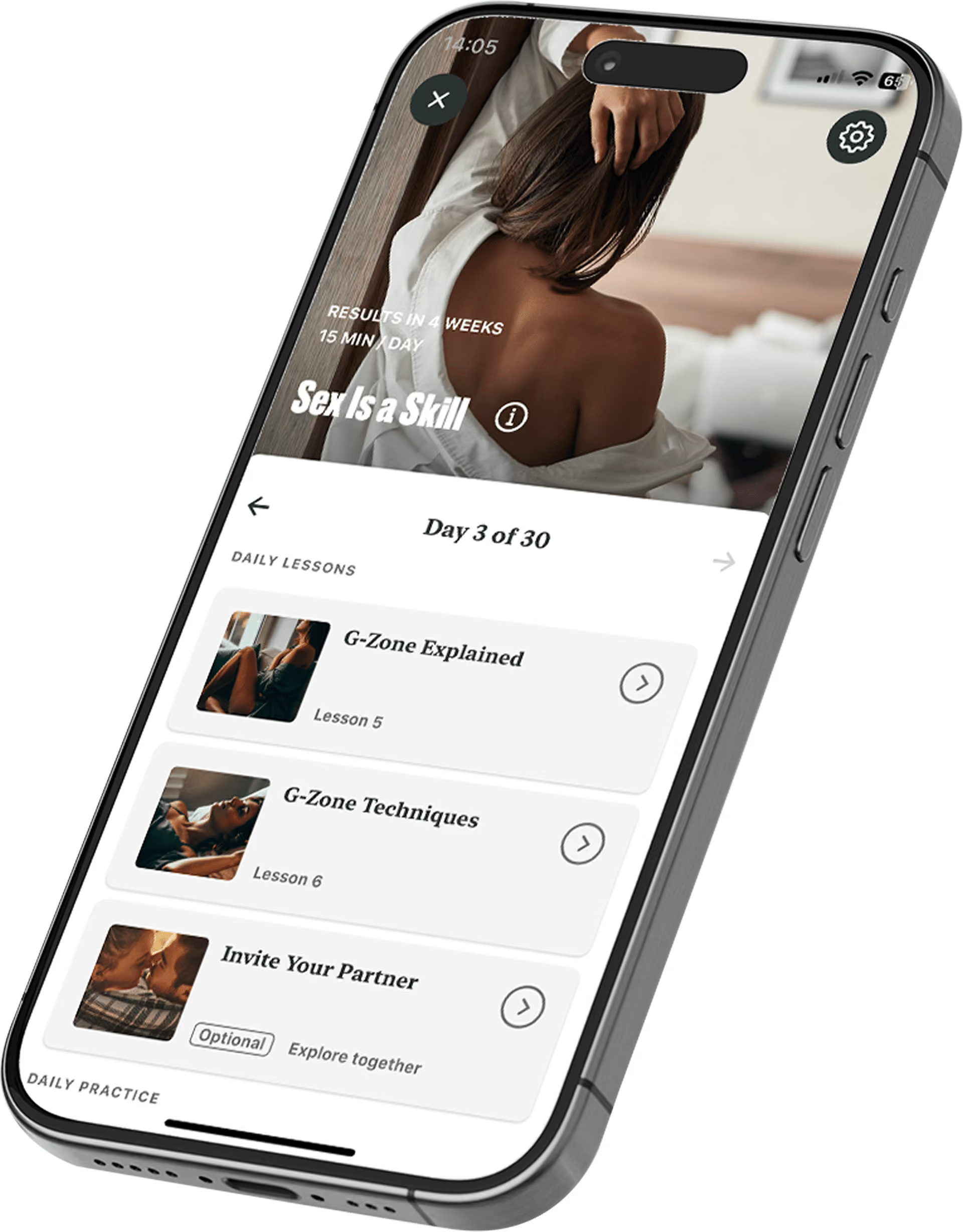
Sex is a Skill is The Coach’s thirty-day program on her pleasure, and the app is paid. It is not a library to browse. One evening, one practice, in an order that does not shuffle.
That is not the running order by accident. It is what the last week is for.
Each is a numbered day, and each is practiced with her in the room rather than read on a screen.
Of the six, talking is the one that changes an evening fastest. Most men are parked at one of two extremes — silence and hope, or a blurt that lands as an instruction — and how to become a better lover for her, the woman actually in the room, starts with getting out of both.
The fix is not a script to memorize. It is a swap, and there are three of them. “No, not like that” becomes “Mmm… slower. Just like that.” “Move your hand” becomes “Can I guide you?”, and then you guide it. The information in each pair is identical. What changes is whether she has just been corrected or invited.
Asking for what you want runs on the same swap. The demand most men have rehearsed in their head and never said out loud becomes a question with the want still in it: “Can I show you something I’ve been fantasizing about?” It is not softer. It is the same appetite, addressed to a person who gets a say.
Then the part almost nobody writes down: what to do when the answer is no. One sentence — that’s okay, thanks for telling me — and the evening carries on being an evening. Handled that way twice, it stops being a risk to ask.
Reading those three swaps takes ninety seconds. Saying one of them on a Tuesday, in a voice that doesn’t sound rehearsed, is what the thirty days are for.
Technique is what your hands do. The rest of it is who walked into the room.
Four things the thirty days keep returning to, none of which is a move.
Day twenty-seven builds craving out of unpredictability, steadiness, and being wanted for something other than sex. It opens by throwing out the pickup hacks and the text-her-this advice, and there is no script anywhere in it.
Women want to be led, not managed. The line between them is whether she can still change what happens next, and a man who leads well is easier to interrupt, not harder.
Day twenty-three maps his own body — perineum, inner thighs, lower abs, nipples, neck — on the grounds that a man giving one square inch of himself all his attention has none spare for her.
The last minutes are not the tidying up; they are the part she carries into the next day. That one has a walkthrough of its own: sex aftercare.
The other five take a month, which happens to be the length of the program.
From a survey of The Coach users who finished their first four weeks:
They practiced short things on ordinary evenings, for four weeks.
Left as they were written on the App Store and Google Play, trimmed only for length.
“After only five or six lessons, I was tuned in to making the experience more pleasurable for her, which actually made me feel sexier! I’m not ashamed to admit that the Coach made me a better partner and lover.”
“I am grateful for the reminders and techniques to enhance and revitalize my love for my wife. Technique that makes you own the confidence that you’re doing the right stuff. Anatomy that we forgot about and sensory stuff that makes her squirm. Thank you”
“There’s a couple of uses for the app, but I liked how organized the section was on ‘Sex is a Skill.’ It has professionally drawn sketches to help you understand what is being described without looking graphic or distasteful. It has helped me up my game in the bedroom and I’m happy with my results!”
“At 61 years old I thought I knew a lot about female anatomy and sex, it turns out I was WRONG! While I have been quite successful in helping women reach orgasm in the past, it turns out it was more from luck than any skill on my part.”
Clinical researchers, certified sex therapists and medical professionals, including practising urologists, shape what The Coach teaches.
Dr. Justin Lehmiller
PhD in social psychology and senior research fellow at the Kinsey Institute.
Dr. Jessica Yih
Urologist and director of women's sexual health and male infertility at UCI.
Dr. Kirti S. Patel
Board-certified ob/gyn and host of The Gynarchy, a women's-health podcast.
Cameron Fraser
Australia's leading men's sex coach, specializing in male sexual wellness and performance.
Dr. Paula Hall
Accredited sexual and relationship psychotherapist, registered with leading professional bodies in psychotherapy.
Natalie Goldberg
Certified sex and family therapist dedicated to improving intimate relationships and personal well-being.
Dr. Justin Houman
MD, UCLA-trained urologist and male reproductive specialist focusing on sexual health.
Dr. Amy Pearlman
Board-certified urologist specializing in male sexual wellness, performance, and hormonal health.
Five things: he reads her and adapts, he guides without ego, he handles his own arousal, she feels wanted rather than pressured, and he stays present instead of performing. Every one of them is a behavior, which is why it can be trained. None of them is a position, a duration or a trick.
Honestly, not most of it. Twenty-eight of the thirty practices are written for two people in a room — the reading, the leading, the asking, the mirroring. Day one opens with two steps you do on your own and day twenty-six is a solo rewrite of your own script, but the habits above are learned with someone.
The word swaps land the first evening you use one, because she hears the difference immediately. The rest is slower: the survey figures above come from four weeks of practice, and the program is thirty days long.
Both, in that order. The material is sexual — anatomy, oral, penetration, arousal — and the last week is about how you lead, ask, and leave her. What it never becomes is dating advice: no texting scripts, no games, nothing to send her.
It will, for about a week, the way anything you have never done feels borrowed. The answer is not to act more confident but to lead with your hands first — pressure, tempo, a pause — where there is nothing to perform. The words get easier once she has already been following.
Two ways. Email support@the.coach and a real person on our team gets back to you — usually within a day. Or open the app, go to the Today tab, tap your profile, and hit Support. Both land with the same people.