
It holds everything up
The bladder, the bowel and the prostate sit on it. That’s the day job, and it runs whether you think about it or not.

Men have a pelvic floor too, and almost nobody trains it. It sits at the base of the pelvis, it does real work every time you get hard or finish, and years of sitting down leave it weaker than it should be. Here’s where it is and what it does — then how to train it, ten minutes a day.
Start pelvic floor trainingThe pelvic floor is a sheet of muscle that closes the bottom of the pelvis, the way a floor closes a room. It carries the bladder, the bowel and the prostate, and it works during erections and orgasm. Men have one. Clinically it’s the pelvic diaphragm, and pelvic floor exercises are simply what you do to make it stronger.
You’ll never see this one work, and that’s most of the reason it goes untrained. No mirror check, no soreness the next morning, no weight going up. It holds its position all day regardless — while you stand, walk and lift — so the only way to find out whether it’s doing that job well is to try to use it on purpose.
Nothing in an ordinary week asks much of this muscle. It loses condition the way any unused muscle does — only quietly, because nothing about it shows.
There’s no home test that gives you a number. What you can check is simpler: find the muscle, hold it, let it go. If you can’t locate it, or the hold fades after a second or two, there’s something to train. If something feels wrong rather than weak — pain, or symptoms that started after surgery — that’s a pelvic health physiotherapist’s job, not an app’s.
Six in ten men report a significant improvement after six weeks of practice. Getting there isn’t complicated, but training a muscle you can’t see does mean the basics matter more — nothing gives you feedback except the muscle itself.
Two things are true at once. The movement is simple enough to describe in a sentence, and almost nobody keeps it up without something counting for them.
The first four points are how any small muscle group gets trained. None of it is secret and you can start tonight without us. What the program adds is the sixth week — the stretch where staying consistent stops depending on you remembering.
It isn’t one muscle with one purpose. It’s a group doing four jobs at once, which is why weakness there turns up in places that look unrelated.
The bladder, the bowel and the prostate sit on it. That’s the day job, and it runs whether you think about it or not.
These are the muscles that drive blood flow to the area, which is why the research on training them covers erection quality, not just endurance.
Those contractions you feel are this group working. That’s the physical link between how strong it is and how much say you get in the timing.
Half its job is releasing on cue. A floor stuck in permanent low-level tension behaves a lot like a weak one, and men who only ever squeeze end up exactly there.
Search for pelvic floor exercises and most of what comes back was written for women — pregnancy, postnatal recovery, bladder control. The muscle group has the same name in both bodies. It isn’t answering the same question.
None of that makes the women’s material wrong. It makes it a poor place for a man to start, and it is most of the reason so many men have heard the phrase and never done anything with it.
Unedited reviews from the App Store, Google Play and Trustpilot:
“Excellent training program I only wish I found it sooner. The science behind training specific pelvic floor muscles was impressive but not overrepresented.”
“The Kegel exercise program provides clear, step-by-step guidance that makes it easy to build a consistent routine for improving pelvic floor strength.”
“It has different articles help you understand the root cause of the problem and exercise that helps your pelvic floor build up and stamina.”
“I’ve been using The Coach: Men’s Health and Kegel for a while now, and I’m genuinely impressed with how well the app is designed and how practical it is.”
Pelvic health is a physiotherapy speciality long before it’s an app feature. These are the people we built the program with.
Dr. Justin Houman
MD, UCLA-trained urologist and male reproductive specialist focusing on sexual health.
Dr. Susie Gronski
Licensed physical therapist, certified sexuality counselor, and founder of a men's pelvic health clinic.
Cameron Fraser
Australia's leading men's sex coach, specializing in male sexual wellness and performance.
Dr. Amy Pearlman
Board-certified urologist specializing in male sexual wellness, performance, and hormonal health.
Gerard Greene
Specialist men's health physiotherapist and senior lecturer at Coventry University.
Natalie Goldberg
Certified sex and family therapist dedicated to improving intimate relationships and personal well-being.
Dr. Paula Hall
Accredited sexual and relationship psychotherapist, registered with leading professional bodies in psychotherapy.
Dr. Justin Lehmiller
PhD in social psychology and senior research fellow at the Kinsey Institute.
This is training, not treatment, and the difference matters more here than in most places. Pelvic health is a real physiotherapy speciality, and some things belong to it rather than to an app.
Gerard Greene, one of the specialists we built this with, teaches exactly this as a men’s health physiotherapist. Training and treatment are both real. They are just not the same appointment.
Nothing, in practice. The pelvic floor is the muscle group; a kegel is the name of the exercise that trains it, after the doctor who described it. People searching one term usually want the other. If what you want is the technique itself, rep by rep, that’s on our kegel exercises page.
There’s no home test that gives you a number, and anything promising one is guessing. The practical check is whether you can find the muscle at all, hold it for a few seconds, and then let it go completely. Trouble at any of those points means there’s something to train.
Ten minutes a day for six weeks — that’s the program in the app, and six weeks is roughly the floor for any muscle to genuinely change. Before that you’re mostly getting better at finding it, which is worth having on its own. After it, it keeps improving as long as you keep going.
Ten minutes is a more useful unit than a rep count. Reps stop meaning much the moment form slips, and with a muscle you can’t see, form slips quietly. If you’re training without guidance, watch one thing instead of counting: whether the release at the end of each hold is actually complete.
Once you can reliably find the muscle, yes — nothing about it is visible, which is the practical appeal of the whole thing. Early on it pays to be stricter than that. Sitting recruits your abs and glutes for you, so it hides the exact mistake you are trying to catch.
Control shows up before strength does. You find the muscle first time instead of hunting for it, you hold it without your stomach joining in, and you can let it go completely on command. Strength takes longer and reads differently — holds that don’t shake and don’t fade after two seconds.
Yes, and it’s a real thing rather than a footnote. Clenching all day out of habit builds tension and fatigue, and it can leave you with a hair-trigger reflex — the opposite of what you were training for. That’s why the release half of every rep matters, and why more is not better here.
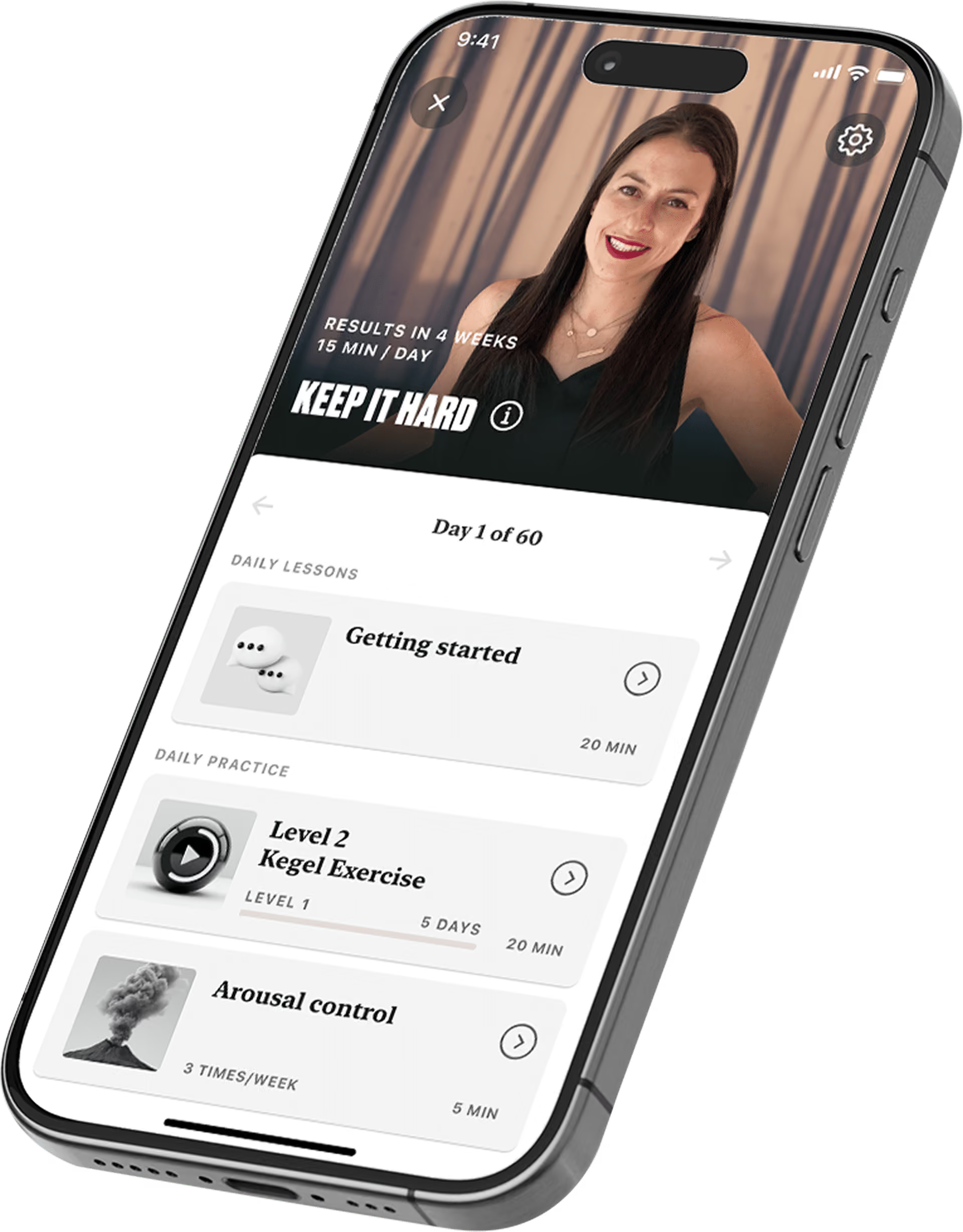
They are part of the picture rather than the whole of it. These are the muscles that support blood flow to the groin, which is why training them turns up in research on erection quality and not only on endurance. If erections are the main reason you are here, our Keep It Hard program is built around that problem specifically.
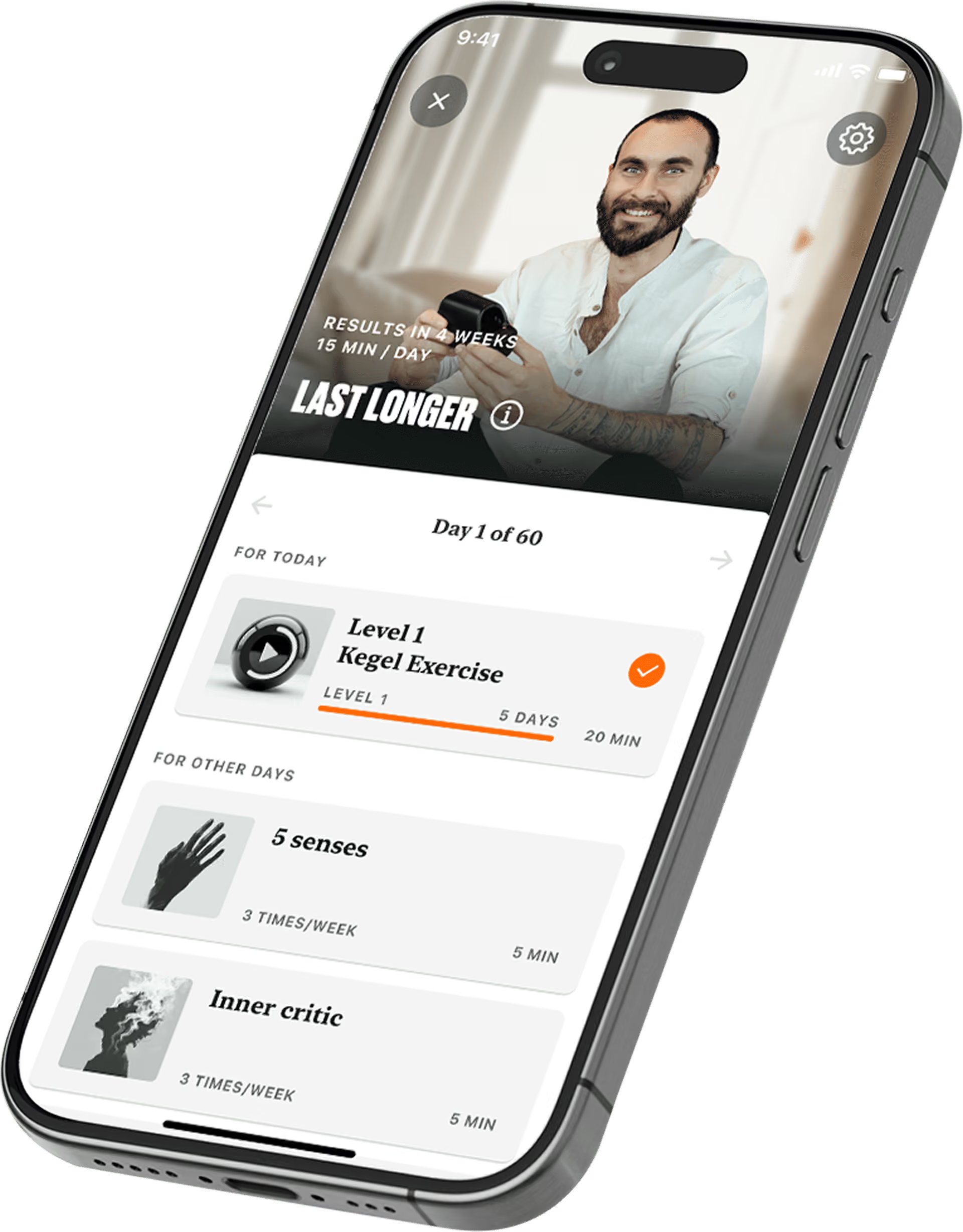
They are the physical half of it. A trained pelvic floor gives you something to use when arousal is high; knowing the moment to use it is a separate skill, built on breathing and reading your own arousal. Our Last Longer program puts both halves together over eight weeks.
If there’s pain, or symptoms that started after surgery or an injury, then yes — and before an app. We do training, not treatment, and those aren’t the same job. If nothing hurts and the muscle is simply untrained, that’s what the program is for.
Everything on this page is free to use and it is genuinely enough to start with — where the muscle is, what a session looks like, what to avoid. The app is paid, and what it adds is six weeks of structure with the counting done for you. That is the difference between knowing the exercise and still doing it on a Tuesday in week four.
Yes. You can cancel anytime from your account settings — no questions asked, no retention calls.
Two ways. Email support@the.coach and a real person on our team gets back to you — usually within a day. Or open the app, go to the Today tab, tap your profile, and hit Support. Both land with the same people.