Erectile Dysfunction: What Causes It, and What Changes It
Most men with erection trouble never find out which kind they have. There’s a physical version, a psychological version, and a very common mix of the two — and they don’t answer to the same things. Here’s how the difference shows up, what sits behind each, and where a doctor’s job starts.
Erectile dysfunction is what happens when a link in the erection chain gives way: the thought, the signal that carries it down the nervous system, or the blood flow that signal triggers. One failed night isn’t that chain breaking — it’s a chain that works, on a night that didn’t. The word describes a pattern, not an evening.
One bad night, or the first night with someone new. Getting an erection runs on the branch of the nervous system that handles rest, and nerves put you on the other one.
A stretch that lines up with something else. A new prescription, a heavy few months, a period where you barely moved — all three are on the medical list of physical causes, and all three can move back off it.
Losing it once mid-way and getting it back. The signal can drop and return; the description of the psychological version is a chain that starts fine and gets interrupted. Once is information, not a diagnosis.
If what you actually typed was why can’t I get hard, that’s the same question asked before the word has been applied to it, and the rest of this page answers it either way. Because the useful version isn’t whether you qualify for the label. It’s which link in the chain is the one giving way.
Two kinds of ED, and how to tell which you have
Until about twenty years ago this was assumed to be almost entirely psychological. It isn’t — physical causes turn out to be at least as likely, and the two behave differently enough that you can usually tell them apart before anyone examines you. Three checks do most of the work.
Does it happen in every situation, or only some? This is the rule the program’s own second lesson opens with: if you can’t get an erection under any circumstances, the primary cause is more likely physical. If it works on your own and not with a partner, or with one partner and not another, the machinery is intact and something is interrupting the signal.
Did it arrive gradually or suddenly? Physical causes tend to come on slowly, and once they’re there they show up across all sexual activity. A psychological interruption can start well and stop part-way — which is why an evening can begin fine and go wrong later.
Is there something new alongside it? A prescription that started around the same time, a diagnosis, an injury, surgery. That isn’t a coincidence to reason past. It’s the reason to have the physical side ruled out first.
Most men are a mix. The material this program is built on is blunt about it: most men with ED have both a psychological and a physical cause, with one feeding the other. A physical misfire teaches the body to expect the next one, and the expectation does the rest.
The part that isn’t ours. If the honest answer to the first check is never, in any circumstance, or if anything in the third applies, that’s an appointment before it’s an app. It isn’t an exotic one: blood pressure, cholesterol, a diabetes test, a morning testosterone reading, and a look at whatever you’re already taking.
What causes erectile dysfunction
Five routes, and most men who look this up are on two of them at once. The first four are physical and the fifth isn’t, which is the split the section above is about.
01Cause
Blood flow. Heart and vessel disease, high blood pressure, cholesterol and diabetes all cut what arrives — and the pelvic floor can be too weak to hold it or too tight to let it in.
02Cause
Nerve signalling. An erection starts as a signal that has to travel. Diabetes, MS, Parkinson’s, a stroke, a spinal injury or pelvic surgery can interrupt it. That’s diagnosable, not trainable.
03Cause
Hormones. An overactive or underactive thyroid, and low testosterone — more common as a cause than it used to be considered, and it turns up at any age. A morning blood test settles it.
04Cause
What you take and what you do. Prescribed drugs list this as a side effect; recreational drugs and heavy drinking cause it outright. Smoking, extra weight and barely moving all make it likelier.
05Cause
The fear response. The brain registers a threat, fight-or-flight fires, and blood goes to your arms and legs instead. Once it has happened once, expecting it is enough.
When to see a doctor, and when it’s trainable
Worth a doctor’s visit
It doesn’t happen in any situation, including on your own
It started around a new prescription, a diagnosis, an injury or surgery
You already know about diabetes, blood pressure or cholesterol
There’s pain involved, or a change in shape
The ordinary case
It works in some situations and not in others
It followed one bad experience, and now you’re braced for the next
Nothing else changed — no new medication, no new diagnosis
It tracks how much you’re carrying that week
What actually helps, in order
There’s a sequence to this, and most of the money spent on it gets spent out of order. Four steps. The first one isn’t ours.
Get the physical drivers looked at, and treated. Blood pressure, cholesterol, diabetes, thyroid, testosterone, and any prescription that lists this as a side effect. Where one of those is the driver, this is the step that changes things fastest — and it’s the one step nothing on this page can do for you.
Change what sits on the lifestyle end of the cause list. Heavy drinking, recreational drugs, smoking, extra weight, barely moving. Those are on the medical list of causes, not on a wellness list, and they’re the only causes you can start on tonight without an appointment.
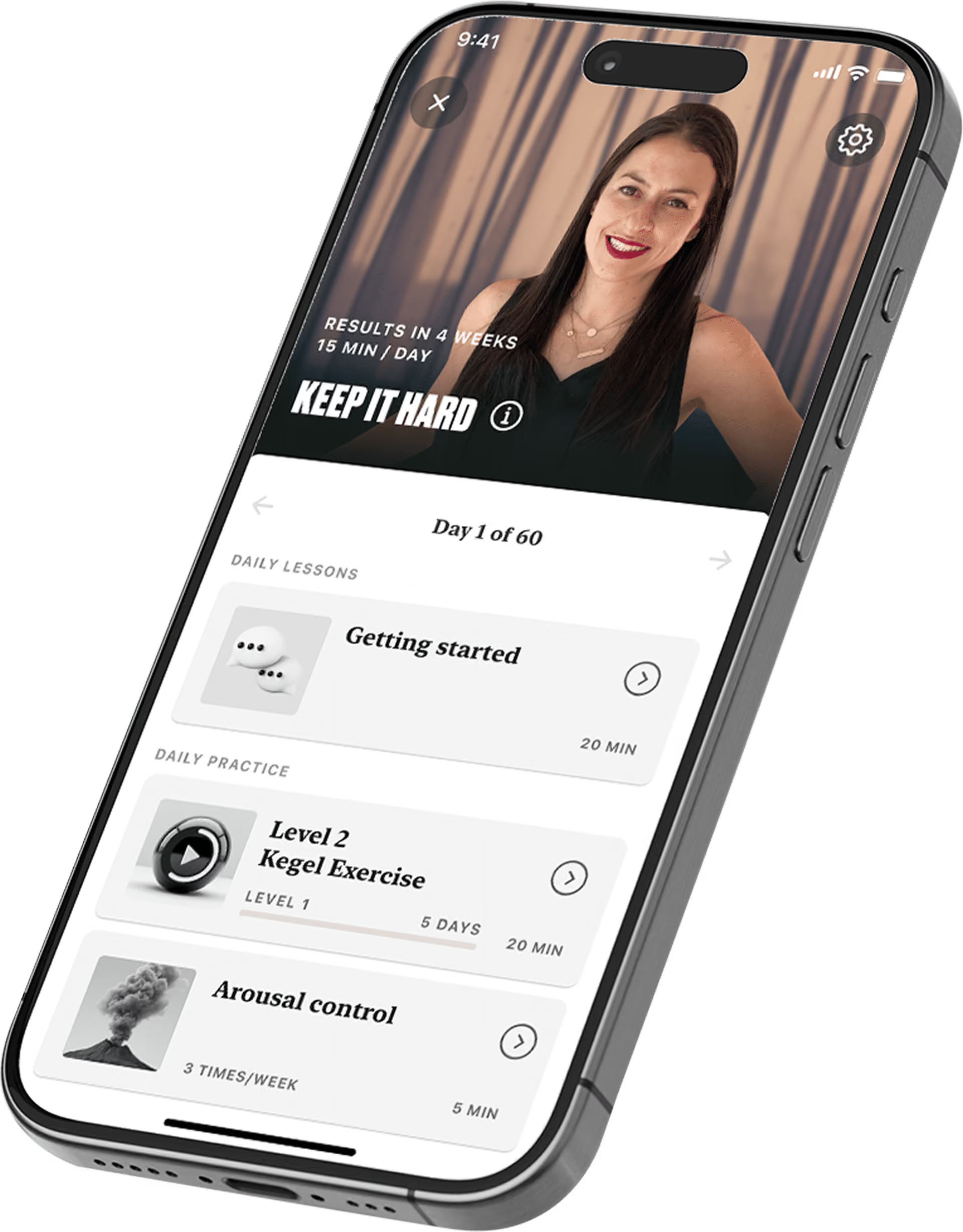
Train the two things that are trainable. The pelvic floor muscles that hold blood where it’s needed, and the nervous system that decides whether blood goes there at all. That’s what the program is — physical conditioning, the anxiety work, and enough skill that a wobble doesn’t turn into a spiral.
Don’t avoid sex while you do the rest. Avoidance is the multiplier, for reasons the next section gets into. It’s also the step that costs nothing and gets skipped anyway.
Notice what isn’t on the list: no device, no supplement, no shortcut, and nothing that works inside a week. And notice that steps 1 and 2 don’t involve us at all. If they turn out to be your whole answer, that’s a good outcome, not a lost sale.
Can erectile dysfunction be reversed?
This is the question under most of the searching, and the words people use for it — cure, fix, reverse, for good — are more certain than any honest answer. Here’s the honest one, in four parts.
Treatable isn’t the same as cured.
For most men there’s an identifiable cause, and causes can be worked on — which is why the outlook is genuinely better than it feels at the start. What nobody can promise is permanently, because the things underneath it (vessels, hormones, habits, whatever you’re taking) keep changing after you stop paying attention.
Progress arrives in degrees, not as a switch.
The material this program is built on is insistent about it: not everything being right, just a little better than the day before. Men waiting for the on‑off moment tend to decide nothing is happening while something is.
Waiting is the one thing that reliably makes it worse.
It happens, so you avoid the situation; avoiding it raises the stakes; the stakes make it happen again. By the course’s own count, six in ten men with this never do anything about it. A study in the American Journal of Medicine followed nearly a thousand men aged 50 to 70 for five years and found that having sex less than once a week went with a higher risk of developing ED.
Age changes the odds, not the answer.
Lower testosterone and narrower vessels both get more common with the years, which is why this does too. Neither of them stops the work working. They change what the work has to include.
Unedited reviews from the App Store, Google Play and Trustpilot:
“I started using the coach in the first week of January, 2026 and by the 2nd week I’d already started seeing improvement in my erection.”
Elpaolo
“I have erectile dysfunction due to a few medical conditions. I believe that training my pelvic floor muscles with this app will beat my ED.”
Martin11997722
“The lessons and exercises have helped me tremendously. I am much more confident both within myself and also with my appearance. Intimate moments are not so anxious as before.”
Mark Rushby
“I take medication as a last resort, so when I saw the natural approach I thought I would give it a try. I am happy for the results I have gotten and I appreciate the tips and advice.”
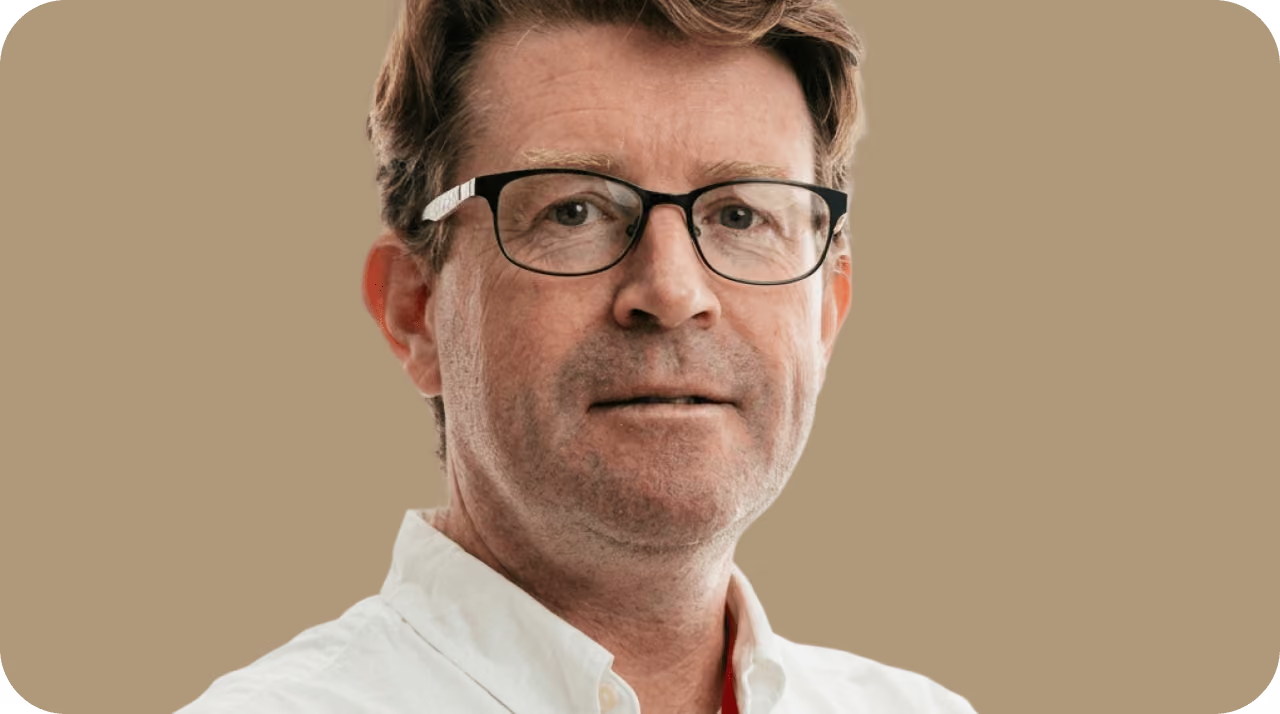
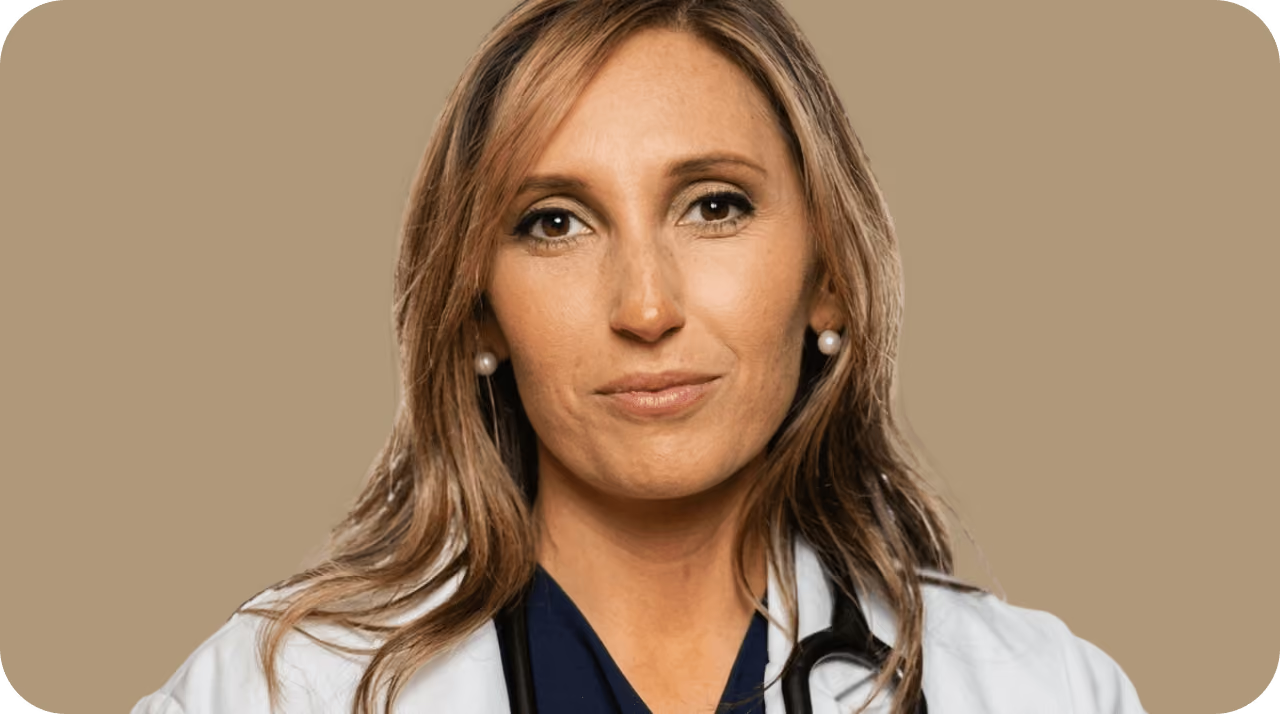
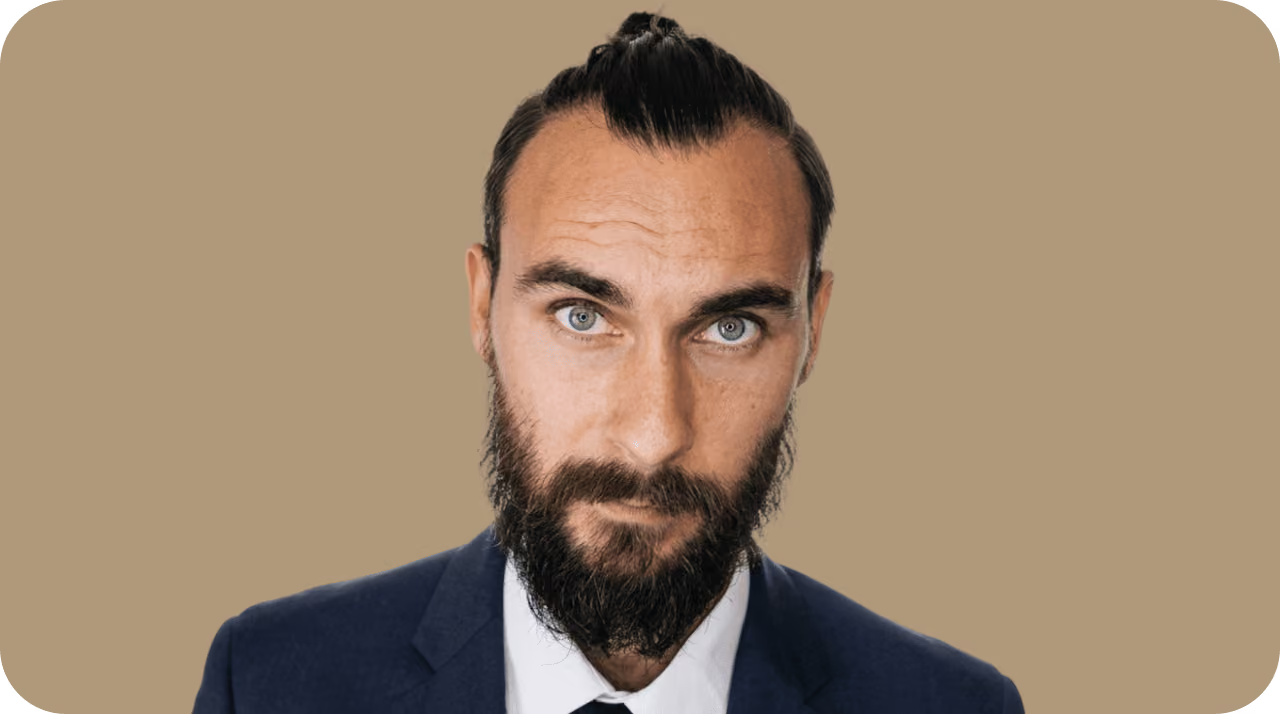
Urologists, men’s-health physiotherapists and therapists who work in sexual health helped build the programs. Where something on this page needs a doctor rather than an app, that’s why it says so.
Gerard Greene
Specialist men's health physiotherapist and senior lecturer at Coventry University.
Dr. Susie Gronski
Licensed physical therapist, certified sexuality counselor, and founder of a men's pelvic health clinic.
Natalie Goldberg
Certified sex and family therapist dedicated to improving intimate relationships and personal well-being.
Dr. Amy Pearlman
Board-certified urologist specializing in male sexual wellness, performance, and hormonal health.
Dr. Justin Houman
MD, UCLA-trained urologist and male reproductive specialist focusing on sexual health.
Cameron Fraser
Australia's leading men's sex coach, specializing in male sexual wellness and performance.
Ben Greenfield
13-time Ironman triathlete, bestselling author, and recognized expert in health, fitness, and performance.
Dr. Gary Shlifer
DO, board-certified internal medicine physician specializing in preventative care, nutrition, and anti-aging.
Questions men actually ask
Is it normal at my age?
Common and normal aren’t the same word, and neither one is a verdict. What rises with age is how often the things underneath turn up — narrower vessels, lower testosterone, more prescriptions — rather than some separate age effect on erections. Low testosterone in particular shows up at every age, not only late. So age tells you which causes to check first. It doesn’t tell you the answer.
I still get erections some mornings — what does that tell me?
On its own, not enough to act on. What it does is feed the first check above: an erection that happens in one situation and not another is the pattern that points away from a purely physical cause, and a morning is one such situation. It’s a data point for a conversation with a doctor, not a test you can pass or fail at home.
Could this be a sign of something else?
Sometimes — and that’s why doctors take it seriously, not a reason to panic. If narrowed arteries are what’s behind it, the narrowing is rarely confined to one place, and the medical material this program is built on puts erection trouble three to five years ahead of a heart complaint. Which makes getting checked early worth considerably more than getting reassured early. If you’ve been putting off a check-up, this is the argument for booking it.
Is there a quick trick that works?
No — and the tricks get advertised precisely because that’s what people type. The honest version is the section above: find out which cause applies to you, treat what a doctor treats, change what sits on the lifestyle end, and train the parts that train. The program’s own line on this is worth repeating exactly: it won’t happen overnight, it does take time to sort out, and it is absolutely possible.
Do natural remedies or lifestyle changes help?
Lifestyle changes do, and they aren’t really remedies — they’re on the medical list of causes. Heavy drinking, recreational drugs, smoking, extra weight and inactivity all make this more likely, so taking one away takes a cause away. Supplements, herbs and “natural cures” are not on that list, and we don’t sell any. If something is being sold to you as a natural fix, the useful question is which of the causes above it claims to touch.
Can I do anything about it without medication?
That’s the whole design of our Keep It Hard program: physical conditioning, the nervous-system half, and enough skill that a wobble doesn’t turn into a spiral. Prescriptions exist and they’re a doctor’s decision, not ours — we don’t work with medication and never have. What no tablet does is switch off the fear response, which is why the psychological half is on the list whichever route you take.
How long before anything changes?
The program’s own figure is four to six weeks for the first noticeable difference, at ten to twenty minutes a day. Physical causes run on their own clock: if an untreated condition or a medication is the driver, that part of the timeline belongs to your doctor rather than to us.
Can I cancel anytime?
Yes. You can cancel anytime from your account settings — no questions asked, no retention calls.
How do I get in touch?
Two ways. Email support@the.coach and a real person on our team gets back to you — usually within a day. Or open the app, go to the Today tab, tap your profile, and hit Support. Both land with the same people.
More programs from The Coach
Keep It Hard
Stay hard without the pills.
See the program
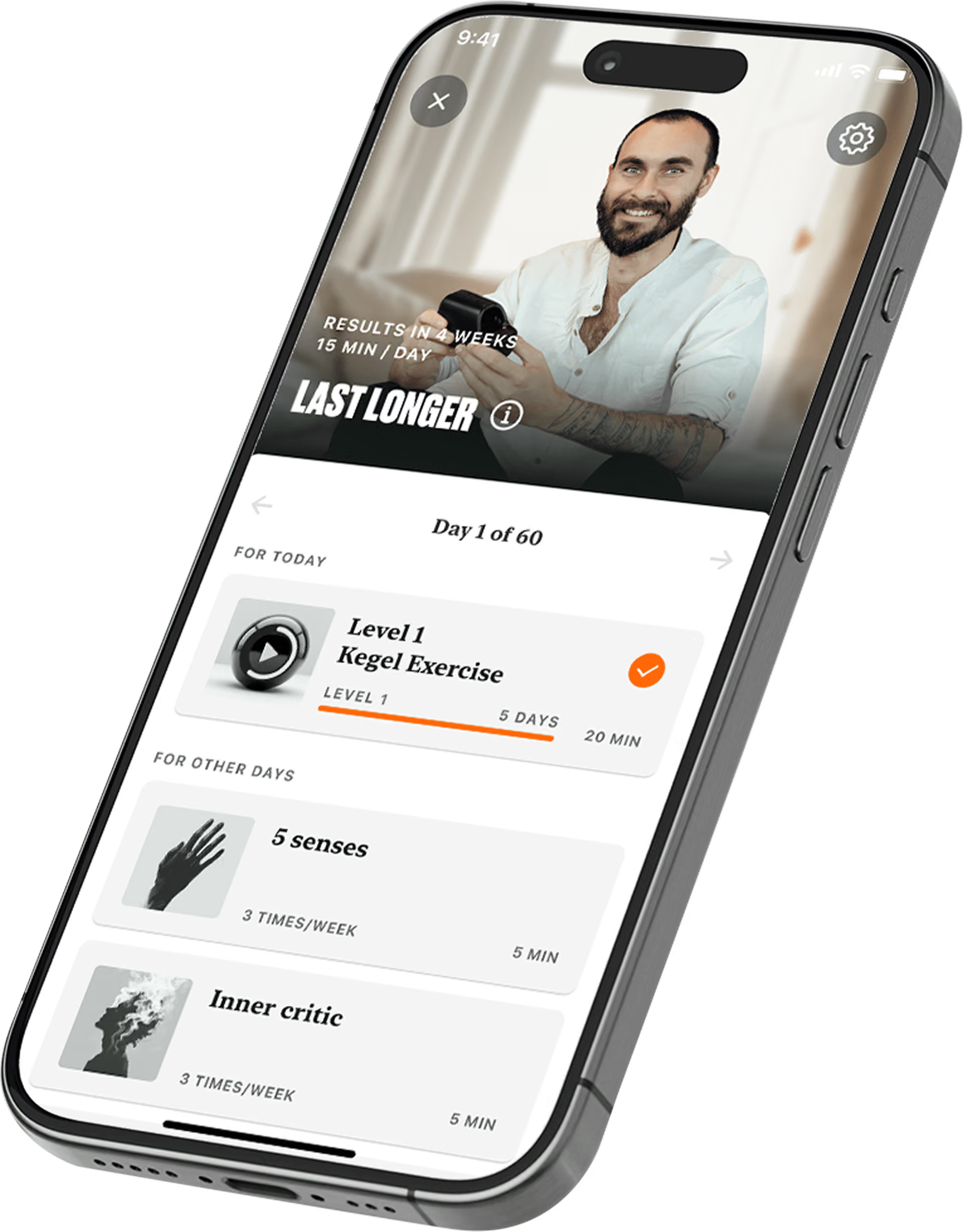
Last Longer
Real arousal control in eight weeks.
See the program
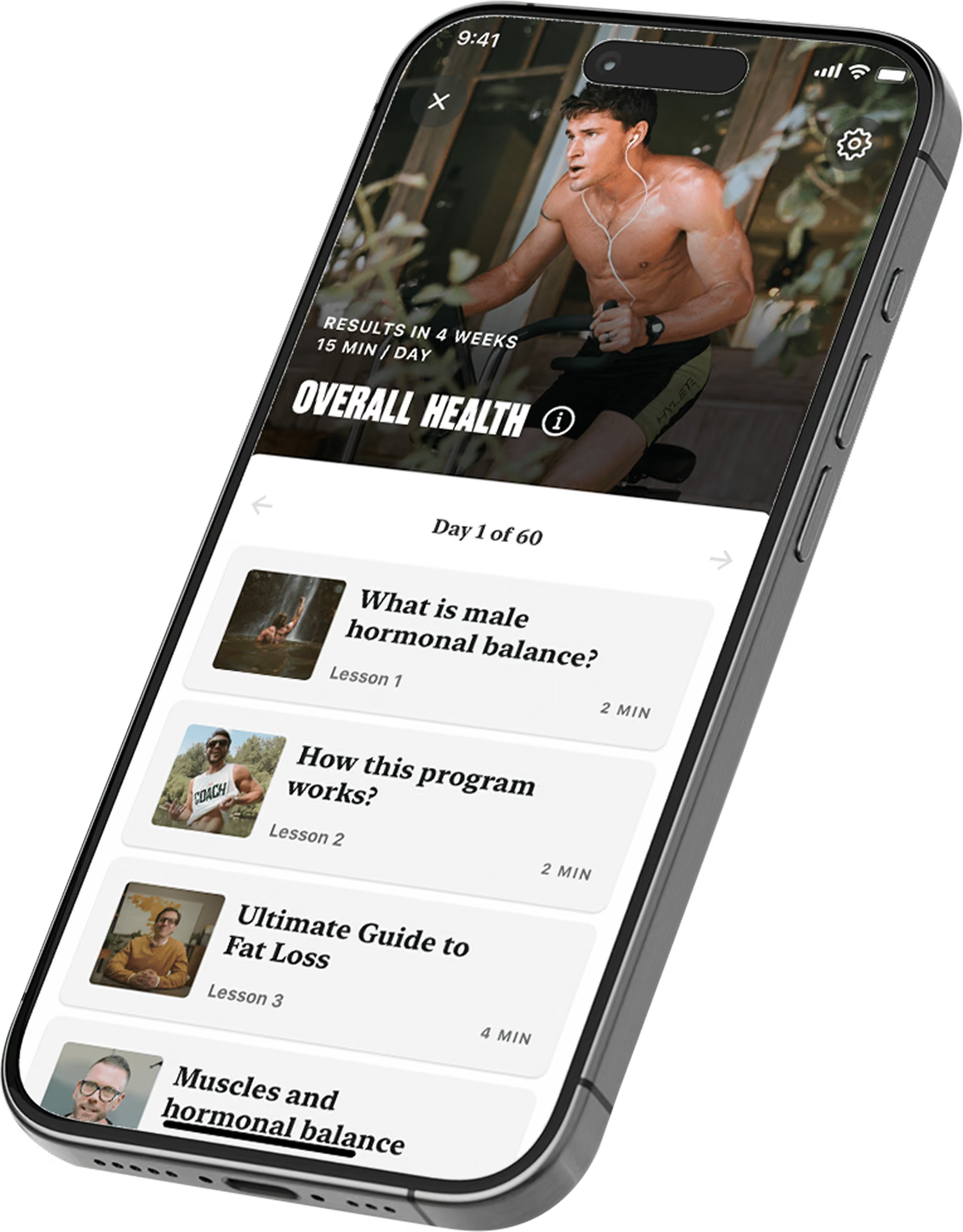
Overall Health
Boost your testosterone and get your energy back.
See the program
The one thing that never helps is waiting
Ten to twenty minutes a day. First changes in four to six weeks.